
What our safe handling briefing covers
Our safe handling briefing is built for print teams working with UV-curable inks on flatbed and roll-to-roll printers in Cape Town, Johannesburg, Durban, Pretoria and Gqeberha. The focus is practical: how to receive stock, how to open and decant it safely, how to avoid contamination, and how to work in a way that suits your production pace.
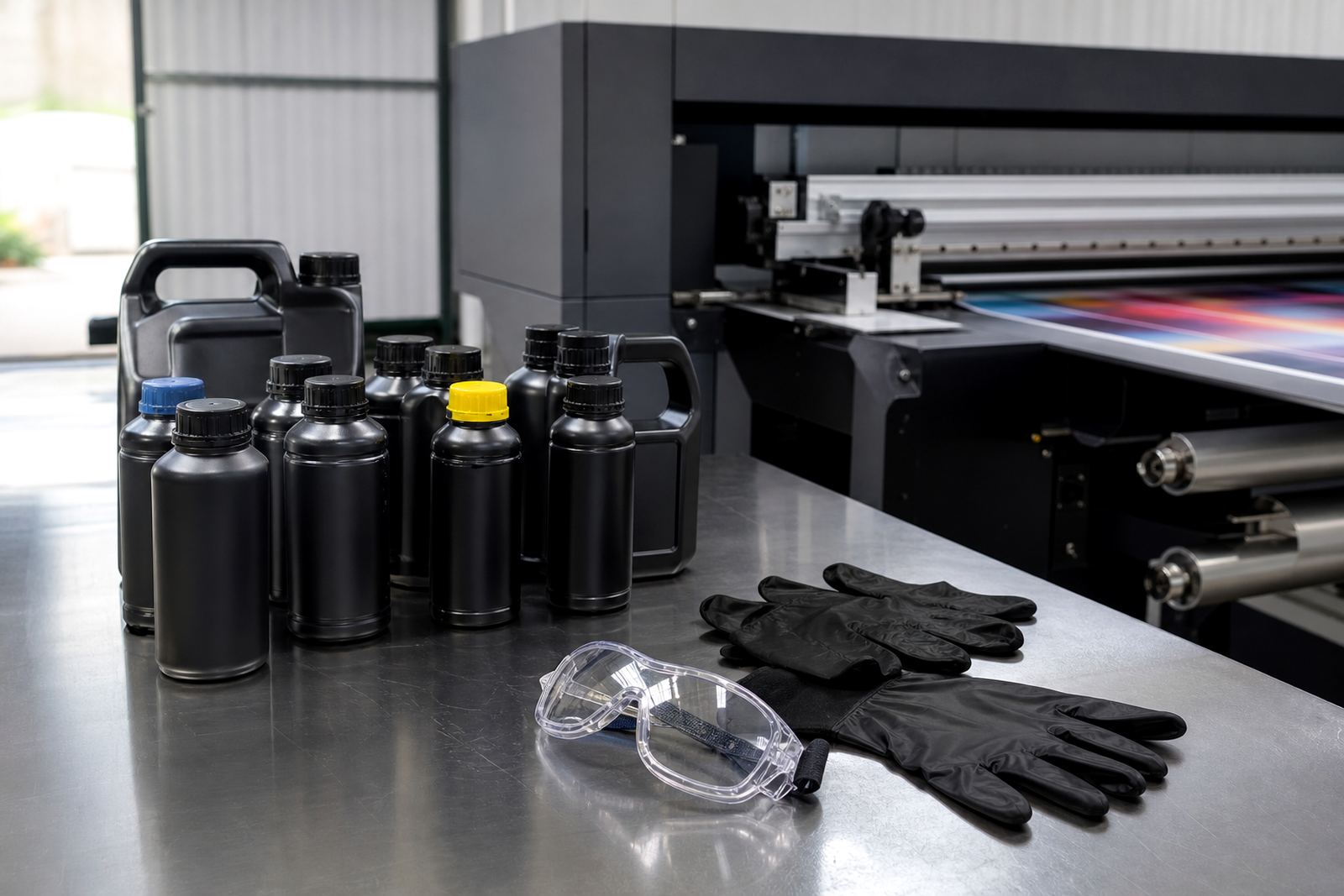
We remind teams to follow the safety data sheet for every ink they handle, wear gloves and use suitable PPE. That includes basic eye protection, closed shoes and clothing that covers skin where splashes could land. UV-curable inks are designed to cure under the correct light source and exposure time, but before curing they must be handled with care. A quick briefing at the start can prevent a messy shift later on.
- Opening, closing and labelling containers correctly
- Keeping caps, funnels and tools clean between colours
- Segregating ink storage from food areas and general stock
- Using gloves and PPE when transferring or testing ink
- Spotting contamination risks before they affect print quality
How the briefing is run on site or remotely
We can work through the briefing at your Epping base, on a production floor in Bellville or Paarl, or remotely if your team is spread across more than one branch. The process begins with a short discussion about your printer type, ink format and the materials you print most often. That lets us tailor the advice to your setup instead of giving generic tips that do not match the job.
The session usually starts with the basics of UV-curable chemistry in plain language. We explain that these inks remain workable until exposed to the correct curing energy, which is why lids, nozzles and hoses must stay protected from unnecessary light. We also cover ink compatibility with printer parts, substrate sensitivity and how to avoid adhesion problems caused by dust, oils, moisture or poor surface prep. If your team handles both rigid boards and flexible media, we show where the risks differ.
- Printer and substrate review before the session
- Walkthrough of handling steps for your specific workflow
- Practical cleaning and wipe-down guidance
- Question time for operators, supervisors and warehouse staff
Safe storage, spill control and daily checks
Ink storage matters just as much as how the product is used. UV-curable inks should be kept in a cool, dry place away from direct sun and heat sources, with containers closed properly after each use. In coastal areas such as Cape Town and Gqeberha, we advise teams to watch for moisture exposure and to keep stock off cold concrete where possible. In inland warehouses, temperature swings can be a bigger concern, especially in rooms that heat up during the day and cool sharply after hours.
We show your staff how to check seals, batch labels and container condition before production begins. If a container looks damaged, swollen or contaminated, it should be set aside and reported. For spills, the main goal is to keep people safe first, then contain the product and clean the area with the right materials according to the safety data sheet. Never leave a spill to dry on its own, because cured residue can be harder to remove and may affect floor safety or equipment surfaces.
- Inspect lids, caps and seals before opening
- Store away from direct light and heat
- Keep absorbent material and cleaning cloths nearby
- Report damaged or leaking stock without delay
- Follow the safety data sheet for cleanup instructions
Printer compatibility and adhesion guidance
Safe handling is not just about the operator, it also protects print quality. The wrong ink on the wrong surface can lead to poor adhesion, smudging, premature wear or wasted stock. During the briefing we point out the simple compatibility checks that should happen before production starts. That includes confirming the intended printer platform, the substrate type and any pre-treatment or surface cleaning needed to support adhesion. If you work with signage boards, packaging components or mixed media, this step is worth repeating every time a new job comes in.
We also discuss curing balance. Too little curing can leave prints under-cured and tacky, while too much heat or energy may affect sensitive materials. The right setup depends on the printer, ink formulation and speed settings. A small test panel before a full run can save a lot of material. Our team can advise on the practical signs to look for, such as edge lift, poor rub resistance or uneven gloss. It is better to catch those issues early than after a 50 metre run.
- Confirm substrate suitability before the job starts
- Check surface cleanliness and dryness
- Use test prints to verify adhesion and finish
- Adjust curing and production speed with care
Curing and handling tips
We recommend a short refresher whenever there is a new operator, a new ink batch, a new substrate or a change in printer settings. In busy production rooms, that may mean a quick monthly check-in and a fuller review every few months. People forget small steps when the pace gets heavy, and that is where mistakes usually start.
Caps, fittings, wipe cloths and transfer tools should be checked daily. Storage areas should be reviewed weekly for leaks, dust or heat exposure. If you use stock regularly, we can build a simple maintenance rhythm that fits your order cycle and team size. The aim is not paperwork for its own sake, but fewer interruptions and cleaner work.
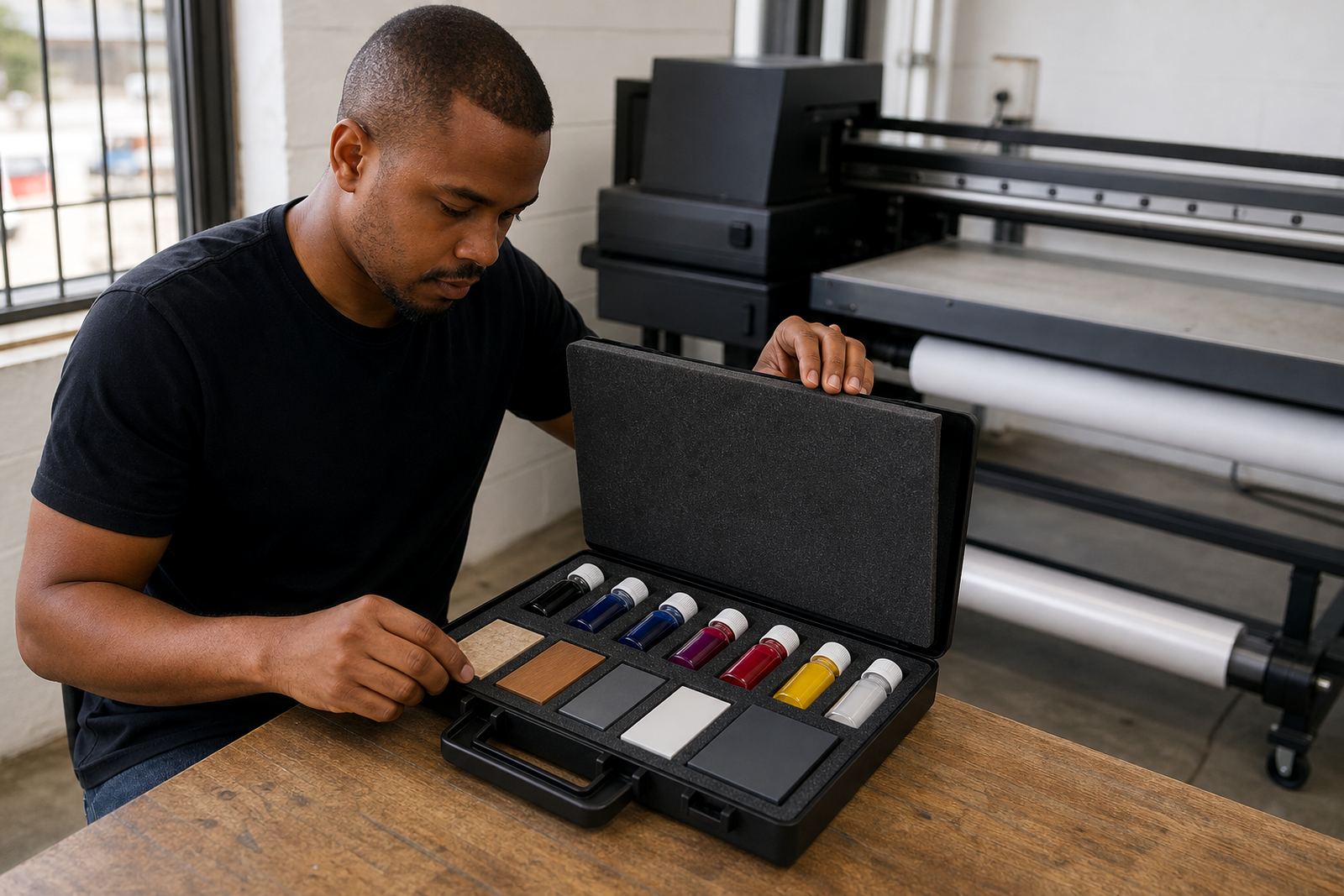
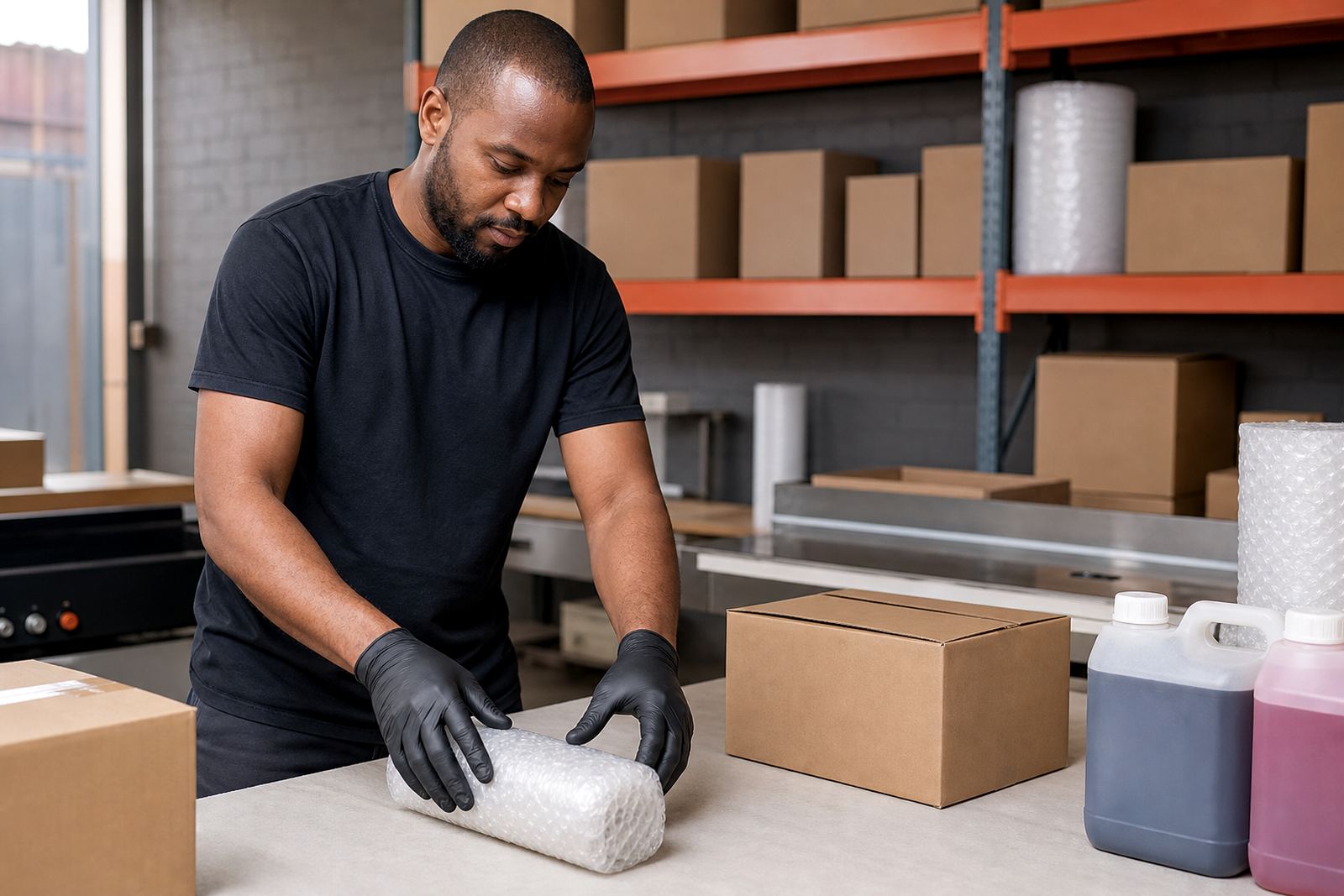
Our pricing approach for this service is straightforward and depends on the size of the team, whether the briefing is on site or remote, and whether we are working with one printer or several. If sample pack preparation, operator training or remote tech help is added to the session, we quote for the full scope upfront so there are no surprises later. Turnaround is usually quick for scheduled briefings, with courier support available for stock and samples across South Africa.
Who this service suits and how to book
Safe handling briefing is useful for signage shops, packaging producers, trade printers and any team that wants clearer procedures around UV-curable inks. It is especially useful for new installations, expanding workshops and sites that need a common standard across several staff members. If you are based in Epping or need delivery to Cape Town, Johannesburg, Durban, Pretoria, Gqeberha, Bellville or Paarl, we can coordinate the briefing around your production timetable.
Most briefing requests start through our contact form, where shops can outline their printer setup and ink handling needs. We will ask what printer type you use, how your team handles ink today and what problems you want to prevent. From there we can plan the briefing content, delivery method and follow-up support. The result is a team that understands the basic safety steps, handles ink with more care and keeps production moving with less waste.
Ink data
| Service name | Safe Handling Briefing |
|---|---|
| Focus | UV-curable ink handling, PPE, storage and spill control |
| Suitable for | Flatbed and roll-to-roll printer teams |
| Locations supported | Epping, Cape Town and courier support across South Africa |
| Typical turnaround | Scheduled briefings arranged to suit production |
| Pricing approach | Quoted by scope, team size and delivery method |