



Choosing the right UV ink for your printer and job mix
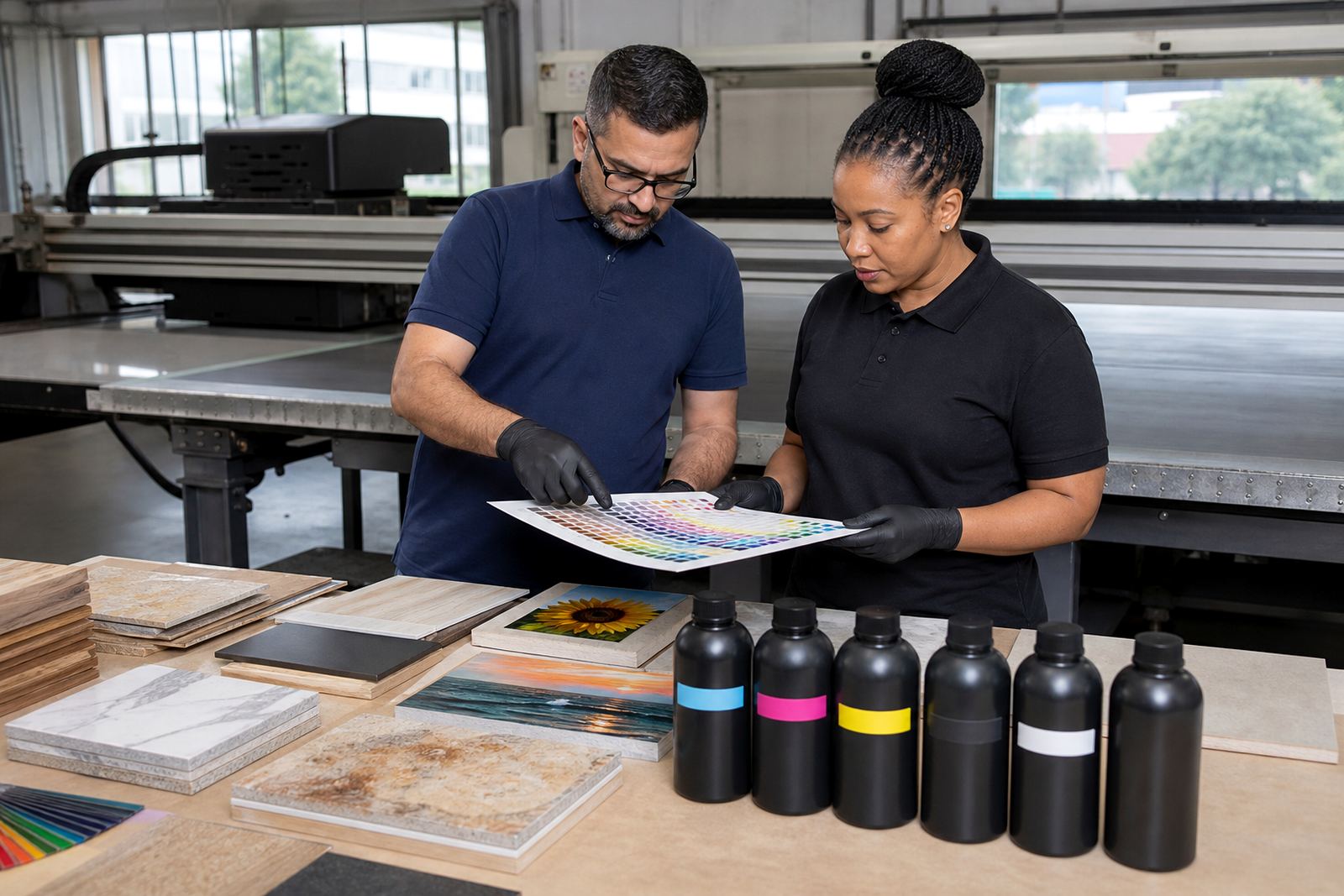
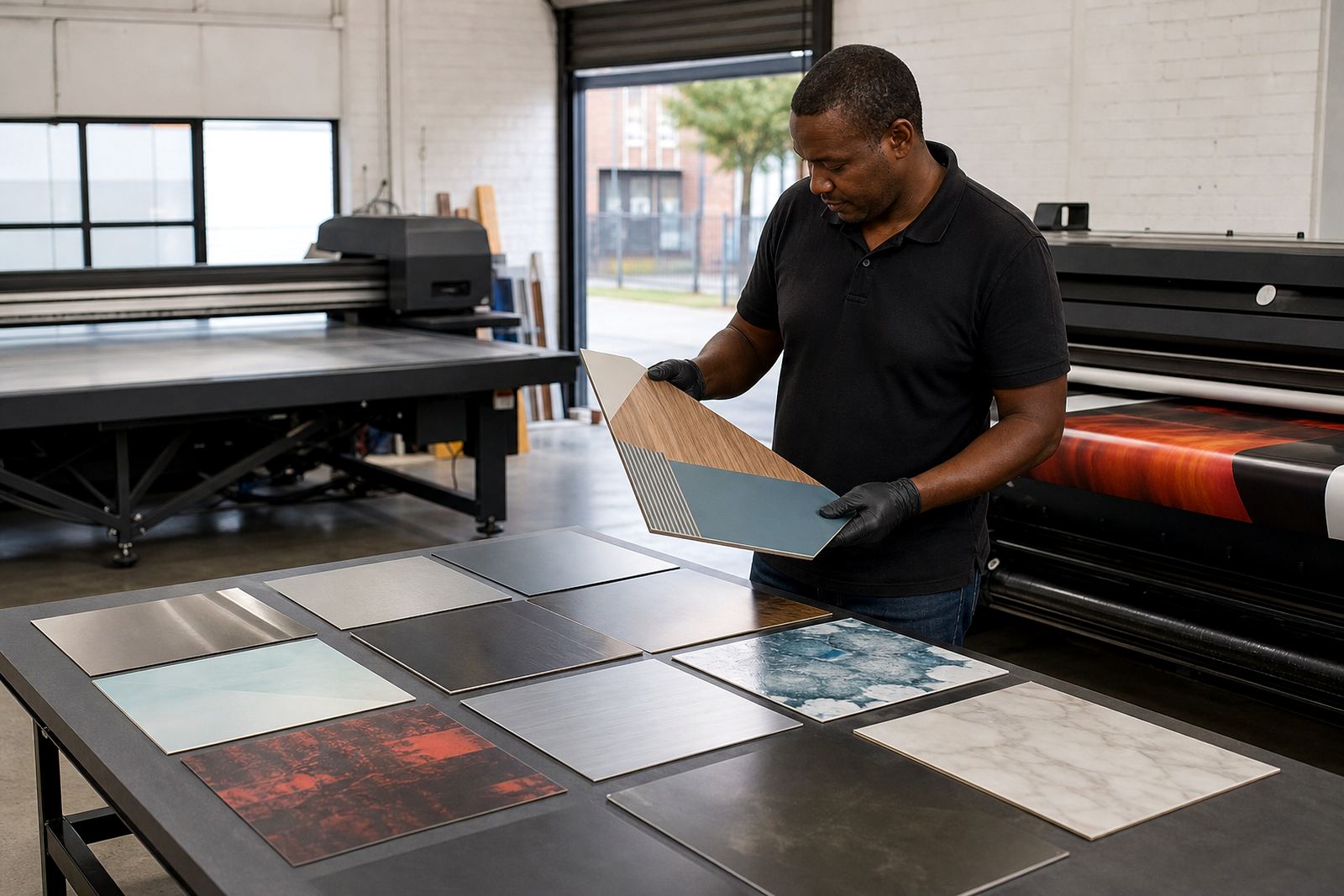
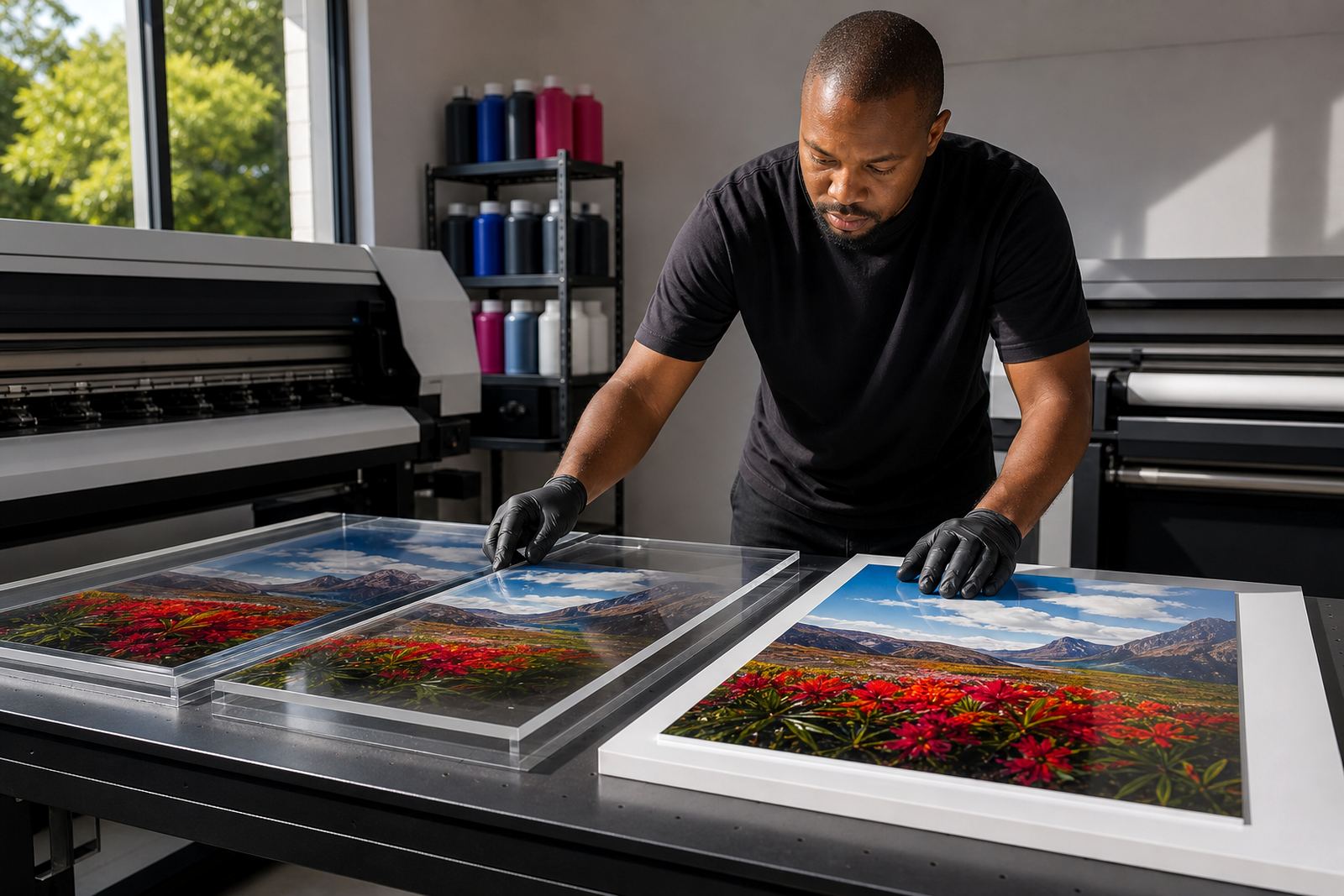
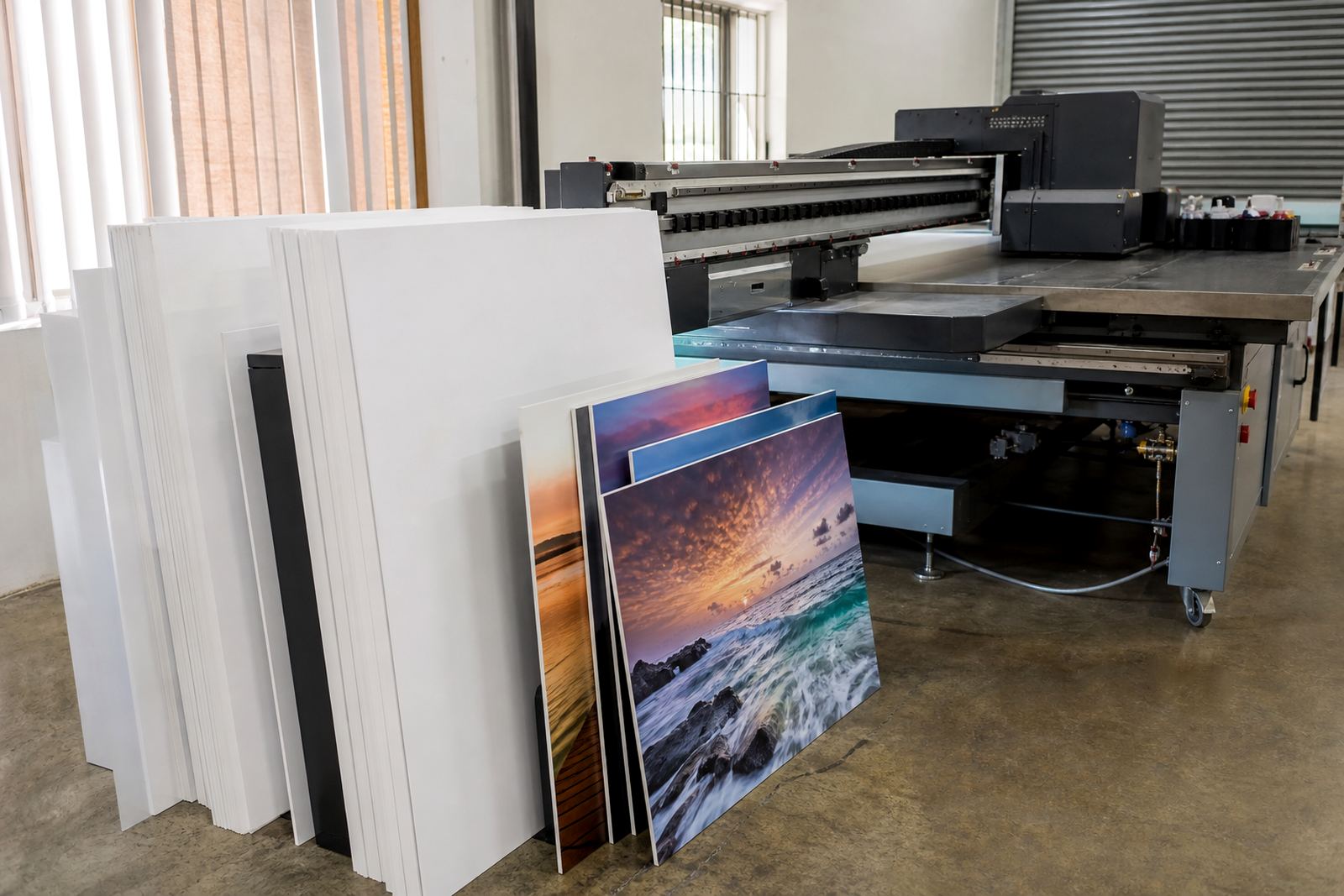
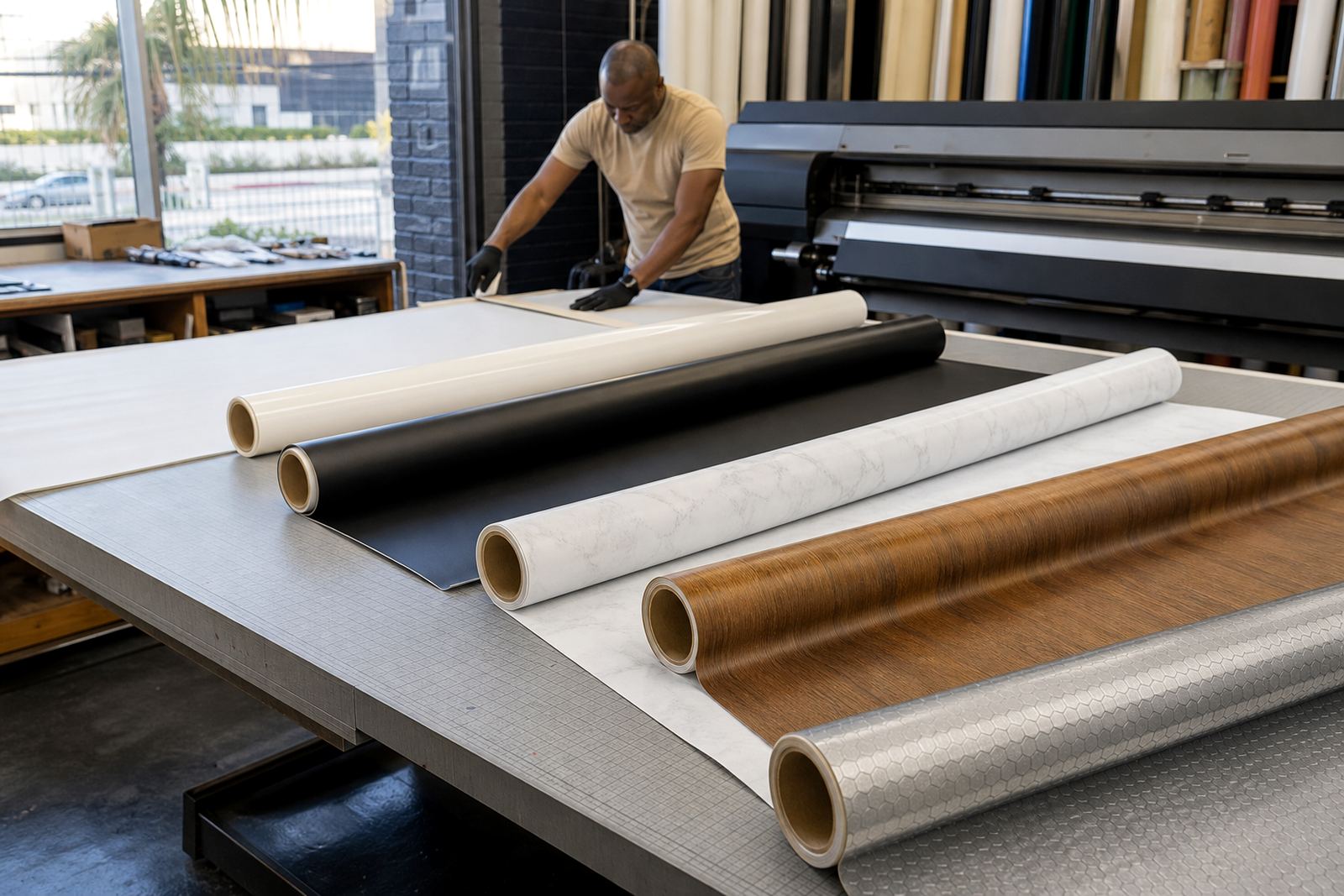
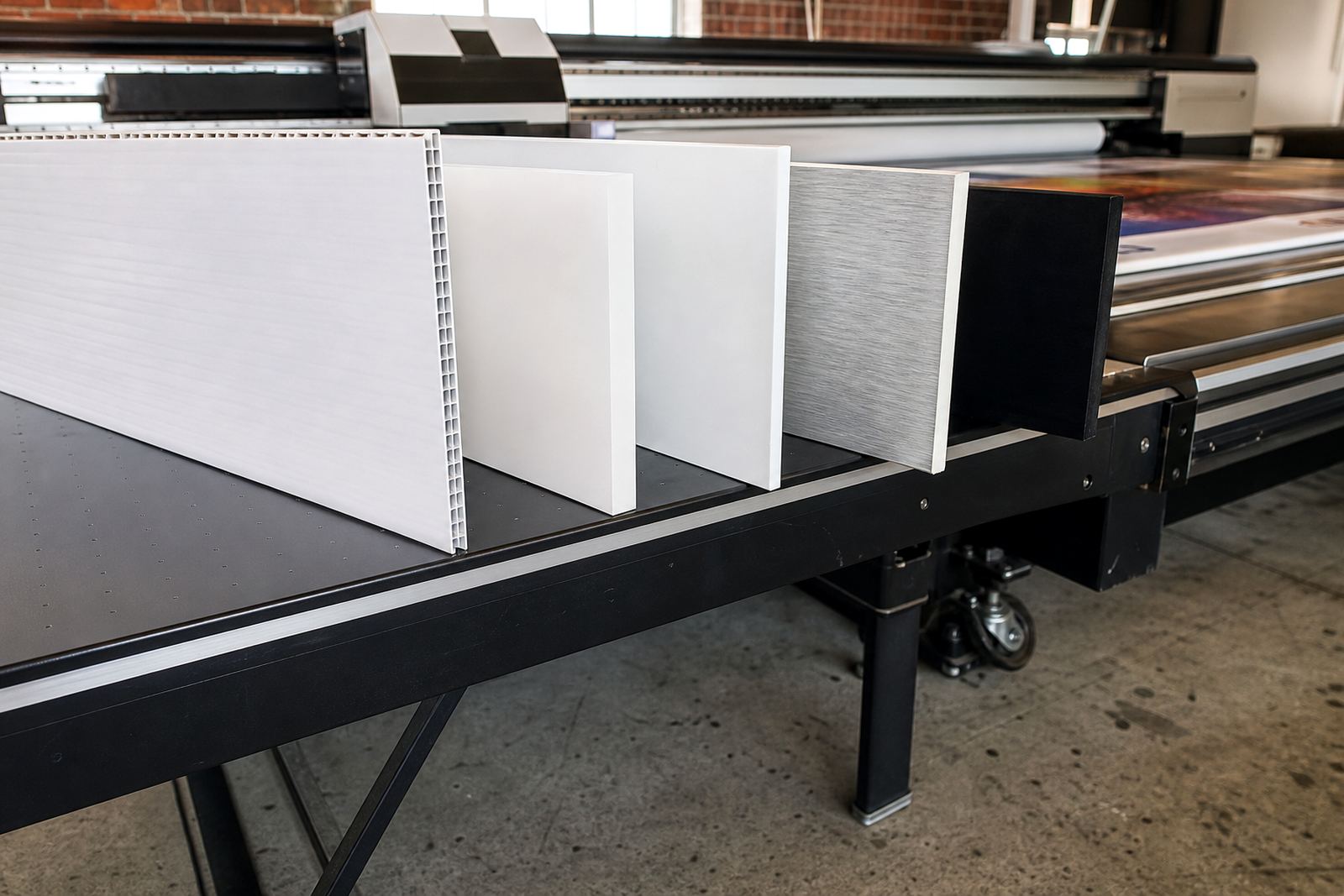
Not every UV-curable ink suits every machine or print run. Flatbed printers usually work across rigid boards, acrylic, foam PVC, aluminium composite and other sheet goods, while roll-to-roll systems need inks that flex with banner, vinyl, film and certain coated media. A good starting point is to match the ink to the printer head type, the substrate surface and the end use of the print.
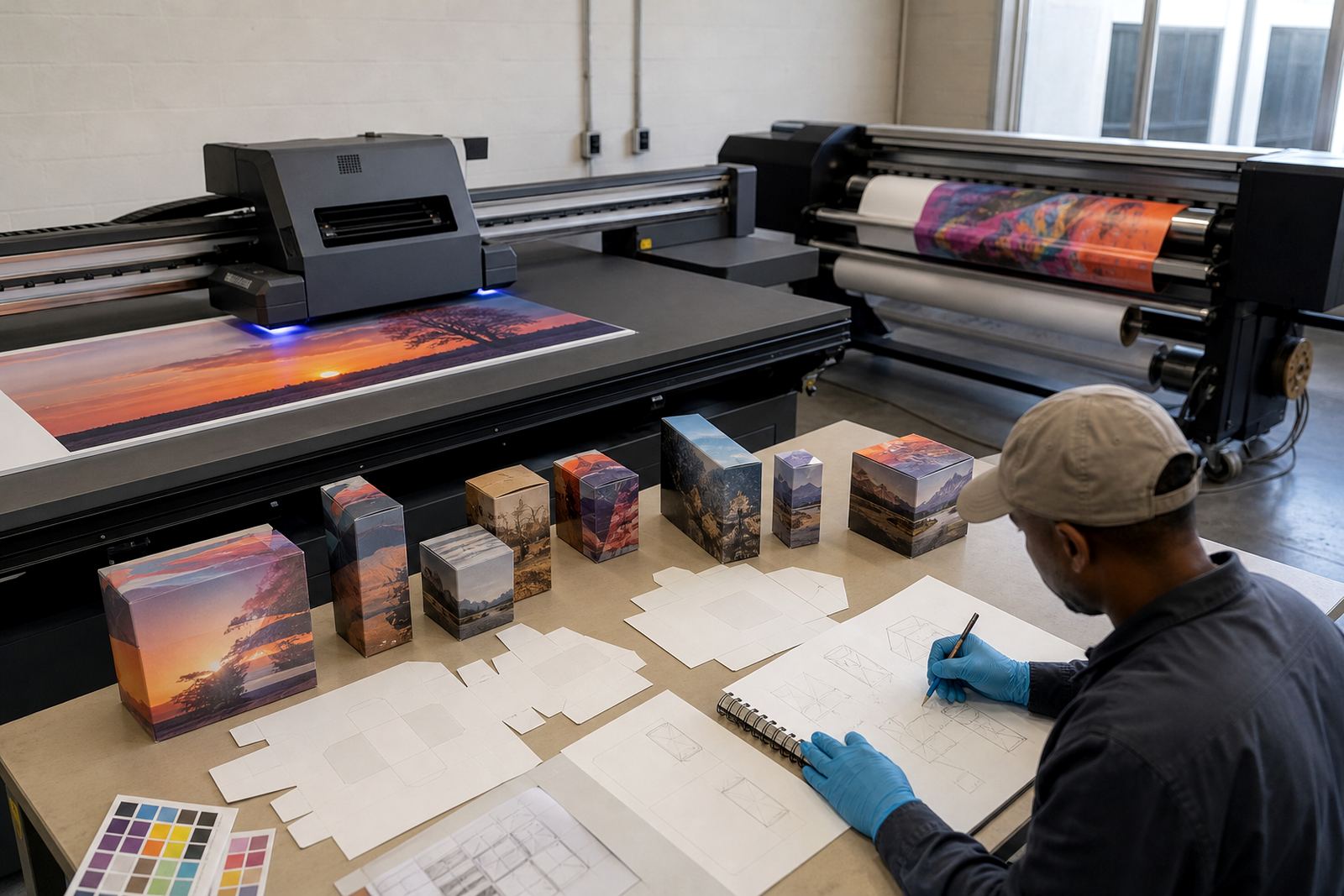
If your work changes from week to week, for example signage one day and packaging components the next, it helps to look at how the ink behaves under heat, light and handling. Some jobs need stronger adhesion on difficult plastics, while others need better scuff resistance for frequent contact. The right choice can reduce waste, slow down reprints and make colour work more predictable.
- Check whether the printer is flatbed, hybrid or roll-to-roll.
- List the substrates you use most often, including any coated or textured surfaces.
- Confirm the curing method and whether your line has enough output speed.
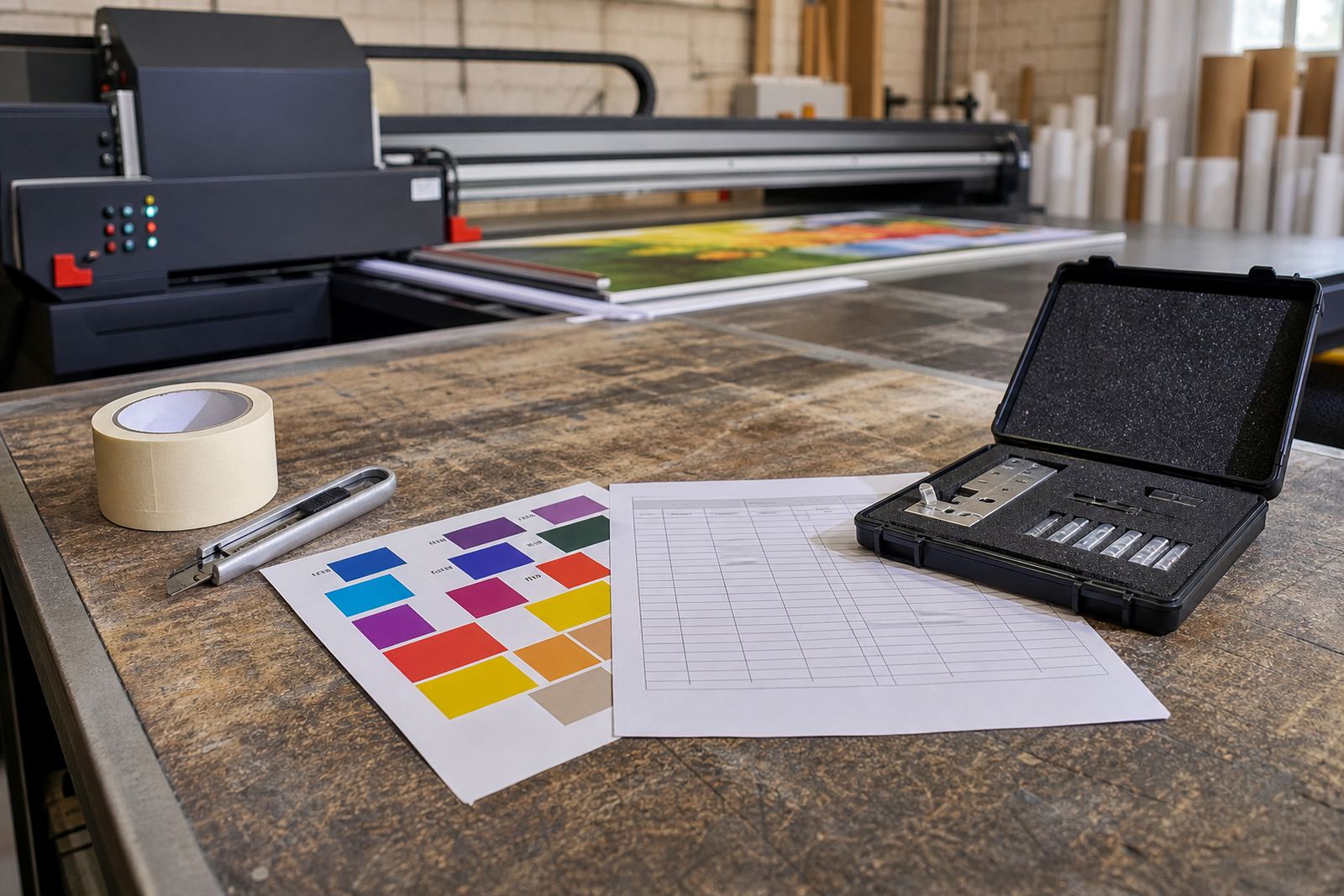
- Use sample prints before committing to full production.
What curing means in day-to-day production
UV inks cure when exposed to the correct UV light energy, turning from a liquid state into a bonded print film. That curing step is what gives the print its dry, ready-to-handle finish. If curing is too light, the surface may feel tacky, smear or fail adhesion tests. If it is too heavy, you can see brittleness, heat stress or unwanted change in surface appearance.
In a busy shop, curing is not just a machine setting, it is part of the full production plan. Line speed, lamp output, pass count, bed height and material thickness all play a part. On some jobs, a slight adjustment in speed or lamp intensity can make a clear difference to finish quality and durability.
Keep notes on what works for each substrate and save them for the next order.
Adhesion testing before production runs
Adhesion testing is one of the most useful checks before a full print run. Different materials respond differently to UV ink, even when they look similar. A board with a smooth coating may hold ink well, while the same material from another batch may need extra preparation.
Good testing looks at more than whether the ink sticks. It should also check crosshatch performance, tape pull results, flex on bendable media and surface marking after handling. For outdoor signage in coastal areas like Cape Town or Gqeberha, humidity and salt air can change how a print behaves over time, so it is worth testing under conditions close to real use.
- Clean the substrate before testing, especially if dust or release residue is present.
- Test at least one sample from each new batch of material.
- Keep records of pass or fail results for future repeat orders.
- Review both curing and adhesion together, not separately.
Colour, finish and production consistency
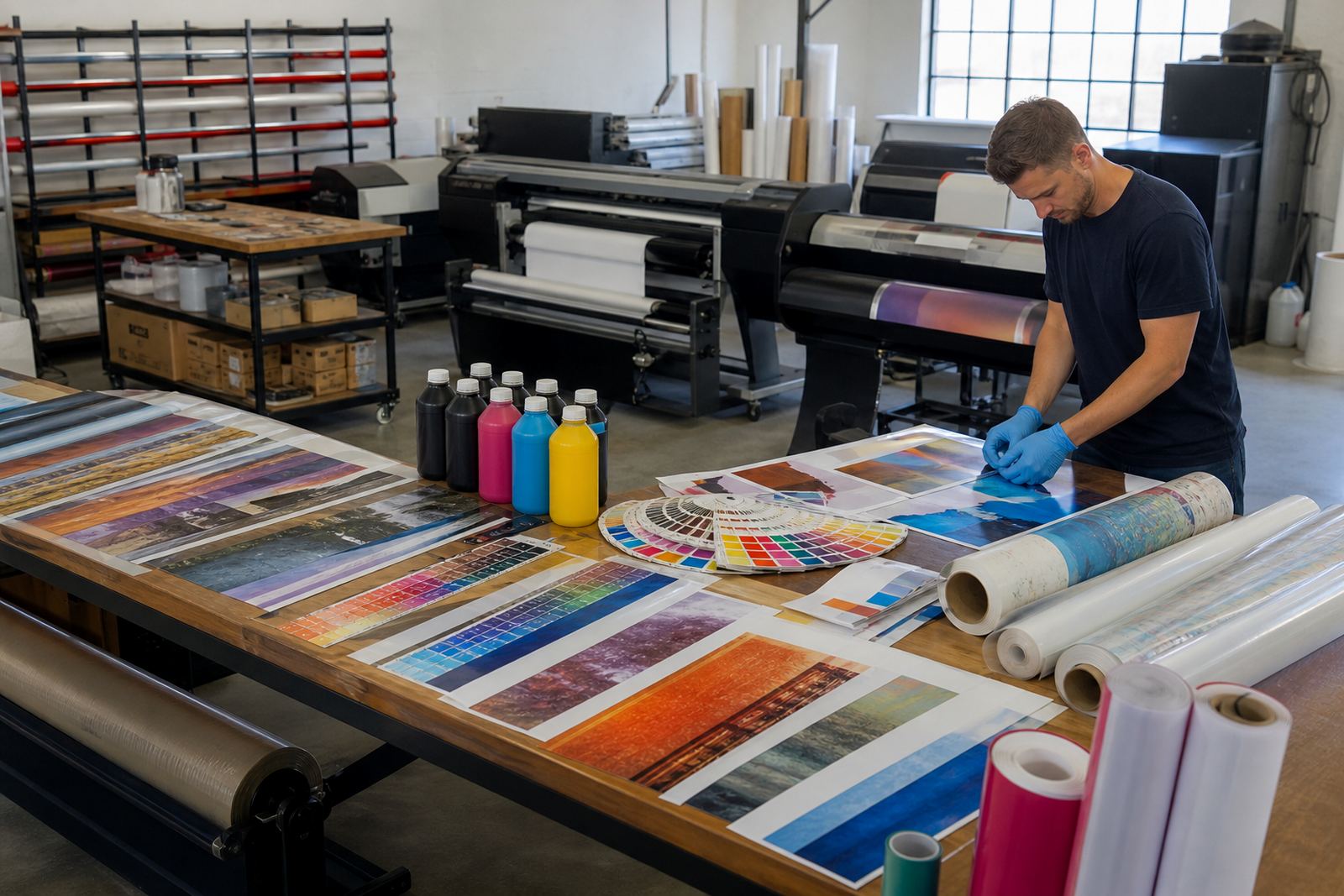
Colour matching with UV inks is easier when the whole production chain stays steady. Media type, ink laydown, curing level and viewing light all affect the final look. A bright colour on one substrate can appear duller on another, even when the artwork is identical. That is why colour trial support matters before high value work goes to press.
Gloss, satin and matte finishes can also alter the appearance of the same image. For packaging, display graphics and branded panels, small changes in surface finish can shift how a customer reads the colour. If a job needs a close repeat, keep a written production note with the exact substrate, printer setting and drying or curing setup used the first time.
For teams working across multiple sites or shift patterns, clear notes help reduce waste and keep colour stable from one order to the next. It saves time when the operator on duty can see what was done on the previous run.
Safe handling in the print room
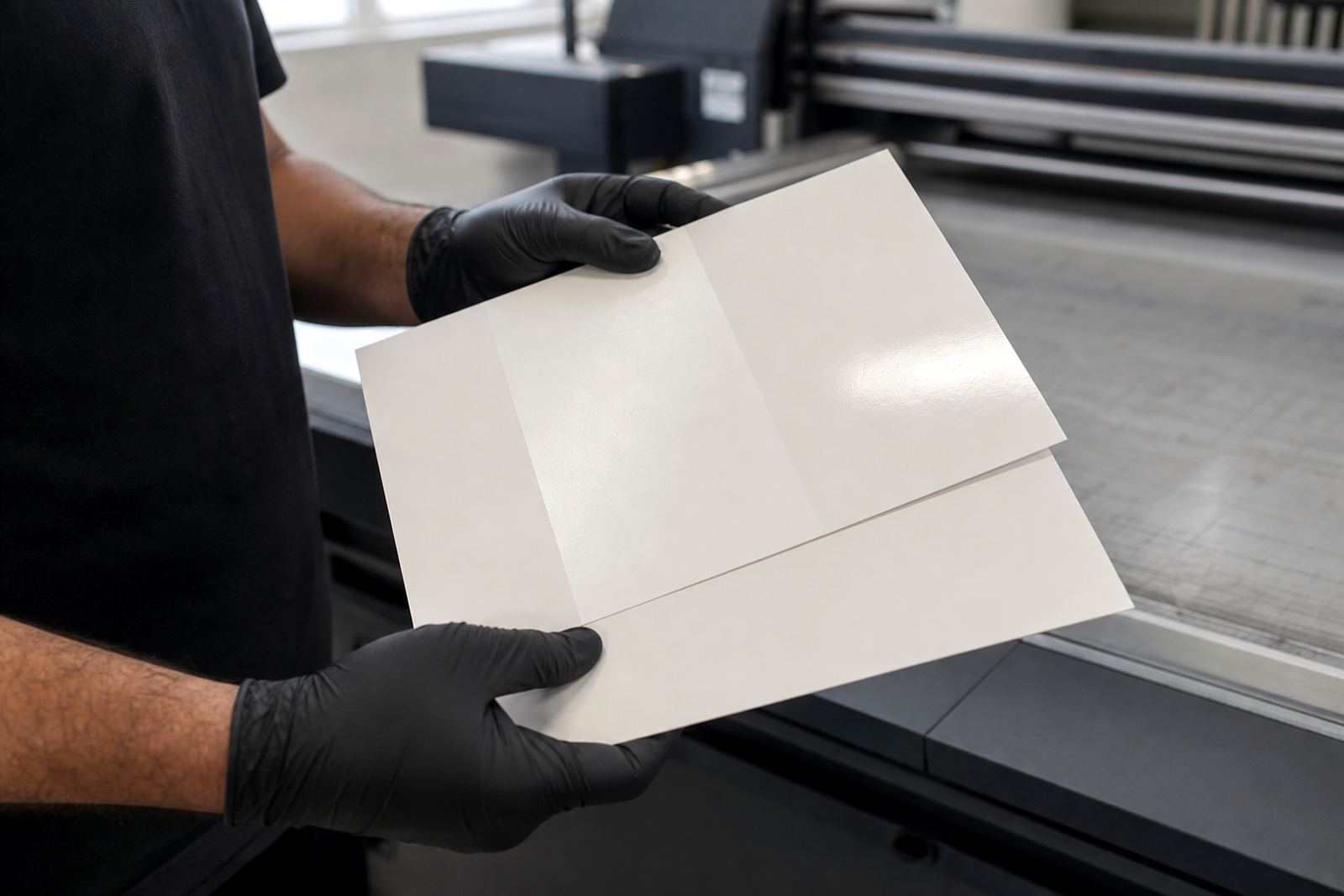
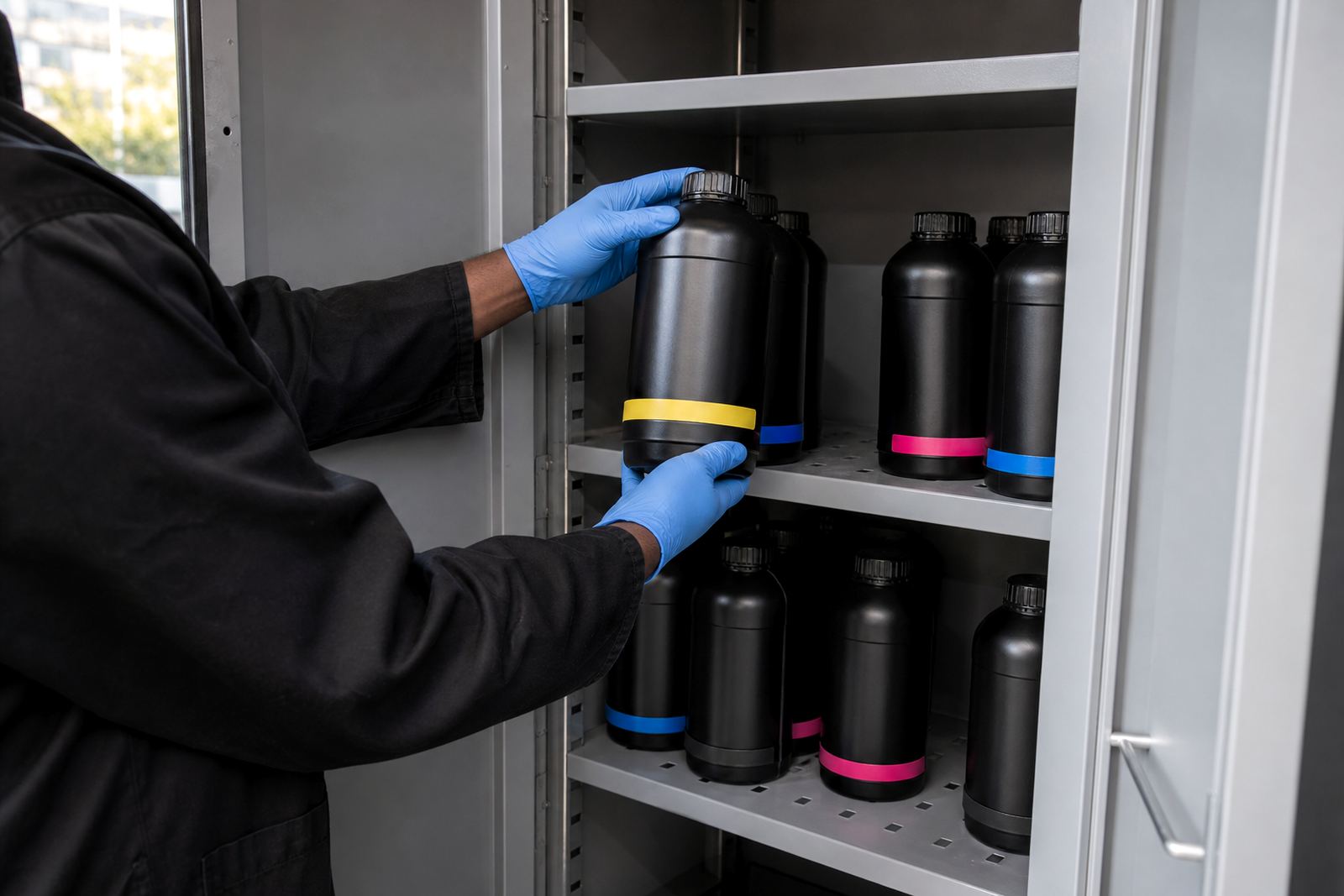
UV-curable inks should be handled with care. Follow the safety data sheet for each product, wear gloves and keep the work area tidy. Avoid skin contact, wipe spills straight away and store containers closed when not in use. If ink is left open in warm conditions, contamination and surface skinning can become a problem.
Training matters, especially where new operators are learning how to prime lines, clean tools or change between colours. A simple safe handling briefing can prevent avoidable mistakes and protect both staff and equipment. Make sure staff know where the safety data sheet is kept, what to do after a spill and how to dispose of used cloths or packaging according to site rules.
Good habits are especially useful in busy Cape Town and Johannesburg production environments where many jobs move through the room each day.
Help for buyers and operators
Practical notes for planning, ordering and running UV print work. Buyers can compare ink suitability across different machines and applications. Production managers can plan stock, reduce mismatch between media and ink, and prepare for repeat orders without guesswork.
Operators can use the same guides for day-to-day checks on curing, adhesion and handling. If you are ordering from Epping, Cape Town or arranging courier delivery to Durban, Pretoria, Bellville, Paarl, Johannesburg or Gqeberha, the aim is the same: fewer surprises on press and cleaner results on the substrate.
- Use the guides to narrow down ink choice before placing an order.
- Review substrate behaviour before switching to a new material.
- Plan tests, samples and production timing together.
- Keep safety and cure checks part of every run.