
Start with the sign’s job and where it will live
Before you load a sheet or roll, decide where the sign will be used and how long it must hold up. A short-term promo board for an indoor retail special has very different needs from a shopfront panel in Cape Town’s coastal air or a directional sign on a windy site in Gauteng. UV-curable inks are chosen for fast curing and good print handling, but the best result still depends on matching the ink, media and finishing to the job.
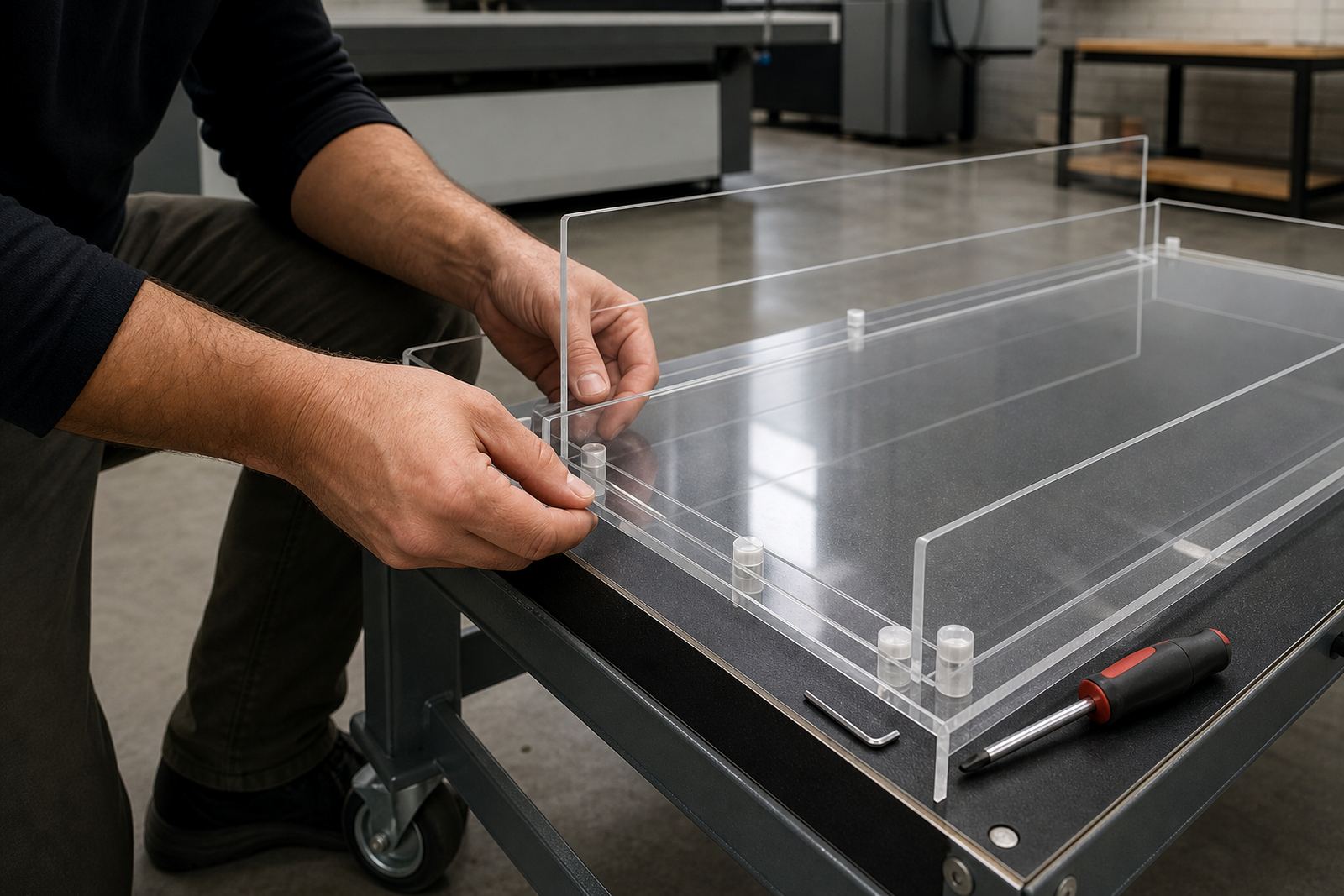
Ask three simple questions first: is it indoor or outdoor, will people touch it, and will it face sun, moisture or cleaning? For high-touch signs, adhesion becomes as important as colour. For outside work, check whether the substrate can take the heat and lamp energy from the printer without warping or softening. On corrugated plastic, foam board, acrylic, PVC sheet and coated boards, a quick test print can save a full production run.
Choose the right media for flatbed and roll work
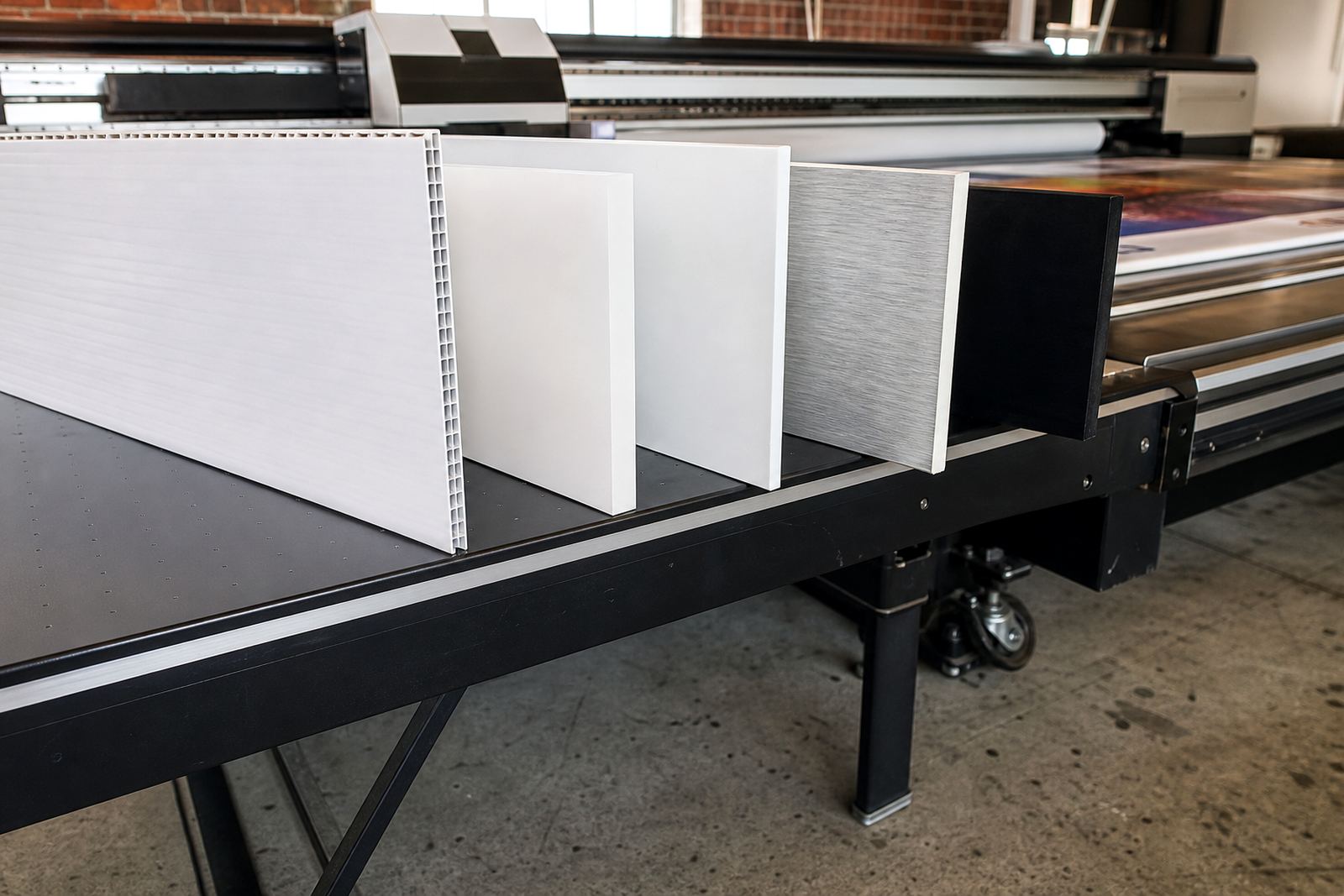
Flatbed printers are suited to rigid materials, while roll-to-roll printers handle flexible media. That sounds simple, but a lot goes wrong when a substrate looks suitable yet behaves badly under production conditions. In hot weather, some plastics move slightly. In humid areas, board can pick up moisture. In colder mornings, certain films need extra time to settle before printing.
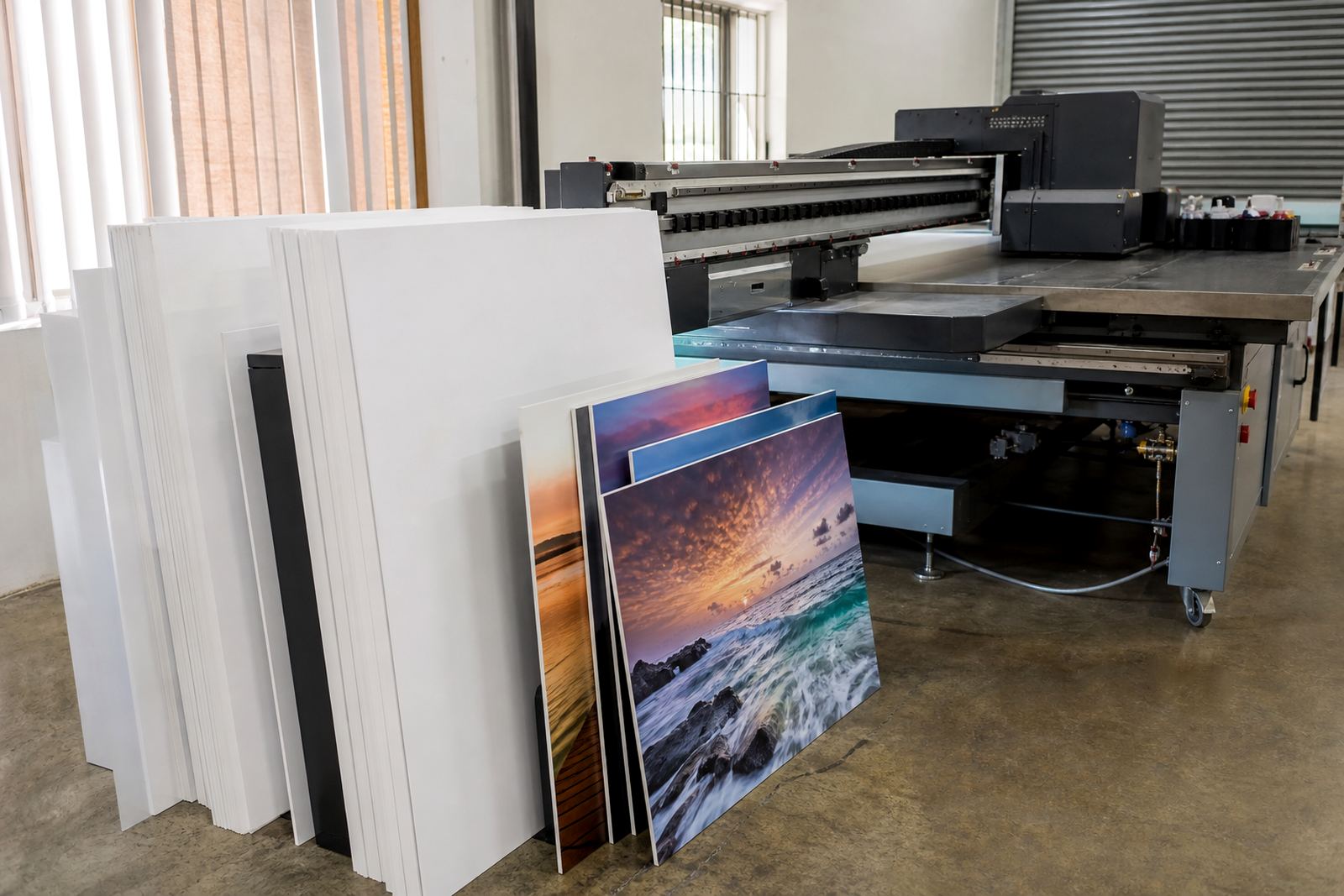
Common signage media include rigid boards for panels, foamex-style sheets for indoor displays, adhesive vinyl for vehicle graphics and window graphics, and banner materials for temporary promotions. For each one, check surface energy, coating quality and intended finish. A smooth surface may give sharper detail, while a textured face can need more ink coverage and a slower curing pass.
- Confirm whether the media is rigid or flexible.
- Check if it is coated for UV-curable ink.
- Inspect for dust, oil, moisture and edge damage.
- Do a small test before the full print run.
Understand curing, adhesion and why they matter
UV-curable ink dries by curing under UV light rather than by air drying. That means the lamp settings, print speed and ink laydown all work together. If curing is too light, the print may feel tacky or rub off. If it is too strong, some media can distort or show heat stress. Good curing gives a print that can be handled, trimmed and installed with less risk of marking.
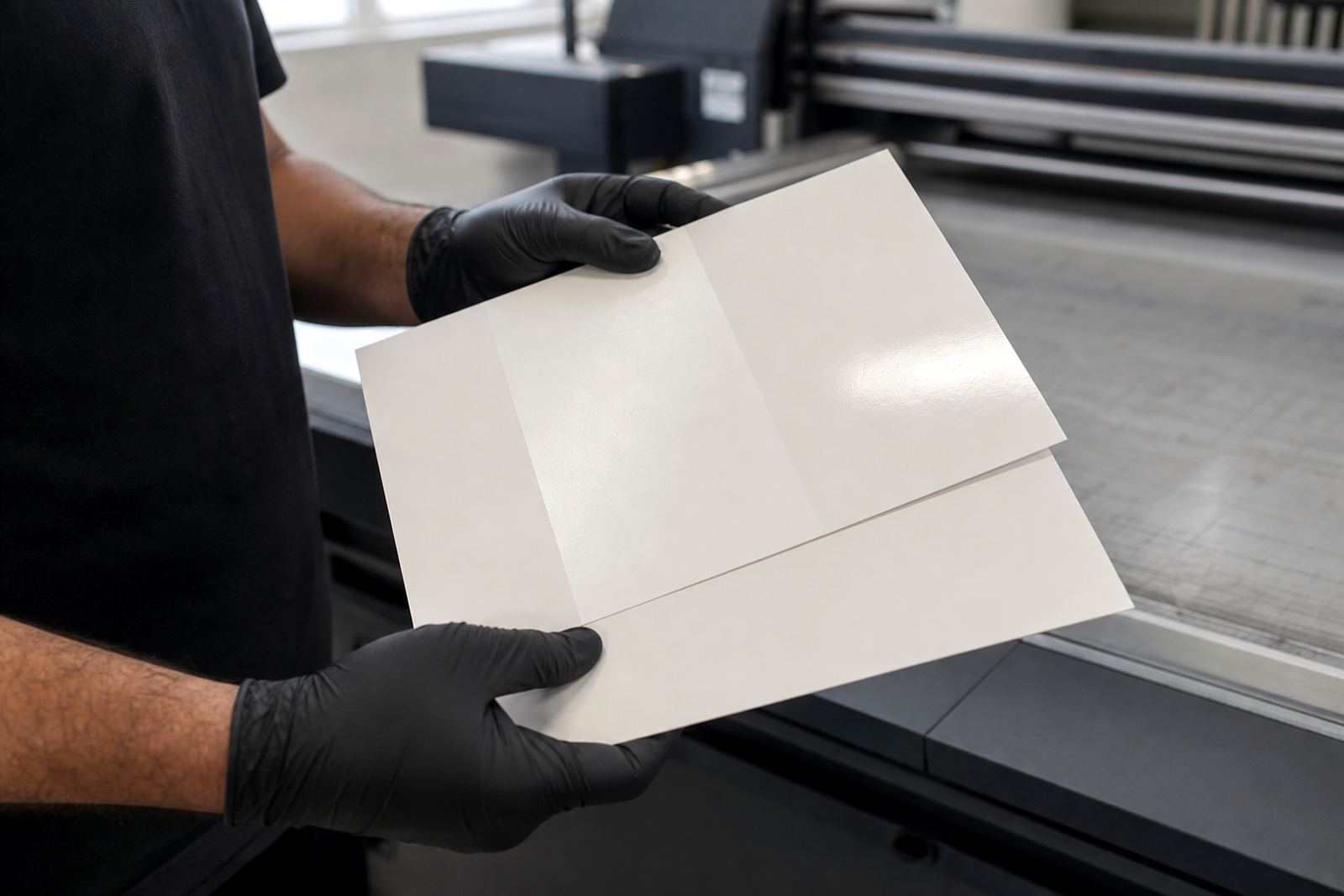
Adhesion is not just about sticking to the surface. It is about how well the cured ink grips after the sign is cut, bent, wiped or exposed to the weather. That is why a proper adhesion test matters before going into production. For outdoor signs, especially in coastal towns like Gqeberha or Durban, salt air and humidity can expose weak bonds quickly. Always follow the safety data sheet and wear gloves when handling inks, wipes and fresh prints.
- Check the printer’s curing setup before the run.
- Use the correct print mode for the material.
- Allow prints to cool before stacking or packing.
- Test for tape pull, scuffing and edge lift.
Build a production checklist before you press print
A good signage job starts before the first pass. Clean the print bed, remove dust from the media and check that the file matches the actual size needed on site. In South Africa, sign jobs often get rushed because a customer wants same-day turnaround before a weekend market, a rugby event or a municipal deadline. Rushing is where simple mistakes creep in, like wrong bleed, poor alignment or missed overprint settings.
Use a short production checklist every time. It keeps the team aligned and helps reduce waste, especially when courier delivery is involved and reprints cost both time and money. If you are producing for multiple branches or sites, keep the same naming system for files, materials and finishing notes. That makes repeat orders and re-orders far easier to manage.
- Check artwork dimensions and bleed.
- Confirm media type and surface condition.
- Review colour, curing and pass count settings.
- Keep a sample from the approved print for reference.
Match durability to the location and finish
Not every sign needs the same life span. A temporary sale board might only need to last a few weeks, while a fascia panel or directional board may need to stay presentable for years. Durability depends on the ink, the substrate, the curing process and whether the sign is laminated or protected afterwards. Sunlight, rain, salt air and regular cleaning all affect the final result.
If the sign will face strong sun, use media and finishing that can cope with fading and surface wear. In windy or dusty areas around Pretoria or Johannesburg, edges and fixings should be planned properly so the panel does not rattle or lift. A sign that looks good in the workshop can still fail on site if the fixing method is ignored.
Set up the right checks for colour and repeat orders
Colour consistency matters when the same brand sign goes to several branches or is reprinted later. Keep a note of the media used, the print mode, curing level and any colour adjustments made during the first run. That makes it easier to match the next job without guesswork. For roll work, it also helps to track the batch of material, since slight surface differences can affect output.
When a customer wants a sample pack or a colour trial, print a small section that includes solid areas, fine text and any important brand colours. Check it under normal viewing light, not just under workshop lamps. If you are producing for multiple delivery points, mark each pack clearly so it reaches the right site without delay.
Use the right support when the job needs a second look
Some signage work is straightforward, but other jobs need a quick technical check before production starts. That can include substrate selection, adhesion testing, curing guidance or operator training for a new workflow. If a printer is showing inconsistent results, it may be the file, the media, the print settings or simply the handling process. It helps to work through each step carefully instead of changing everything at once.
UV Ink supplies UV-curable inks from Epping, Cape Town, with We courier UV ink to Cape Town, Johannesburg, Durban, Pretoria, Gqeberha and other centres. Our team supports ink selection, compatibility checks, sample pack prep, production planning and remote tech help, so customers can keep signage work moving. For enquiries, use the form on our contact page and include the printer type, media and the job size you need to produce.