Start with the safety data sheet before any decanting
Before opening a new container, read the safety data sheet for that specific ink. It tells you the hazards, first aid steps, storage limits, spill response, and disposal notes that apply to the product in your hand.
Do not mix guidance from different inks or assume every UV-curable ink behaves the same. Even when the colour looks similar, the formulation may differ and the handling instructions can change.
- Check the product name and batch details.
- Read the PPE section before you begin.
- Confirm the recommended storage temperature and shelf life.
- Keep the sheet close to the production area, not in a drawer across the room.
Wear gloves and keep skin contact to a minimum
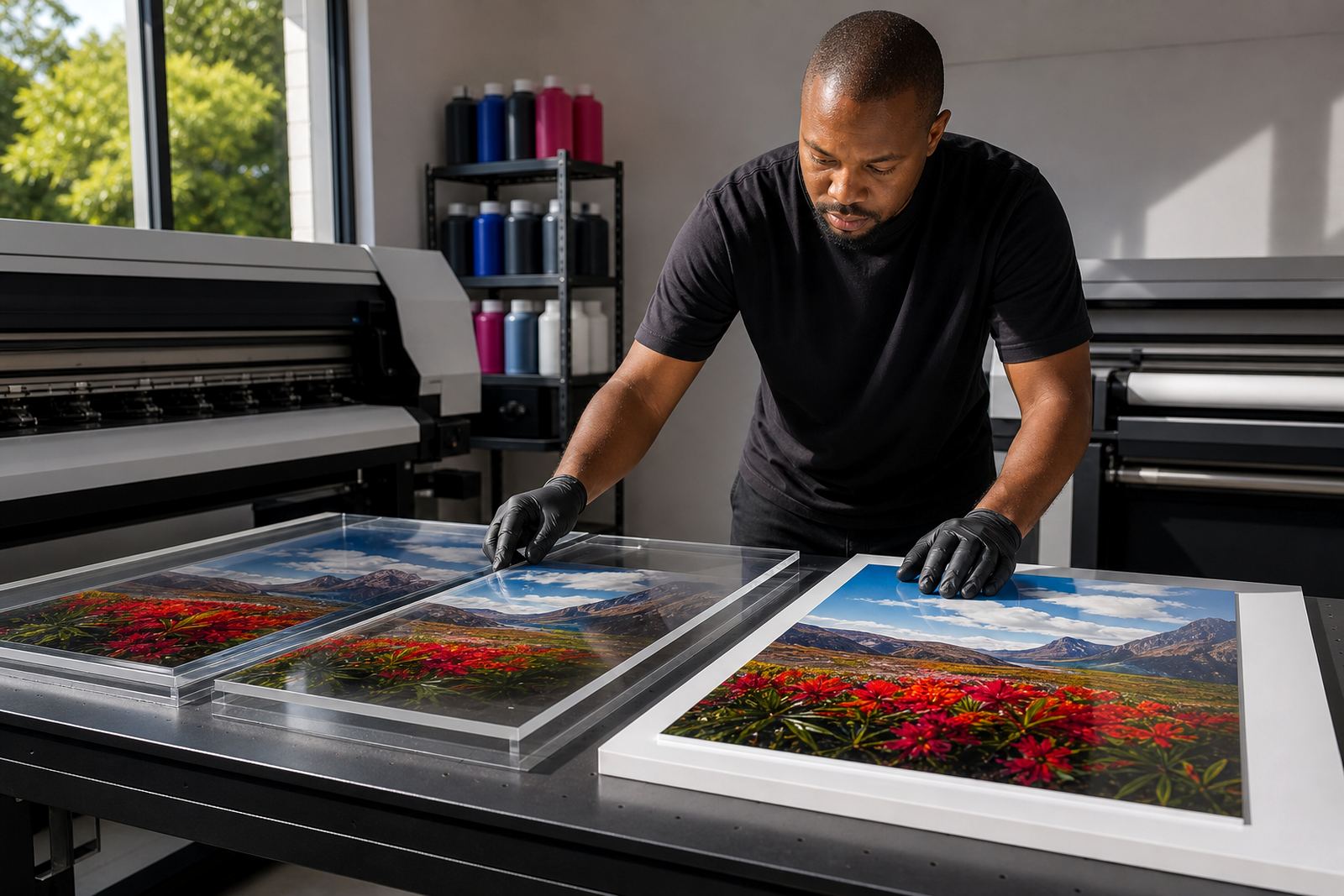
Always wear suitable gloves when opening containers, filling trays, wiping spills, or cleaning print heads and surrounding parts. UV-curable ink can irritate skin, and repeated contact is something to avoid, even if the job feels small.
Choose gloves that fit properly and replace them when torn or stained through. If your gloves are dusty, oily, or damaged, change them before handling ink again. Wash hands after removing gloves and before eating, drinking, or touching your face.
- Use gloves every time you handle uncured ink.
- Keep spare gloves near the printer station.
- Change gloves after cleaning a spill.
- Do not use the same gloves for packing, eating, or general workshop tasks.
Keep curing under control for safer handling
UV-curable inks are designed to harden under the correct UV exposure. If the cure is too weak, too fast, or uneven, the ink may stay tacky and transfer onto hands, rollers, or finished sheets. That creates a handling problem as well as a print quality problem.
Set up your curing process so the ink fully cures for the material, print speed, and layer thickness you are using. On flatbed and roll-to-roll work, test the cure at the start of the shift and again after any change in media, lamp setting, or pass count.
- Confirm the surface is dry and not sticky before stacking.
- Check edges, corners, and heavy coverage areas for complete cure.
- Allow extra curing time when production speeds increase.
- Do not touch fresh prints until they are fully set.
Match the ink to the printer and the material
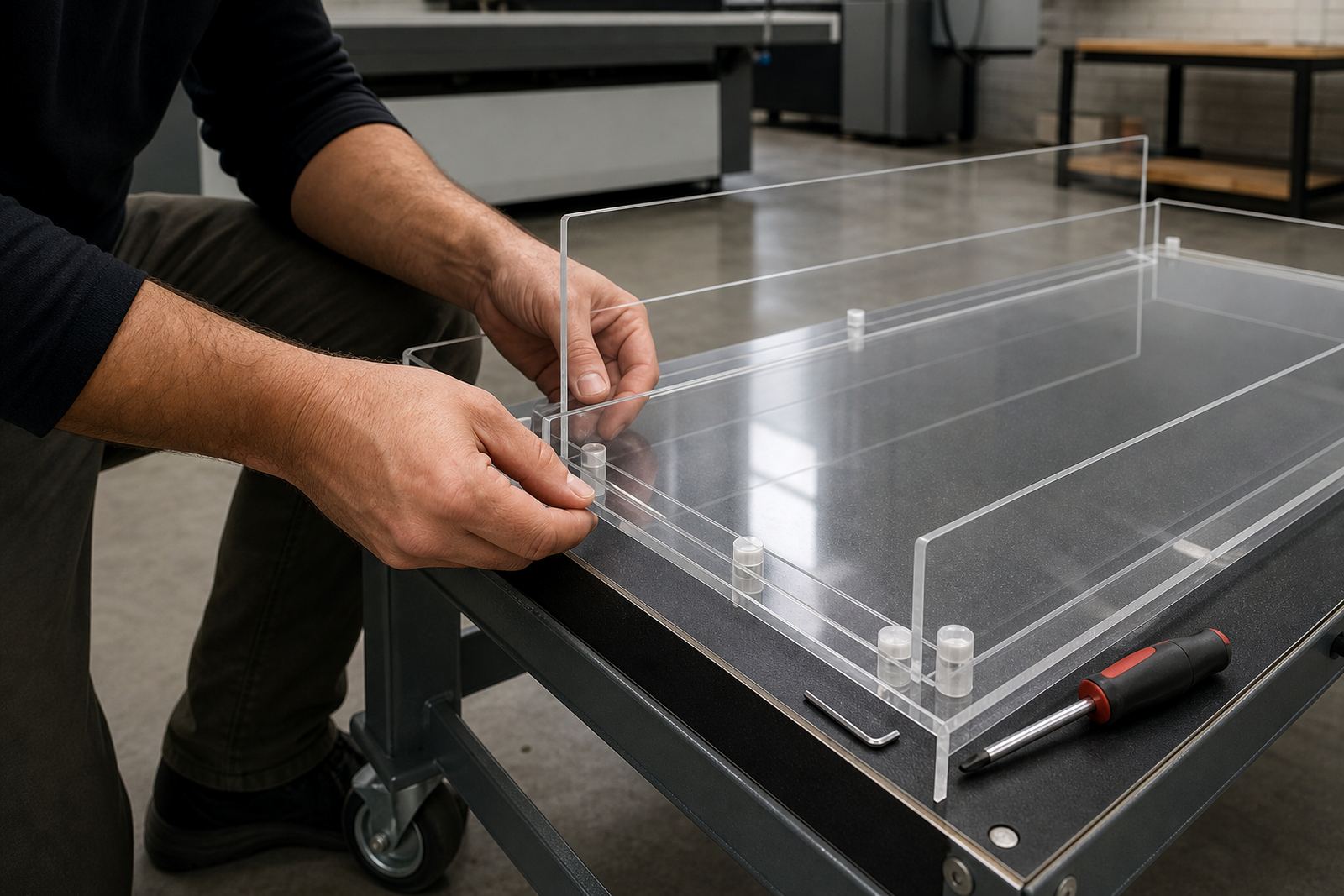
Safe handling begins with correct compatibility. An ink that works well in one printer may not suit another system, especially when the print heads, feed path, or curing setup differ. Using the wrong product can lead to poor adhesion, blockages, misting, or extra cleaning work.
Before production, check the material type, the printer configuration, and the recommended use for the ink. This matters for acrylic, PVC, coated board, rigid signage panels, and roll media used in shops across Cape Town, Johannesburg, Durban, Pretoria, and Gqeberha.
- Confirm the printer type, flatbed or roll-to-roll.
- Test adhesion on the exact substrate you plan to use.
- Allow drying and curing time before packing or finishing.
- Keep a note of settings that work well for repeat jobs.
Store inks properly in Epping and on site
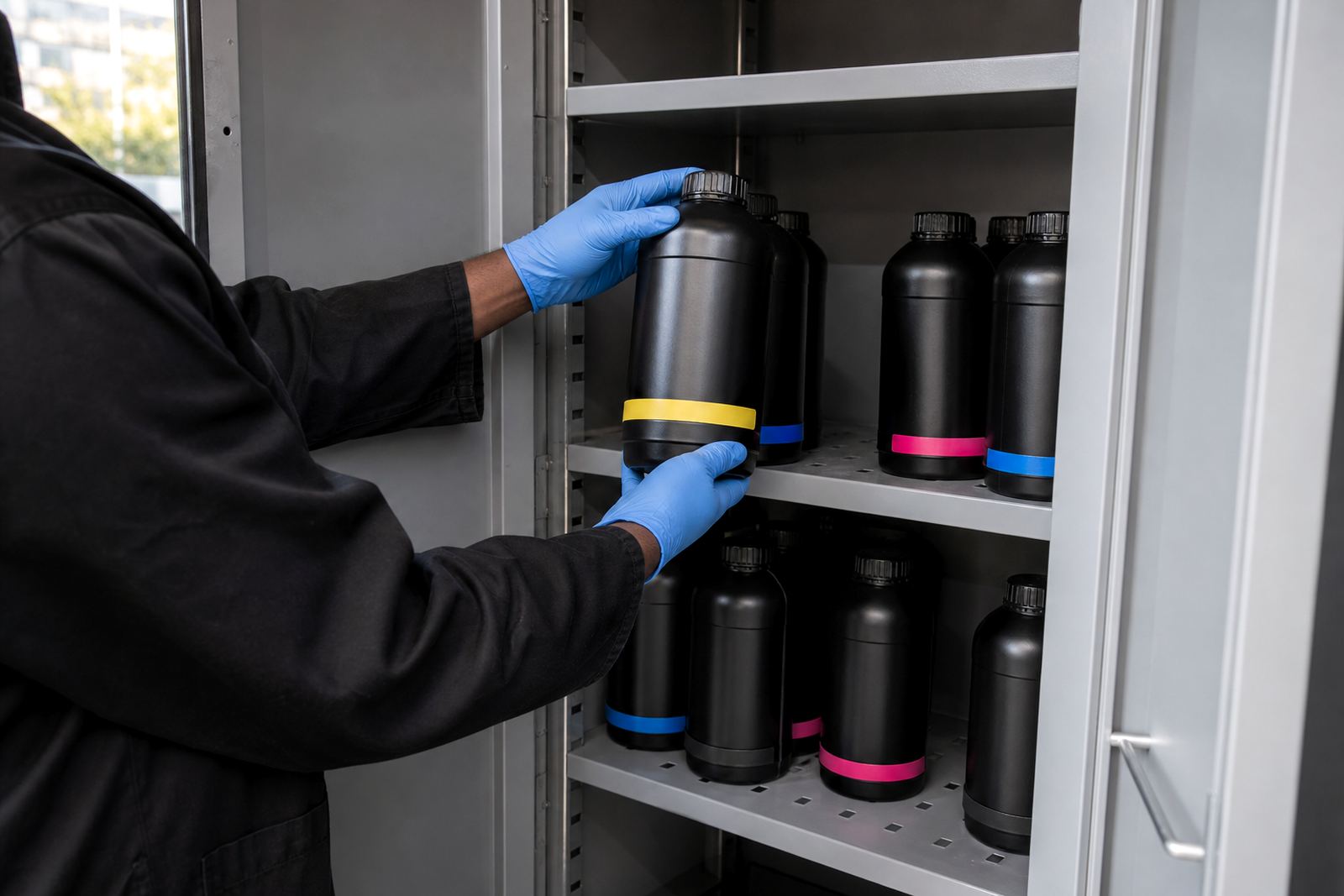
Good storage helps keep ink stable and easier to handle. Store containers upright, sealed tightly, and away from heat, direct sunlight, and dust. In Cape Town, coastal humidity can also affect workshop conditions, so keep the storage area dry and orderly.
Do not leave open containers near the printer for long periods. Use clean tools for decanting and close lids immediately after use. If stock is moved between branches or sent by courier, make sure containers are packed securely to prevent leaks or contamination.
- Store at the temperature stated on the safety data sheet.
- Keep lids and caps clean before resealing.
- Label opened stock clearly with the opening date.
- Separate fresh stock from partially used containers.
Handle spills, cleaning, and waste with care
If ink spills, stop work and clean it up promptly. Use absorbent material, gloves, and the cleaning method listed in the safety data sheet. Do not hose spills into drains or leave soaked wipes lying around in a workshop or loading bay.
Used wipes, empty containers, and contaminated packaging should be managed according to your site rules and local waste requirements. If a larger spill happens, isolate the area and get help before continuing. In busy production spaces, a small delay is better than a bigger mess later.
- Keep spill absorbents near the printer area.
- Dispose of waste in the correct container.
- Ventilate the room after cleaning if the sheet calls for it.
- Report repeated leaks or drips so the cause can be fixed.
A simple daily checklist for operators and supervisors
A short routine helps prevent avoidable contact, wasted media, and printer downtime.
When the team follows the same steps every day, handling becomes safer and faster. It also helps new operators settle in with fewer mistakes.
- Safety data sheet available and reviewed.
- Gloves on and in good condition.
- Printer clean and ready for the selected ink.
- Ink container sealed when not in use.
- Curing settings checked against the job.
- Test print cured and inspected before full production.
- Spill kit and waste bin in place.
If you are unsure about a product, ask for guidance before starting the run. The right check at the start can save time, reduce waste, and keep the workshop safer for everyone.