
Start with the pack style and the board surface
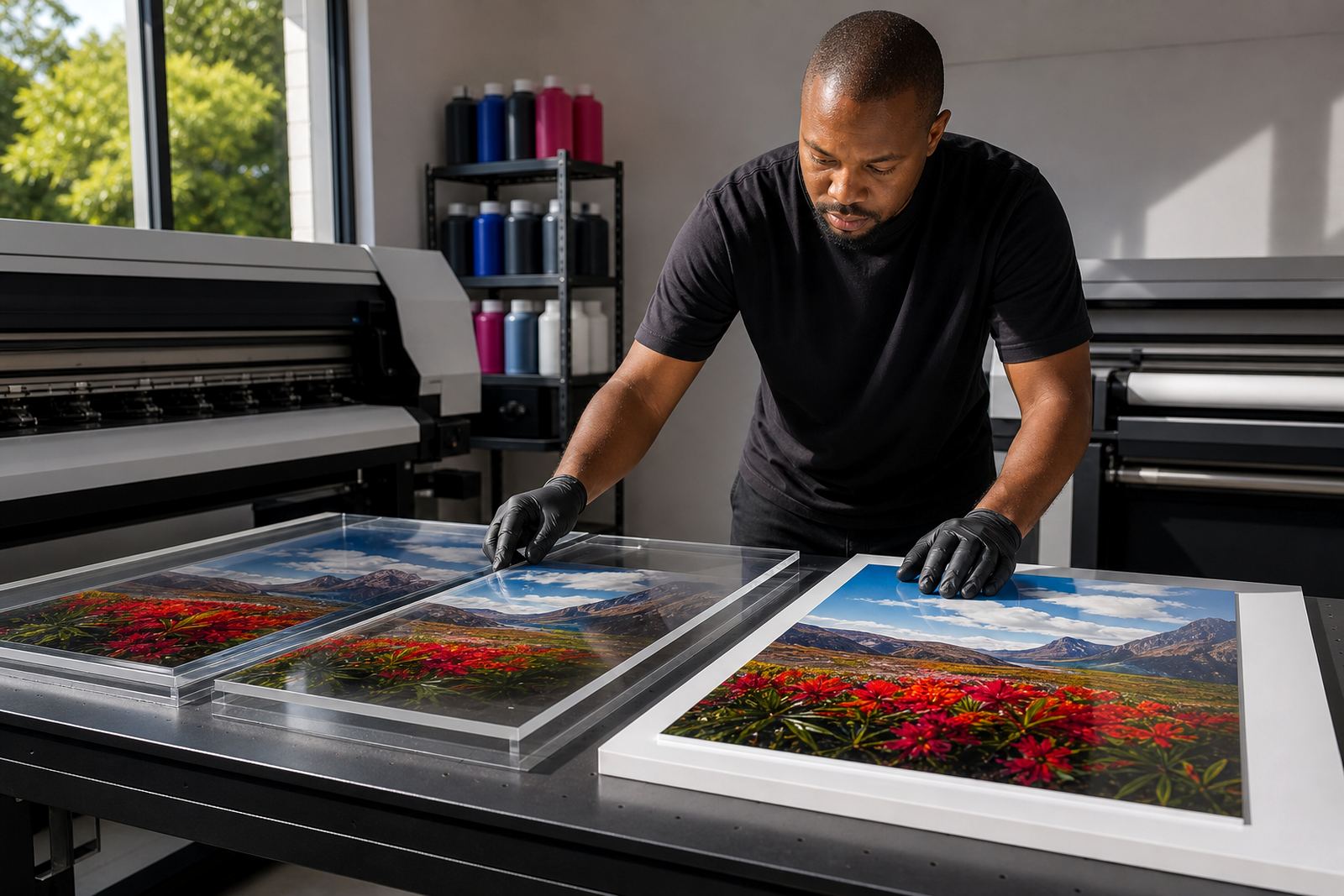
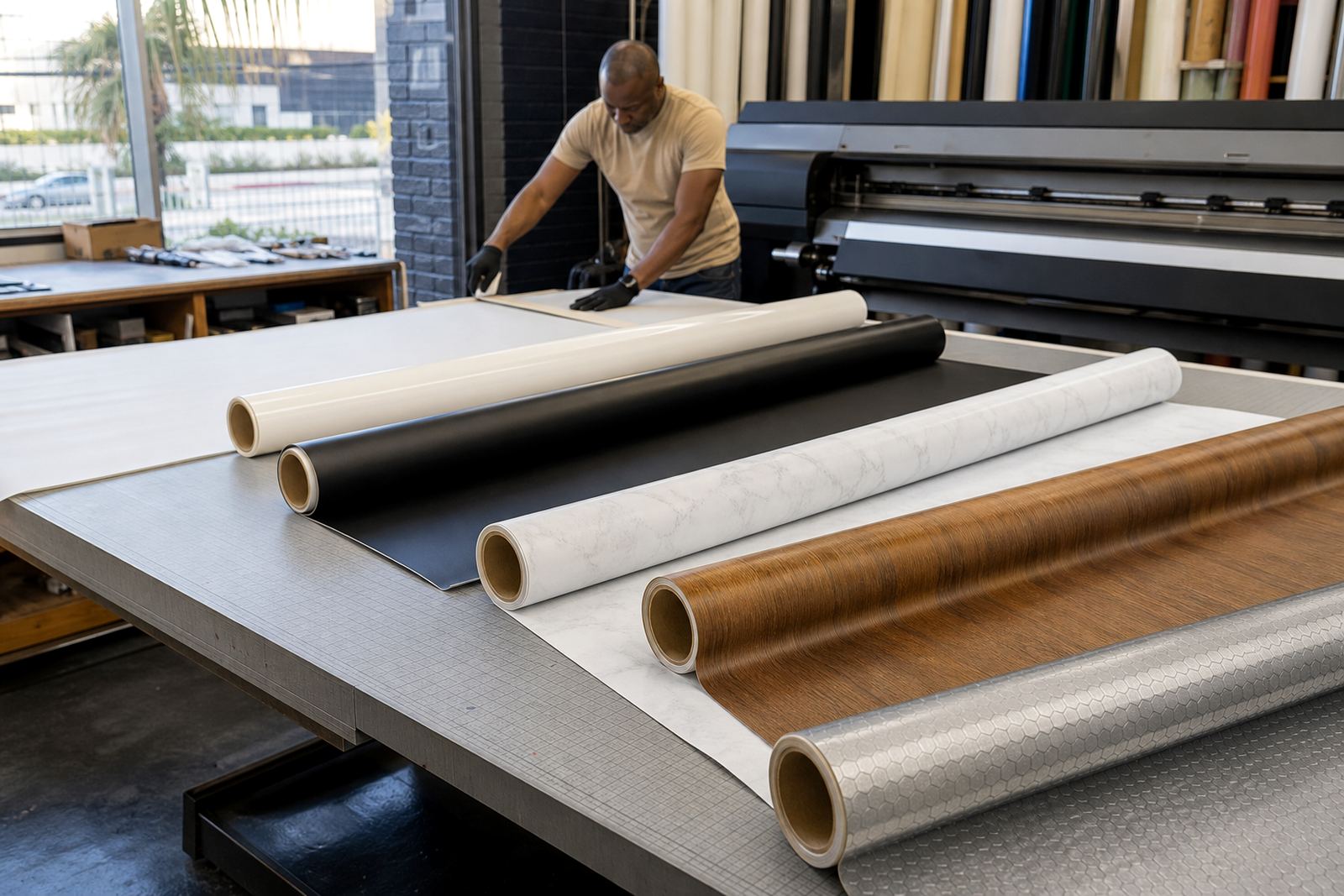
Before you load a sheet or roll, look at the packaging job itself. A display carton, folded sleeve or sample mock-up can use different board coatings, thicknesses and finishing steps, so the ink choice should match the substrate and the way the pack will be converted. Gloss coated board often needs a different cure and adhesion approach from uncoated or lightly coated stock, while recycled board can behave differently again because of fibre content and surface absorbency.
For short-run packaging work, the aim is clean print, strong adhesion and enough flexibility for folding lines without cracking. If the pack will be glued, stapled, laminated or die-cut after printing, test that sequence first. Some jobs look fine straight off the press but show scuffing at the crease or poor hold at the glue flap if the curing is too hard or the ink film is too heavy.
- Confirm the board type, coating and thickness before print.
- Check whether the carton will be folded, glued or die-cut after printing.
- Plan a small test run for each new substrate.
- Keep note of any surface treatment already on the board.
Choose UV-curable inks with the printer in mind
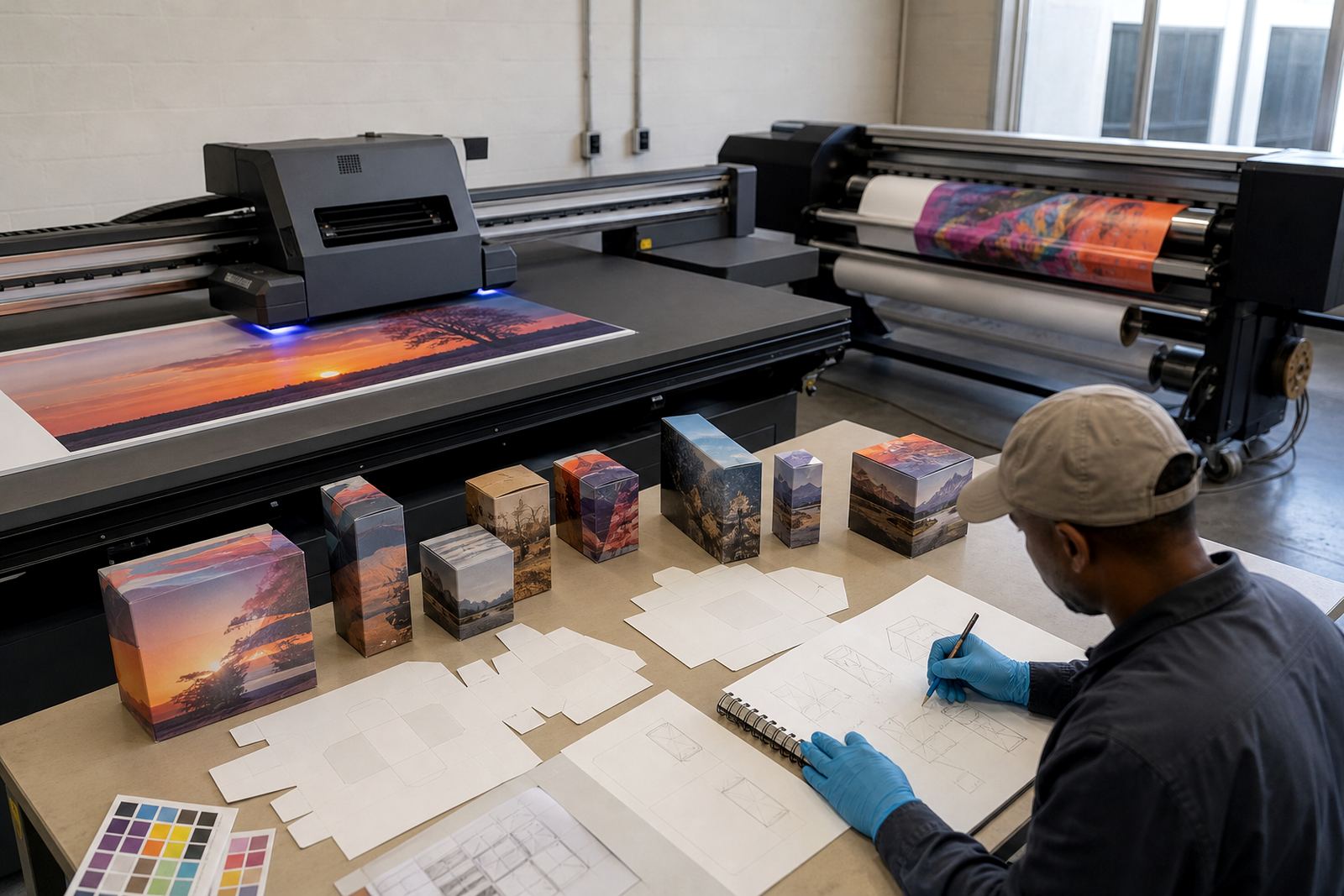
Flatbed and roll-to-roll printers do not behave the same, and packaging work can expose the difference quickly. A flatbed is often used for rigid boards and thicker display pieces, while roll printers are better suited to flexible sleeves, wraps and certain mock-up materials. The ink must match the machine’s ink delivery system, lamp setup and print speed or you may see pinholing, incomplete cure or poor surface hold.
Compatibility is not only about whether the ink fits the printer physically. It also includes how the ink lays down at different pass counts, how it reacts to the curing unit and whether it stays stable during longer runs. If a printer runs in a hot room, or in a coastal area like Cape Town where humidity can shift through the day, keep an eye on drying behaviour and surface tack.
- Match the ink to flatbed or roll-to-roll use, not both by assumption.
- Check print speed, pass count and lamp setup before production.
- Watch for tackiness after cure, especially on coated board.
- Keep the print area stable and clean for repeatable results.
Curing checks that protect folding and finishing
UV-curable inks cure when exposed to the correct light energy, which means the printed surface should harden properly without becoming brittle. For packaging, that balance matters. If the cure is too light, the print may smear, mark or transfer during stacking. If it is too strong, especially on heavy ink coverage, the surface can become less forgiving on folds and creases.
Use a simple check on every new job: print, cure, rub test and fold test. Give the sheet a little time to cool, then inspect the colour, surface and edges. If the ink is sitting on top and not anchoring well, adjust the cure or ink laydown before full production. On display cartons with solid blocks of colour, test the worst area first. A small difference in lamp output can change the result more than people expect.
Keep the line moving but do not skip the check. One missed setting can mean a whole stack of cartons being rejected at the finishing table.
- Run a rub test after cure and before cutting.
- Do a fold test along the crease line.
- Check for ink transfer onto the next sheet in the stack.
- Confirm that the print is dry to touch and fully cured.
Adhesion testing for mock-ups, sleeves and cartons
Adhesion testing helps you see whether the ink will stay put once the packaging is handled, packed and opened. For short-run mock-ups, this is especially useful because the client may want to compare several substrate options before final artwork is signed off. A quick test on the actual board or sleeve material saves time and avoids costly reprints later.
Use the same handling the finished pack will face. For example, a sleeve for cosmetics may be slid on and off several times, while a display carton may be folded flat, opened and refolded. Coastal humidity, dust from storage and repeated hand contact can all affect the printed surface. If adhesion is weak, the answer may be in the surface preparation, not only the ink itself. In some cases a simple change in stock or a better cure gives a much cleaner result.
- Test on the final substrate, not a similar one.
- Simulate folding, sliding and stacking.
- Check scuffing after handling and after overnight rest.
- Keep samples labelled so results can be compared later.
Build a production plan for short runs and repeat orders
Packaging mock-ups often move quickly from concept to approval, then into a short production run. That means the print team needs a clear plan for colour, curing, stock, packing and delivery. Keep the same file version, same substrate lot if possible and the same printer settings for repeat orders. Small changes can show up in the final pack, especially on pale cartons or on large solid colour areas.
For teams working across Cape Town, Johannesburg, Durban, Pretoria and Gqeberha, it helps to keep sample notes and reorder records in one place. That way a pack used for a trade show in one town can be reprinted for a second site without starting again from scratch. If courier delivery is needed, allow time for samples to reach the production floor before final approval. A short delay upfront is better than redoing a whole batch after dispatch.
When the work is for shelf-ready packaging, think about the full line from print to packing. If the cartons are being assembled by hand, train the team on safe handling and drying checks so the finished stack stays clean.
Safety, handling and support on the production floor
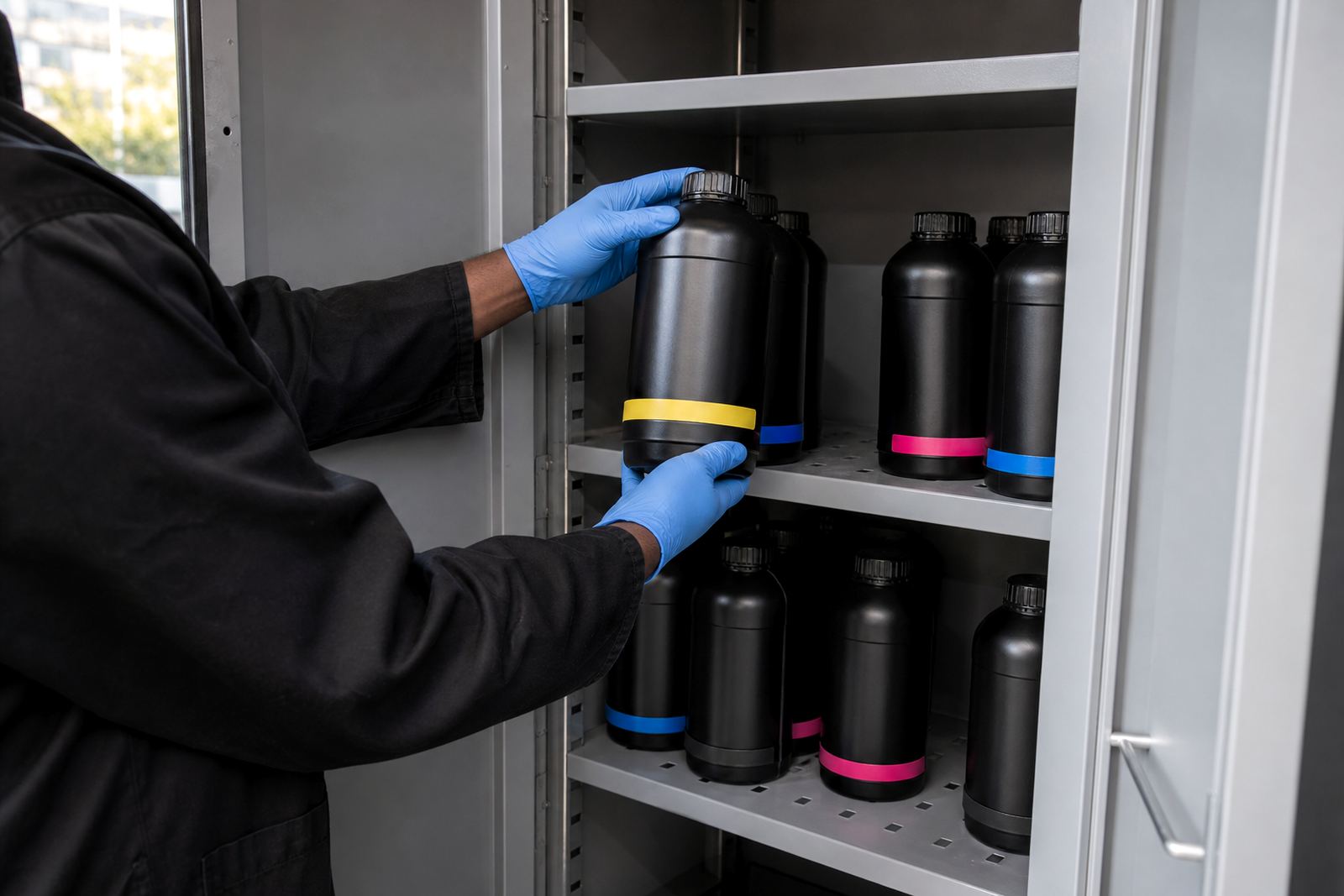
UV-curable inks need careful handling. Always follow the safety data sheet for the specific product in use, and wear gloves when handling ink, wipes or printed test pieces that are not fully cured. Keep the work area ventilated, avoid skin contact and store containers closed when they are not in use. If a spill happens, clean it properly and do not let it sit on the bench or floor.
Good handling also protects the print result. Dust, oil from hands and dirty cloths can all affect adhesion and finish. In a packaging environment, that matters because the print may be judged closely at point of sale. A clean setup and steady procedure usually give better results than trying to fix problems after the run has started.
- Read the safety data sheet before first use.
- Wear gloves during mixing, sampling and cleanup.
- Keep caps and lids closed between jobs.
- Store carton and label samples away from heat, dust and direct sun.
UV Ink supports packaging work from Epping, Cape Town with courier delivery across South Africa, including Bellville, Paarl, Johannesburg, Durban, Pretoria and Gqeberha. If you need help with ink selection, compatibility checks, adhesion testing or operator training, write to UV Ink through the contact page form and the team will follow up with practical support.