
Start with the print method and the job life
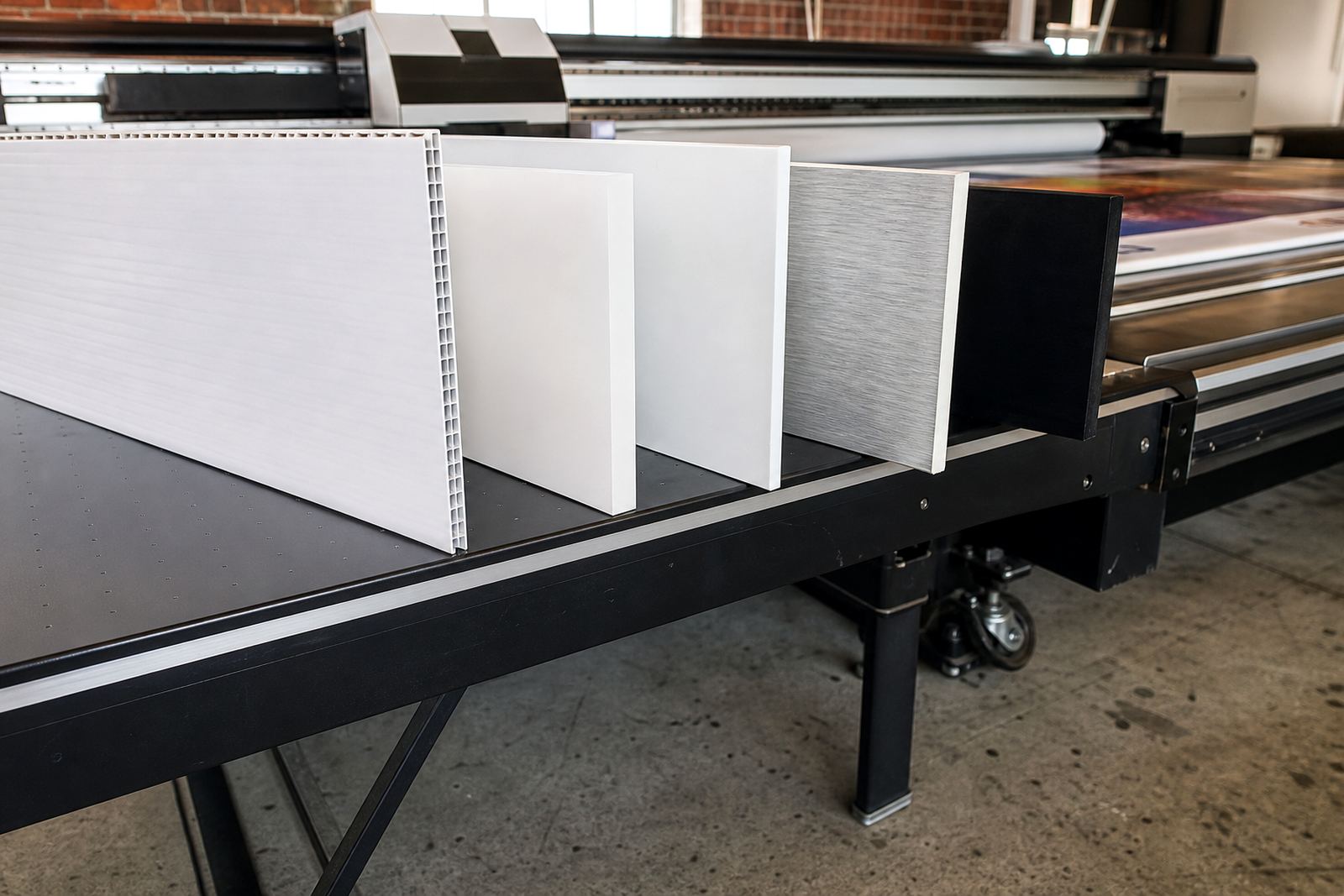
Before you buy vinyl, confirm whether the job is for a flatbed printer or a roll-to-roll setup. Flatbed work often suits rigid or self-adhesive vinyl mounted to boards, while roll media is better for long runs, wall graphics and vehicle-related applications. The wrong match can cause poor layflat, edge lift or curing issues that show up later on the floor or on site.
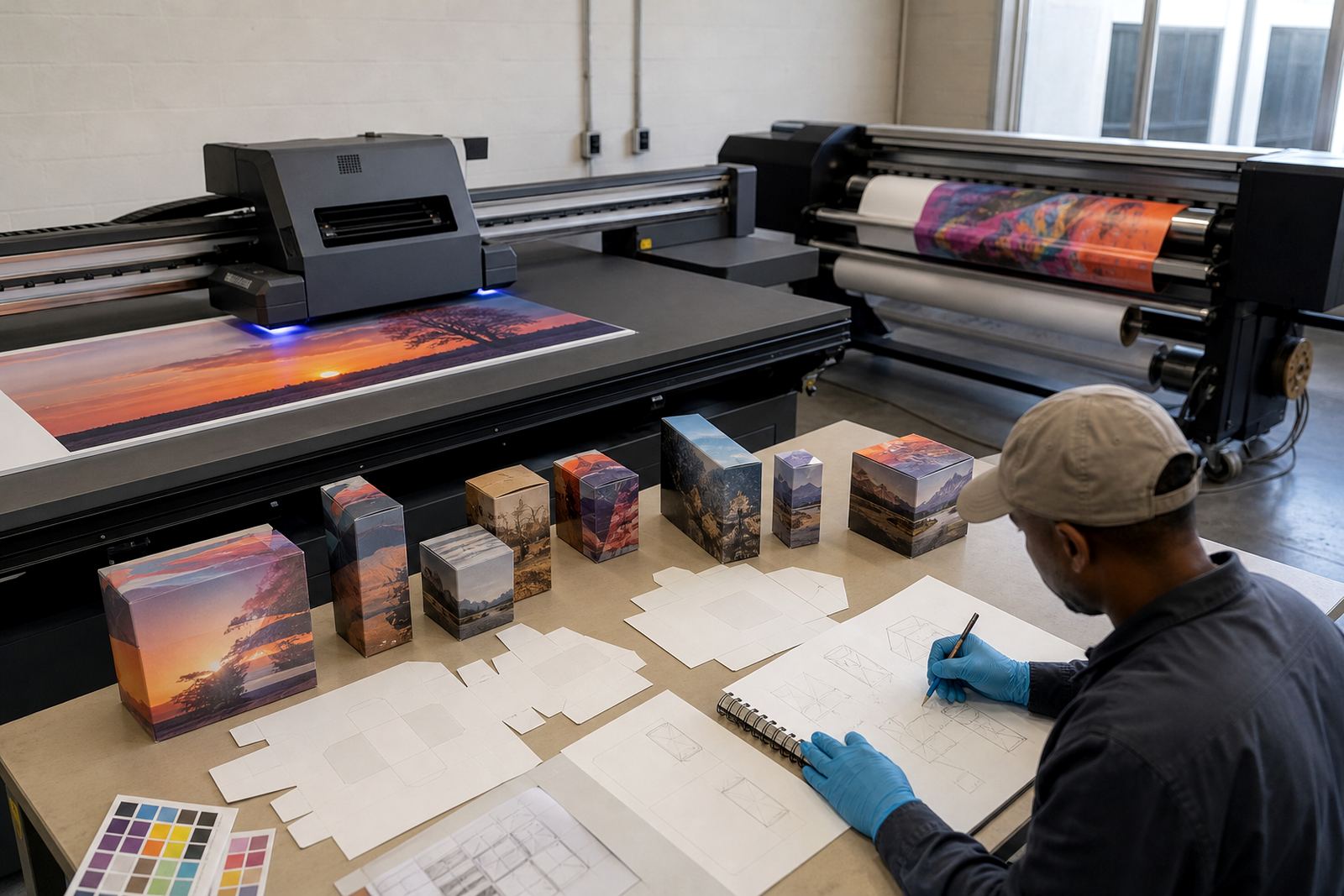
Think about where the print will live. Indoor work in a dry office in Pretoria is different from coastal use in Gqeberha or Durban where humidity can affect handling and storage. For outdoor jobs, choose vinyl that can cope with sun, cleaning and temperature changes. If the print is going onto a municipal sign, shop front or packaging sample, ask how long it needs to last and whether the surface will be touched, folded or cleaned often.
- Identify the printer type and ink set first.
- Check if the vinyl is coated for UV ink or needs primer.
- Match the life span to the real use, not only the brief.
Check surface energy, coating and thickness
UV-curable inks sit on the surface and cure quickly under UV light, so the top coat of the vinyl matters a lot. Some vinyls have a coating that improves wetting and adhesion, while others need extra testing before full production. If the surface is too slick, the ink can bead, scratch off or give weak adhesion after curing.
Thickness also affects handling. Thin vinyl can stretch during feeding or application, while heavier stock may hold better on flat applications and give a cleaner finish. For flatbed work, make sure the sheet lies true and does not lift at the corners.
- Confirm coating compatibility with UV-curable inks.
- Ask for the substrate thickness in microns or mm.
- Test a corner for peel, scratch and edge lift after curing.
Do a small adhesion test before production
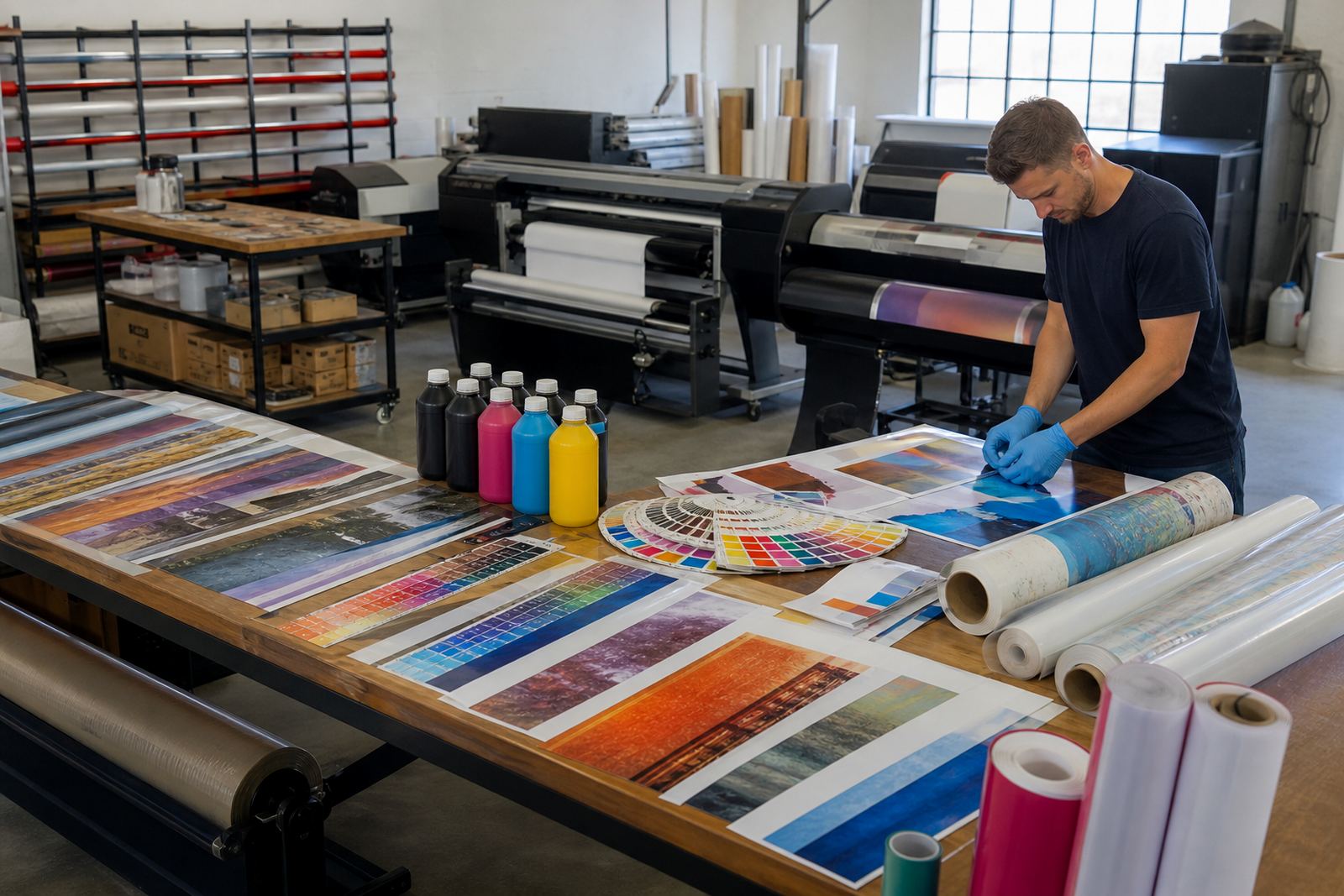
A sample test saves time and material. Print a small panel, cure it fully and leave it for 24 hours before doing a fingernail rub, tape pull or light flex test. If the ink still marks easily, the vinyl and ink combination needs attention. This is especially important for jobs going to busy retail spaces, packaging lines or transport use where handling is rougher than in the print room.
Keep records of the test conditions. Note the vinyl name, print speed, lamp setting, curing pass and room temperature. In Cape Town, a cool morning can behave differently to a warm afternoon, and that shift matters when you are producing repeat orders. A simple log helps your team repeat what worked and avoid reprints.
- Print a sample before committing to the full run.
- Allow the ink to cure fully before testing.
- Record settings so the same result can be repeated later.
Plan around curing, drying and operator handling
UV inks cure fast, but fast is not the same as complete. The print needs enough energy to cure through the ink film without overexposing the vinyl surface. Too little curing can leave a tacky finish, while too much heat or UV exposure may affect flexibility or cause a brittle feel. Operators should watch for small shifts in gloss, odour and surface feel as part of normal checks.
Handle printed vinyl with clean gloves and follow the safety data sheet for the ink system. Gloves reduce skin contact and keep oils from hands off the print and adhesive side of the media. Keep open rolls flat, and keep sheets away from dust, moisture and direct sun. In humid coastal areas, sealed storage helps prevent extra cleaning and rework caused by dusty or damp media.
- Wear gloves when handling ink and freshly printed media.
- Follow the safety data sheet for cleaning and storage advice.
- Keep rolls and sheets in a clean, dry area before printing.
Choose the right finish for the end use
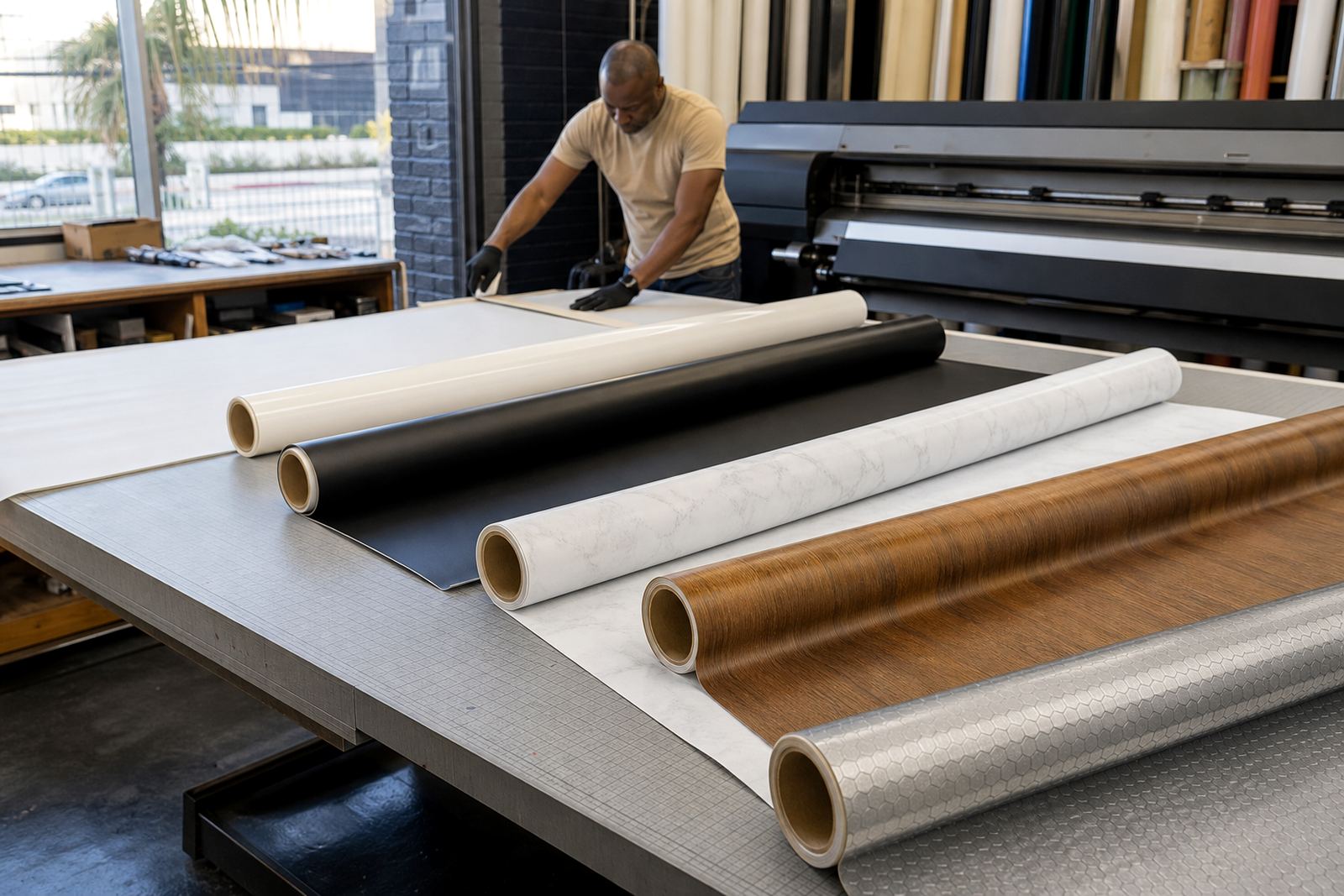
Vinyl finish changes both appearance and performance. Gloss can make colours pop and is useful for retail graphics, but it can show glare under bright lighting. Matte is easier to read in strong sun and often suits industrial labels, wall graphics and indoor directional signage. Clear or translucent vinyl needs extra care because the background can alter the final colour and opacity.
For wrap-style or conformable jobs, choose a vinyl that can move with curves without cracking. For flat boards or short-term promotions, a more standard film may be enough. If the work will be cleaned often, tested for moisture, or applied near loading bays and workshop areas, make sure the adhesive and top surface can take that use. Bellville, Paarl and the wider Western Cape often see mixed indoor-outdoor jobs where the same media has to behave in both settings.
- Gloss for strong colour impact.
- Matte for lower glare and easier reading.
- Conformable film for curves and shape changes.
Use a practical ink checklist before you place an order
A practical checklist keeps the order on track and reduces waste. If you are sourcing for a flatbed or roll printer in Epping, or arranging courier delivery to Johannesburg, Durban, Pretoria or Gqeberha, have the spec ready before production starts. That includes media type, size, finish, intended use and whether you need sample pack prep or colour trial support.
Good buyers also plan for repeat work. If a vinyl performs well, keep the same batch details and note the curing guidance, adhesion testing result and any operator feedback. That makes repeat order management much easier, especially when jobs are split across teams or locations. If you are unsure, ask for ink selection support, compatibility checks or remote tech help before running full production.
- Printer type: flatbed or roll-to-roll.
- Use case: indoor, outdoor, short term or long term.
- Surface: smooth, textured, rigid or flexible.
- Test result: adhesion, scratch resistance and curing.
- Logistics: local pickup or courier stock support.