
What our compatibility check covers before you run production
Compatibility guidance starts with the printer type, ink path and the material you want to print on. We look at flatbed and roll-to-roll setups, then check whether the substrate, print mode and curing conditions are likely to work together without poor anchoring, pinning issues or overcuring. The aim is to catch problems early, before you commit to a full run.
We work with signage, graphics and packaging jobs where surface energy, coating type and lamp output can change the result. Glossy board, uncoated vinyl, rigid plastics and coated papers all behave differently. In coastal areas such as Cape Town and Gqeberha, humidity can also change drying behaviour and edge lift, so the check includes those practical details too.
- Printer model and head configuration review
- Substrate type, thickness and surface finish check
- Ink layer, cure and adhesion risk assessment
- Job setup advice for test prints and production settings
How the process works from sample to sign-off
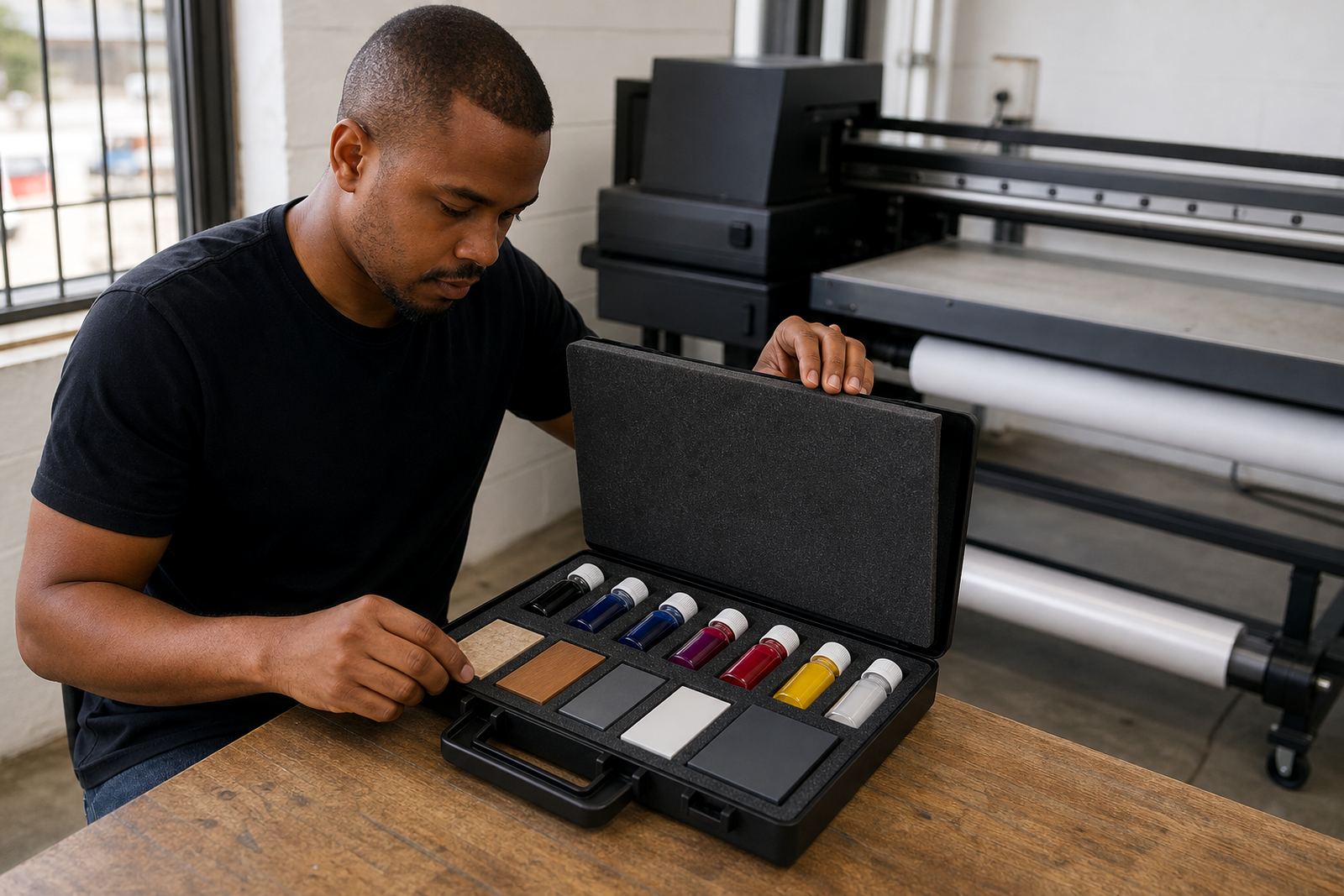
Most checks begin with a short enquiry and a description of the printer, media and end use. If needed, we ask for photos of the media stack, current settings and the curing system so we can narrow down the likely causes of any issue. For new materials, we often recommend a sample pack or a small trial before larger production starts.
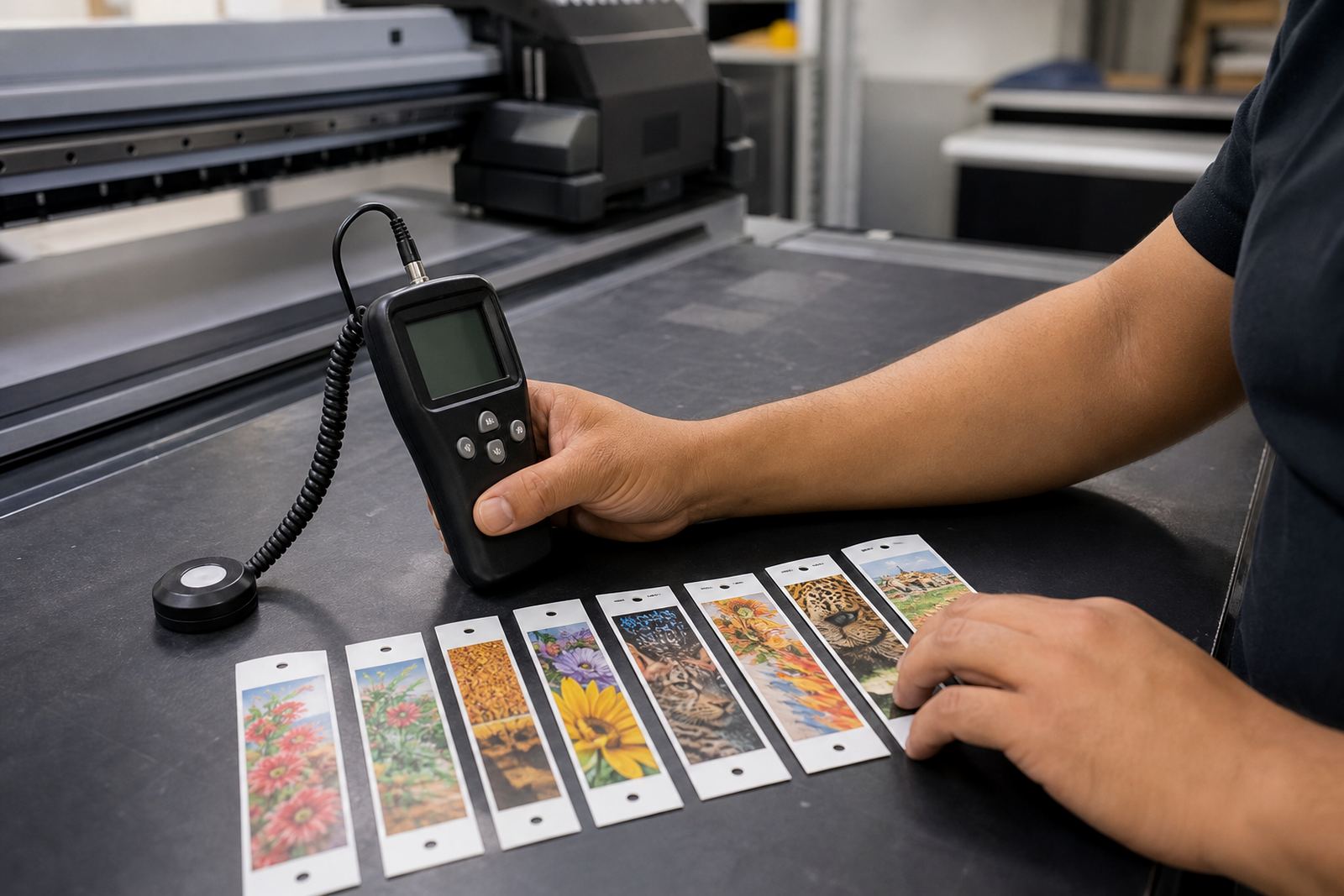
Once we have the details, we guide the test sequence, usually starting with small swatches at different pass counts, ink limits and curing levels. That lets you compare adhesion, surface feel and colour density without using full rolls or full sheets. If the print is for outdoor signage, packaging or handled items, we pay close attention to rub resistance and post-cure stability.
- Step 1: Share printer, ink and substrate details through the enquiry form
- Step 2: Review setup, usage and expected finish
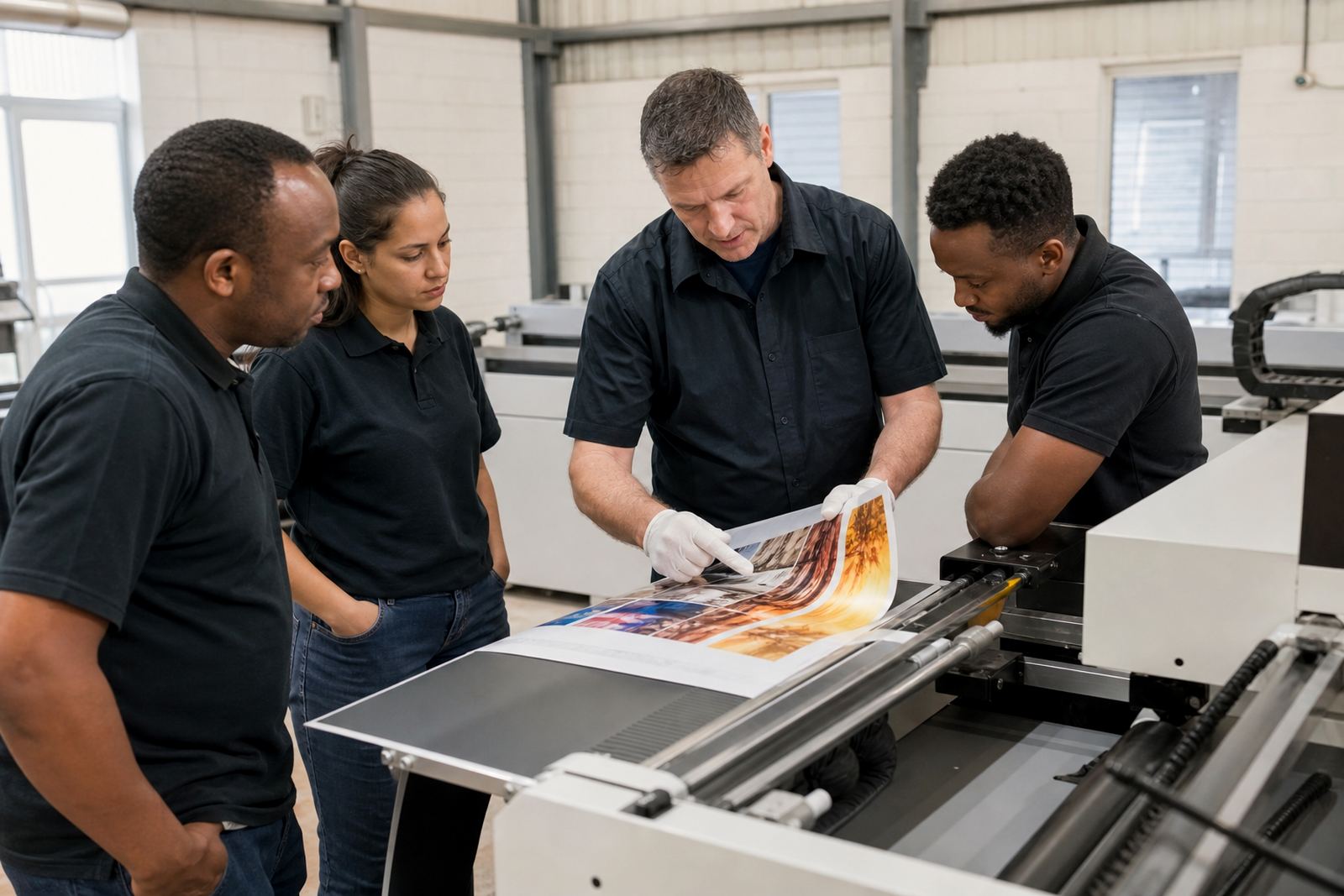
- Step 3: Carry out a small test print with agreed parameters
- Step 4: Check cure, adhesion and handling performance
- Step 5: Confirm the next production settings or adjustment points
Curing, adhesion and surface behaviour in real production
UV-curable ink must cure properly to bond well and resist scuffing, scratching and transfer. Too little curing can leave a tacky surface or weak adhesion, while too much can affect flexibility and sometimes reduce performance on sensitive materials. We help you match the curing conditions to the job, whether your printer uses LED curing or another UV system.
Adhesion testing is especially useful on non-porous plastics, coated boards and promotional items. Some substrates need a cleaner surface, a different ink laydown or a slower production speed to get reliable results. If the job will be folded, stacked or couriered, we also consider how the print will behave after packing, not only at the press.
- Adhesion review for rigid and flexible media
- Curing window guidance for speed and lamp intensity
- Checks for surface cracking, lifting or blocking
- Advice for handling printed stock after cure
Printer compatibility notes for flatbed and roll-to-roll machines
Different printers handle UV ink in different ways, so compatibility is never a one-size answer. Head type, ink channel layout, maintenance routines and media feed all matter. On flatbed machines, the height setting, vacuum hold and board flatness can influence the result. On roll systems, tension, take-up and web path stability are just as important.
We help identify common setup issues such as misting, banding, poor laydown or inconsistent cure at the edges. If your team is running jobs across Johannesburg, Pretoria, Durban or Cape Town, we can talk through the same job file and settings so each site works from the same starting point. That saves time when reorders move between branches or shifts.
- Flatbed height and vacuum considerations
- Roll-to-roll tension and feed path checks
- Head-safe ink handling and cleaning guidance
- Production notes for repeat jobs across sites
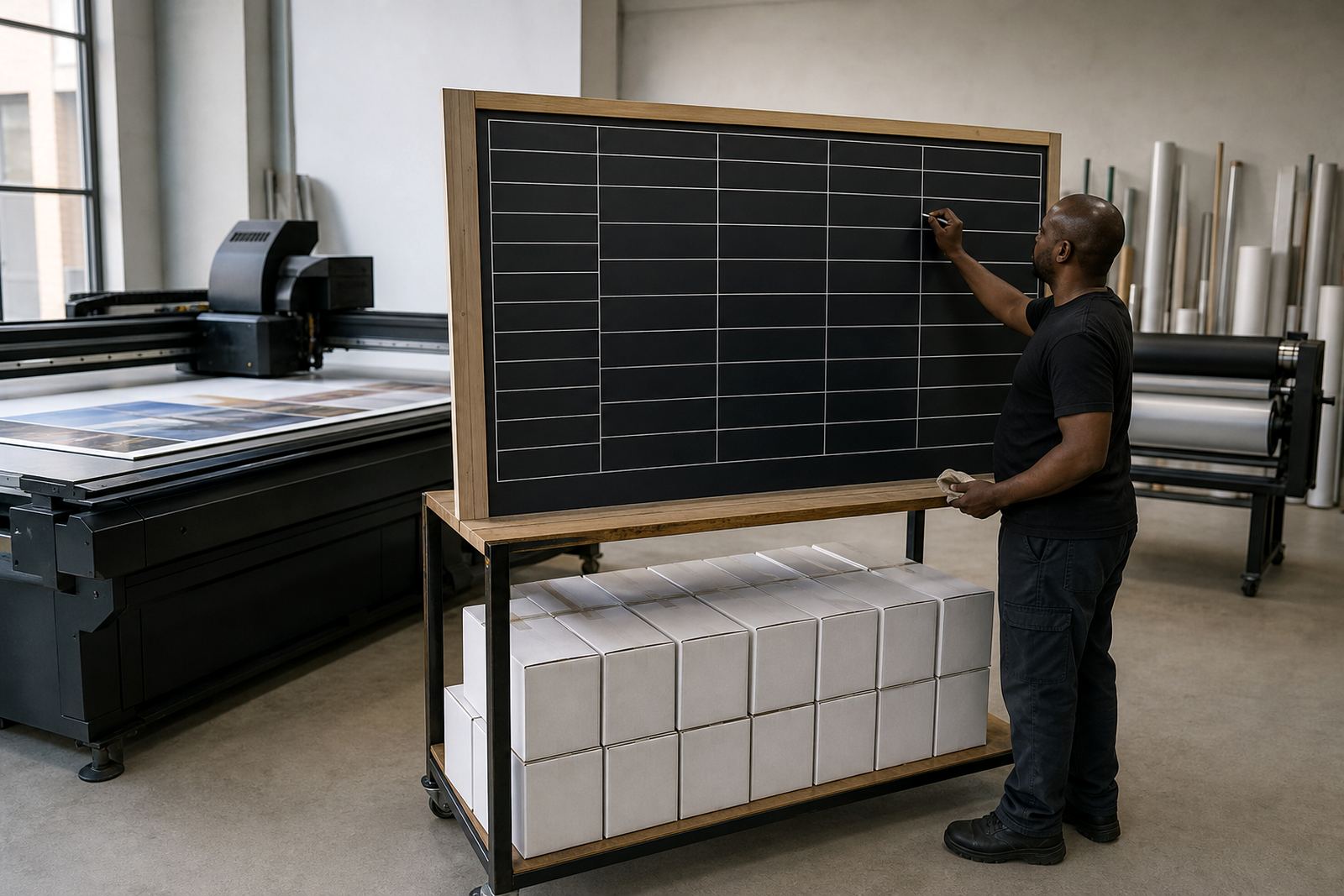
Turnaround times, pricing approach and repeat checks
Turnaround depends on how complex the job is and whether a sample print is needed. Simple guidance can often be handled quickly once the printer and media details are clear. If we need to review a test print, a substrate change or an application issue, allow a bit more time so the advice is based on the actual result.
Pricing is quoted according to the level of support required, not on guesswork. A basic review is different from a full test and training session, and a repeat order with the same material is usually simpler than a new substrate. We keep the approach practical, with the cost shaped by the amount of time, material and technical input needed.
- Basic compatibility review for known printer and known media
- Extended check for new substrate or changed curing setup
- Repeat verification for reorders and production changes
- Courier support where sample packs need to move between branches
Loading and handling the ink
Compatibility is not something you check once and forget. Ink behaviour can change after maintenance, head replacement, new media batches or seasonal shifts in temperature and humidity. We usually suggest a routine review whenever you change substrate supplier, alter curing settings or notice a drop in finish quality. For busy print rooms, a monthly or quarterly check can prevent avoidable stoppages.
Please follow the safety data sheet for the specific UV-curable ink in use, and wear gloves when handling ink, waste or contaminated wipes. Keep the work area clean, close containers properly and avoid skin contact.
- Review after media changes or new job types
- Inspect print quality after maintenance or head replacement
- Recheck cure performance after long idle periods
- Use gloves and follow the safety data sheet every time
Ink data
| Service scope | Printer setup review, substrate behaviour, curing conditions and adhesion guidance |
|---|---|
| Printer types | Flatbed and roll-to-roll UV printers |
| Materials covered | Rigid boards, coated media, uncoated stock, vinyl and selected plastics |
| Typical output checks | Cure level, rub resistance, edge lift, banding and surface finish |
| Support format | Remote guidance through the enquiry form, with sample-based follow up where needed |
| Review interval | After media changes, maintenance, seasonal shifts or any production issue |