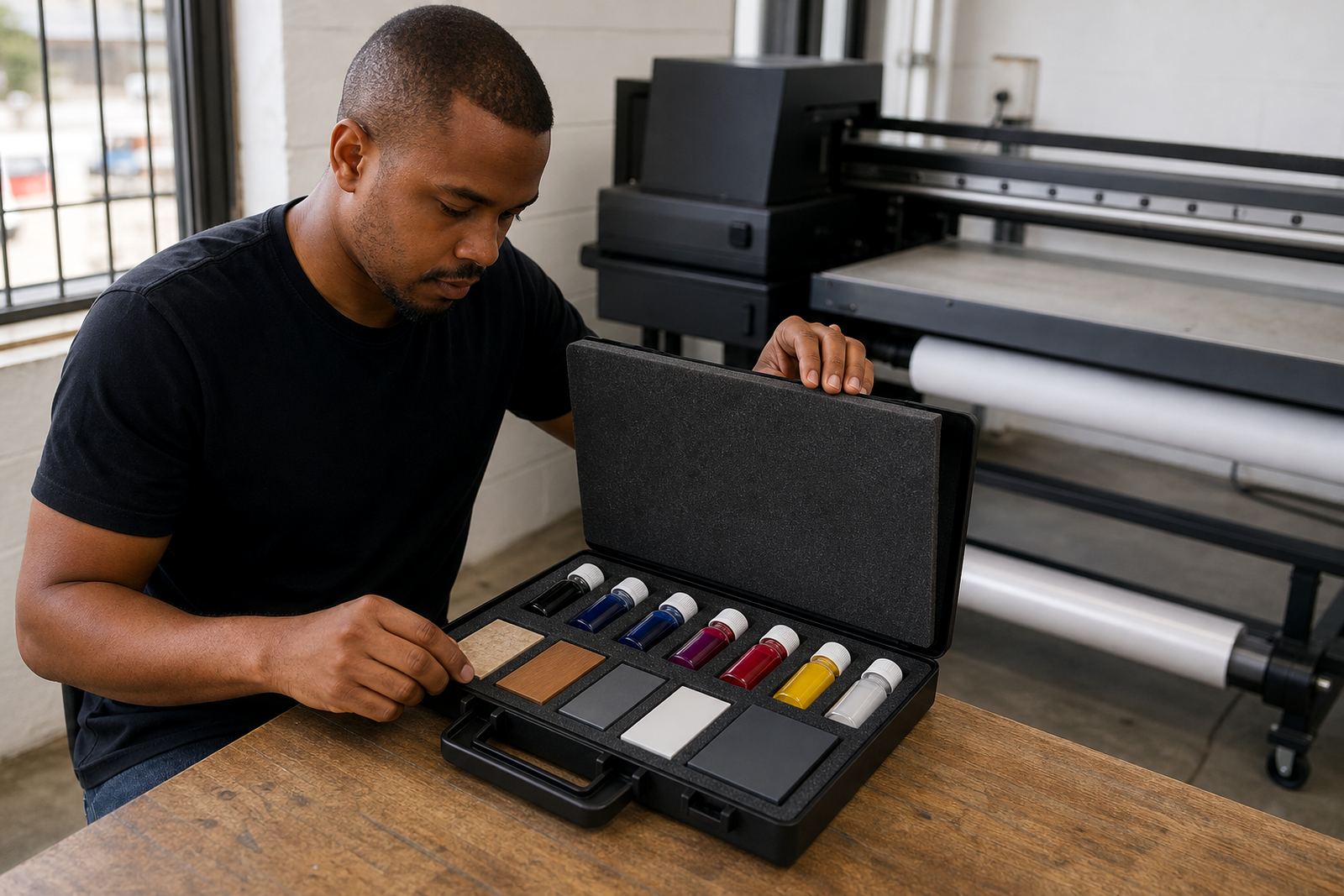

A practical training process that fits production hours
We keep the process simple. First, we gather details about the printer model, the current ink type, the media being used and the problems you want to solve. Then we plan the session around your shift pattern, whether your team works early mornings, split shifts or late production runs to meet dispatch times.
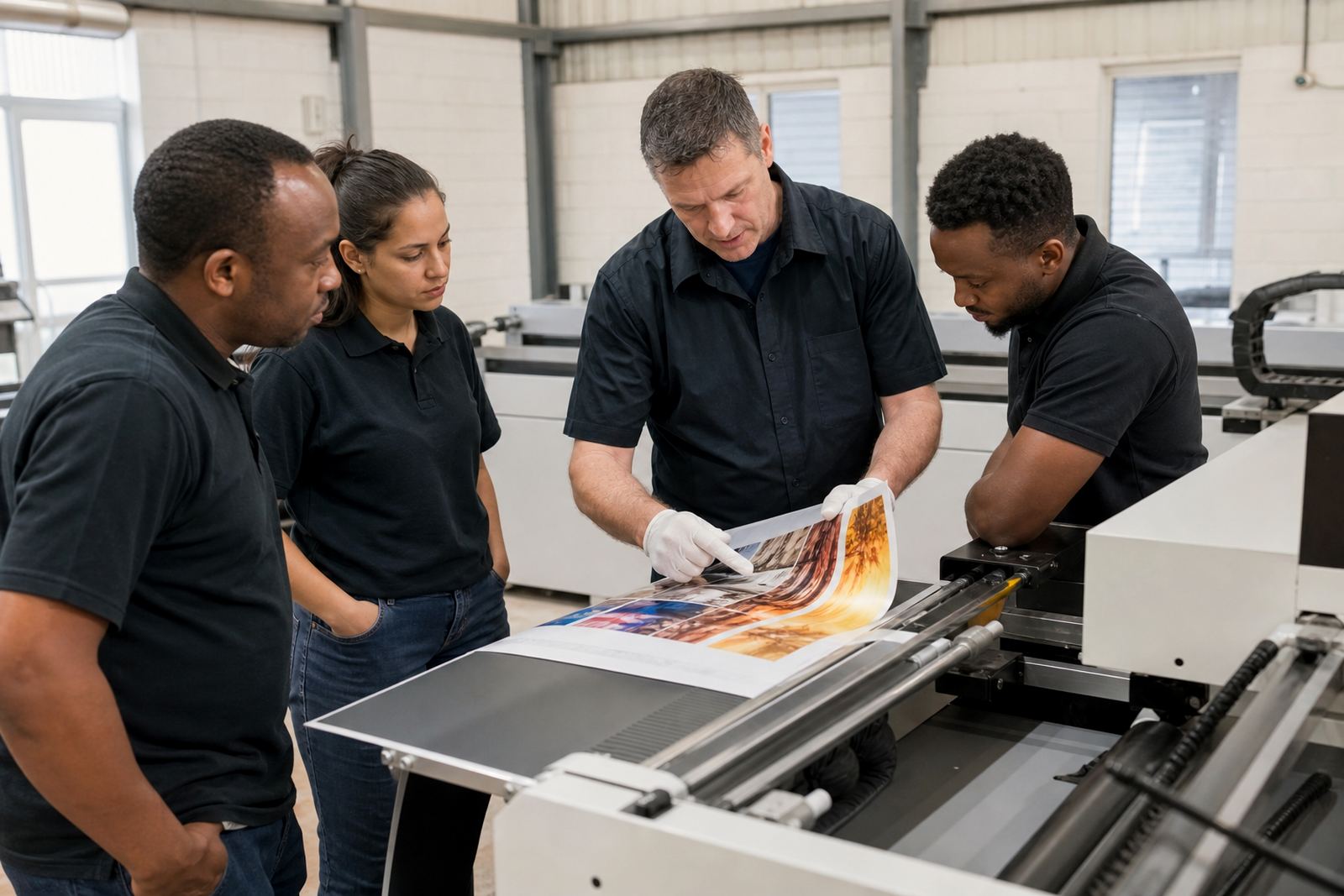
Training can be done at your premises in the Western Cape or supported remotely for teams elsewhere in South Africa. We can work through first-run setup, common warning signs, and how to check whether a print is under-cured, over-cured or simply running on an unsuitable substrate. The goal is to give operators enough confidence to make sensible day-to-day decisions without guessing.
- Pre-training review of machine type, ink set and media list
- Walkthrough of handling steps and safe storage conditions
- Demonstration of routine checks before, during and after printing
- Question time for operator issues, colour drift and adhesion concerns
- Summary notes for supervisors and production leads
Curing awareness, adhesion and printer compatibility
UV-curable inks need the right balance of exposure, media prep and printer settings to bond properly. If the curing is too weak, prints can feel tacky, scratch easily or lift during finishing. If the curing is too strong, some media can warp, gloss levels can shift, or fine detail may lose sharpness.
Adhesion is not only about the ink. Surface condition, dust, humidity, static and pretreatment all matter, especially on coastal jobs in Durban, Gqeberha and Cape Town where moisture can affect dry-down behaviour. During training we show your team how to identify a surface that needs extra attention, and when to pause production for a quick test rather than push through a batch that may fail later. It saves material, time and a lot of rework, which is something every print room wants to avoid.
We also cover compatibility in a practical way. Different printers, heads and curing systems respond differently to UV-curable inks, so operators need to know what can be run together and what should be tested first. That includes rigid boards, corrugated packaging, flexible films and coated promotional stock.
Routine checks that keep the print room running
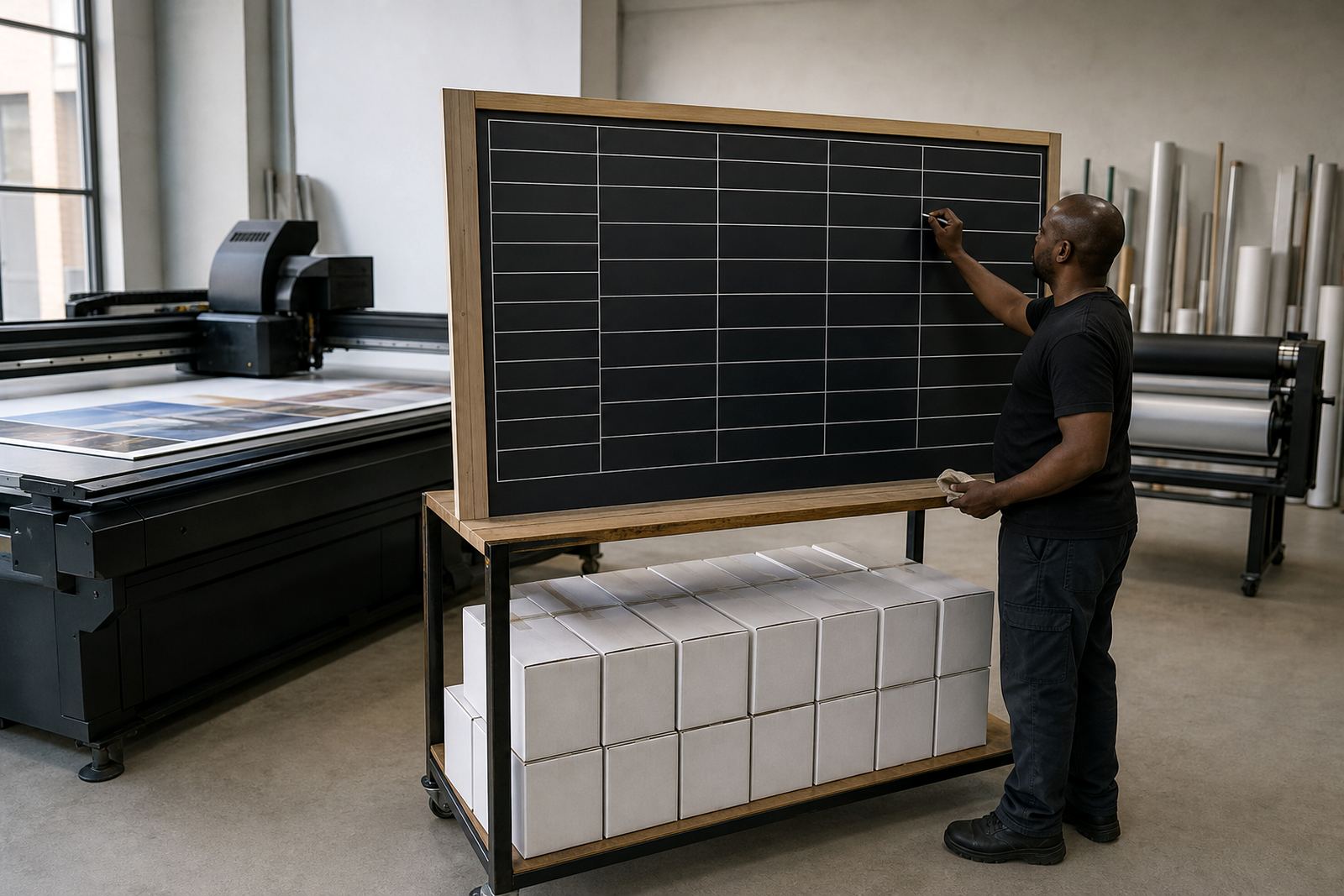
Good operators do small checks before problems turn into faults. Our training gives your team a repeatable checklist for daily use, with attention to nozzle health, temperature, media feed, curing output and housekeeping around the printer. These steps are especially useful for teams that rotate between day and night shifts, because each operator can follow the same routine and hand over cleanly.
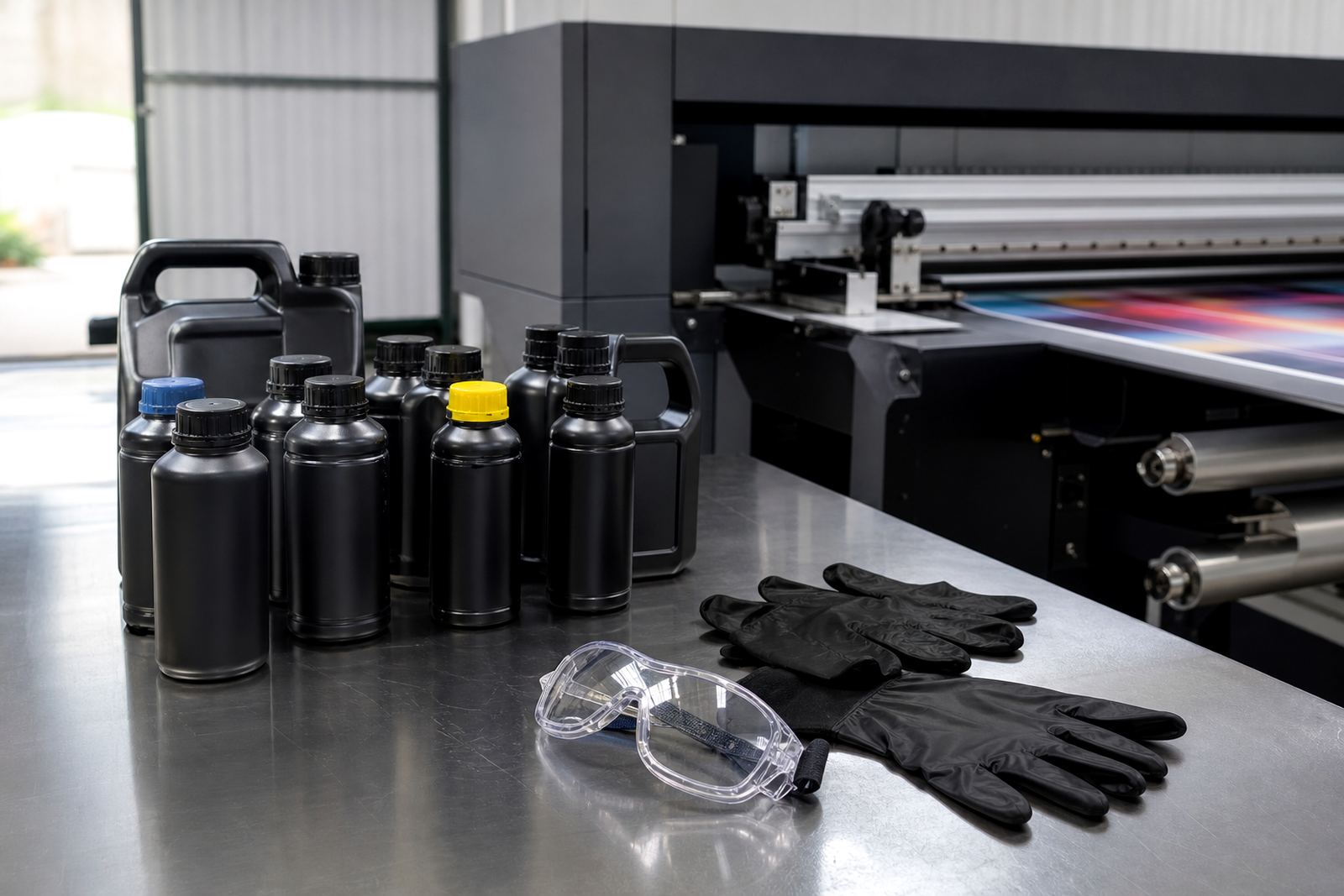
- Inspect ink condition and confirm the correct batch for the job
- Check for dust, oil, media curl and surface contamination
- Confirm curing settings before full production starts
- Watch for banding, poor edge hold, scuffing or incomplete cure
- Log issues early so technical support can act before the job slips
Short daily checks are different from weekly cleaning and monthly service work. That kind of clarity reduces mistakes and helps protect the printer, the job and the people around it.
Turnaround times and how pricing is handled
Training requests are usually assessed first by the size of the team, the number of printers involved and whether the session needs to happen on site or remotely. We then confirm the scope, the time needed, and any supporting material required for your setup. Because every print room is different, pricing is handled on request rather than as a fixed list. That allows us to match the session to the actual job, instead of forcing a one size fits all quote.
For businesses that need urgent support after a change in media, a new operator on shift or a repeat problem with curing, we can often arrange a short extra session. In many cases the first response is a short remote review, followed by a fuller training slot if needed. If you are in Johannesburg, Pretoria or across the metro areas around Cape Town, courier support for sample materials and repeat order stock can also be arranged alongside the training plan.
We keep the process practical. You ask through the enquiry form on our contact page, we confirm the scope, and then we schedule the next step. That way training can be planned without taking the entire production line out of service.
When refresher training makes sense
Refresher training is useful whenever the print environment changes. That could be after a new operator joins, a different substrate is introduced, the curing setup is adjusted, or repeated faults start appearing in the same part of production. It also helps where teams work under pressure and small shortcuts begin to creep in. A short refresher can reset habits before they turn into waste.
Many shops book maintenance-oriented training every few months, while others call us only when a fault appears. Both approaches can work, but regular refreshers are often easier on stock and machine wear. They are also useful when staff move between branches or when a shop in Bellville or Paarl supports work for a larger Cape Town production base. The aim is simple: keep the process consistent, safe and repeatable.
- New operator induction
- Change of media or ink type
- Recurring adhesion or curing issues
- Production scale-up or workflow changes
Ink data
| Service type | Operator training for UV-curable inks |
|---|---|
| Coverage | Flatbed and roll-to-roll printer workflows |
| Format | On site in Cape Town area or remote support |
| Typical focus | Handling, curing awareness, adhesion and daily checks |
| Safety note | Follow the safety data sheet and wear gloves |
| Pricing | Quoted on request based on scope and team size |