
Practical support for UV print issues
Remote Tech Help is for printers who need clear guidance without waiting for an on-site visit. If you are checking ink behaviour, comparing trial results or trying to find the cause of poor adhesion, we work through the problem step by step and keep the advice practical. The aim is to help you get back to production with less waste, fewer reprints and better control over curing, surface prep and operator settings.
This service is useful for signage shops, packaging teams and busy print rooms that run short on time. We can talk through common UV ink issues such as under curing, over curing, poor wetting, line banding, blocked nozzles, colour shift and edge chipping on rigid boards or flexible media. Where needed, we also give guidance on the right follow up tests before you commit to a larger run.
- General troubleshooting for flatbed and roll-to-roll printing
- Guidance on ink flow, adhesion and curing behaviour
- Help interpreting trial prints and sample results
- Advice for operators working on different substrates
What the support session includes
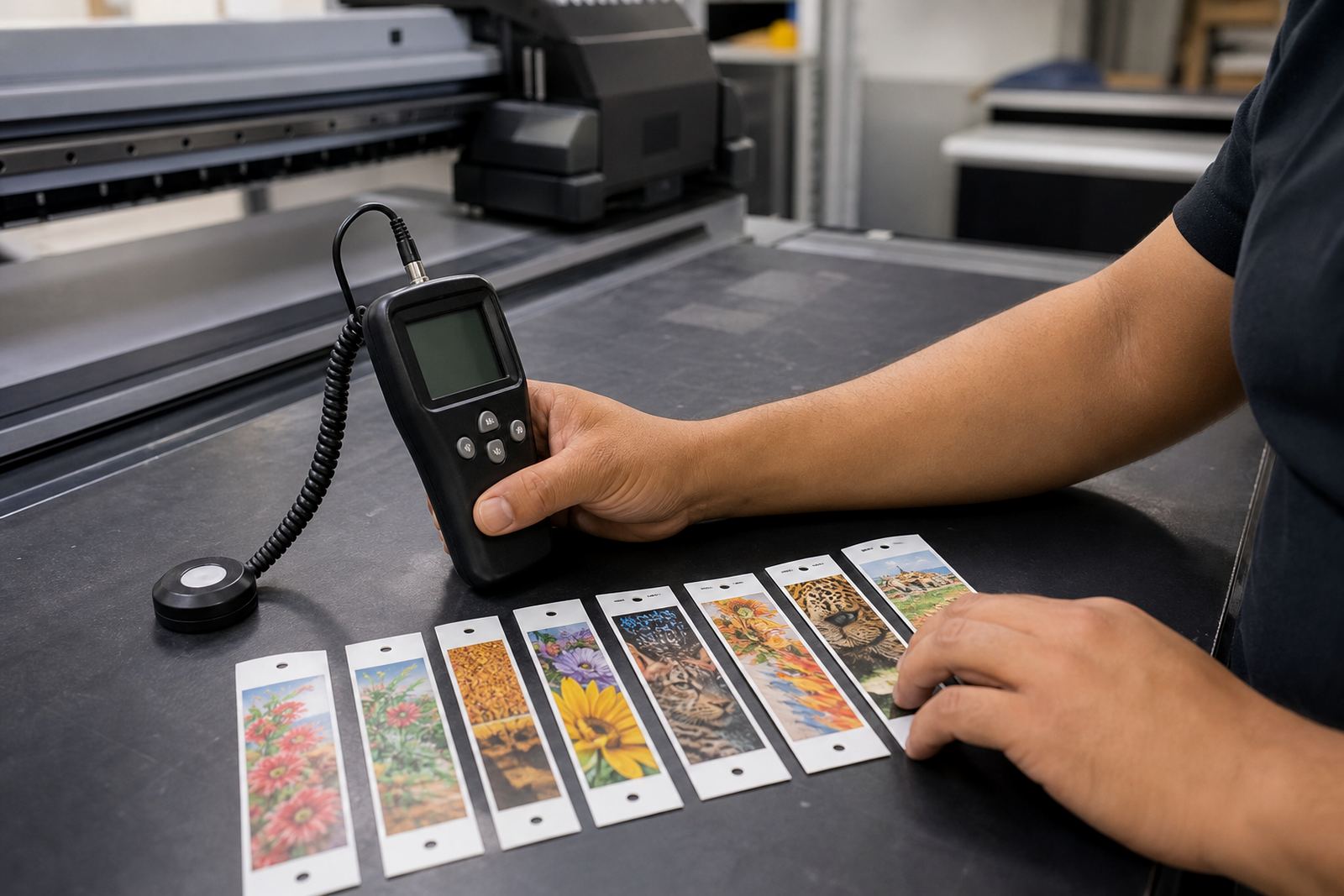
Every support request starts with the basics: what printer you are using, what substrate you are running, which UV-curable ink type is in the machine and what problem you are seeing. From there we narrow it down. That may mean checking lamp output, pass settings, cure speed, pre-treatment, media surface condition or whether the material itself is causing the issue. For a lot of shops, the answer is not one thing but a combination of settings.
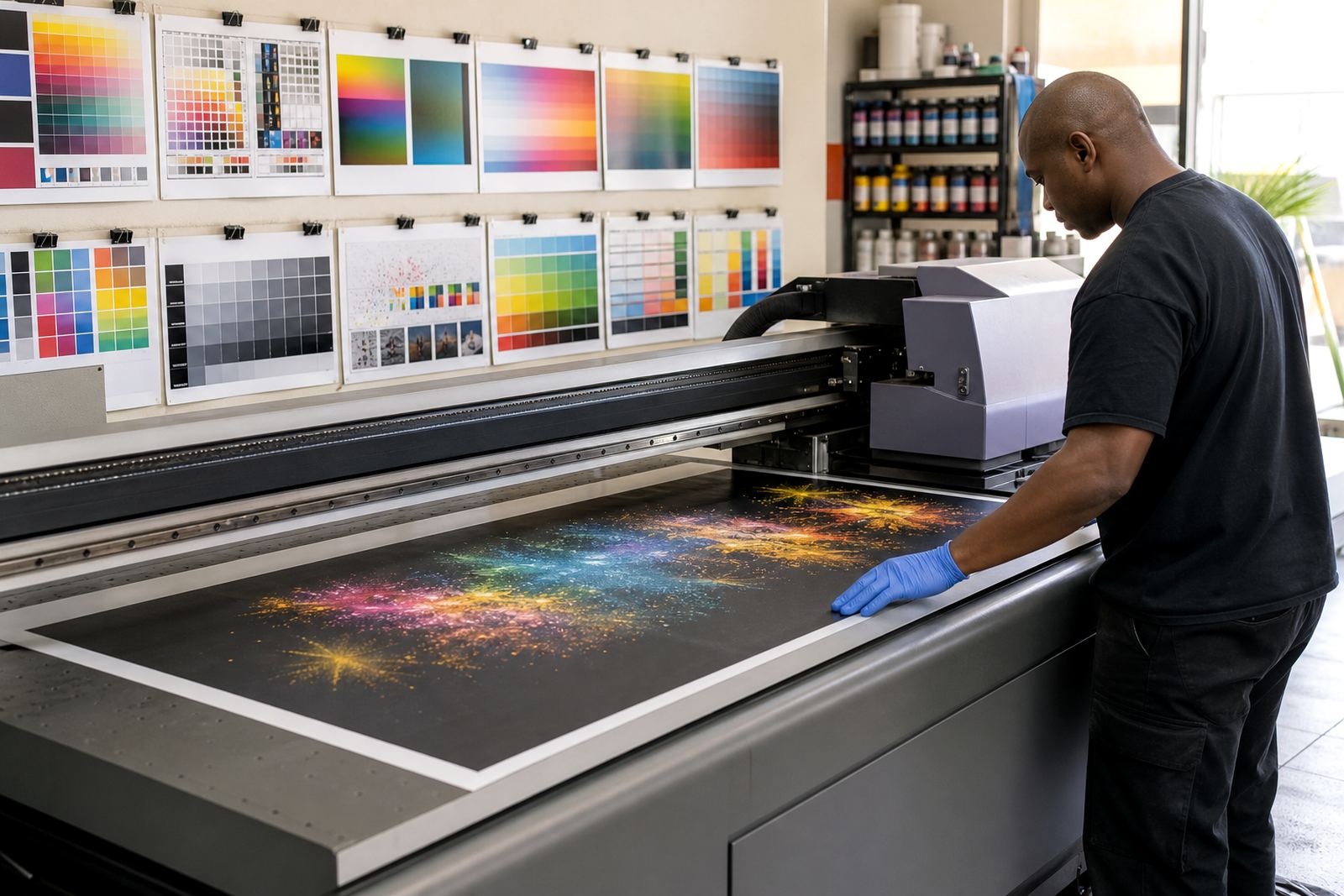
We do not guess. We use your description, print samples and trial notes to suggest the next sensible test. If the problem is not urgent, we may recommend a short test sequence instead of changing too many variables at once. This helps keep results cleaner and saves material. Safety is part of the process too, so we always remind customers to follow the safety data sheet and wear gloves when handling inks, wipes and contaminated parts.
- Compatibility checks for common rigid and roll media
- Adhesion testing guidance for new substrates
- Curing guidance for line speed, lamp strength and layer build
- Colour trial support for first runs and repeat jobs
How the remote help process works
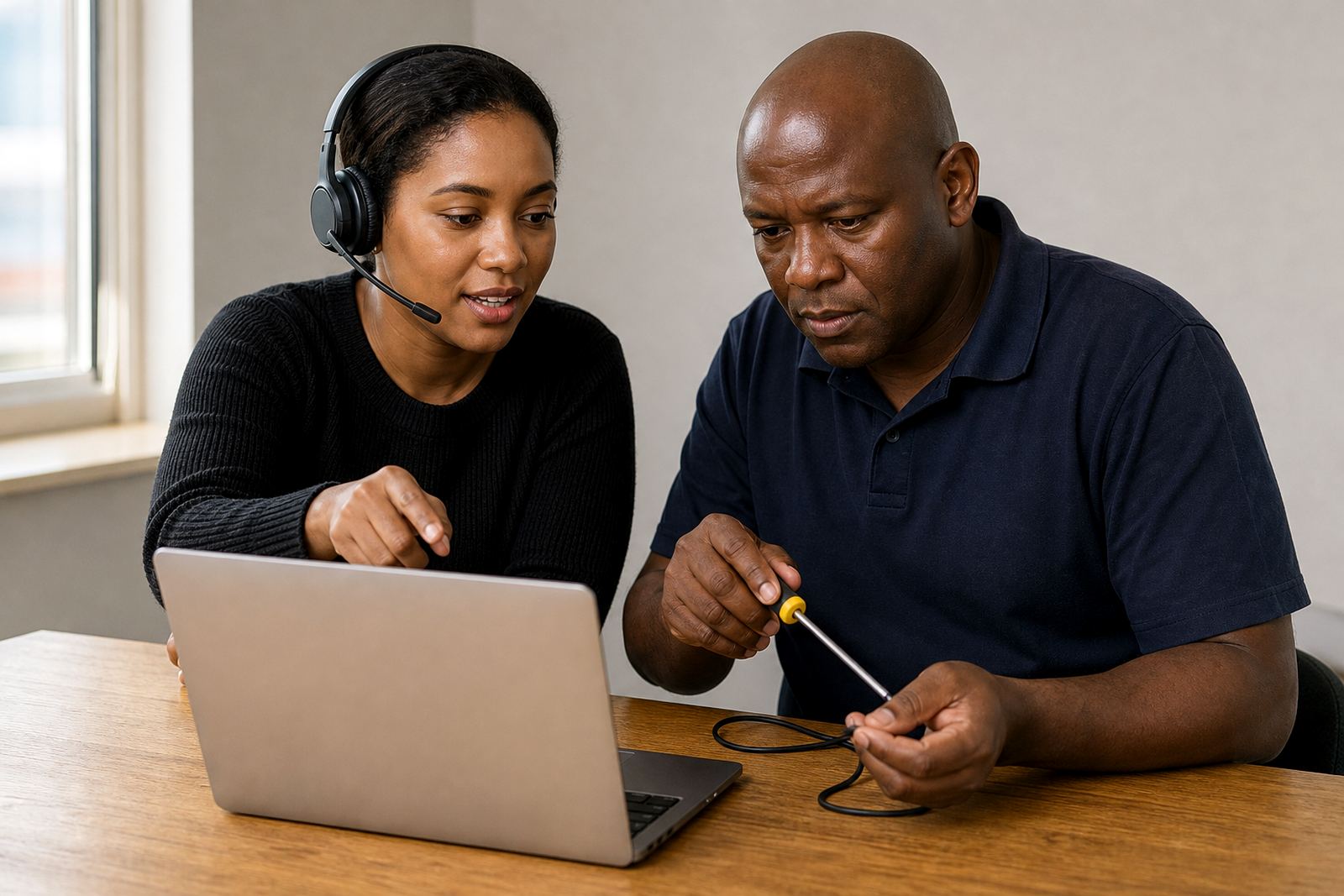
Most support jobs follow the same simple path. You send through the problem details using the enquiry form on our contact page, then we ask a few focused questions so we can understand the printer setup and the job conditions. After that, we review the information and give you a clear response with practical next steps. If the issue needs a second look, we may ask for photos of the print, the media, the cured surface or the nozzle check pattern.
The service is designed for fast turnaround during business hours, with a priority on urgent production stoppages where possible. Some faults can be resolved from the details you send, while others need test prints or checks on your machine first. If you are in Cape Town, Johannesburg, Durban, Pretoria or Gqeberha, courier stock support can be linked to the advice so you are not left waiting for consumables while a job is due. Please note that advice times can vary during high demand periods and month end production peaks.
- Step 1: submit the enquiry and job details
- Step 2: share printer, media and ink information
- Step 3: receive test steps and support feedback
- Step 4: confirm the result or request a follow up
Pricing approach and support frequency
Remote Tech Help is priced according to the amount of guidance needed, the complexity of the issue and whether the job is a one-off query or part of ongoing production support. A basic compatibility question is simpler than a multi-step troubleshooting session on a recurring adhesion fault, so the support approach follows the work involved. We keep pricing practical and explain what is covered before the session continues.
For regular print rooms, we often suggest planned check-ins rather than waiting for a job to fail. This can be useful after a new ink change, a media change, a lamp replacement or a shift in production speed. In coastal areas such as Cape Town and Gqeberha, humidity can also affect storage and handling, so it is worth checking conditions more often. That small bit of prevention can save a lot of rework later.
- One-off support for immediate print problems
- Follow up guidance after trial runs
- Scheduled check-ins for busy production teams
- Advice linked to maintenance changes and media changes
Who uses remote ink support
This service suits print teams that need clear technical guidance and steady production. A sign maker may need help with edge lift on ACM panels, a packaging client may want to know if the ink is curing properly on a coated board, and a roll printer may need support for wrinkle marks or adhesion on flexible media. We also help operators who need a second opinion before a repeat order goes ahead. If a job looks fine on one machine but not another, we can help you compare the variables and decide what to test next.
Because UV ink performance can change with surface type, lamp output and ambient conditions, it helps to have a support contact who understands the basics and asks the right questions. Our team in Epping, Cape Town works with customers across South Africa and keeps the advice grounded in day-to-day print room realities. That includes ordinary things like cleaning routines, storage conditions, nozzle checks and handling media on humid or dusty days.
- Signage and display print rooms
- Packaging and short-run label producers
- Flatbed and roll-to-roll operators
- Teams needing repeat order consistency
Ink data
| Support scope | General ink behaviour queries, trial feedback and print troubleshooting |
|---|---|
| Printer types | Flatbed printers and roll-to-roll printers |
| Coverage area | Epping, Cape Town with courier delivery across South Africa |
| Support window | During business hours, with urgent jobs handled as quickly as possible |
| Safety note | Follow the safety data sheet and wear gloves when handling inks or contaminated parts |
| Support format | Remote guidance through the enquiry form with follow up notes and test steps |