
What Roll CMYK Ink is used for
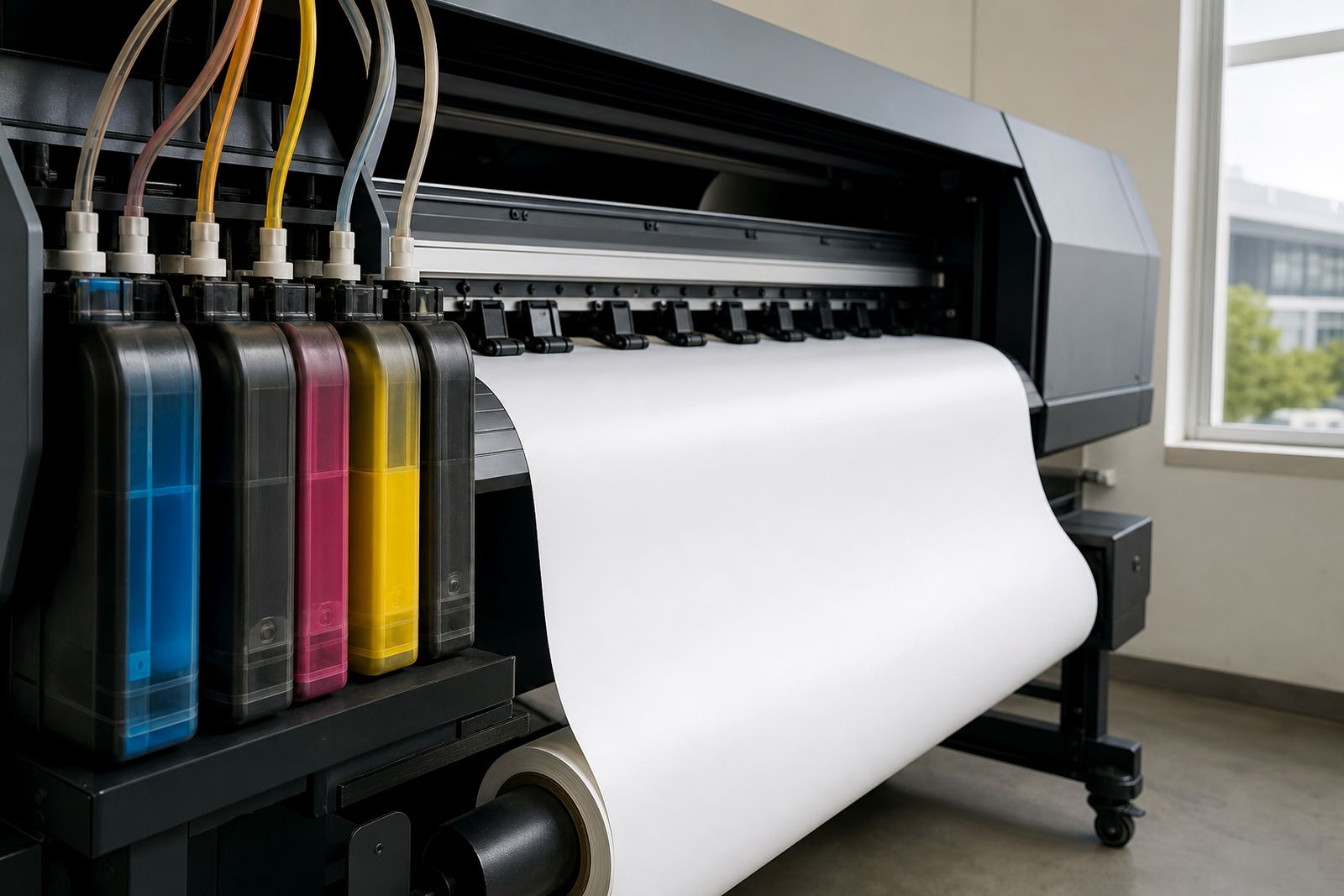
Roll CMYK Ink is a UV-curable ink set used on roll-to-roll printers for flexible media such as self-adhesive vinyl, banner material, PVC sheet, printable film and coated roll stock. The ink cures under UV lamps as it passes through the printer, so it can be handled soon after printing and moved into finishing without long drying times. For shops in Cape Town, Johannesburg or Durban, that can help when turnaround is tight and the job needs to go out same day.
This type of ink is suited to signage, point-of-sale graphics, exhibition panels and indoor or short-term outdoor display work. The key is matching the ink to the media and the printer setup. On some media, adhesion is excellent straight away, while other materials need more testing or a change in curing settings. Good results start with the right substrate, the right print mode and a clean machine, not guesswork.
Colour output, adhesion and finish
CMYK gives the base colour set needed for everyday production. Yellow, magenta, cyan and black are blended by the printer to build solid areas, images and type. On the right media, the finish is crisp enough for retail work and durable enough for regular handling. If the ink is under-cured, you may see scuffing or odour. If it is over-cured, you can lose some gloss or flexibility.
Adhesion is affected by the coating on the material, surface energy, dust, static and even humidity in the work area. Coastal conditions in places like Gqeberha and Durban can make prep more important, especially on wide rolls left open on the machine for too long. A quick wipe, a test print and a proper cure check are worth the time. Small colour shifts can also happen between batches, so a colour trial is sensible before a full run.
- Good for flexible, roll-fed media used in graphics and signage
- Can be checked for scratch resistance after curing
- Works best when the media is clean and the printer is set correctly
Printer compatibility and production setup
Before ordering, check that your roll-to-roll printer is set up for UV-curable inks and that the ink system, heads and curing unit are compatible. Some machines need specific viscosity ranges, filtration or circulation settings. Others are more forgiving, but the safest approach is to confirm the print head type, ink channel configuration and whether the machine uses pinch rollers, media heaters or pre-treatment. If you are running more than one printer, it helps to keep each unit labelled by ink set and profile.
For production in Epping or Bellville, and for courier stock moving to Pretoria or Paarl, it is also important to think about repeatability. A compatible ink should behave the same from one order to the next, provided the printer is maintained. That means checking the nozzle check, head height, lamp output and media feed before starting a long run. A small test on the actual roll you plan to use can save a lot of waste.
- Confirm printer model, head type and ink channel layout
- Check whether the machine needs heater or lamp adjustments
- Test the actual roll media before full production
Sizes, supply options and ordering points
Roll CMYK Ink is normally supplied as a production ink set for regular shop use, with supply options suited to one-off jobs or repeated orders. Some clients prefer sample packs first, while others want full production quantities once the media and settings have been confirmed. For busy shops, repeat order planning is useful because it avoids stoppages when a roll run is already on the machine. If you work with several media types, keep separate notes for each one.
When ordering, be clear about the printer, the media, the intended use and the finish you want. If you need support with matching the ink to the job, our team can help with Ink Selection, Compatibility Checks, Adhesion Testing, Curing Guidance and Sample Pack Prep. For operators new to UV roll printing, a short training session on cleaning, curing and safe handling can prevent costly mistakes.
- Supply for trial work, standard production and repeat ordering
- Sample packs can help with colour and adhesion checks
- Order notes should include printer type, media and intended use
Curing setup and lamp checks
The printer itself must be installed correctly and run in a suitable workspace. If your site has an unstable supply, build a restart check into the morning routine.
The room should be kept clean, with limited dust and decent ventilation. You do not want airborne dirt landing on open rolls or fresh prints. Keep the ink sealed when not in use, avoid direct sun on stock and store it in a cool, dry place away from heat. In coastal areas, humidity can influence handling and media condition, so storage matters just as much as the printer settings. If the area gets warm, keep the bottles or cartridges out of the way of machinery vibration and sunlight.
Using the ink on press
Good care starts with the printer. Clean the capping station, wipers and surrounding areas as part of the normal shift routine. Check for build-up around the heads and make sure the curing system is working evenly across the print width. If prints start looking dull, hazy or sticky, stop and check the cure before carrying on. A quick service check can prevent a full day of reprints, which nobody wants.
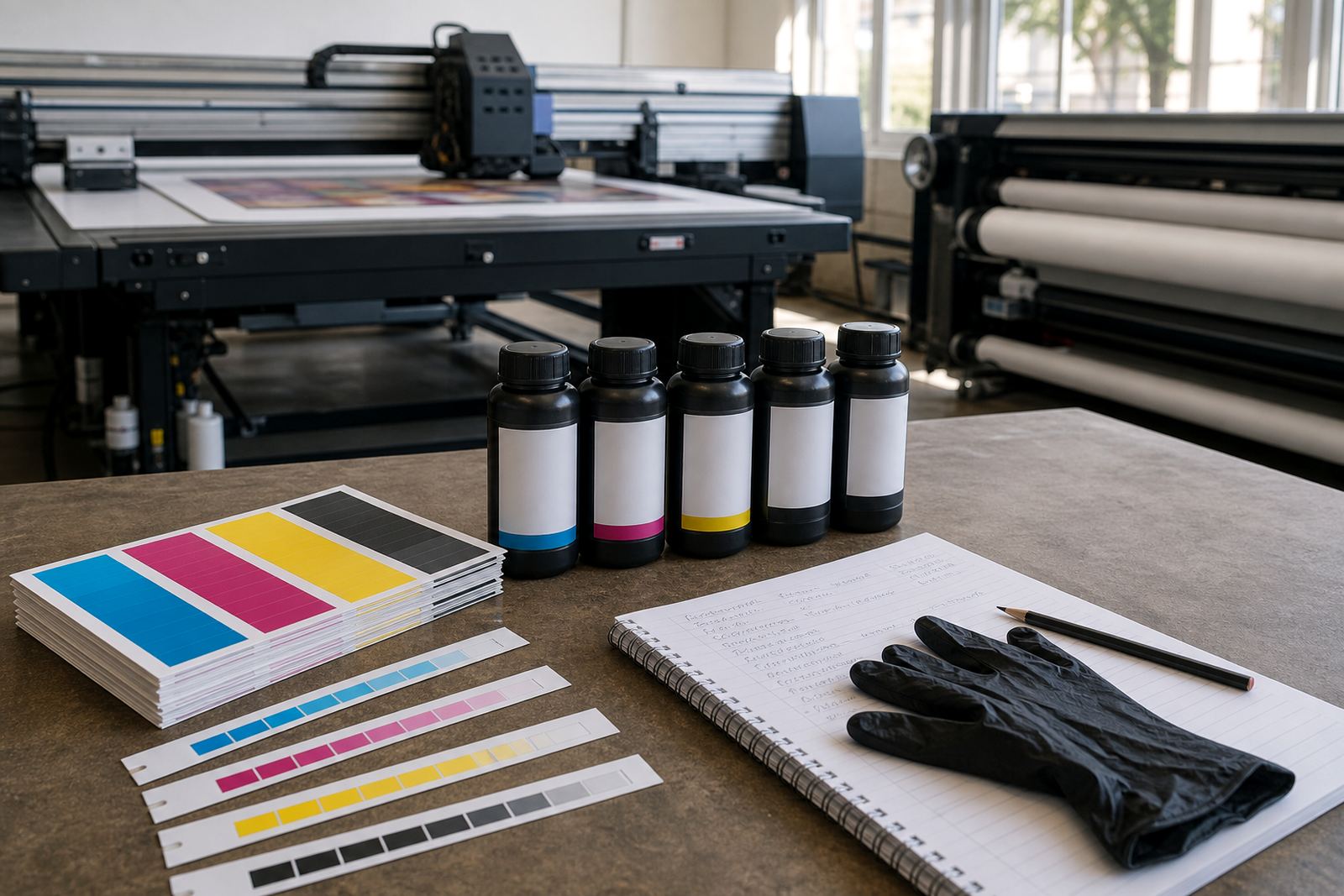
Always follow the safety data sheet for the ink you are using. Wear gloves when handling ink, avoid skin contact and keep the lids closed when the bottles are not in use. If ink is spilt, clean it promptly using the recommended method for the product and the surface. Never mix different ink types unless you have checked compatibility first. If you are unsure, ask for remote tech help before the job starts.
- Follow the safety data sheet every time
- Wear gloves and keep the work area tidy
- Stop and check curing if prints feel tacky or show scuffing
Ink data
| Product type | UV-curable CMYK ink for roll-to-roll printers |
|---|---|
| Print media | Flexible roll stock such as vinyl, film, banner and coated media |
| Curing method | UV lamp curing during printing |
| Typical use | Signage, graphics, display and short-run production |
| Compatibility | Dependent on printer model, head type and ink system settings |
| Handling note | Follow the safety data sheet and wear gloves during use |