
When interior branding has to look good up close
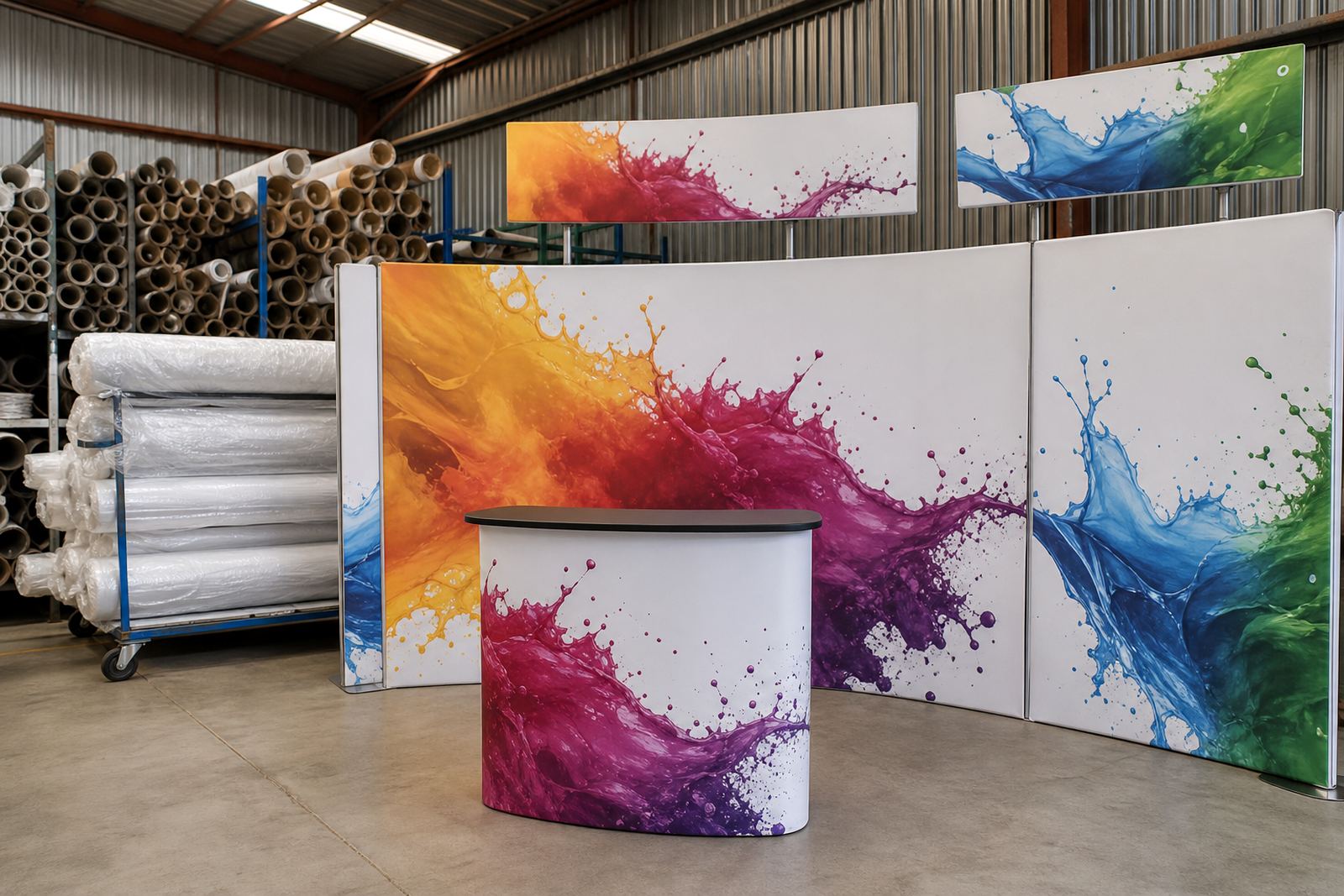
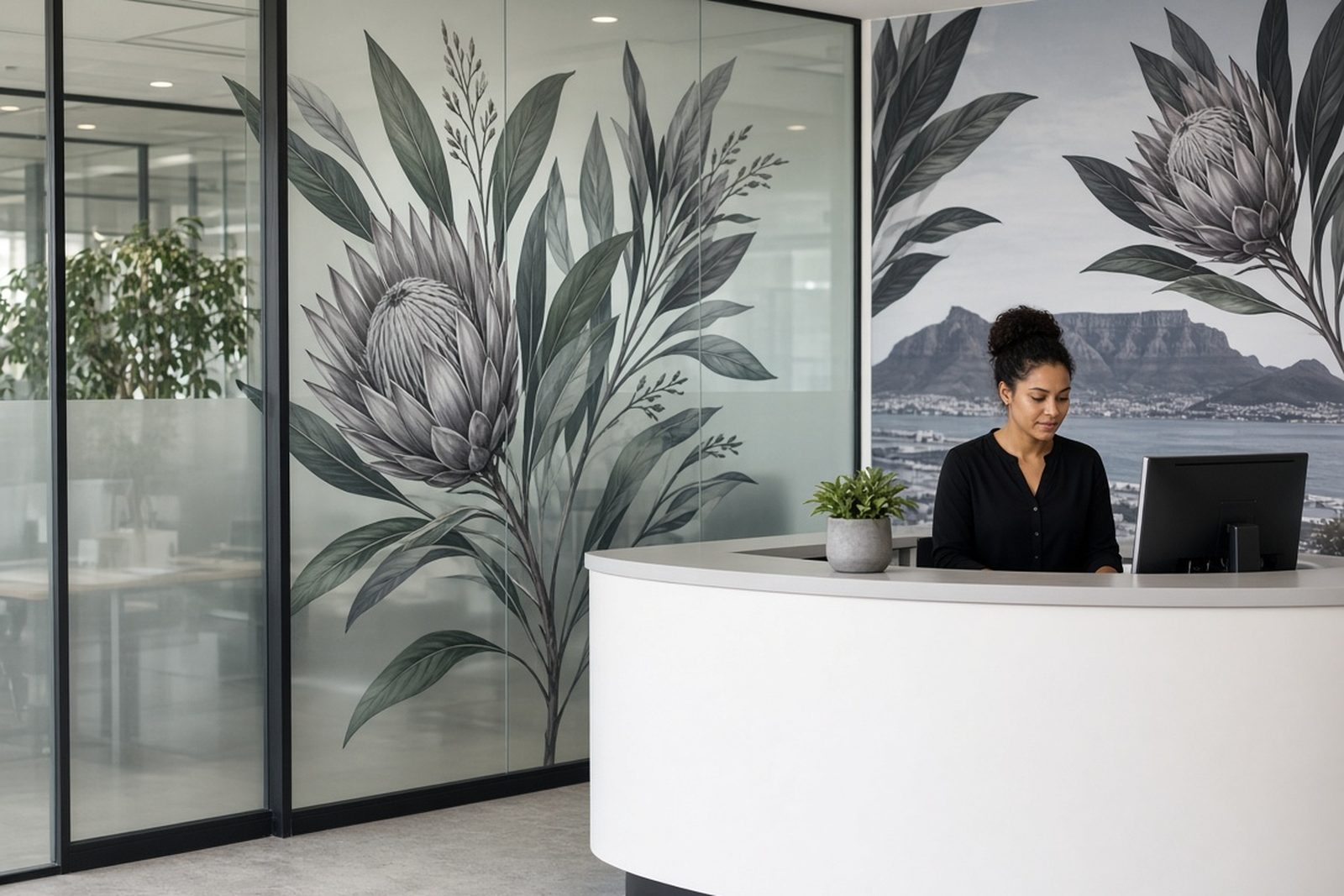
Interior branding work is usually viewed at short distance, so print quality matters more than people expect. Reception walls, corridor panels, point of sale features and meeting room graphics all need clean colour, sharp type and even gloss or matte finish depending on the brief. UV-curable inks suit this type of work because they cure quickly on the printer and can bond well to many rigid and flexible substrates when the setup is right.
For a project in Cape Town, Johannesburg, Durban, Pretoria or Gqeberha, the first question is not just what the artwork looks like. It is what surface it will sit on, how often it will be touched, whether the site gets direct sun through glass, and if the material will move with heat or remain fixed. A panel in a foyer may need different ink behaviour from an acrylic logo above a boardroom wall, even if both are printed on the same machine.
Typical printer set-up for walls, acrylic and panels
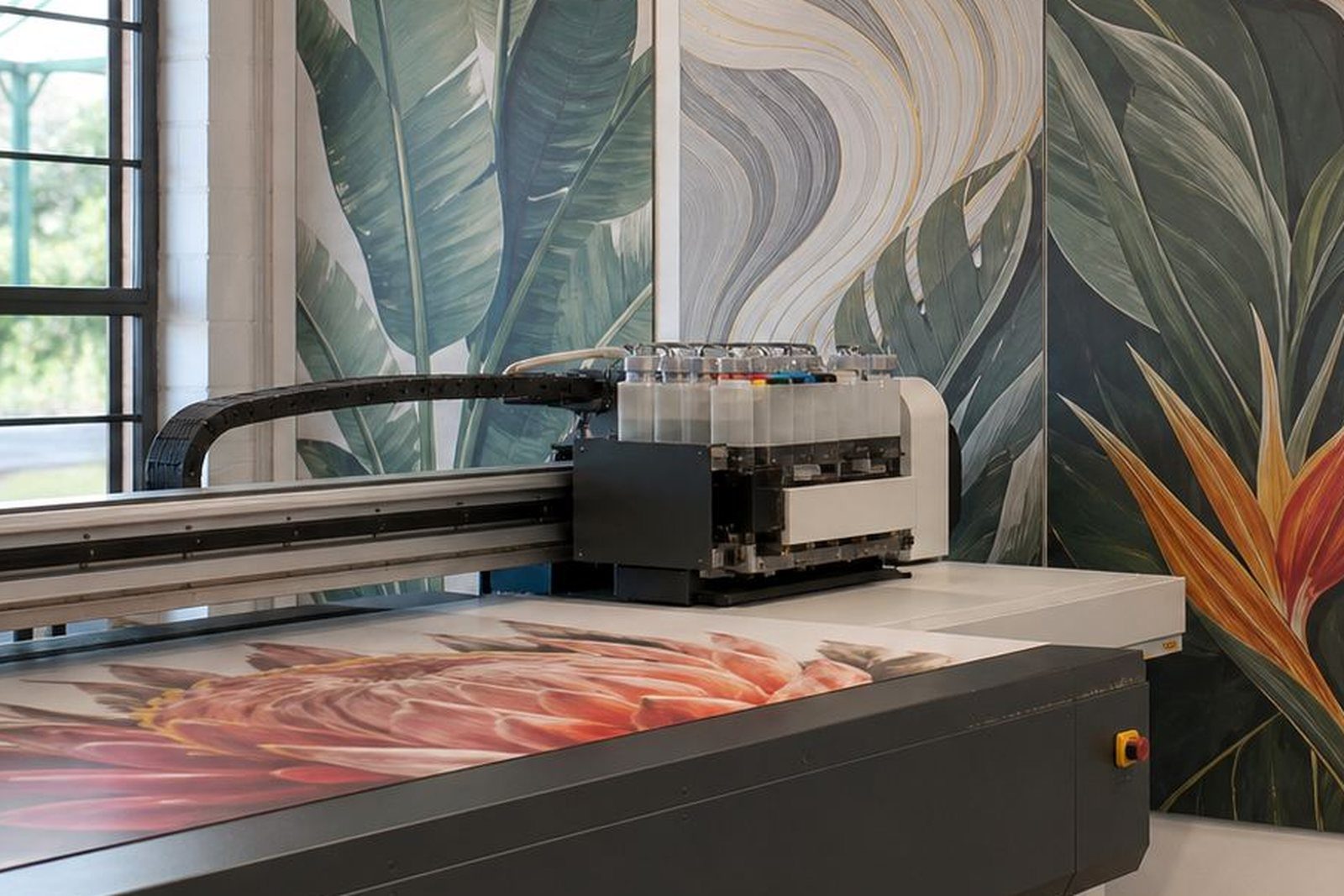
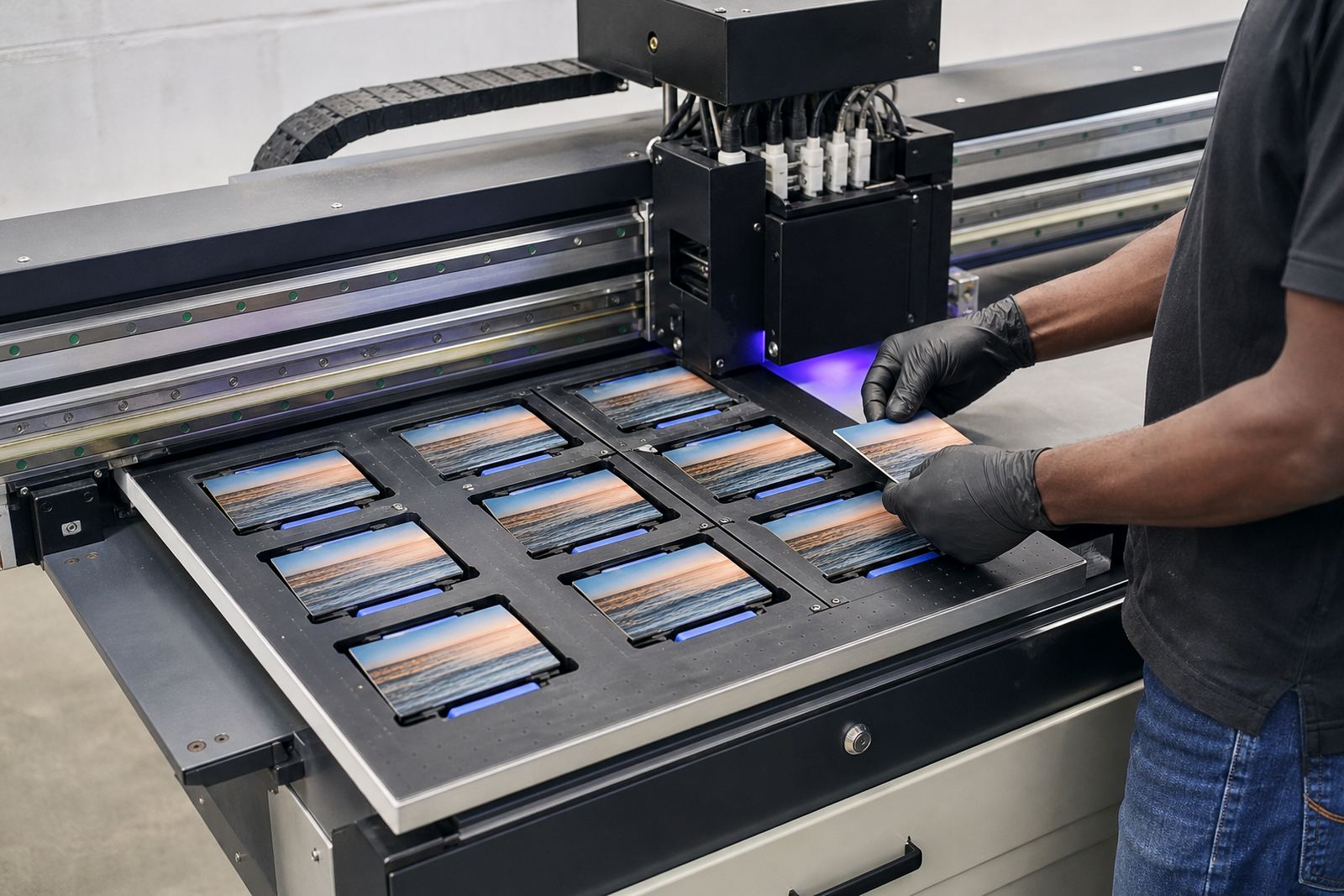
Interior branding is usually produced on flatbed printers for rigid boards and on roll-to-roll printers for flexible media like self-adhesive film or wallpaper material. UV-curable inks are used because they cure under the printer's UV lamps, so the print can be handled sooner and sent on for cutting, mounting or laminating without waiting for long dry times. That helps when a site in Sandton, Bellville or Umhlanga is working to a tight handover date.
- Flatbed printer for acrylic sheets, foam board, composite panels and similar rigid media
- Roll-to-roll printer for wall film, window graphics and wrap-style interior panels
- Proper curing unit or lamp setup matched to the ink set and media speed
- Cutting and finishing equipment for trimming, routing or kiss-cutting after print
Printer compatibility is important. Some machines handle different ink viscosities, lamp strengths and print heads better than others. If the ink is not matched to the printer, adhesion can suffer or the finish may look uneven, especially on textured panels or low-energy plastics.
Planning advice before the first print run
Good interior branding starts before the artwork goes to print. Check the substrate, its thickness, the mounting method and the final position in the building. A panel near an entrance may face more dust and handling than one inside a boardroom. Even in Johannesburg or Pretoria, a cold morning and a warm afternoon can shift a sheet enough to cause fit issues.
We usually advise clients to confirm the following early in the job:
- What the surface is made of and whether it has a coating or primer
- Whether the print needs strong abrasion resistance or just visual impact
- If the finish should be gloss, satin or low glare for indoor lighting
- How the piece will be fixed, framed or mounted once printed
- Whether a sample or colour trial is needed before full production
At this stage, colour trial support and adhesion testing save time later. A small test panel can show how the ink behaves after curing and whether any extra surface prep is needed. That is often cheaper than reprinting a large wall set because the first run was not quite right.
Common mistakes on interior branding jobs
One of the most common mistakes is assuming all smooth surfaces behave the same. Acrylic, PVC, coated board and painted wall panels can each react differently to UV-curable inks. Another problem is pushing the printer too fast in order to save time. If curing is too light, the print may feel dry but still fail adhesion tests later. We also see jobs where the installer cleans the panel with the wrong solvent after print, which can dull the image or lift the edges.
Other errors are easier to miss. Artwork with very fine white text on dark backgrounds may look strong on screen but lose clarity in the real lighting of a foyer or corridor. Poor planning around site access is another issue. If the lift is too small, or the panels are too large for the stairwell, the install team may have to cut and join on site, which changes the final look.
How UV Ink supports supply, testing and support
UV Ink supplies UV-curable inks from our Epping base in Cape Town, with courier delivery to Cape Town, Johannesburg, Durban, Pretoria and Gqeberha, plus Bellville and Paarl. We help with ink selection, compatibility checks, curing guidance, remote tech help and repeat order management for interior branding work that needs consistency from one batch to the next. Our team also assists with sample pack prep and operator training, which is useful when a print shop is adding new interior work to an existing production line.
Michael van Wyk leads the business, with support from Lindiwe Maseko in sales, Hennie Opperman on technical support, Shanaaz Allie in operations, Moagi Shirinda in logistics, Nadine Motaung in customer service and Thabo Steyn on training. For fast-moving sites, we can help plan stock levels so the right ink is on hand before a large rollout begins.
Budget ranges and what they usually include
Interior branding budgets vary by substrate, size, print coverage and the amount of trial work needed. The ink itself is only one part of the total cost, but it still needs to be factored in properly because waste, reprints and poor adhesion can become expensive quickly.
As a practical guide, many projects are budgeted in stages rather than as one number. The stages often include trial prints, production ink, substrate prep, finishing and courier costs. If the job needs extra adhesion testing or curing guidance, build that into the schedule. For commercial interiors, that can mean the difference between a clean handover and a costly return visit.
For enquiries, clients usually come through the form on our contact page. That helps us review the surface type, printer model and turnaround needed before recommending the right approach for the job.