
When exhibition graphics need to hold up on the stand
Exhibition work is usually judged in seconds. A panel has to carry a message, look clean from a few metres away and still survive setup, breakdown and transport between venues. That is why UV-curable inks are often chosen for flatbed and roll-to-roll jobs on rigid boards, composite panels, wallpaper-style graphics and fabric-look films used in displays. They cure quickly under UV light, which helps reduce waiting time before handling, packing or finishing.
In Cape Town, Johannesburg, Durban, Pretoria and Gqeberha, exhibition teams often work to tight move-in times and short lead times. A practical ink choice matters because the print needs to match the substrate, the curing settings and the intended viewing distance. If the ink is not compatible with the board or film, you can run into adhesion problems, surface scuffing or colour that shifts once the panel is exposed to light and touch on the floor.
UV Ink supplies UV-curable inks for this kind of work from Epping, Cape Town, with courier delivery across South Africa and repeat order support for ongoing exhibition schedules.
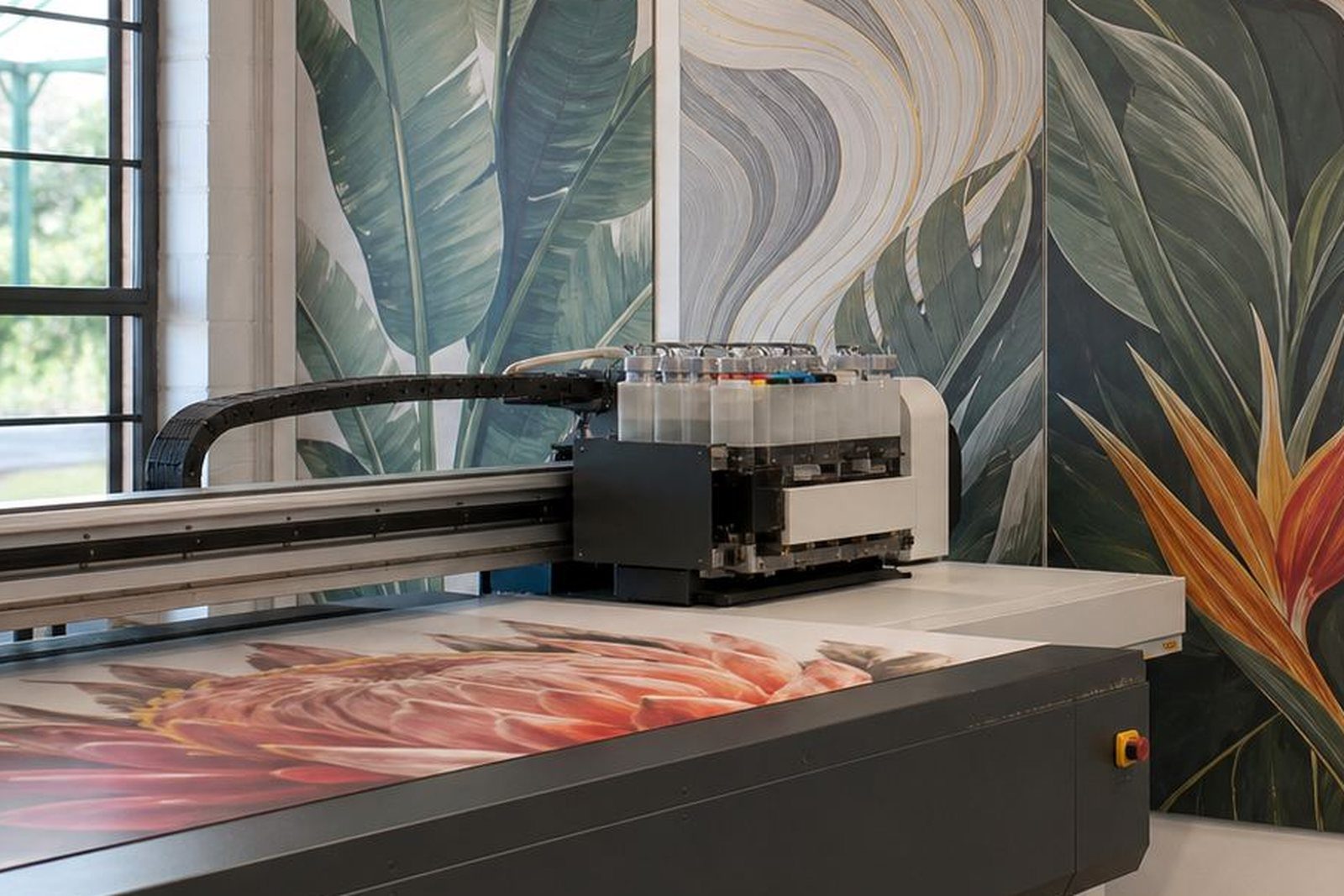
Typical equipment used for exhibition panel production
Most exhibition panel jobs are produced on a flatbed printer for rigid substrates, or on a roll-to-roll printer where the final panel will be mounted, framed or tensioned. The right setup depends on whether you are printing directly onto board, onto a self-adhesive film, or onto a flexible graphic that will be applied later. If your team changes between substrates often, keep a written print recipe for each one. That saves time and reduces waste.
- Flatbed printer for ACM-style panels, foamed PVC, acrylic-look sheets and other rigid display boards
- Roll-to-roll printer for backdrops, graphic films and wrap-style exhibition skins
- UV curing system matched to the printer and ink line so cure is complete without overexposure
- Clean cutting and trimming tools for finished panel edges
- Soft gloves for handling fresh prints and avoiding fingerprints
For exhibition work, the small details matter. A panel can look perfect on the machine, then pick up marks during stacking or show a slight banding issue under bright hall lights. Good operator habits, consistent curing and a clean production area help avoid that. If you are printing in a coastal area like Cape Town or Gqeberha, the humidity can affect storage and board flatness too, so keep substrates covered and dry.
Planning the layout so the artwork reads from the aisle
Exhibition graphics are usually seen from a standing position, often under mixed lighting and with people moving past at pace. That means the layout should be simple enough to read quickly, with a clear heading, strong contrast and enough open space around the key message. Dense text rarely performs well on panels unless viewers are expected to stand close for long periods.
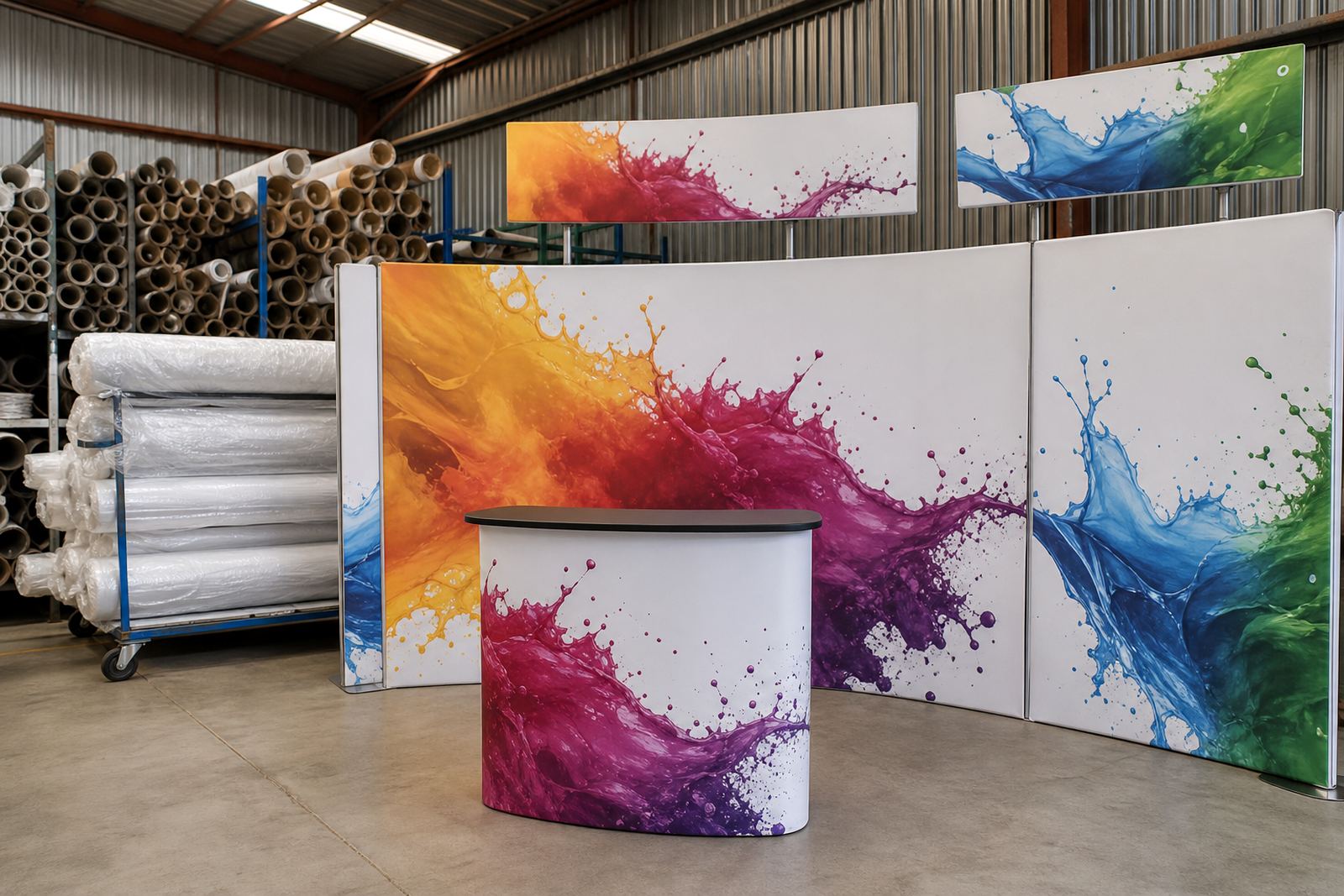
When planning an exhibition panel set, think in layers. The main title should be visible from the aisle, supporting detail should sit in a secondary zone and small print should be limited to contact, direction or product specifics. On large backdrops, the image needs to hold together from near and far. On smaller boards, keep type sizes generous and avoid thin fonts that can break down after curing or in poor lighting.
- Confirm the final viewing distance before locking in font size and image placement
- Allow for trim, fixing points and overlaps so no important text gets cut off
- Build in bleed for boards that will be trimmed after print
- Check whether the panel will be flat, curved or mounted behind lighting
Colour trials are worth doing before a full run, especially where brand colours must stay consistent across multiple stands or venues. A quick sample can show how the ink behaves on the real material, not only on a screen. That can save a lot of rework later, and a little planning here usually pays off.
Adhesion, curing and surface matching on boards and films
Exhibition panels often use a mix of materials, and each one behaves differently. A hard board may accept ink well but still need careful curing to avoid brittleness. A film may print nicely yet need a different handling method because it flexes more.
Before full production, test the substrate with the intended ink and curing settings. Some surfaces need a cleaner wipe-down, some need a primer or special handling, and some simply need lower or higher energy to cure correctly. If curing is too light, the print can mark off on contact. If it is too strong, the surface can become dull or the ink film may lose flexibility. We help clients with compatibility checks, curing guidance and adhesion testing so the job behaves properly on site.
Always follow the safety data sheet for the ink and wear gloves when handling product and fresh prints. Keep lids closed when not in use and store material away from dust, heat and direct sun. In hot inland areas like Pretoria and Johannesburg, storage conditions can shift quickly during the day, so it is worth keeping stock in a stable room rather than near a loading bay or window.
Common mistakes that slow down exhibition jobs
Many exhibition delays come from avoidable production errors rather than from the artwork itself. The most common one is choosing an ink or curing setting without checking the actual substrate. Another is underestimating the time needed for packing, transport and final fitting. A board that looks ready in the workshop may still need extra handling care once it leaves the print room.
- Printing without confirming material compatibility first
- Using the same cure setting for every substrate
- Skipping a sample when a colour match matters
- Forgetting about scuff resistance during transport
- Leaving panels stacked too tightly before they are ready
There is also a planning mistake that shows up often: treating the exhibition stand as if it is a single panel job. In reality, it may involve multiple boards, hanging graphics and replacement pieces, all with slightly different handling needs. If you know the event is in Durban, Gqeberha or Cape Town, allow for courier timing and a small buffer in case a replacement panel is needed at short notice. That is part of production planning, not a bonus.
Budget ranges for exhibition panel work in Rand
Budgets depend on the board type, print size, number of panels and whether you need sample support, colour trials or technical guidance. A small one-off exhibition panel set may only need a modest ink allocation, while a larger stand with repeated graphics and spares will require more stock and more careful planning. It helps to budget for the whole workflow, not only the print run.
As a practical guide, smaller sample and trial packs are usually the lowest-cost way to start, while full production volumes rise with coverage, substrate type and reprints. If you are managing a campaign across several cities, repeat order management can help keep the same ink behaviour from one event to the next. For many clients, the real saving comes from fewer failed prints and less time lost on rework, not from the unit price alone.
UV Ink offers sample pack prep, remote tech help, courier stock support and operator training for exhibition teams that need predictable results. Our base is in Epping, Cape Town, and we supply across South Africa with delivery to Cape Town, Johannesburg, Durban, Pretoria, Gqeberha, Bellville and Paarl.