Why packaging prototypes need print that behaves like production
When a packaging team is checking a new carton, label or sleeve, the aim is not only to see the artwork on paper. The sample must act like the final job as closely as possible, so folds, glue areas, varnish zones and handling marks can be checked before the bigger run starts. UV-curable inks are often used for this stage because they cure fast under UV light and can give a sharp, dry finish that is ready for handling soon after printing.
In practice, the client may be a converter in Epping, a brand owner in Cape Town, or a marketing team in Johannesburg sending artwork for approval. They usually need a clean prototype for sign-off, a few colour options, and enough consistency to judge the final look under store lighting. If the sample looks right but chips on the fold or misses detail on a coated board, that issue must be corrected early.
For short-run packaging mock-ups, the focus is usually on substrate matching, adhesion and colour control. UV-curable systems can suit many rigid and flexible materials, but the right result depends on the surface, the printer set-up and the curing level. A quick sample with poor prep can cost more time than a careful first pass.
Typical printer set-ups for mock-up work
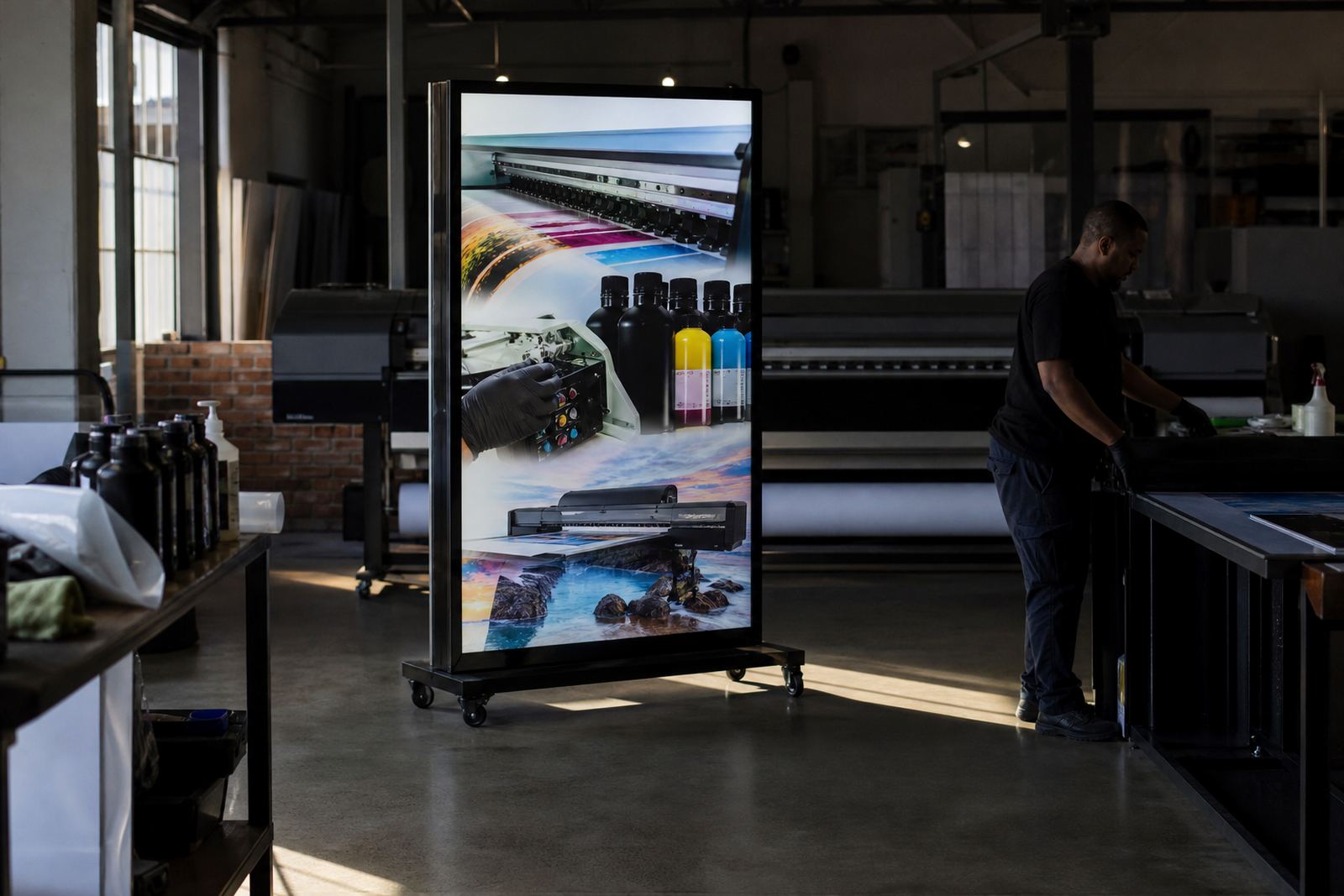
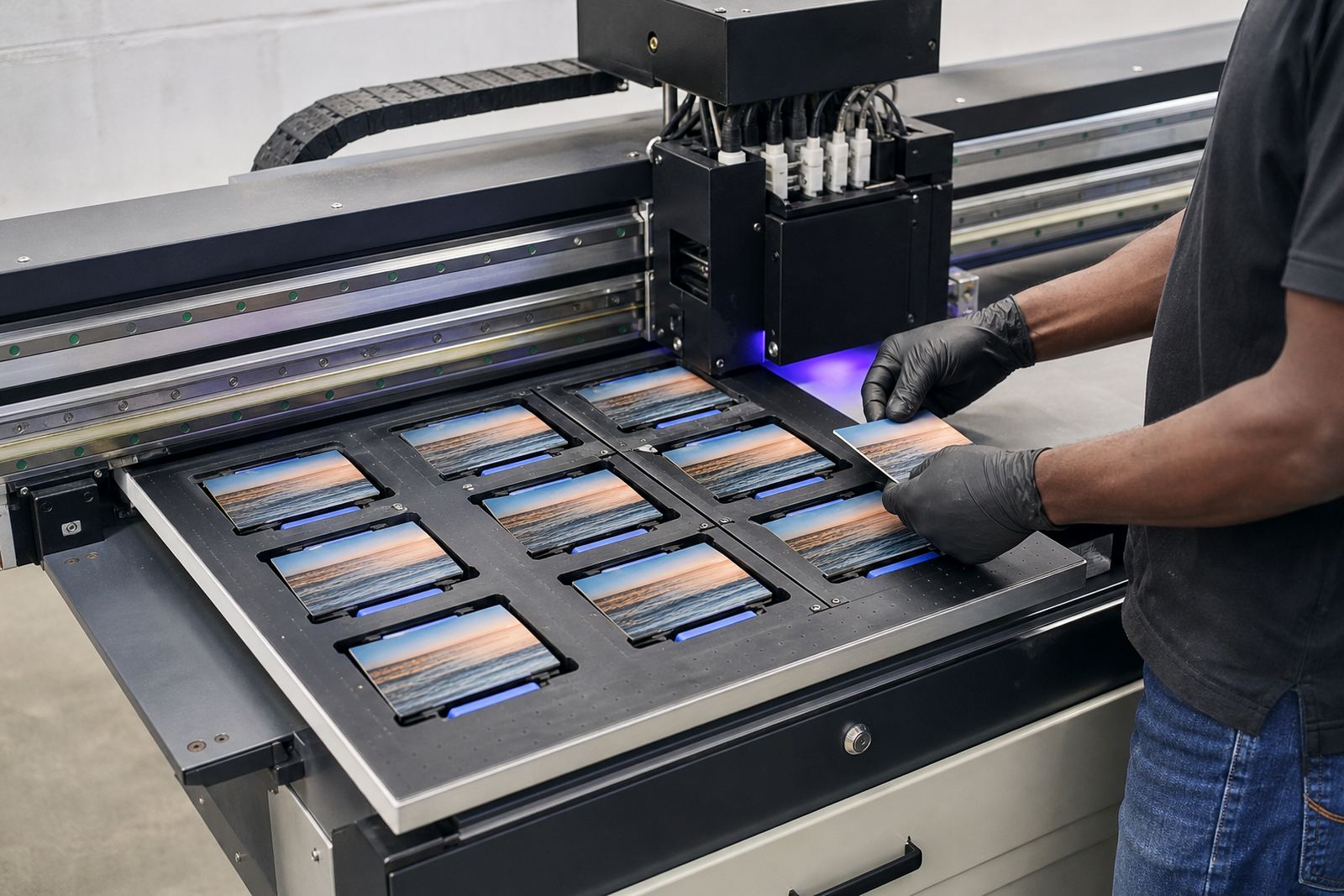
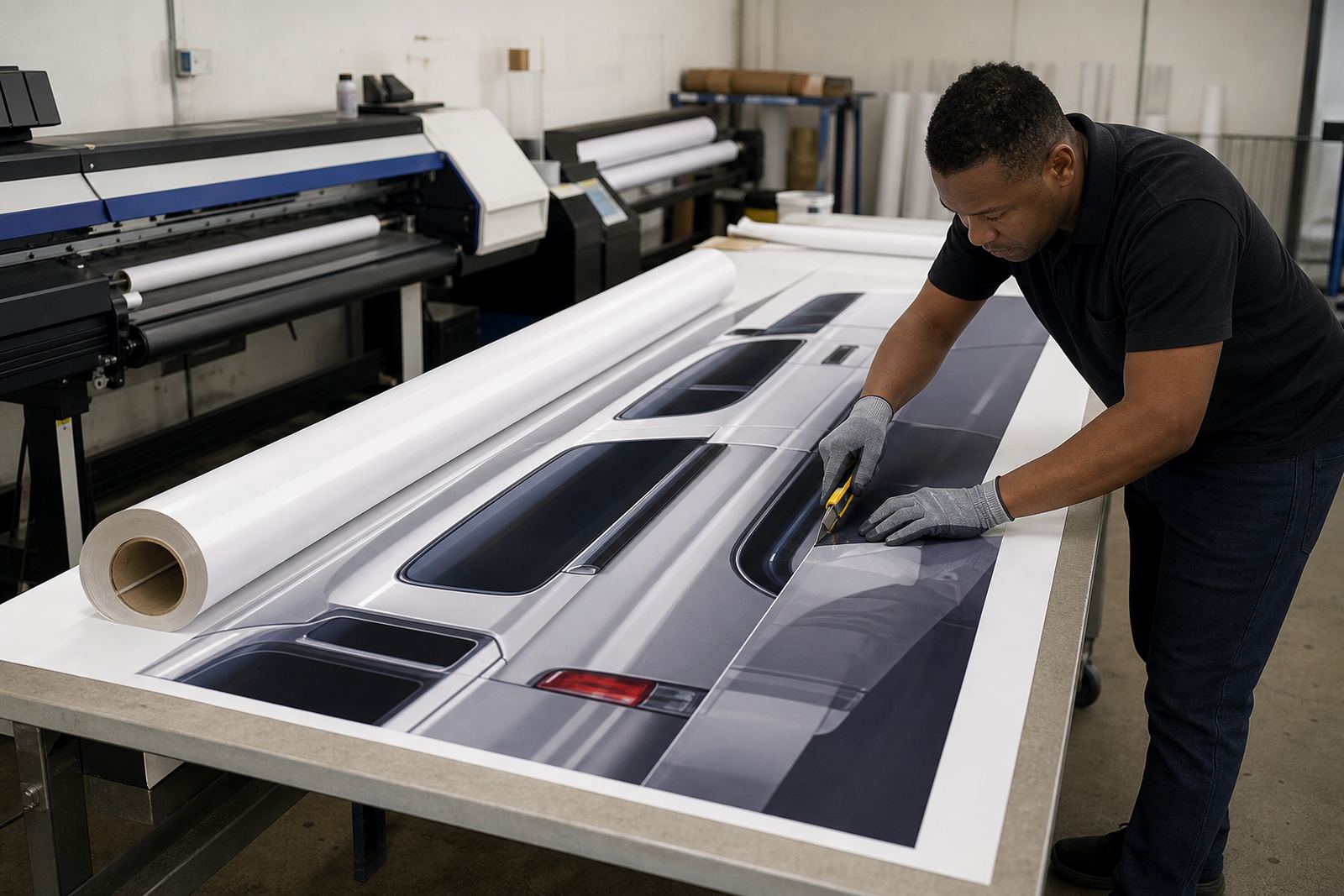
Packaging prototypes are commonly printed on flatbed or roll-to-roll equipment, depending on the sample format. Flatbeds suit cartons, display panels, rigid sleeves and boards, while roll printers are useful when the mock-up includes labels, wrap-around sleeves or longer sample strips. The ink must be compatible with the printer’s ink delivery system, head type and curing arrangement, otherwise the prototype may show banding, weak colour or poor adhesion.
Our technical support usually starts with the basics: what is being printed, what material is being used and what the final handling will be. A mock-up for a dry goods carton may have different needs from a sample that will be chilled, handled often or stored near moisture. In coastal areas like Cape Town, Bellville and Gqeberha, humidity can affect board prep and drying behaviour, so the sample plan should allow for that.
- Confirm the substrate first, whether it is folding carton board, coated paper, synthetic film or laminated stock.
- Check whether the print is on a flatbed or roll-to-roll set-up, since curing and feed settings differ.
- Allow enough time for adhesion testing on folds, cuts, glue zones and any high-wear edges.
- Test the sample under the light where it will be viewed, not only under workshop lighting.
Layout and planning advice before you print samples
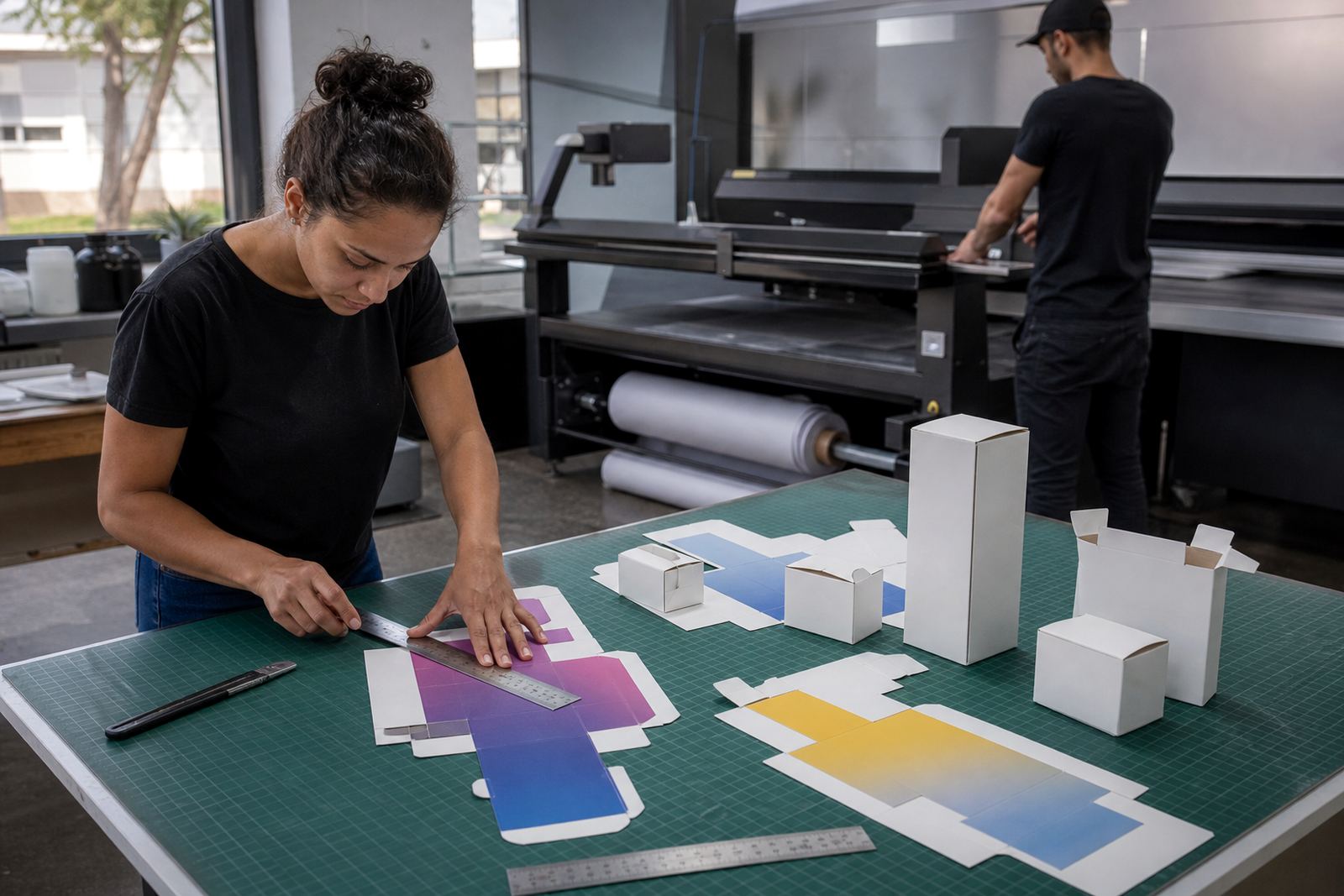
Good packaging prototyping starts with the layout. The artwork should include bleed, fold lines, glue flaps and any areas where text may become hard to read after folding. If the file is rushed, the prototype may still print, but it will not answer the real question, which is whether the design works in the hand. Small type, dark solids and fine line work should be checked carefully, especially where there is a crease or cut.
We often advise clients to print more than one version at sample stage. A colour trial can compare two shades of a logo block, while another copy can test a different finish or coverage level. If the product will go into stores across South Africa, the sample should also be checked for lighting differences. What looks fine in a bright studio can shift under warmer retail lights or in a warehouse in Pretoria with patchy daylight.
- Use the final dieline where possible, not an approximate layout.
- Mark fold, glue and cut positions clearly on the proof file.
- Keep spot colours and process builds consistent from one prototype to the next.
- Leave room for barcodes, batch codes and legal copy where needed.
Common mistakes that waste time and board
The most common mistake is assuming the prototype only needs to look right. In packaging, a sample must also survive folding, rubbing, stacking and handling by several people. A print that looks good on first inspection may fail once the carton is opened, glued or packed with product. Another mistake is skipping compatibility checks and using an ink set that is not suited to the substrate or the printer settings.
Incorrect curing is another frequent problem. If the ink is under-cured, adhesion can be weak and the finish may mark or smudge. If it is over-cured, the film can become brittle and crack on a fold. This is why curing guidance matters as much as colour matching. Always follow the safety data sheet, wear gloves when handling inks and keep the work area clean to avoid contamination.
On a tight sample deadline, a little planning saves a lot of rework.
Budget ranges for prototype runs in rand
Prototype budgets vary depending on the substrate, the number of versions and the amount of print testing needed. A simple one-off mock-up for internal review can cost far less than a set of sample packs with multiple colour options, adhesion tests and repeat adjustments. The right budget also depends on whether the job is a quick colour proof or a more complete packaging trial with folding and assembly.
For planning purposes, many businesses work within a sample budget of around R750 to R2,500 for basic prototype materials and ink use, then allow more for multiple test rounds, operator training or remote technical support. More involved packaging trials can move into the R3,000 to R7,500 range when several boards, repeat prints and production planning are needed. Courier delivery across South Africa should also be included, especially when stock needs to reach Durban, Johannesburg or Pretoria by a certain date.
We help clients manage repeat order planning too, so once the packaging format is approved, the same ink choice and handling notes can be used again with less back-and-forth. That is useful when a launch date moves or the customer asks for another round of samples.
How our Epping team supports packaging sample work
From our Epping, Cape Town base, we support packaging prototype jobs with ink selection, compatibility checks, adhesion testing, curing guidance and sample pack prep. If you need colour trial support or remote tech help, we can talk through the job before stock is couriered to your site. That matters when a converter in Paarl, a sign shop in Bellville or a packhouse in Gqeberha needs a sample without losing a day to avoidable trial and error.
Michael van Wyk leads the business, with Lindiwe Maseko on sales, Hennie Opperman on technical support, Shanaaz Allie on operations, Moagi Shirinda on logistics, Nadine Motaung on customer service and Thabo Steyn on training. The team works with packaging clients who need practical answers, not guesswork. If the job calls for a different approach to curing, handling or print sequence, we will say so plainly.
For an ink order, write to UV Ink through the contact page form with your printer model and ink colours, and we then advise on stock, sample prep and courier timing for Cape Town, Johannesburg, Durban, Pretoria and Gqeberha. For packaging prototypes, the aim is simple: get the colour right, get the adhesion right and get the sample on the table in time for approval.