Vehicle decal work starts with the right film and ink match
For vehicle decals, the print is only one part of the job. The film, the ink, the curing process and the installer all need to work together. UV-curable inks can support decal and branding workflows on compatible films produced for application onto vehicles, but adhesion depends on surface prep, ink laydown and whether the material is suited to the final use.
Most decal jobs in Cape Town, Johannesburg and Durban are for fleet branding, service vehicles, short-term promotions or panel graphics. That means the print has to handle sun, wash cycles, road grime and temperature changes. Coastal humidity in areas like Epping, Bellville and Gqeberha can also affect storage and handling, so stock should be kept sealed and dry before printing.
We help customers check compatibility before production, especially where the same printer is used for signage one day and decals the next.
Typical printer setups used for decal production
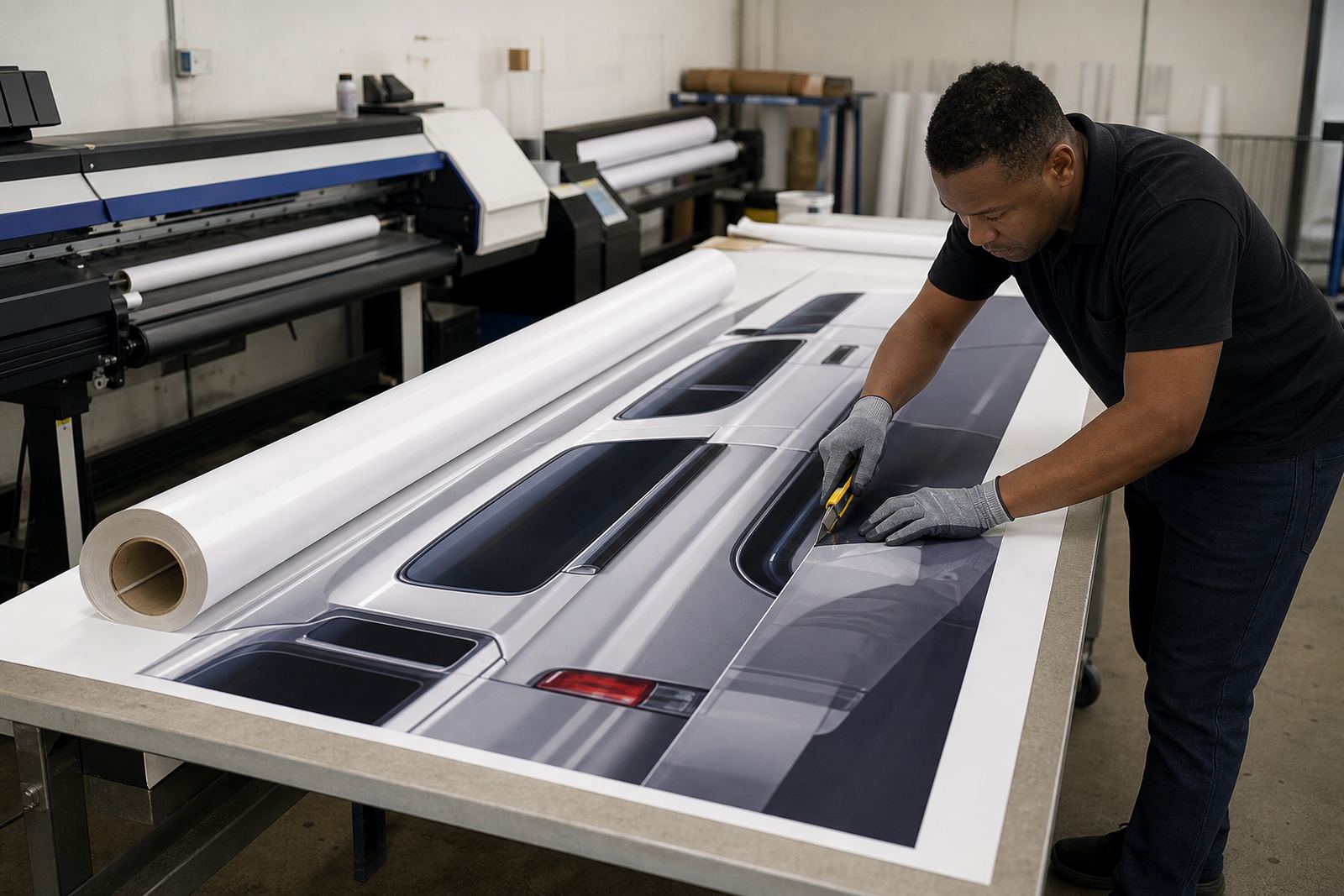
Vehicle decal work is usually printed on a flatbed or roll-to-roll printer, depending on the media and the size of the job. Flatbeds are common for rigid panels, sample boards and layered graphics. Roll printers suit long runs of decals, full wraps, door logos and printed sections that are later cut to shape.
For most shops, the key is consistency. If the ink cures too hard, too soft, or unevenly, you can get cracking at cut edges or poor bond when the decal is installed. Printer operators should check ink laydown, nozzle condition, heat settings where relevant and the cure level before releasing a run.
- Flatbed printer for rigid test panels and short, accurate production runs
- Roll-to-roll printer for long decal runs and repeated fleet graphics
- Cutting plotter for contour cutting and lettering
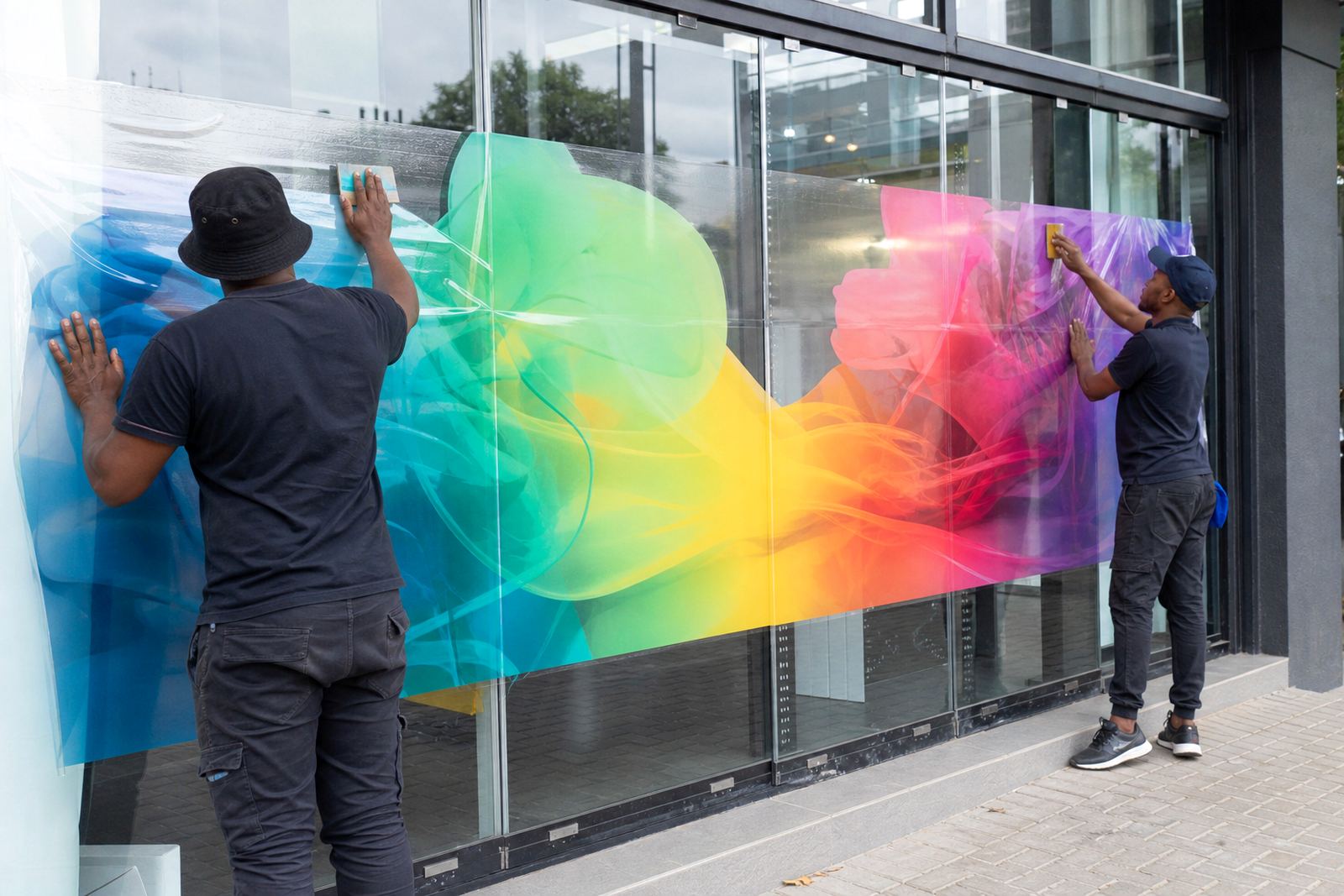
- Application tools for positioning, squeegeeing and edge finishing
Planning layout so the decal reads from the road
Vehicle branding must be read quickly. That means strong contrast, sensible sizing and a layout that works on doors, tailgates, bakkies, vans and panel vans. Small text looks neat on screen but it can disappear once the vehicle is moving or parked in harsh light. If the artwork wraps around handles, curves or rivets, the installer needs a plan before printing.
For fleet jobs, we normally suggest measuring each panel individually rather than relying on one standard vehicle shape. Different model years can vary by a few millimetres or more, and that matters when the decal must line up with trims, handles or fuel caps. On busy commercial vehicles, a simple layout often lasts longer and is easier to replace later.
- Keep contact details large enough to read from a short distance
- Allow safe margins around curves, seams and door gaps
- Place key information where mud and scratches are less likely
- Use separate files for each panel if the vehicle is not identical across the fleet
- Plan for future replacement, especially on leased vehicles
Lamp, media and adhesion checks
Adhesion is where many decal jobs go wrong. A print may look bright straight off the printer, then fail later because the surface was dusty, the ink was under-cured, or the installer rushed the application. UV-curable ink must cure properly for the chosen film and use case, but over-curing can also create brittle prints that lift at the edges.
Before production, we recommend a simple compatibility check and if needed a sample print on the actual film. That helps catch issues with ink adhesion, cure balance and post-print handling. For outdoor vehicle work, especially in warm inland areas like Pretoria and Johannesburg, the decal should be tested for heat exposure and edge lift. In coastal regions, salt air and moisture make clean application even more important.
- Check the film is suitable for outdoor vehicle use
- Clean the panel carefully before application
- Follow the curing guidance for the ink and printer combination
- Handle printed pieces with gloves to avoid contamination
Common mistakes we see on fleet and sign shop orders
Many vehicle decal problems are preventable. One common mistake is using a media intended for indoor signage, then expecting it to last on a truck door in summer. Another is printing a detailed wrap with colours that look good on a monitor but lose impact under daylight and road glare. There is also the issue of careless handling. Finger marks, dust and solvent residue can all interfere with bond.
Another practical problem is poor production planning. A job may be printed without enough spare material for test pieces, alignment checks or panel corrections. That leads to waste and reprints, which is expensive when a fleet has to go out on the road. If you are working around municipal branding rules, permit requirements or commercial signage limits, it is better to check the layout before production starts.
Always follow the safety data sheet and wear gloves when handling ink and freshly printed material. Keep the area ventilated and store supplies properly after use.
Budget ranges for decal printing and support in Rand
Vehicle decal budgets depend on the vehicle size, the film selected, the number of colours, the amount of contour cutting and whether you need sample support or repeat production. For a small business in Bellville or Paarl, a simple logo set may be modest. For a multi-vehicle fleet in Durban or Gqeberha, the spend rises with material coverage and labour.
As a broad working guide, expect small decal material and print jobs to start from around R1,500 to R4,500 for limited branding pieces, while larger vehicle graphics or multiple panels can move into the R5,000 to R15,000 range and beyond depending on coverage. If you are printing in batches, repeat order management can help reduce downtime and avoid last-minute courier delays.
- Small logo and door decal sets: lower entry cost
- Partial branding with cut lettering and panel graphics: mid-range budget
- Large fleet runs, test samples and training: higher budget with better control
- Courier support available for Cape Town, Johannesburg, Durban, Pretoria and Gqeberha
How UV Ink supports decal production from Epping
From our Epping, Cape Town base, we assist with ink selection, compatibility checks, adhesion testing, curing guidance and sample pack prep for vehicle decal work. If you are setting up a new workflow or trying to improve an existing one, we can help with production planning, operator training and remote tech help so the print comes out consistently.
We also handle courier stock support and repeat order management for customers across South Africa. Whether you are supplying a single panel van or a full branch fleet, the goal is the same: clean print, stable cure and decals that install properly. If a job is urgent, it helps to know exactly what printer, film and finish you are using before the first bottle opens.
For enquiries, please use the form on our contact page and tell us what vehicle type, film and printer set-up you are working with.