What retail signage jobs usually need
Retail work is often fast moving. One week it is shelf wobblers and price boards, the next it is window vinyl, point-of-sale panels or seasonal promos for a store in Epping, Bellville or Durban. The common thread is speed, clean colour and a finish that looks good close-up, because customers read these signs at arm’s length.
UV-curable inks are used where a quick cure and solid surface hold matter. For rigid boards they can be a practical choice for shop fitouts and internal displays. For roll-to-roll work, the key is matching the ink set to the media, then checking whether the sign will sit inside under LEDs, near a door, or in full sun at a coastal site where humidity can be high.
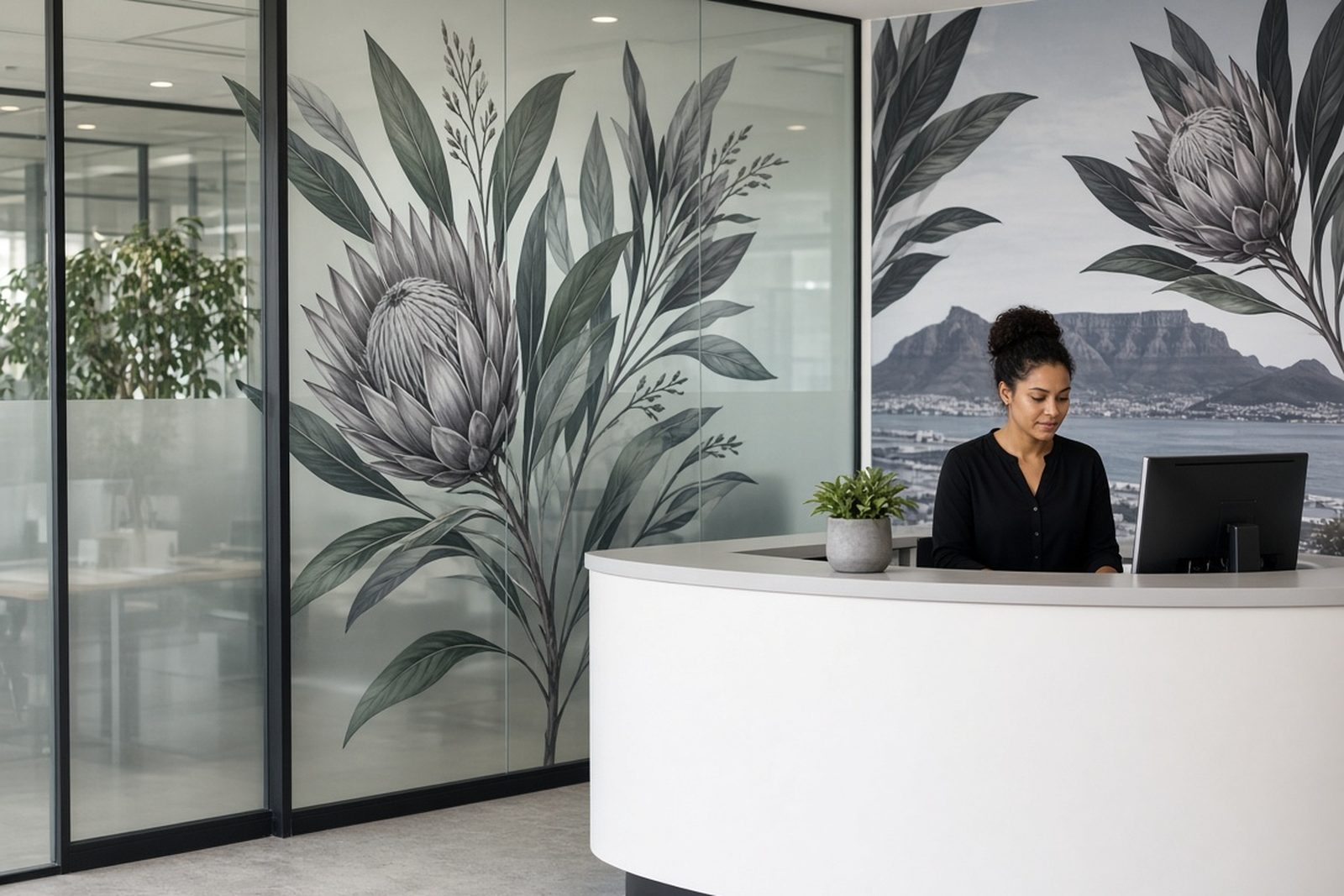
- Shop fronts and window graphics
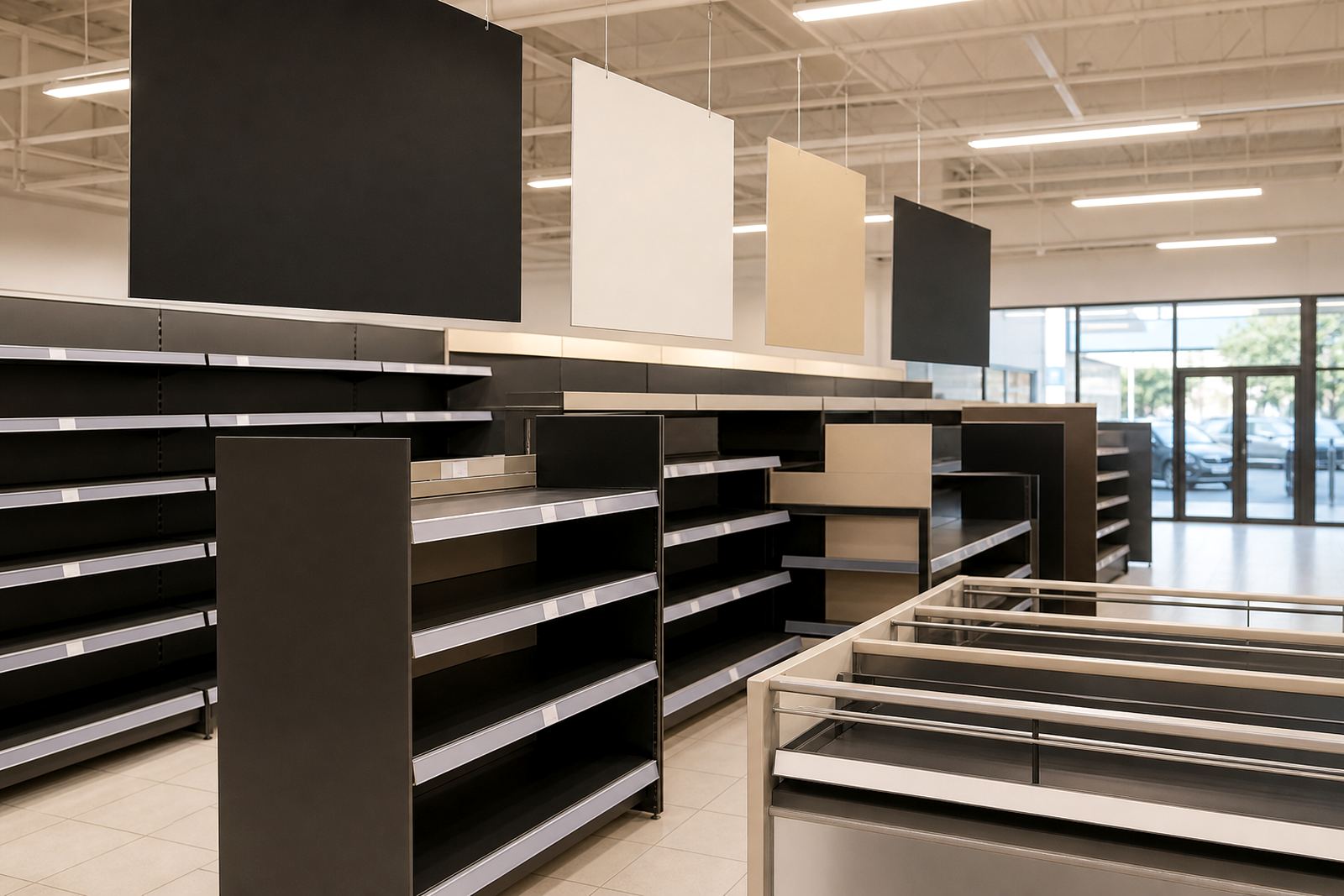
- Price boards and shelf signage
- Promotional panels for launches and specials
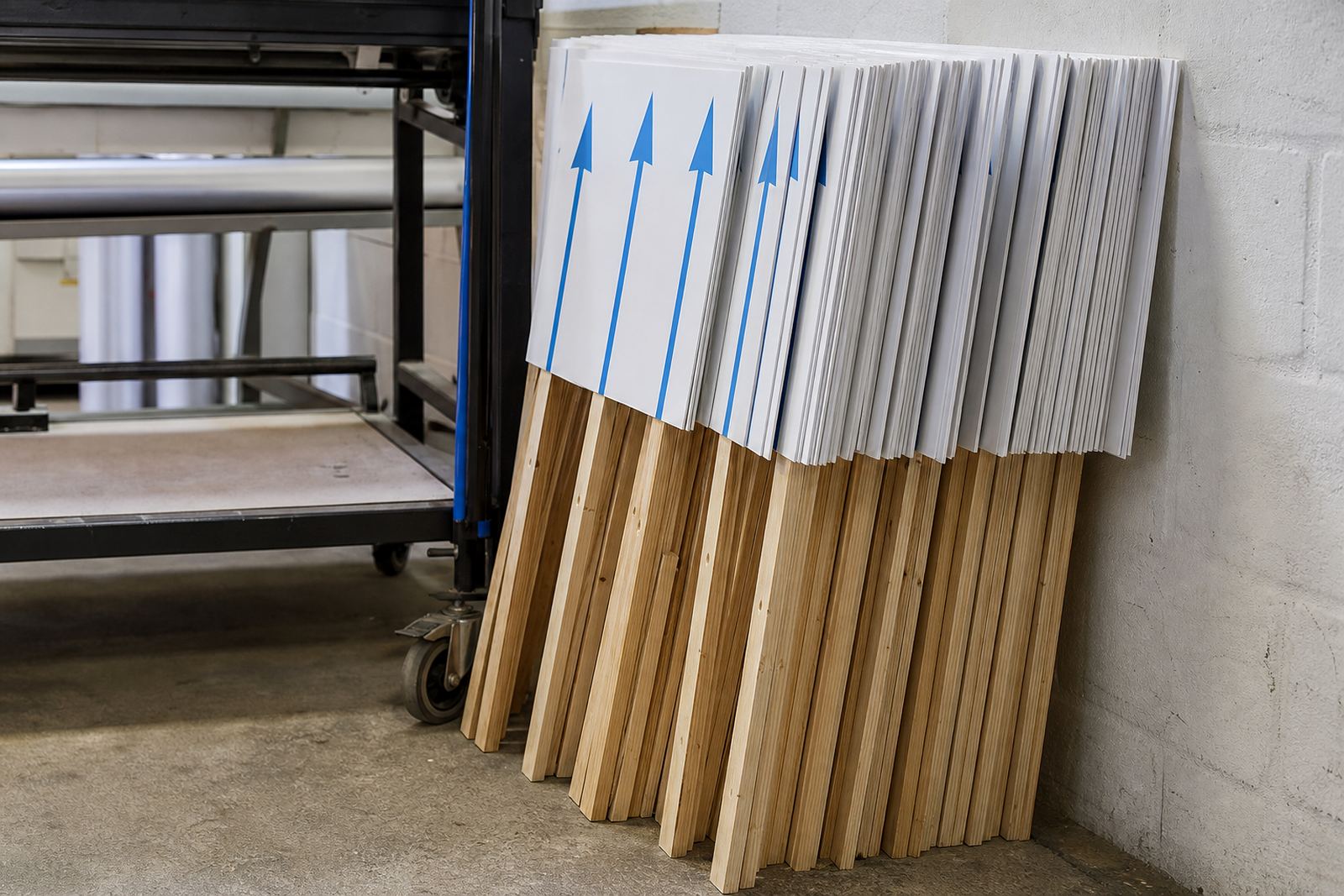
- Directional signs for malls, forecourts and showrooms
- Short-run packaging inserts and display headers
Printer setups that suit this kind of work
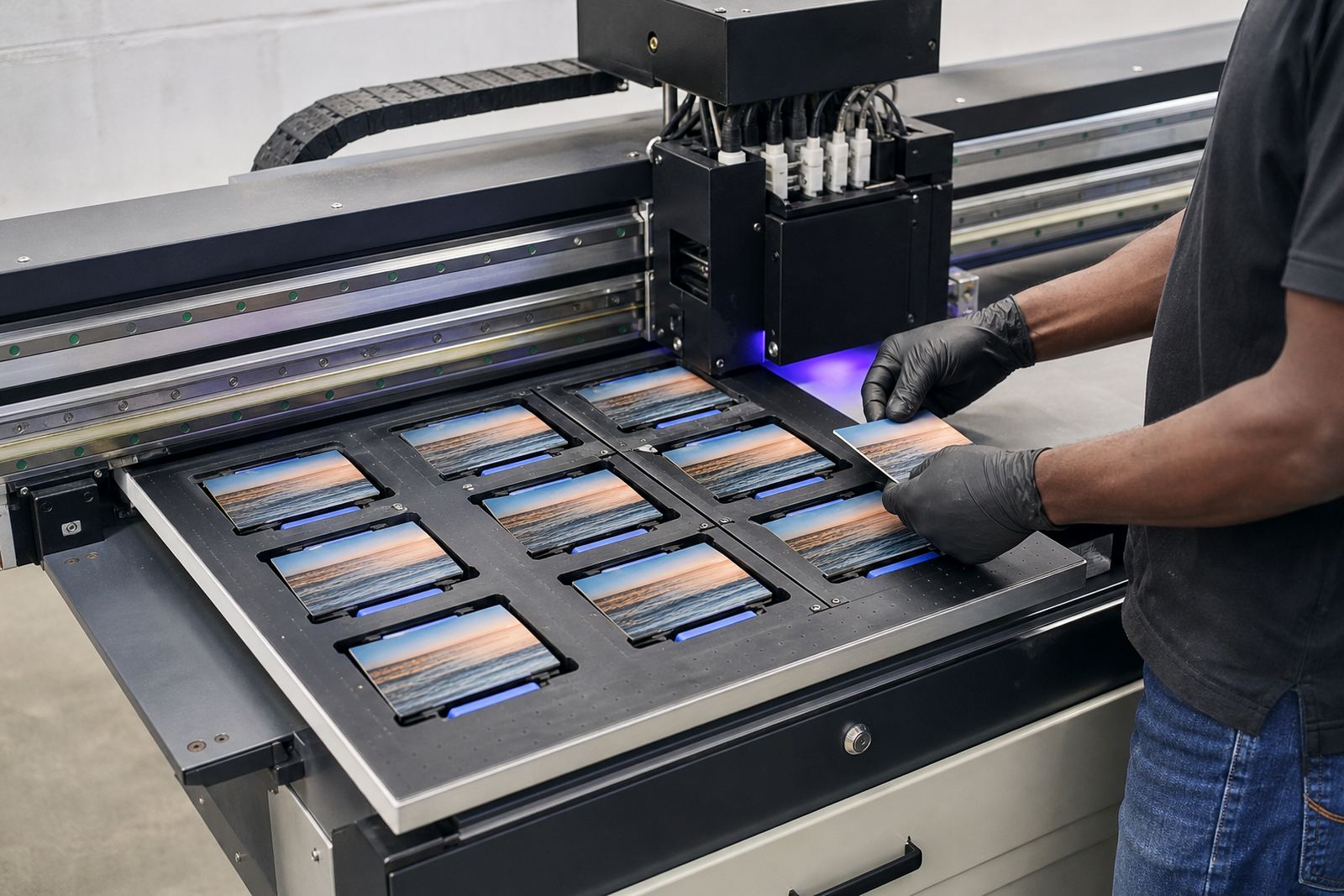
Most retail signage rooms use either a flatbed printer for rigid material or a roll-to-roll printer for flexible media. Some sites run both. Flatbeds are handy for foam board, PVC sheet, acrylic and composite panels. Roll systems suit self-adhesive vinyl, banner media and some coated films. The ink has to match the print head chemistry and the printer’s curing setup, otherwise you get weak adhesion, poor gloss control or blocked heads.
At UV Ink we help clients check compatibility before a job starts. That usually means confirming the media type, the intended use, whether the piece will be handled by staff every day, and what curing settings the machine can hold consistently. It also helps to test on the actual stock, not only on a similar sample. A small change in coating or surface texture can make a large difference.
- Flatbed printer for boards, panels and rigid shop graphics
- Roll-to-roll printer for vinyl, film and banner jobs
- Correct lamp or LED curing setup for the ink line
- Basic colour management for repeat retail campaigns
Planning the layout before you print
Retail signs work best when the message is short and the layout is easy to read from 2 to 5 metres away. Large type, high contrast and simple price blocks matter more than decorative extras. If the sign is going near a till point or aisle end, keep the most important line at eye level and leave enough white space so the promotion does not feel crowded.
For stores with multiple branches, it helps to standardise sizes and bleed marks from the start. That saves time when a head office in Johannesburg wants the same format sent to Pretoria, Gqeberha and Cape Town. It also makes repeat orders easier because the operator can keep the same dimensions, curing profile and finishing steps from one run to the next.
Common planning errors include printing too small for the viewing distance, using colour combinations that wash out under store lighting, and forgetting that a board may be cut or mounted after printing.
Adhesion and curing checks that save reprints
Good colour means little if the ink rubs off, cracks on a bend or lifts at the edges. That is why adhesion testing and curing guidance matter so much in retail signage. Some substrates need extra surface prep, some need slower passes, and some need a post-print wait before handling. If the print is over-cured, the film can become brittle. If it is under-cured, scuffing and fingerprinting become a problem.
For shop graphics, the practical checks are simple: print a small sample, wait, rub test it and inspect the edges after cutting. If the job is for a busy store, ask how often the panel will be cleaned and with what product. Wiping with strong cleaners can affect surface appearance over time, especially on high-touch signs near tills or promo tables.
- Test on the final media before full production
- Check cure level after printing and after cutting
- Allow for handling, stacking and courier movement
- Keep a log of ink settings for repeat print runs
Typical mistakes on shop and promo boards
Retail jobs often fail for ordinary reasons. A printer operator may choose the wrong media profile, rush the cure stage, or lay down too much ink on a textured board. Another common mistake is mixing indoor and outdoor expectations. A promo sign meant for a month in a mall corridor does not need the same construction as one for an exterior window in Cape Town’s salt air.
We also see problems when clients reuse old artwork without checking the final size. A neat design on screen can turn awkward on a 600 x 900 mm board if the logo, price and callout are not spaced properly. And when the print room is under pressure, stock control can slip. Keep a repeat order list, batch notes and a sample reference for each store group, it makes life easier when stock must move quickly between branches.
For safer handling, follow the safety data sheet for the ink system, use gloves during mixing and clean-up, and keep the work area well ventilated. That is especially important when staff are running long shifts or working around warm curing equipment.
Budget ranges for retail signage runs
Budget depends on quantity, media, size, finishing and whether the job needs testing or training support. A small internal retail run might only need sample packs and a few test prints. A larger chain rollout can include colour trials, operator training and repeat order management across several branches. In Rand terms, the ink cost is only one part of the picture, but it still needs to fit the margin on the final sign.
As a rough planning guide, smaller trial jobs can start in the low hundreds of Rand for samples and test media, while short production runs for shop graphics can move into the low thousands once full boards, roll stock and courier delivery are included. Larger multi-branch orders can run higher depending on volume and whether the team needs remote technical help during setup. The best way to control spend is to test once, standardise the settings, then repeat the same spec for later orders.
UV Ink supports clients from Epping, Cape Town and sends courier stock support across South Africa, including Johannesburg, Durban, Pretoria and Gqeberha. If you need help choosing a line for retail signage, write to UV Ink through the contact page form and the team can guide ink selection, compatibility checks and curing guidance before the first run.