
Bellville brief for a fast-moving estate season
The client was a suburban print shop in Bellville handling a sharp rise in estate board work during the peak selling period. Their boards were going out on fluted polypropylene sheets, mostly for roadside use where the print had to stay visible in bright sun, damp mornings and the odd windy afternoon.
The brief was practical: keep colour consistent across repeat runs, avoid ink cracking on the fluted profile, and make sure the finished boards could be handled, stapled and moved without scuffing too easily. The shop also needed a supply plan that would not leave them waiting for stock when the schedule got tight. One day a job might need ten boards, the next it was fifty, so we kept the ordering simple and the advice very direct.
They also asked for help reducing waste. On this type of work, a small mismatch between ink, media and curing can mean reprints, poor adhesion or a finish that feels tacky after curing. We looked at the printer setup, the sheet type and the way the boards were being used on site before suggesting a path forward.
What the print room needed to solve
The main challenge was getting a durable print on a sheet with a textured, fluted structure. That surface is not the same as rigid board or smooth vinyl, so ink laydown, adhesion and curing all needed attention.
- Substrate: fluted polypropylene sheets used for estate boards
- Print method: UV flatbed production with repeatable colour runs
- Environment: Bellville, with warm days, cool mornings and some coastal humidity drifting inland
- Constraint: short turnaround during a heavy sales season
- Need: good adhesion, clean curing and simple repeat order support
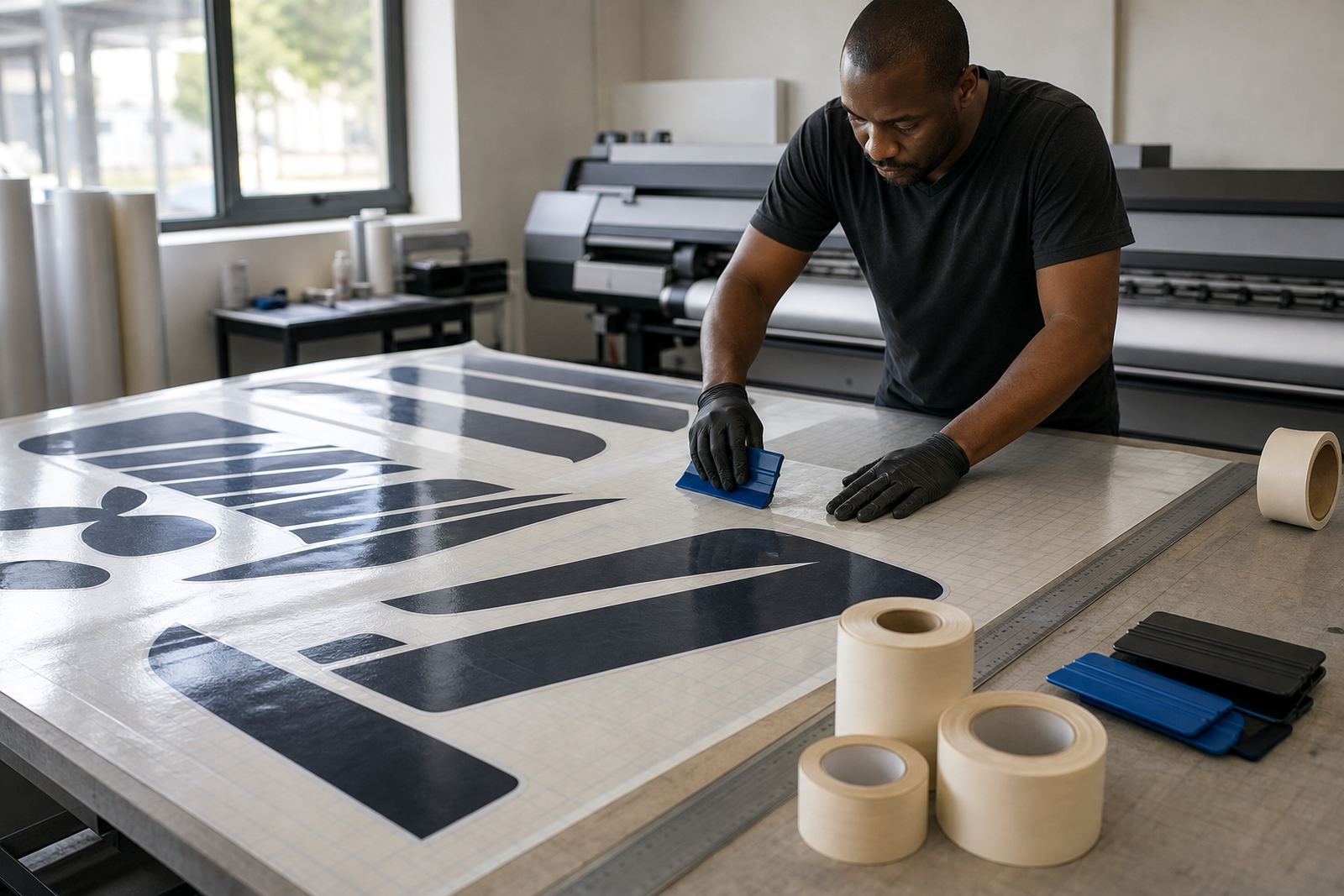
We treated the job as a production support exercise, not just an ink supply. That meant checking how the sheets were fed, how much ink was being laid down and whether the curing was getting full coverage at speed. Small changes at this stage can make a big difference later when the boards are cut, packed and installed.
Ink selection, checks and trial boards
We supplied UV-curable inks suited to flatbed work on fluted sheets and helped the team check whether the printer settings matched the job requirements. The aim was to get the print to cure properly without overloading the surface. In practical terms, that meant looking at curing intensity, pass count and the way colour behaved on the sheet edges.
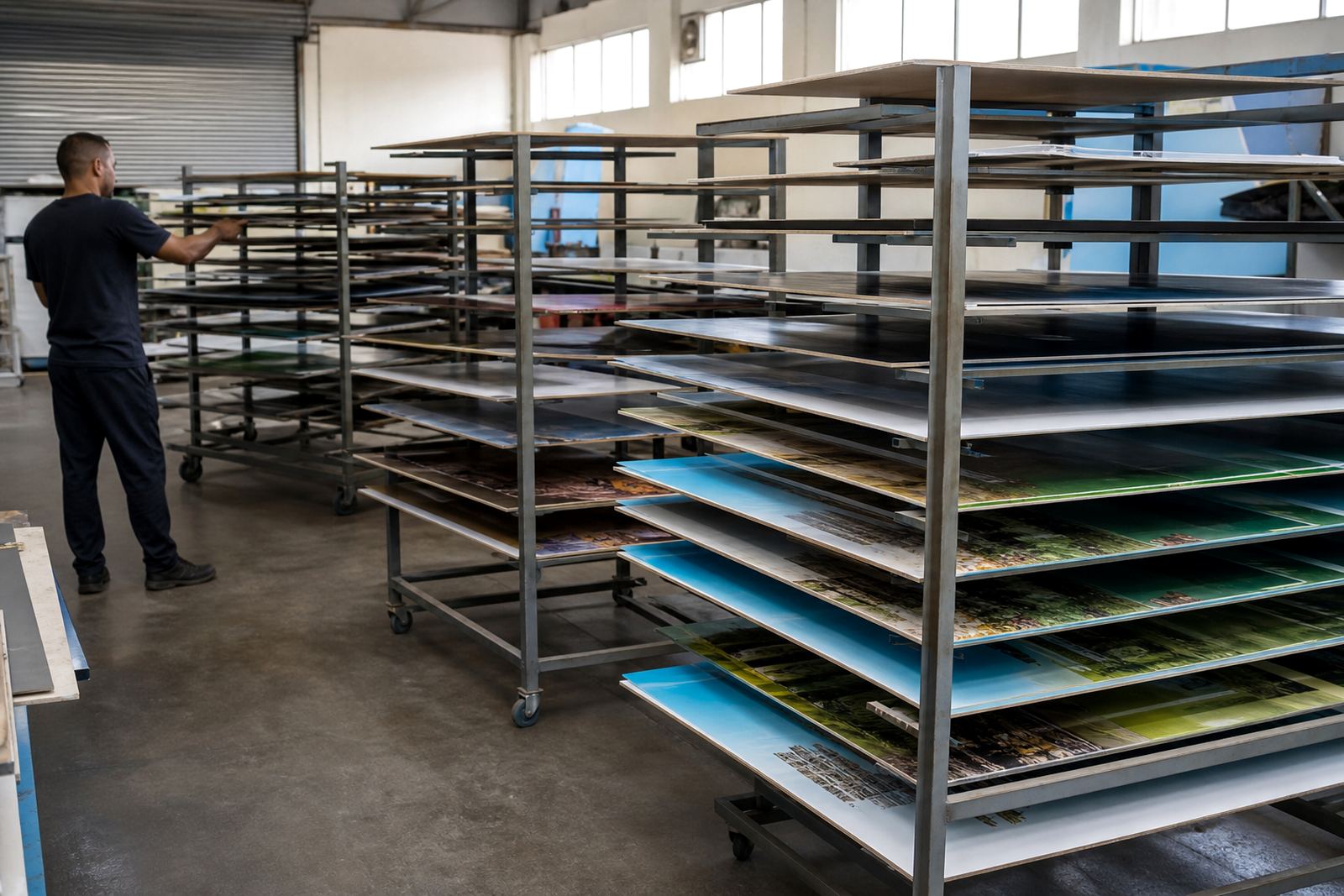
We also supported a few trial boards first. That let the shop compare finish, adhesion and handling before running the full batch. The trials showed where a little extra care was needed around the board edges and fold points, especially on pieces that would be tied to fencing or fixed in place for several weeks. The team then locked in a repeatable production method and used it for the rest of the season.
- Ink selection for fluted sheet compatibility
- Adhesion testing before full production
- Curing guidance for the selected printer setup
- Colour trial support for repeatable branding
- Sample pack preparation for quick approval
Support during production week by week
The work ran over three weeks. In week one we reviewed the brief, media type and printer compatibility, then sent sample support and handling guidance. In week two the shop ran test boards and fine tuned curing and ink laydown. In week three they moved into full production with courier stock support in place so they could keep ordering as jobs were confirmed.
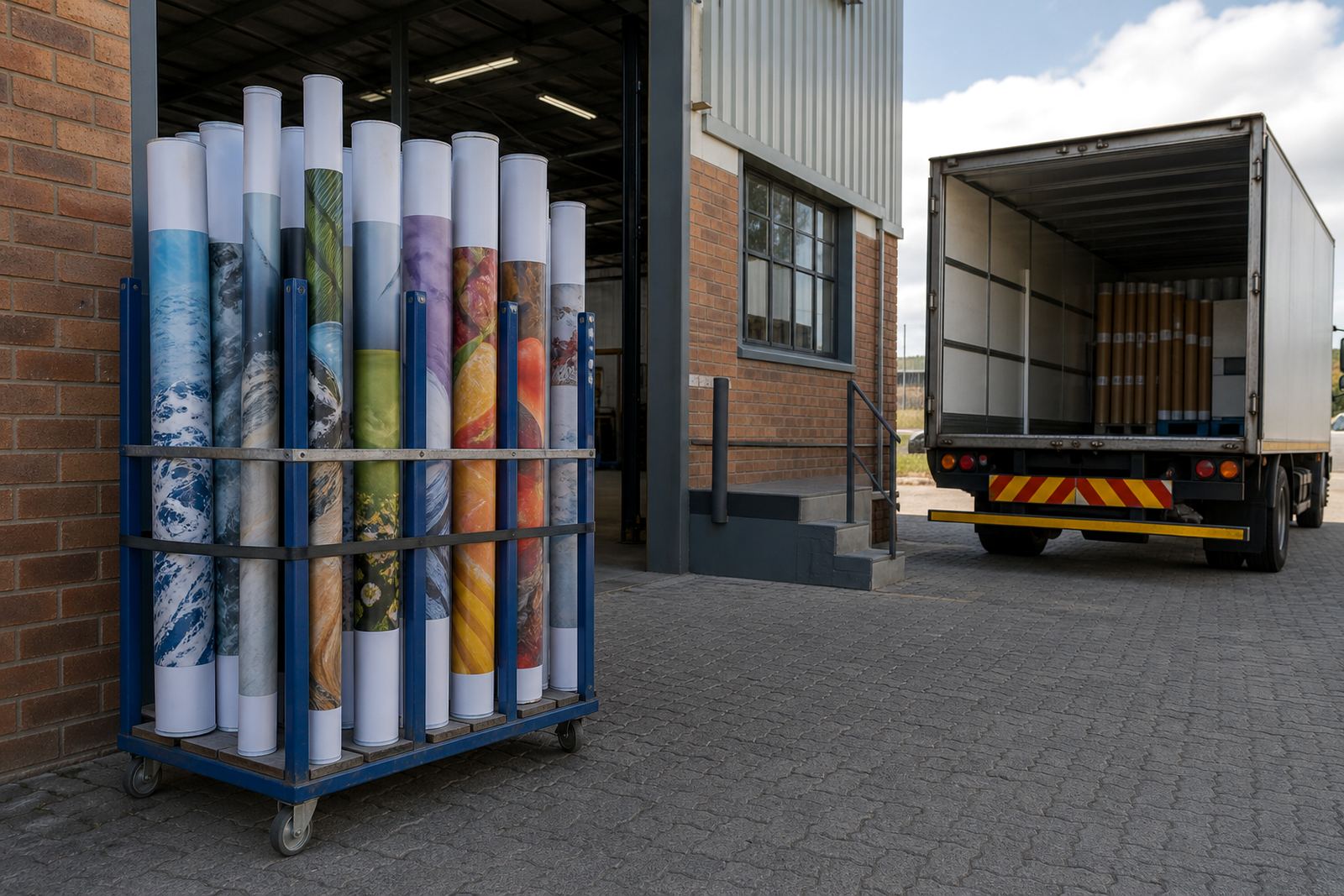
Our role stayed close to the production floor. Hennie helped with technical support on the printer settings, while Lindiwe handled the supply side and repeat order planning. Moagi coordinated dispatch from Epping and kept the courier schedule moving so Bellville stock could be topped up quickly. The team also received a safe handling briefing, including the reminder to follow the safety data sheet and wear gloves when handling uncured ink and cleaning materials.
Because estate board work often comes in bursts, we also helped them plan how many sheets to keep on hand and when to reorder. That cut down on the stop-start pressure that can build up when several agents all want boards in the same week.
Results on the boards and in the print room
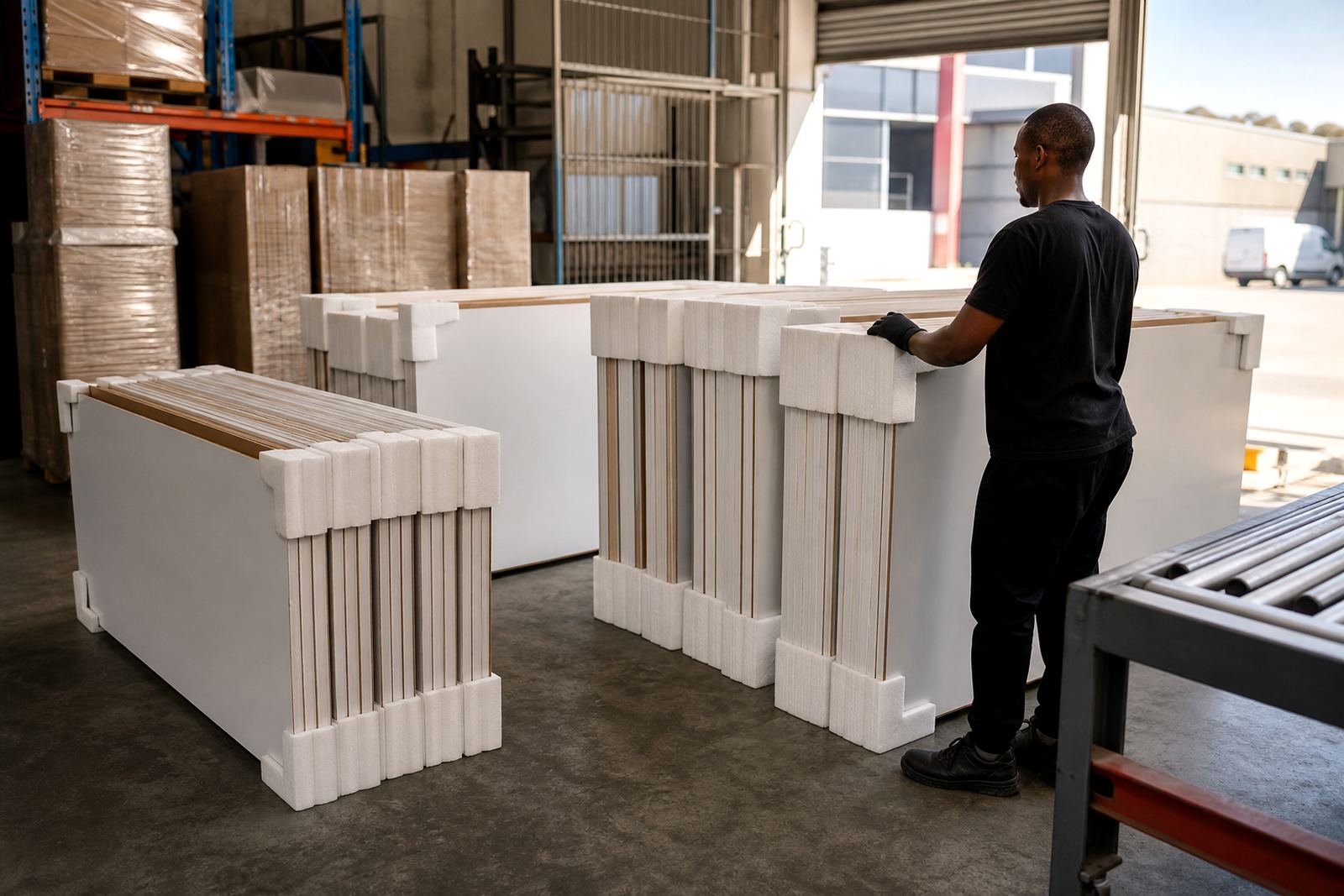
The printed boards went out on time and held together well through the selling period. Colour remained clear enough for property details and directional copy, and the cured finish stood up to handling and outdoor exposure better than the shop had been getting before. The print room reported less rework, fewer failed sheets and a smoother handover from print to cutting and packing.
It also helped that the team now had a known process for this substrate. Instead of guessing at each new job, they had a settled method for adhesion checks, curing guidance and repeat ordering. That made the next batch easier to plan and the stock easier to manage. The shop said the boards looked more consistant across the run and the finish was more dependable from first sheet to last.
- Cleaner adhesion on fluted sheets
- More consistent colour across repeat runs
- Less wastage from trial-and-error setting changes
- Quicker turnaround during the peak season
- Clearer ordering plan for follow-up jobs
Kept for the next Bellville run
If we were doing the same project again, we would start with the same steps: confirm substrate, test adhesion early and set curing around the actual production pace. That approach keeps surprises down and helps the print shop stay on schedule when the work gets busy. For estate boards in particular, the first sample phase is worth the time because it shows whether the finish will hold up once the boards leave the print room.
We would also keep the stock plan simple. For seasonal work, having enough UV-curable ink ready for short notice reprints is usually better than trying to stretch a job too far. In Bellville, where jobs can move quickly and delivery windows can be tight, that kind of planning helps a small team work like a larger one without adding extra overhead.
Michael van Wyk oversees the business, and the support team continues to handle enquiries through the contact form for supply, training and repeat orders across South Africa.
Ink data
| Project | Bellville estate boards on fluted sheets |
|---|---|
| Client type | Suburban print shop |
| Location | Bellville, Cape Town |
| Timeline | 3 weeks from review to full production |
| Media | Fluted polypropylene sheets |
| Support provided | Ink selection, adhesion testing, curing guidance and repeat order planning |