Salt River brief: layered window film with white backing
The client was a graphics studio in Salt River, Cape Town working on a retail-facing window activation for a local campaign. The brief was simple on paper but fussy in production: print layered window film with a strong white backing, keep the lettering sharp, and make sure the colours still read clearly through daylight and indoor lighting.
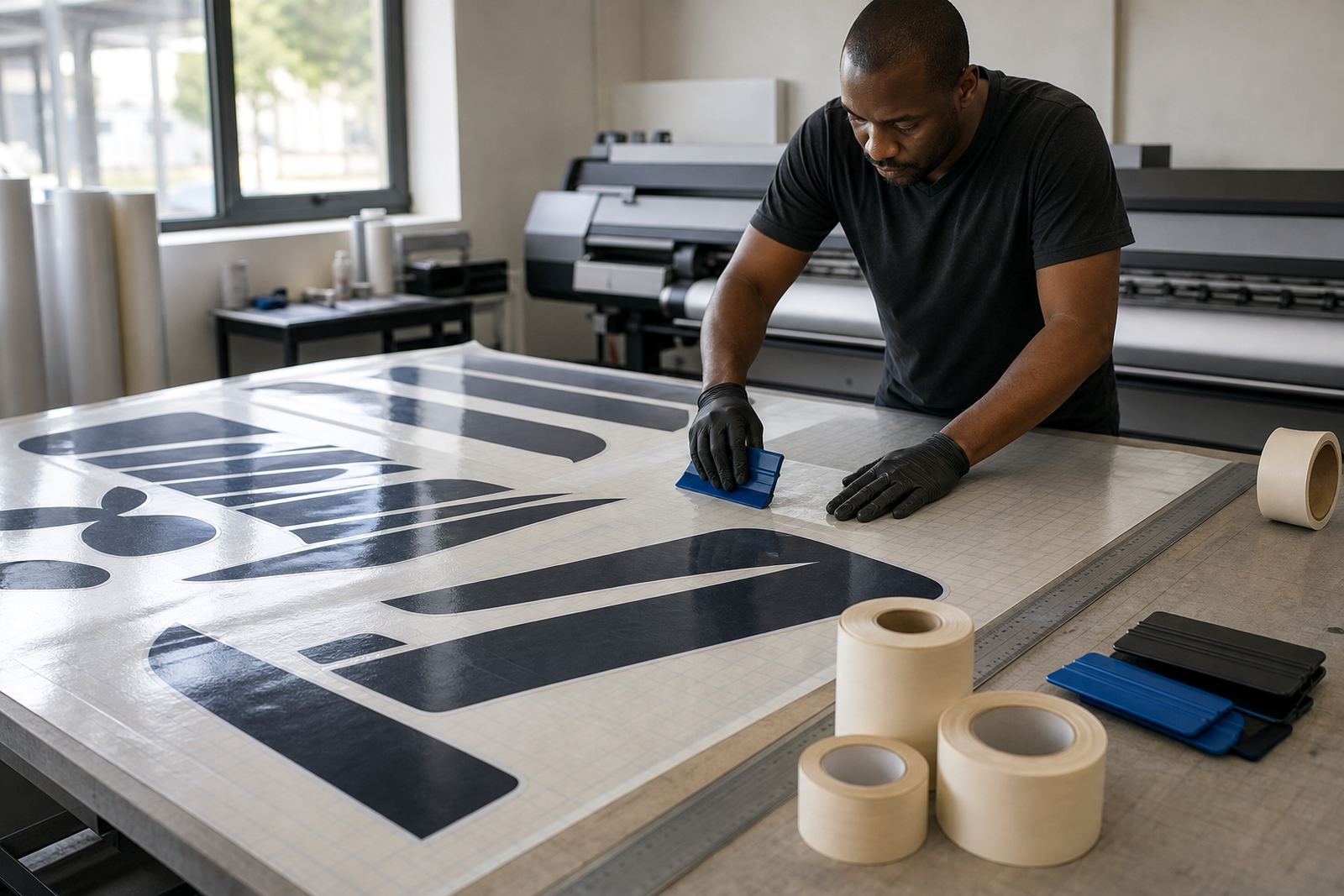
The display had to work on glass, so the print needed good adhesion without looking heavy or hazy. There was also limited install time. The studio wanted a finish that could be produced in one run where possible, then trimmed and installed quickly before trade hours. We discussed the substrate, the print sequence, the curing setup and the handling plan before anything went to press.
Because window pieces are handled, aligned and sometimes repositioned during install, the coating and ink film had to tolerate normal site movement without lifting at the edges. In practice that meant checking the surface prep, the ink laydown, and the final cure rather than assuming the same settings would work for every film type.
What made the job difficult on the day
Window graphics sound straightforward until the details start stacking up. The film needed a crisp white layer behind the graphics, but the white had to stay consistent across the whole panel so the darker colours sat properly on top. If the white is uneven, you see patchiness as soon as the sun hits the glass. If the cure is too light, you get smudging or poor adhesion. If it is too heavy, some films can show brittleness at fold points or cut lines.
That meant production planning mattered as much as print quality. We helped them map the sequence: test strip, colour check, white layer check, full production, then trim and pack for collection. It sounds basic, but it saves reprints when the schedule is tight and the job must go out same week.
- Material: clear window film for layered graphics
- Print structure: colour layers with white backing
- Finish target: high readability in daylight
- Handling need: clean cut edges and stable adhesion
Ink choice, adhesion and curing guidance
For this kind of work, the ink needs to suit the printer type and the media coating. UV-curable inks cure under UV light, so the print firms up quickly once the lamp system does its job. That quick cure is useful on production jobs, but only if the ink is matched properly to the film and the printer settings. We assisted with compatibility checks to help the studio avoid issues like poor wetting, weak bond, or colour shift after cure.
We also gave practical curing guidance. On smooth window films, adhesion depends on more than the ink itself. Cleaning, surface condition, lamp output, pass count and ink volume all play a part. A print that looks fine straight off the machine can still fail if the cure is incomplete or if the film was handled too soon after printing. For that reason, we advised a short rest period before trimming and fitting, especially on panels with dense white coverage.
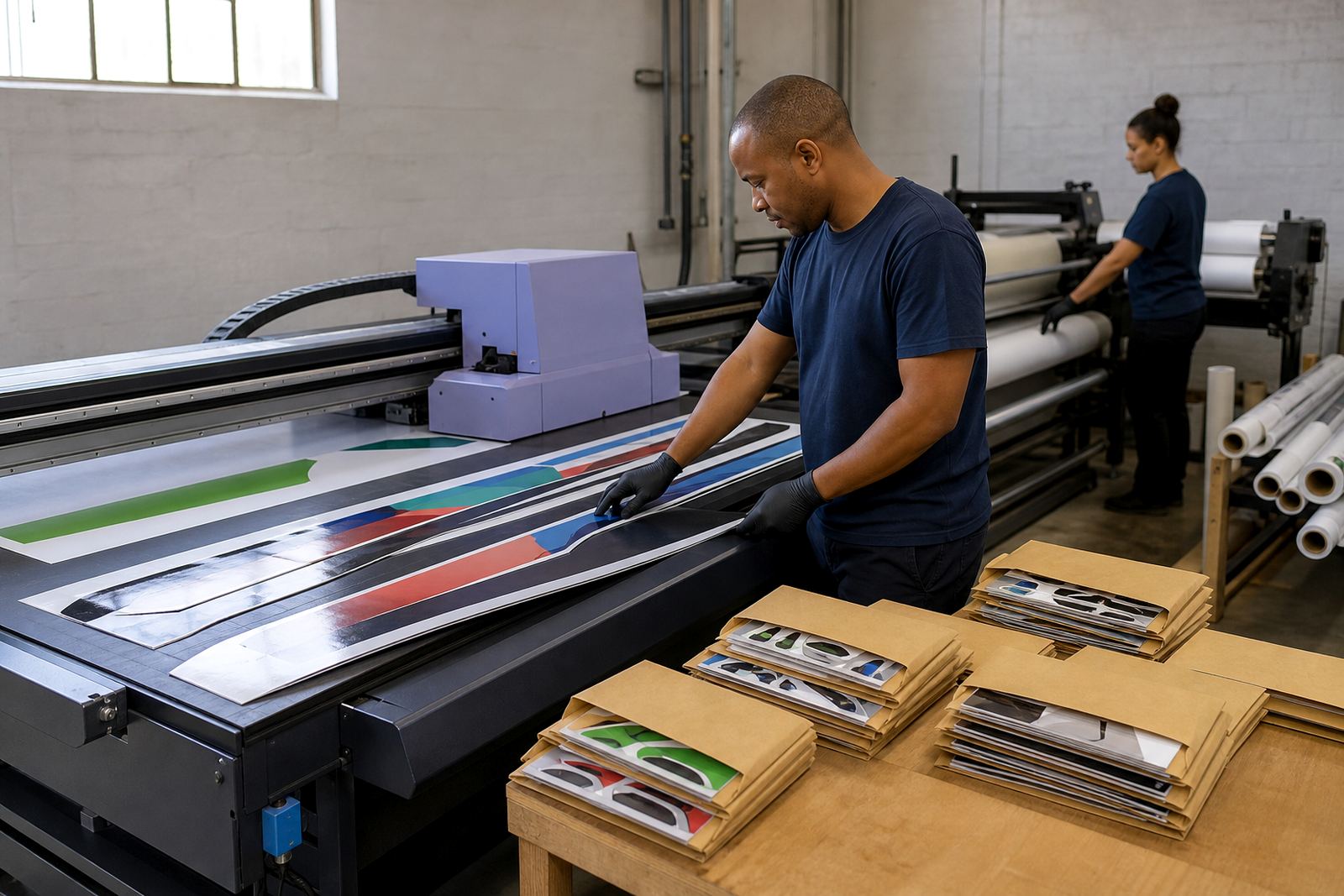
The team followed the safety data sheet and wore gloves during handling, especially when checking sample pieces and working near freshly printed sections. That is standard practice on UV work and worth keeping in place every time, even on smaller runs.
Production support for flatbed and roll-to-roll printers
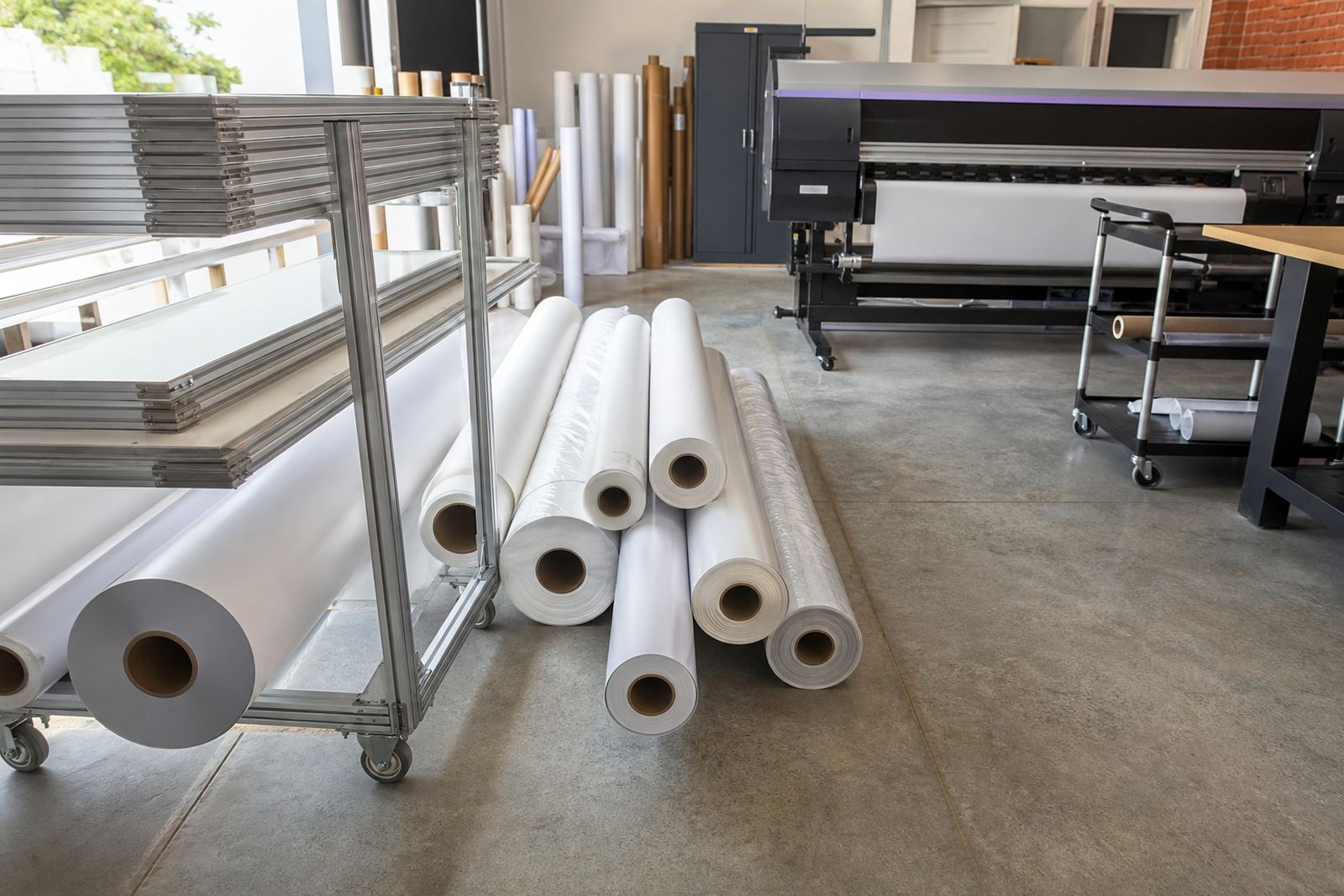
The studio was using a mixed workflow with a roll-to-roll unit for the film and a flatbed setup for sample checks and proof pieces. That is common in sign production because it lets a team compare output before committing to full-size panels. We supported both stages with ink selection advice, sample pack prep and colour trial support so the final run could stay close to the proof.
For layered window work, printer compatibility is not just about whether the machine can physically run the ink. It is also about droplet behaviour, head health, curing balance and the way the media feeds through the unit. A practical compatibility check helps reduce waste and keeps the output consistent from the first metre to the last. That mattered here because the campaign was only useful if all panels looked the same once fitted across the glass.
- Printer type: flatbed and roll-to-roll workflow
- Support: sample pack prep and colour trial support
- Checks: adhesion, cure balance and media fit
- Goal: repeatable output across multiple panels
Cure settings and shop conditions
The result was a cleaner install with fewer touch-ups on site. The window film held its edge, the graphics stayed legible in direct light, and the white backing gave the darker artwork the solid base it needed. The client could fit the panels without chasing last-minute corrections, which is often where time gets lost on promo work. It also reduced the risk of reprint, which saves money and avoids delays when a launch day is fixed.
For another activation like this, we would keep the testing sequence unchanged: confirm the substrate, run a small test, check cure and adhesion, then move into production once the proof is accepted. For short-run activations, that order is usually the safest way to protect both the print and the schedule.
How we would handle the next window campaign
If the same studio came back with another Salt River or CBD window campaign, we would keep the same support structure in place and build on the proven settings. That means keeping notes on film type, white coverage, curing response and trimming behaviour so the next run starts closer to the finish line. It also means planning for practical site conditions such as coastal humidity in Cape Town, dusty prep areas and fast turnaround between print and install.
We supply UV-curable inks for flatbed and roll-to-roll printers from Epping, Cape Town with We courier UV ink to Cape Town, Johannesburg, Durban, Pretoria, Gqeberha and other centres. For an ink order, write to UV Ink through the contact page form with your printer model and ink colours for ink selection, compatibility checks, adhesion testing, curing guidance, colour trial support, sample pack prep, production planning, operator training, safe handling briefing, remote tech help, courier stock support and repeat order management. For window graphics, that kind of support is often the difference between a tidy finish and a costly rework.
Michael van Wyk, our MD, keeps ink support hands-on. Lindiwe Maseko handles sales, Hennie Opperman supports the technical side, Shanaaz Allie coordinates operations, Moagi Shirinda manages logistics, Nadine Motaung looks after customer service and Thabo Steyn handles training. That structure helps when a job needs advice on ink behaviour, curing, or the best way to pack a delicate run for delivery.
Ink data
| Project | Salt River Windows |
|---|---|
| Client type | Graphics studio |
| Town | Salt River, Cape Town |
| Print method | Flatbed and roll-to-roll workflow |
| Material | Layered window film with white backing |
| Timeline | About 2 weeks from brief to install-ready stock |