
UV-Curable Acrylic Print Ink for Clean, Crisp Results
Acrylic print ink is designed for jobs on acrylic sheet where the surface is smooth, non-porous and unforgiving if the ink is not matched to the material. UV-curable ink cures under UV light, so the print firms up quickly after exposure and is ready for handling once the curing system has done its work. For acrylic, that fast cure helps with sharp edges, solid flats and clear detail on signage, display panels and point-of-sale work.
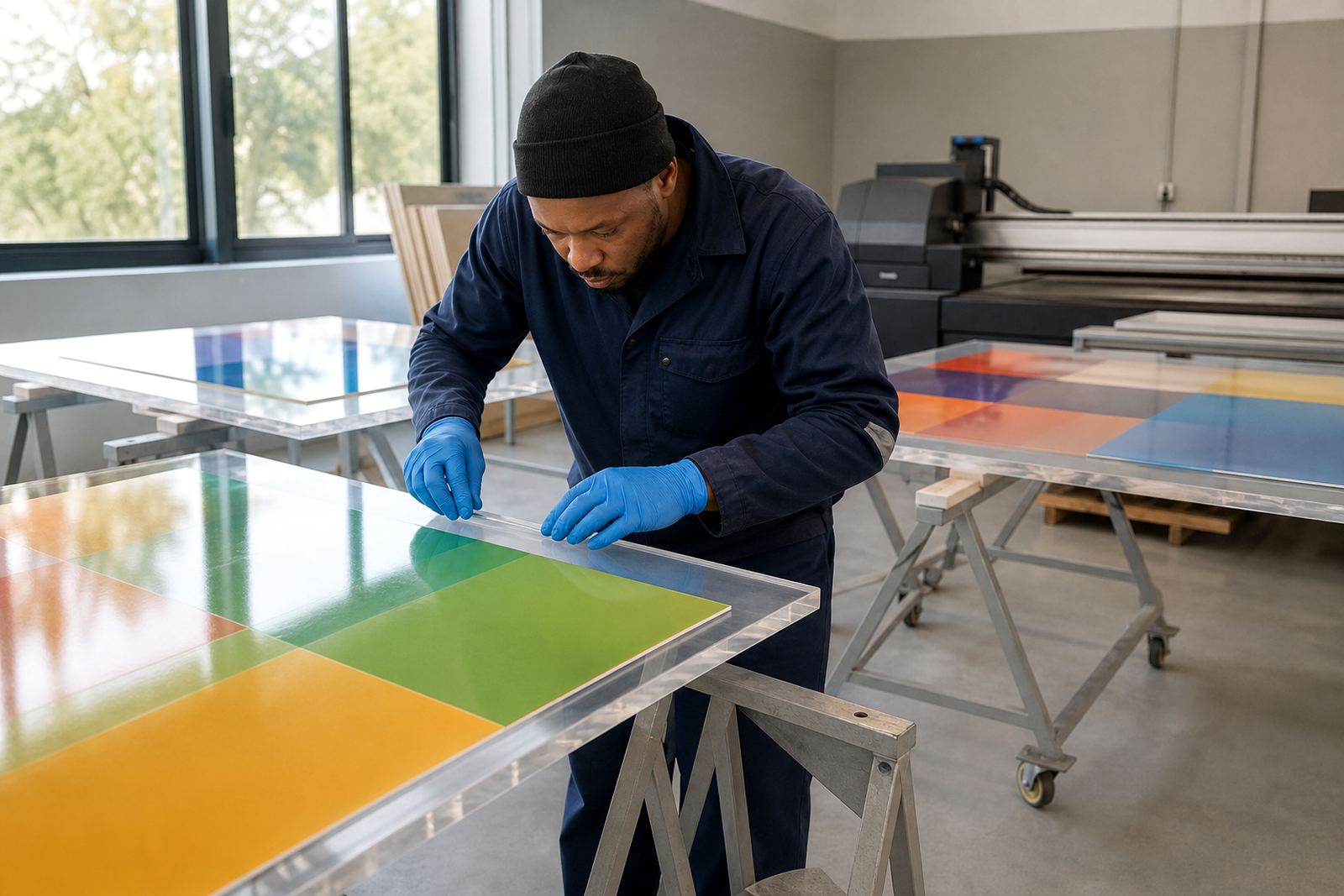
Because acrylic can show poor adhesion if the surface is dusty, oily or static-charged, preparation matters just as much as the ink itself. Clean the sheet properly, handle it with gloves, and check whether the print side has been flame-treated or primed where needed. If the surface is not prepared well, you can see lifting, scratching or a weak bond even if the colour looks correct. Small things matter here.
- Suitable for clear, frosted and coloured acrylic jobs
- Used on flatbed printers and, where the application allows, roll-to-roll print work
- Best where curing, adhesion and surface cleanliness are controlled
- Useful for signage, graphics, retail display and light industrial panels
Sizes, Pack Options and Order Planning
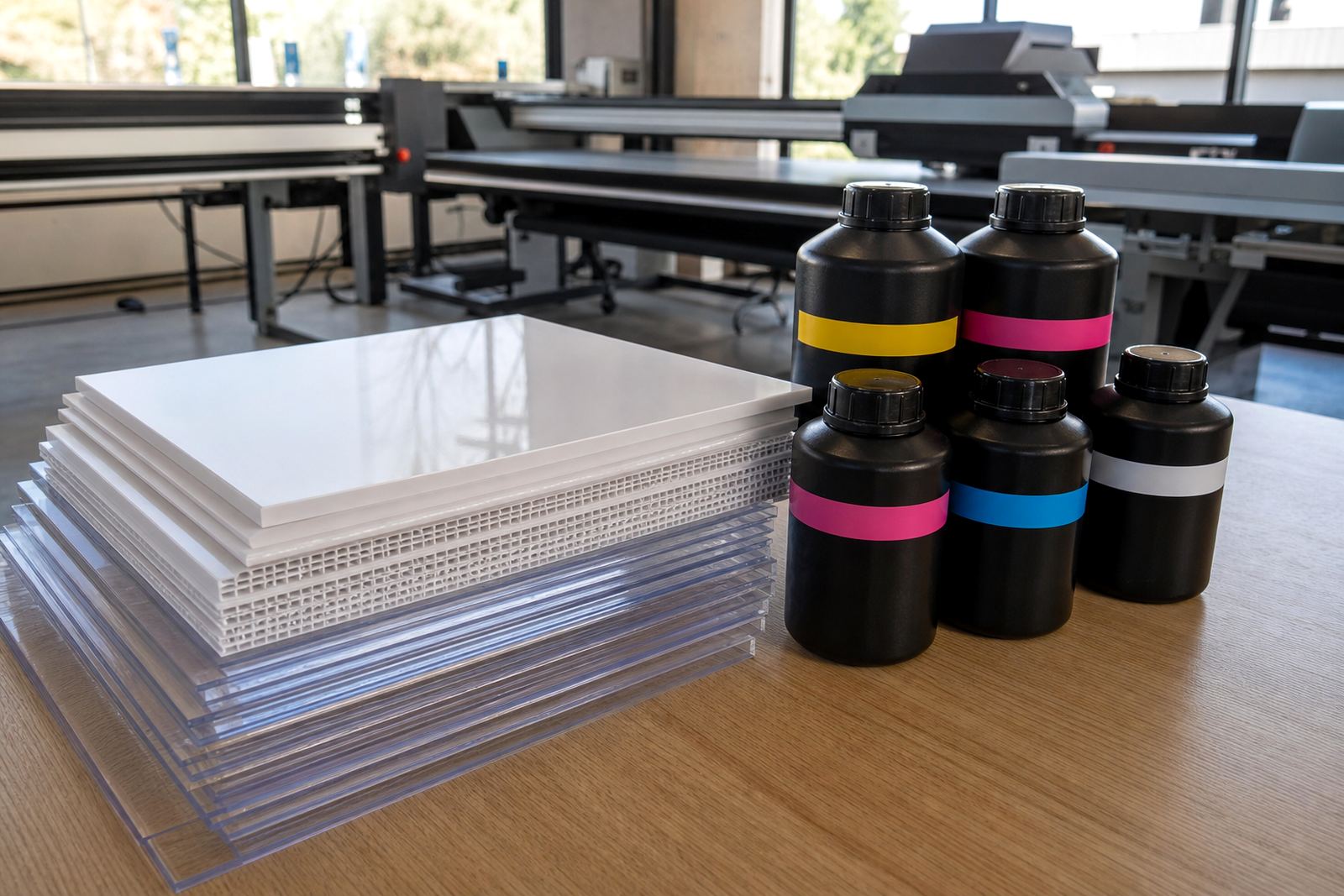
We supply acrylic print ink in practical production sizes to suit small runs, repeat orders and higher-volume print rooms.
When you order, think about colour mix, shelf rotation and how often you run acrylic work compared with other substrates. It is usually better to hold enough stock for planned jobs rather than over-order and let product sit too long. Good stock control also helps in coastal areas like Gqeberha, where humidity can affect storage conditions if containers are left open or poorly sealed.
- Available in production-ready pack sizes for ongoing print use
- Suited to sample testing, short runs and repeat production
- Can be included in sample pack prep and colour trial support
- Repeat order management available for regular users
Where It Suits Best and What the Ink Is Good For
This ink suits acrylic sheets used in signage, internal display, name panels, light retail fittings and decorative print work. It is also used where a neat finish is needed on smooth boards and clear plastics, provided the printer profile and curing setup are correct. For jobs that must withstand handling, frequent cleaning or transport between sites, adhesion testing should be part of the process before full production starts.
Acrylic print ink is not only about colour. It must sit on the surface cleanly, cure evenly and hold up under regular handling. That is why compatibility checks matter, especially if the printer has been changed, heads replaced, or the substrate supplier has switched material. A change in sheet coating or printer settings can affect the final result more than expected. Our team can help with ink selection, compatibility checks and colour trial support before a job goes live.
- Signage and display panels
- Retail point-of-sale graphics
- Decorative interior acrylic pieces
- Short-run packaging inserts and branded panels
Curing and handling tips
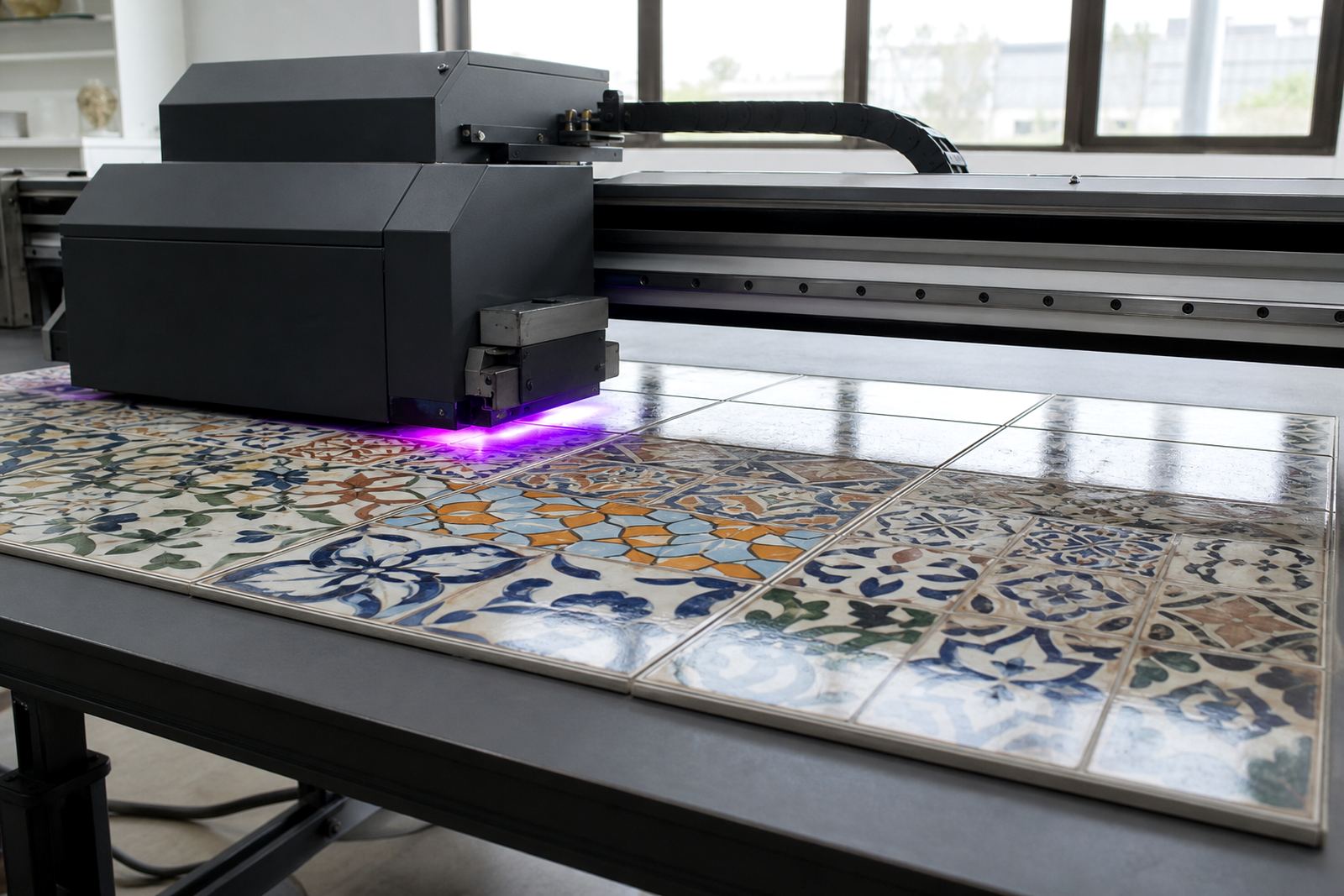
UV-curable acrylic print ink needs the right printer setup to perform well. Flatbed systems are often the first choice because acrylic sheets can be placed securely on the table and printed with accurate placement. Roll-to-roll printers can suit flexible media or compatible films, but acrylic sheet work is generally handled on flatbed equipment. The key is to confirm that your machine, print heads and curing system are all suited to the ink type before production starts.
If your site uses compressors, extraction or other support equipment, keep those systems in good order as well. The print room should be managed carefully for ventilation, heat and safe handling.
Follow the safety data sheet, wear gloves and do not handle uncured ink with bare hands. Keep lids closed, store containers upright and protect stock from direct sun and extreme heat. On busy production floors, a simple briefing for operators can prevent mess, waste and skin contact.
Storage and shelf life
Ink performance depends on more than the bottle on the shelf. A clean printer, well-maintained heads and accurate curing settings all affect how acrylic jobs turn out. If print quality starts to drift, check nozzle condition, curing intensity, substrate cleaning and the age of the stock. In some cases the problem is not the ink at all but dust on the sheet, poor board storage or a profile that no longer matches the job.
For regular users, we recommend keeping a simple checklist for each shift. That helps operators spot problems before they waste material. It also helps when several people are running the machine, which is common in larger shops and trade suppliers across Gauteng and the Western Cape. A quick pre-check saves time later, especially when the day is already packed with cut-offs, client approvals and courier deadlines.
- Wipe down acrylic sheets before printing
- Check cure strength after any printer or lamp adjustment
- Keep ink containers sealed and stored in a cool, dry place
- Train operators on safe handling and cleaning steps
Before you order ink
Before placing an order, check your printer model, your intended acrylic type and the finish you need. Clear acrylic, frosted acrylic and coated plastics may behave differently, so the same setting does not always suit every job. It also helps to confirm whether the job will be installed indoors or outdoors, because that affects curing expectations, cleaning routine and how much handling the print will get.
Tell us if you need help with ink selection, sample pack prep, colour trial support or production planning. We also assist with remote tech help, operator training and repeat order management for businesses that run acrylic work regularly. From Epping, Cape Town we supply customers in Bellville, Paarl, Cape Town, Johannesburg, Pretoria, Durban and Gqeberha with courier stock support and practical advice for the print floor. If you are working against a deadline, order early and allow time for testing. That is usually the safest way to avoid reprints.
- Printer type and head compatibility
- Sheet material and surface condition
- Required finish, colour and drying plan
- Delivery area and stock timing
Ink data
| Product type | UV-curable ink for acrylic printing |
|---|---|
| Compatible equipment | Flatbed printers and suitable roll-to-roll systems where applicable |
| Application | Printed acrylic signage, display panels, graphics and light industrial work |
| Curing method | UV light curing with correct printer settings and exposure control |
| Handling guidance | Use gloves, follow the safety data sheet and keep uncured ink off skin |
| Supply area | Epping, Cape Town with courier delivery across South Africa |