
What rigid media UV ink is made for
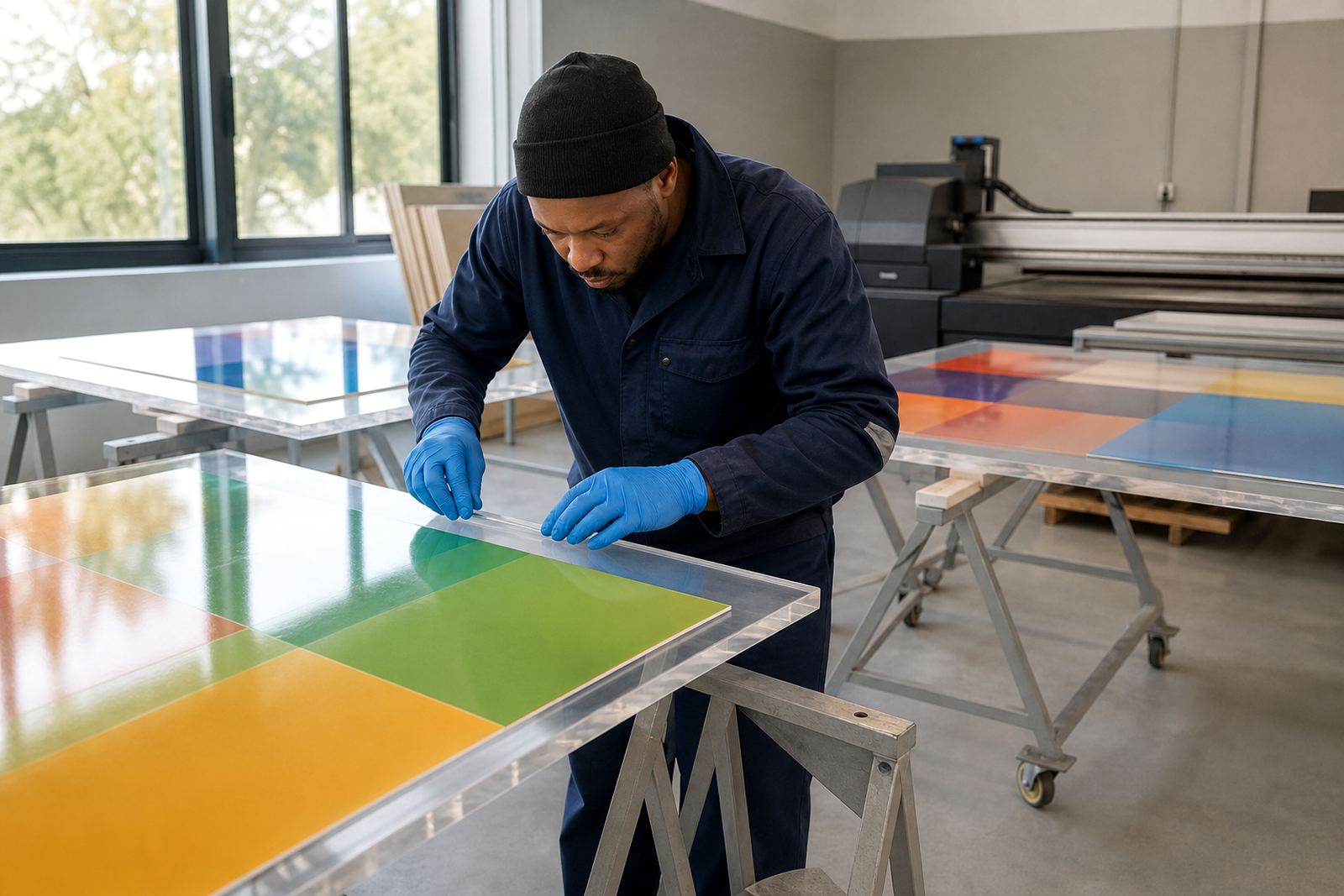
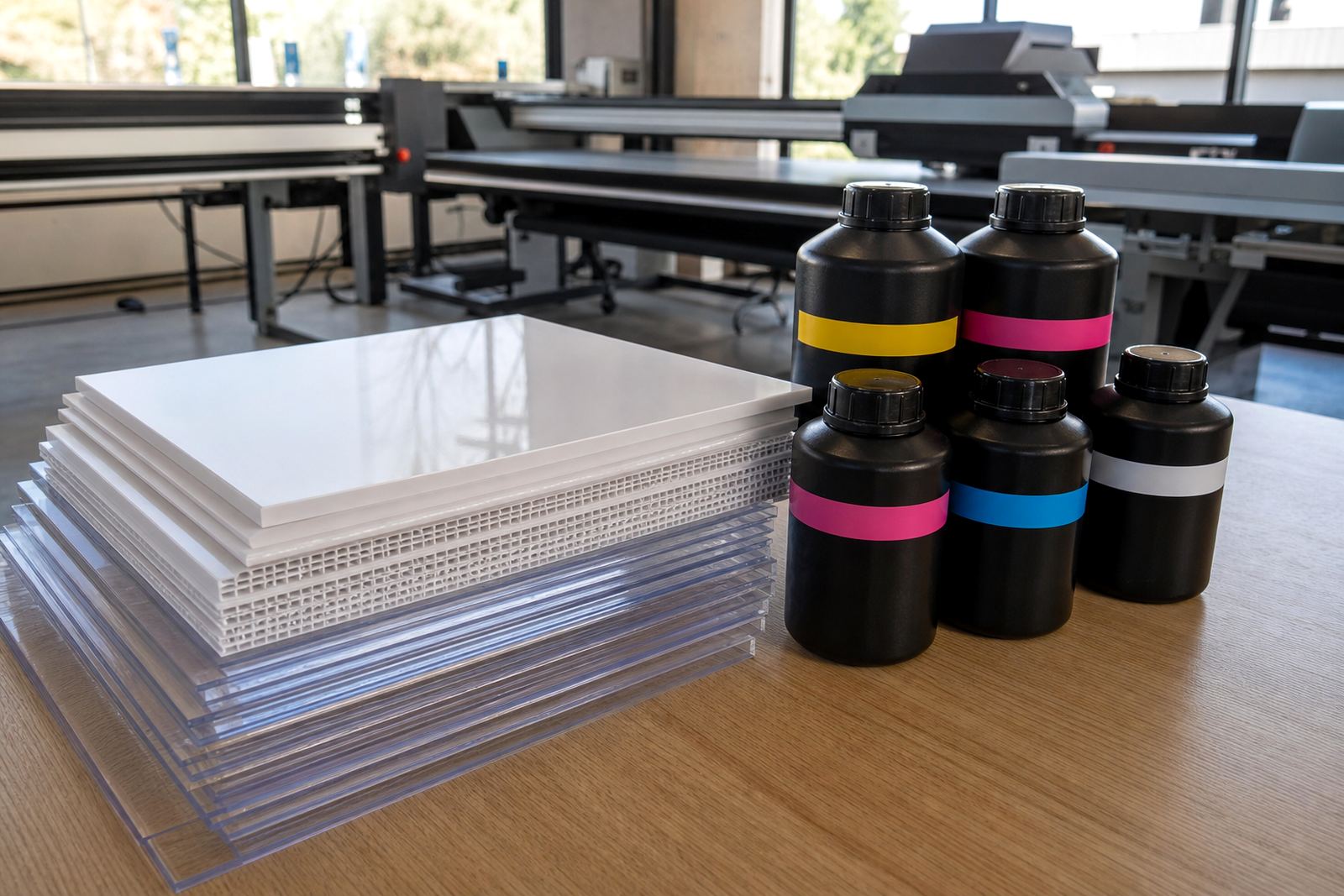
Rigid media ink is used on boards and sheets that need a firm bond and a dry, ready-to-handle finish straight after curing. Think PVC foam board, acrylic, composite panels, coated boards, corrugated board and other sign substrates that pass through shops in Cape Town, Johannesburg, Durban, Pretoria and Gqeberha. The aim is simple: the ink must wet the surface correctly, cure fully and resist scuffing when the job is trimmed, fitted or moved through a busy workshop.
UV-curable ink stays in liquid form until it is exposed to the curing unit on the printer. Once cured, it forms a tough printed layer that is useful for indoor signage, point-of-sale displays, exhibition panels and packaging prototypes. On non-porous surfaces, the first question is always adhesion. On busy production lines, the next question is whether the finish can handle handling, stacking and transport without marking.
We supply rigid media ink from our Epping, Cape Town base with courier delivery across South Africa.
Print sizes, finish options and colour behaviour
UV ink for rigid media is usually supplied in formats that suit regular production rather than one-off use. Customers commonly order bulk containers for higher volume work, or smaller packs for test runs, colour checks and product changeovers. The right size depends on your daily ink draw, the number of channels on the printer and how often you change jobs between board, sheet and roll work.
Colour behaviour matters because rigid media work often includes spot colour matching, small text and white ink layers on clear or coloured substrates. A good rigid media ink should hold line detail, produce even solids and cure without a sticky surface. It should also remain stable enough for reprints, so the same board or sheet can be matched on the next run with less adjustment at the printer.
- Available for flatbed printers and compatible roll-to-roll systems
- Useful for CMYK work, white underlay and layered print builds
- Suitable for test packs, short runs and production replenishment
- Can be matched to job needs for adhesion, gloss level and curing speed
If you print in a factory environment where floors are busy and jobs move from print to cutting to fitting in the same day, order the size that suits your real output. It helps avoid unnecessary changeovers and keeps the line moving.
Where it suits best on boards and sheets
Rigid media UV ink is suited to applications where the substrate is stiff, flat or semi-rigid and the finish must remain neat after curing. It is commonly used for retail signage, indoor display boards, window backing panels, exhibition graphics, wayfinding, short-run packaging samples and promotional sheets.
Not every board behaves the same. A coated sheet may print well with minimal preparation, while an untreated or dusty board may need cleaning, testing or a primer step to improve adhesion. That is why sample trials matter before full production. The print should be checked for lift-off, scratching and edge wear after curing, especially on jobs that will be trimmed, routed or mounted.
- Best suited to rigid and semi-rigid boards
- Works well for indoor displays and short to medium term signage
- Useful where print handling, stacking and cutting happen after output
- Can support clear, white and layered print jobs where the substrate calls for it
For customers handling municipal or site-specific work, it is worth checking the board type and the final install conditions before you place the order. If the sheet will be exposed to sun, cleaning, moisture or heavy touch traffic, mention that upfront so the ink choice and curing guidance can be matched to the job.
Cure settings and shop conditions
UV-curable ink depends on proper curing. The printer’s lamp or curing unit must deliver enough energy for the ink layer, pass speed and media thickness being used. If the curing is too light, the print can feel tacky or mark under pressure. If it is too strong, the surface can shift in finish or create unwanted heat on sensitive boards. The settings need to be checked for each substrate, not guessed.
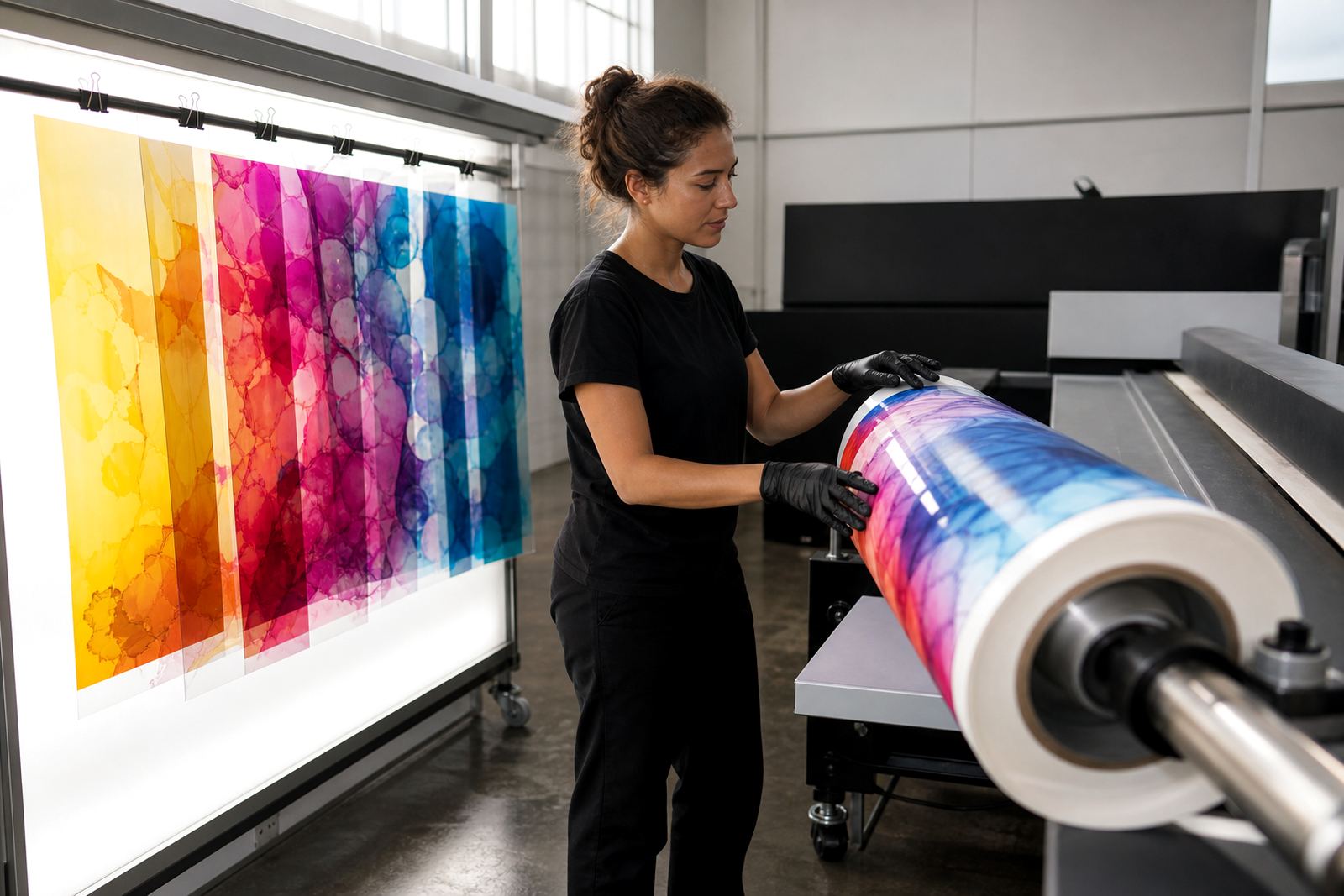
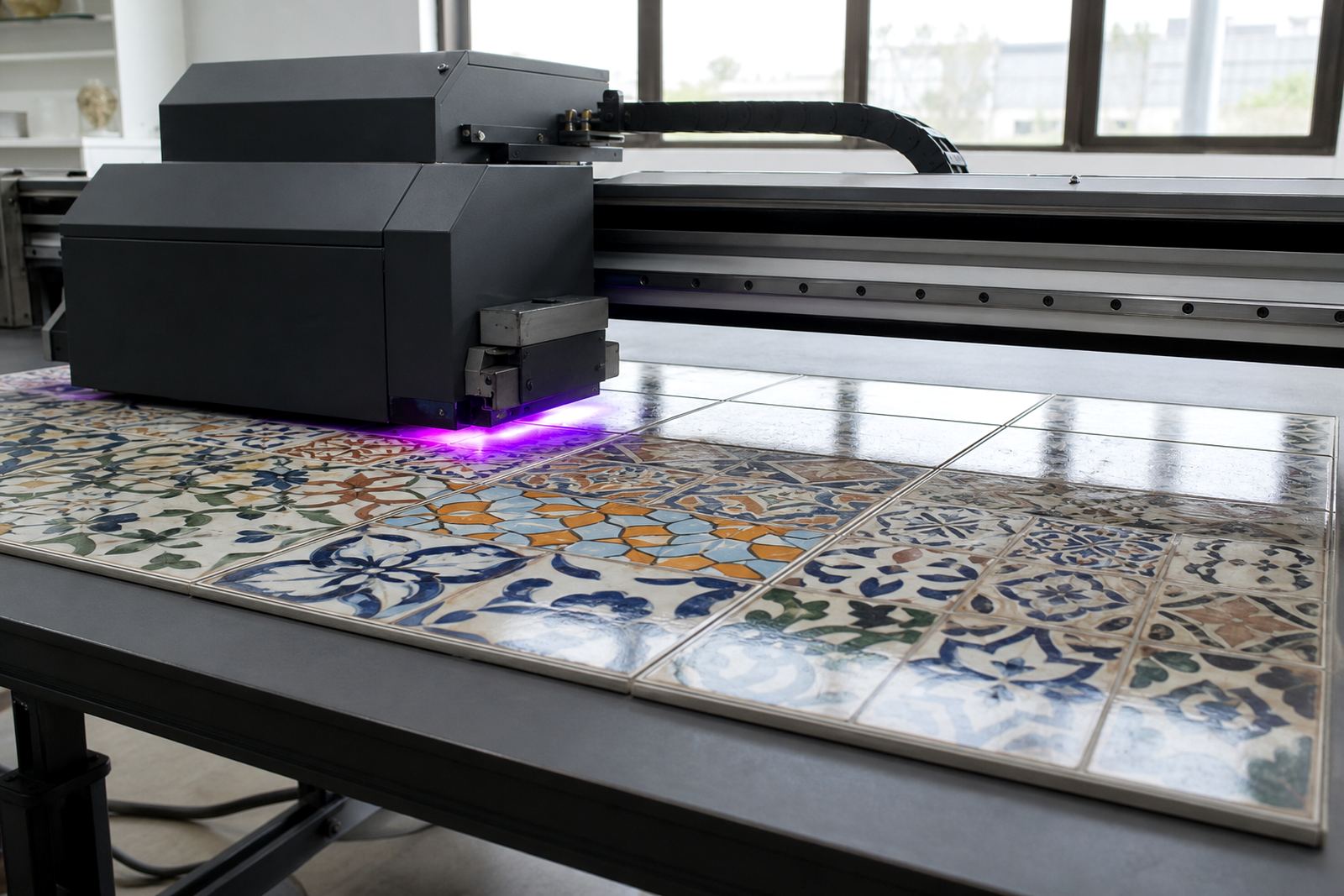
Flatbed printers are often the first choice for rigid media because they can hold boards steady and print directly onto the surface. Roll-to-roll systems can also be used where the media format and machine setup allow it, especially for coated sheet work or long runs that are fed from a roll. Some jobs need white ink, multiple layers or a primer step. Others need only standard process colours with careful pass control.
For shops using compressed air, confirm that the system is clean and dry. If the line uses any support equipment, check the supply and safety setup before running the next batch.
Care, storage and safe handling on the shop floor
UV ink needs normal workshop discipline to stay in good condition. Keep containers sealed when not in use, store them away from direct sun and heat, and avoid contamination from dust, cleaning solvent or mixed leftovers. Once opened, the ink should be handled in a way that keeps the flow path clean and the print head system free from buildup. If a printer sits idle for a while, follow the manufacturer’s cleaning and maintenance routine so the ink does not skin or settle in the wrong place.
Operators should always follow the safety data sheet and wear gloves when handling UV ink. Good ventilation, clean rags and proper waste disposal matter just as much as print quality. Do not mix unknown leftovers into a fresh batch. If the job is critical, check the batch notes, production date and the substrate trial before going live on a full run.
- Keep High-Density Black sealed in a cool, dry cabinet
- Keep ink off skin and away from food or drink areas
- Wear gloves and follow the safety data sheet at all times
- Clean heads, lines and trays according to the printer schedule
For customers who need support after delivery, we can help with remote technical guidance, repeat order management and practical operator training. That matters when staff change shifts or a machine is moved between jobs and the process needs to stay consistent.
Before you order ink
Before ordering rigid media ink, confirm the printer model, the substrate type and the finish you want after curing. Check whether the job needs white ink, a primer step, a special adhesion requirement or a particular cure response. If you are printing boards for a client in Cape Town, Johannesburg or Durban, it is also worth confirming the delivery timing so stock arrives before the production slot starts.
Our team supports ink selection, compatibility checks, adhesion testing, curing guidance, colour trial support, sample pack prep, production planning, operator training, safe handling briefing and remote tech help. That makes it easier to match the ink to the way your shop actually runs rather than forcing the job to fit around a poor choice.
- Printer type: flatbed or roll-to-roll
- Media: board, sheet, coated or untreated surface
- Required finish: gloss, matte, white underlay or special build
- Production need: sample run, repeat order or full production stock
- Delivery area: Epping, Cape Town, Bellville, Paarl or national courier route
UV Ink supplies South African customers from our Epping base, with Michael van Wyk leading the business and a team that understands day-to-day production pressure. If you need rigid media ink that fits your machine and your substrate, send the job details through the enquiry form on our contact page and we will help you work through the right option.
Ink data
| Product type | UV-curable ink for rigid media printing |
|---|---|
| Compatible machines | Flatbed printers and selected roll-to-roll printers |
| Typical substrates | PVC foam board, acrylic, coated board, composite panels, corrugated board |
| Curing method | UV lamp or curing unit matched to pass speed and ink layer |
| Common uses | Signage, display boards, exhibition panels, packaging samples |
| Supply area | Epping, Cape Town with courier delivery across South Africa |