
Fast Cure Ink for production work that cannot wait
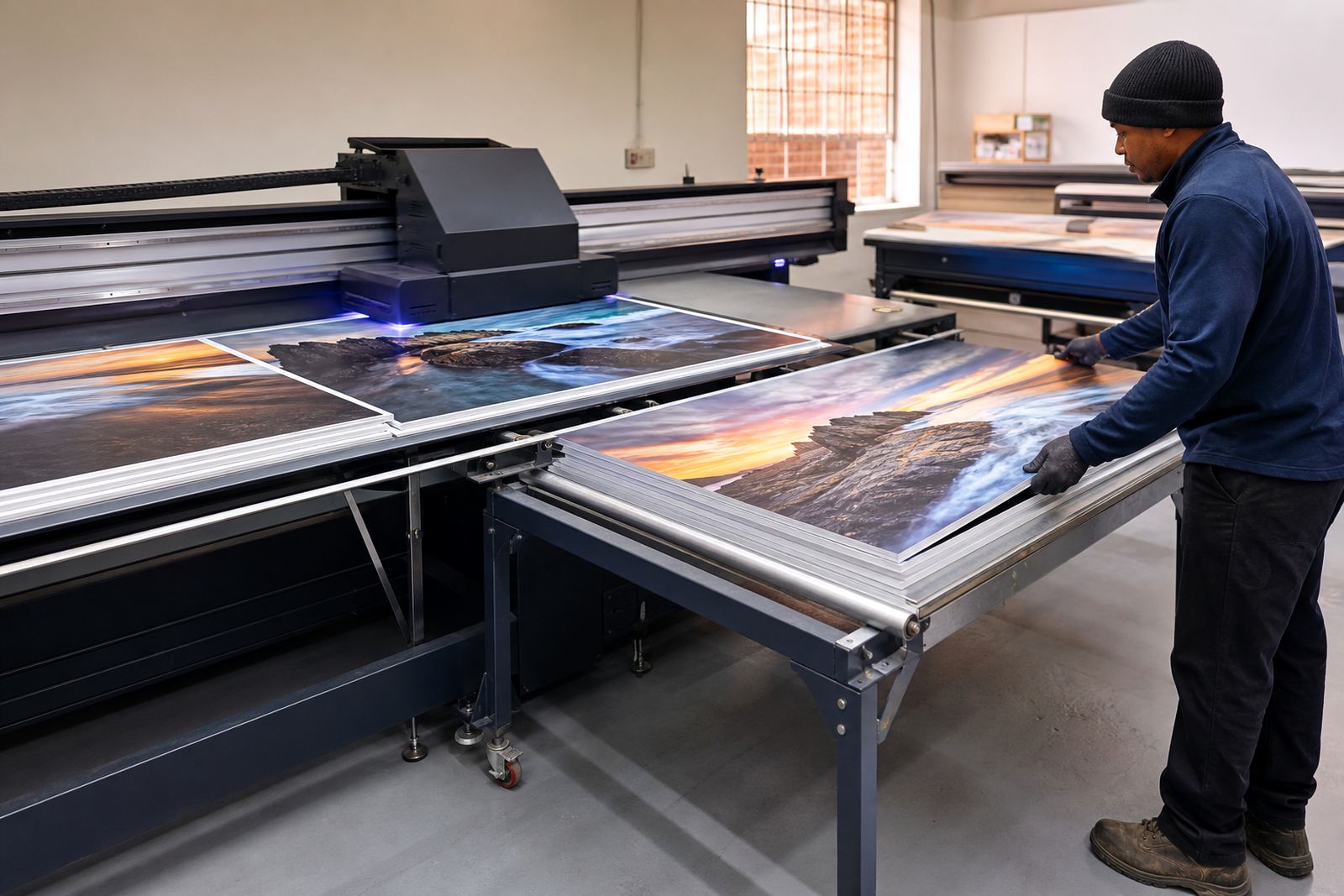
Fast Cure Ink is designed for print shops that need a shorter wait between printing and the next step. Once exposed to the correct UV light, the ink cures into a dry, handleable finish that supports faster turnaround on signage, labels, packaging parts and general graphics work. It is suited to production environments where sheets must move from printer to cutting, trimming or fitting without long delays.
This ink is used on compatible flatbed and roll-to-roll systems, and it is chosen where good adhesion and practical running speed matter. The product is supplied from our Epping base and supported by a team that helps with ink selection, compatibility checks and curing guidance.
We have focused on helping customers choose ink that suits their printer, media and workflow. That includes checking the type of substrate, the curing setup and the finish required before stock is ordered.
How the curing process works and why it matters
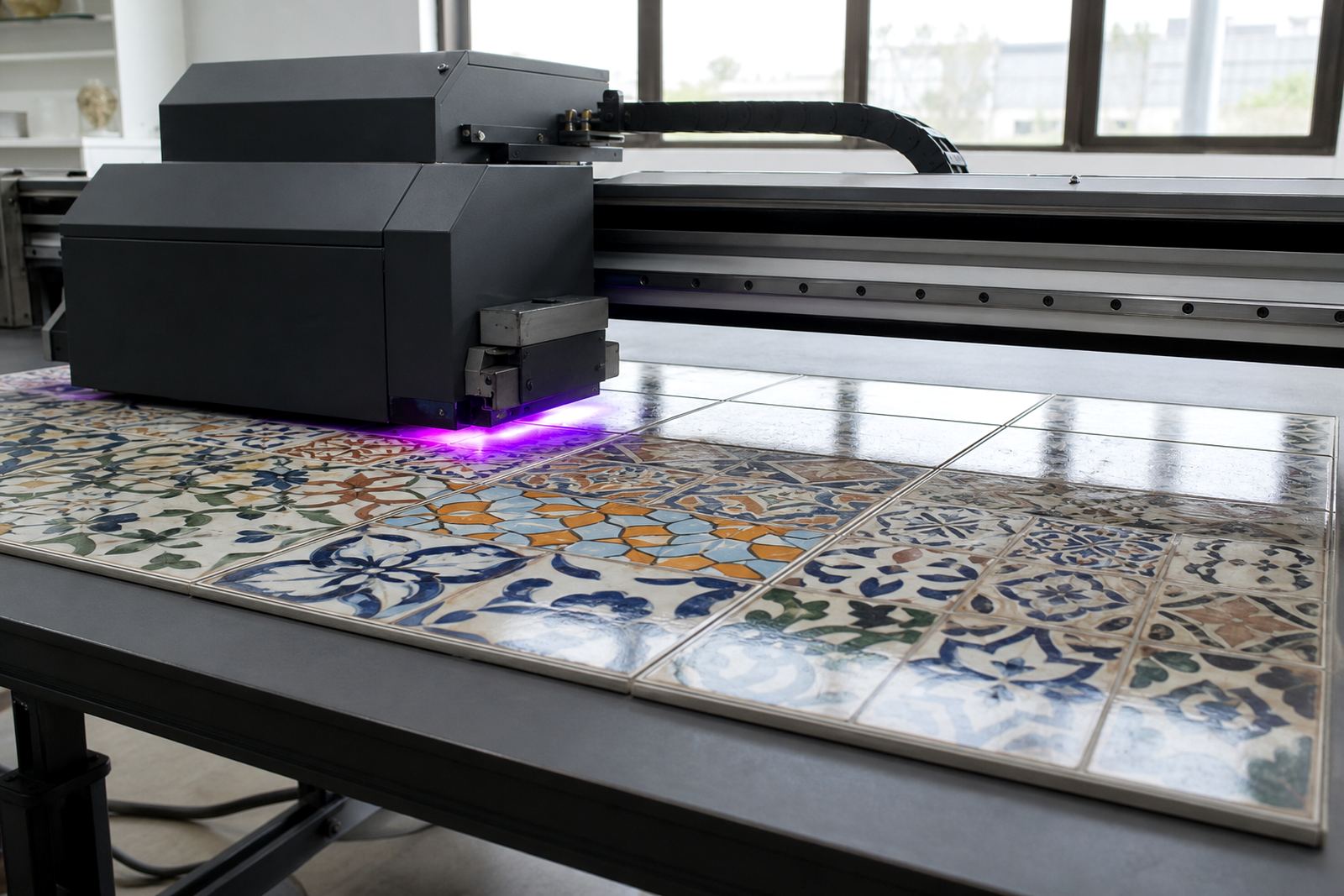
UV-curable ink contains components that change under ultraviolet light. Instead of air drying, the ink cures when it passes under the correct lamp or LED system on the printer. This helps reduce waiting time and supports cleaner handling after print. It also means the cure must be matched to the machine, the lamp output and the media surface.
Good curing matters for adhesion, rub resistance and image stability. If the cure is too weak, the print can stay tacky or mark during stacking. If it is too strong or too hot for the media, some materials may warp, bow or show surface stress.
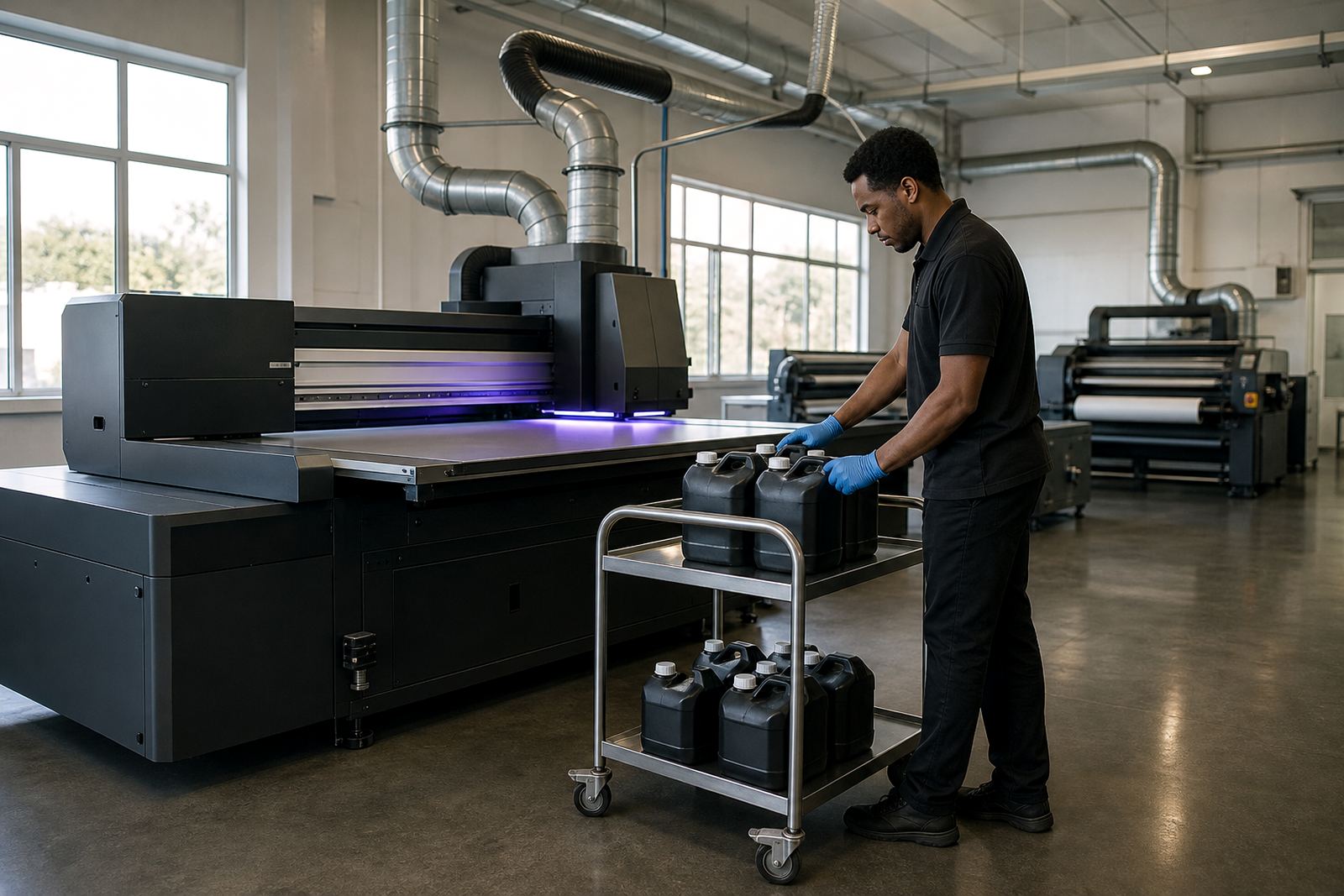
For best results, always follow the safety data sheet and wear gloves when handling ink or cleaning around the print area. Good ventilation and a clean work area help too, especially in enclosed rooms and smaller workshops.
Printer compatibility, substrate choice and sample checks
Fast Cure Ink is meant for compatible UV printing equipment only. Before ordering, check the printer type, printhead family, ink path materials and the curing system fitted to the machine. Some printers handle certain viscosities and pigment loads better than others, so compatibility checks are worth doing before production starts.
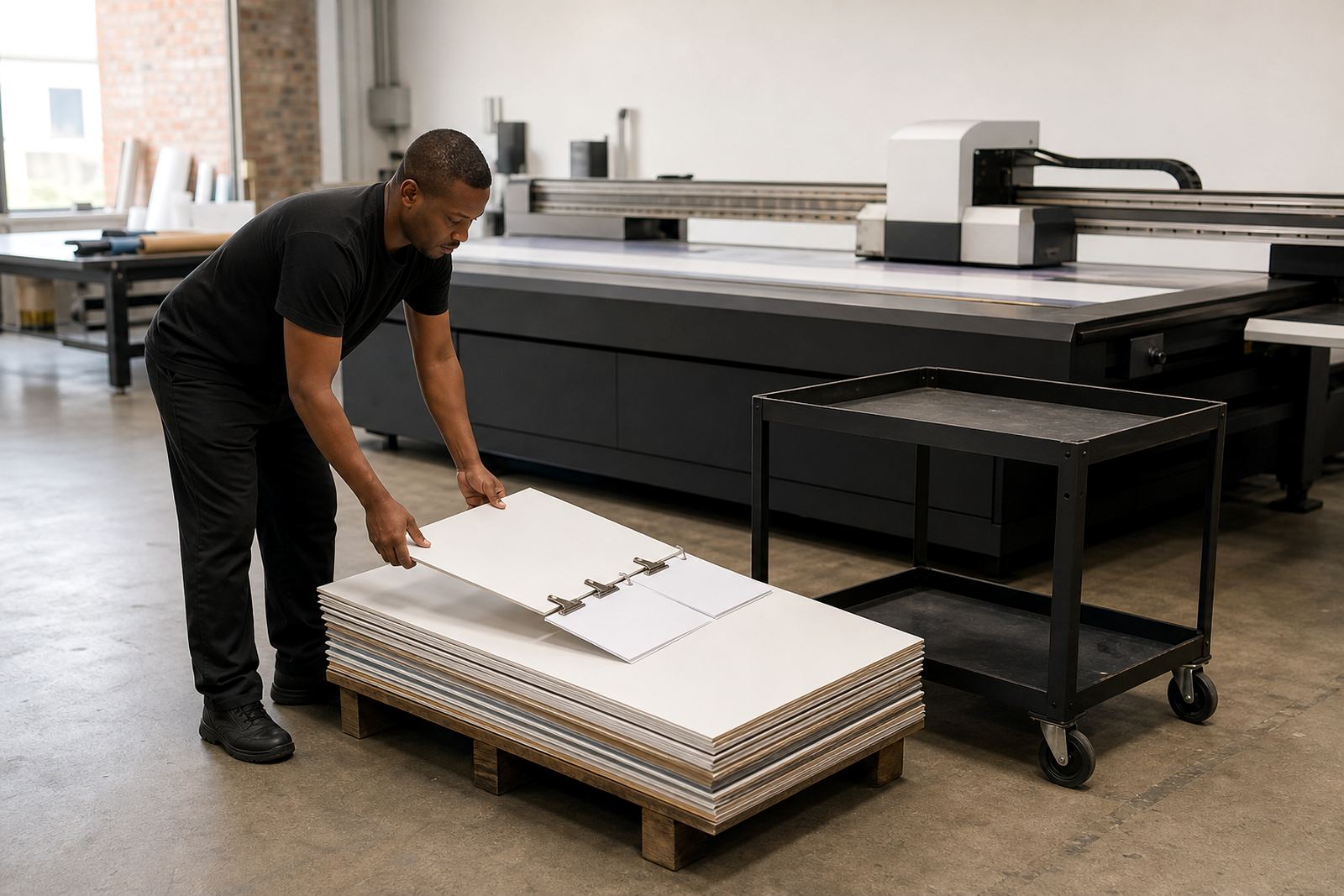
This ink can suit rigid and flexible work where the media is prepared correctly. Common applications include PVC board, coated boards, acrylic, aluminium composite, self-adhesive films and selected roll media designed for UV printing. Surface energy, dust levels and any release coating on the media can affect adhesion, so a test piece is always a good idea.
- Confirm whether the printer is flatbed or roll-to-roll
- Check the head compatibility and ink circulation requirements
- Test the substrate surface before a full run
- Allow time for curing trials on the actual media thickness
- Ask for sample pack prep if you need to compare finishes
Our team can assist with colour trial support, adhesion testing and remote tech help if the job needs a second look before launch.
Sizes, ordering options and repeat supply planning
Fast Cure Ink is supplied in practical production sizes, depending on the printer setup and the volume required. For busy shops, ordering by colour set or by job forecast can help reduce downtime and keep stock on hand for repeat work. If the machine runs daily, it is sensible to plan ahead so the next order arrives before levels get too low.
If you are moving from one ink type to another, it is better to discuss the flush or changeover plan first, because mixing systems can cause issues with adhesion or nozzle stability.
- Single colour supply for specific production needs
- Full process sets for mixed signage and packaging work
- Sample packs for testing before larger orders
- Repeat order support for regular users
- Courier stock support to main centres and outlying areas
We arrange We courier UV ink to Cape Town, Johannesburg, Durban, Pretoria, Gqeberha and other centres, as well as Bellville and Paarl when local delivery is needed.
Curing setup and lamp checks
UV printing relies on the printer, the curing unit and the workshop environment working together.
The room should stay reasonably clean and at a steady temperature. Dust can affect surface finish, while excessive humidity in coastal areas like Cape Town or Gqeberha can sometimes influence handling and media behaviour. If a workshop is near the sea or in an open industrial area, it helps to store ink lids closed and keep material protected from moisture and grit.
If the printer is being commissioned for the first time, operator training can save a lot of trouble later on.
Loading and handling the ink
Like any production ink, Fast Cure Ink performs best when stored and used correctly. Keep it sealed when not in use, avoid contamination from dust or cleaning fluids, and never pour unused ink back into the original container unless the process allows it. Regular nozzle checks, head maintenance and cleaning routines help protect print quality and reduce stoppages.
If a print line starts to show changes in gloss, adhesion or cure speed, check the lamp output, media lot, room conditions and the cleaning schedule. Our technical support team can guide you through curing guidance, safe handling briefing and remote trouble shooting for recurring faults.
Before ordering, please check the following:
- Printer model and ink system type
- Required colour set and daily usage
- Substrate types and thicknesses
- Need for samples, trials or operator training
- Delivery area
- Any current issues with adhesion, curing or nozzle stability
If you need help deciding, write to UV Ink through the contact page form and the team will come back with the next step.
Ink data
| Product type | UV-curable ink for production printing |
|---|---|
| Curing method | Requires compatible UV lamp or LED curing system |
| Compatible printers | Selected flatbed and roll-to-roll UV printers |
| Best suited for | Signage, graphics, labels and packaging work |
| Supply areas | Epping, Cape Town plus national courier delivery |
| Support offered | Compatibility checks, adhesion testing and curing guidance |