
What Indoor Display Ink is made for
Indoor Display Ink is formulated for indoor signage, retail graphics, exhibition panels and short run decorative work where clean colour and a crisp finish matter more than outdoor weather resistance. It cures under UV light, which means the ink changes from a liquid state to a solid film as it passes under the curing lamps, allowing work to move through production with less waiting time.
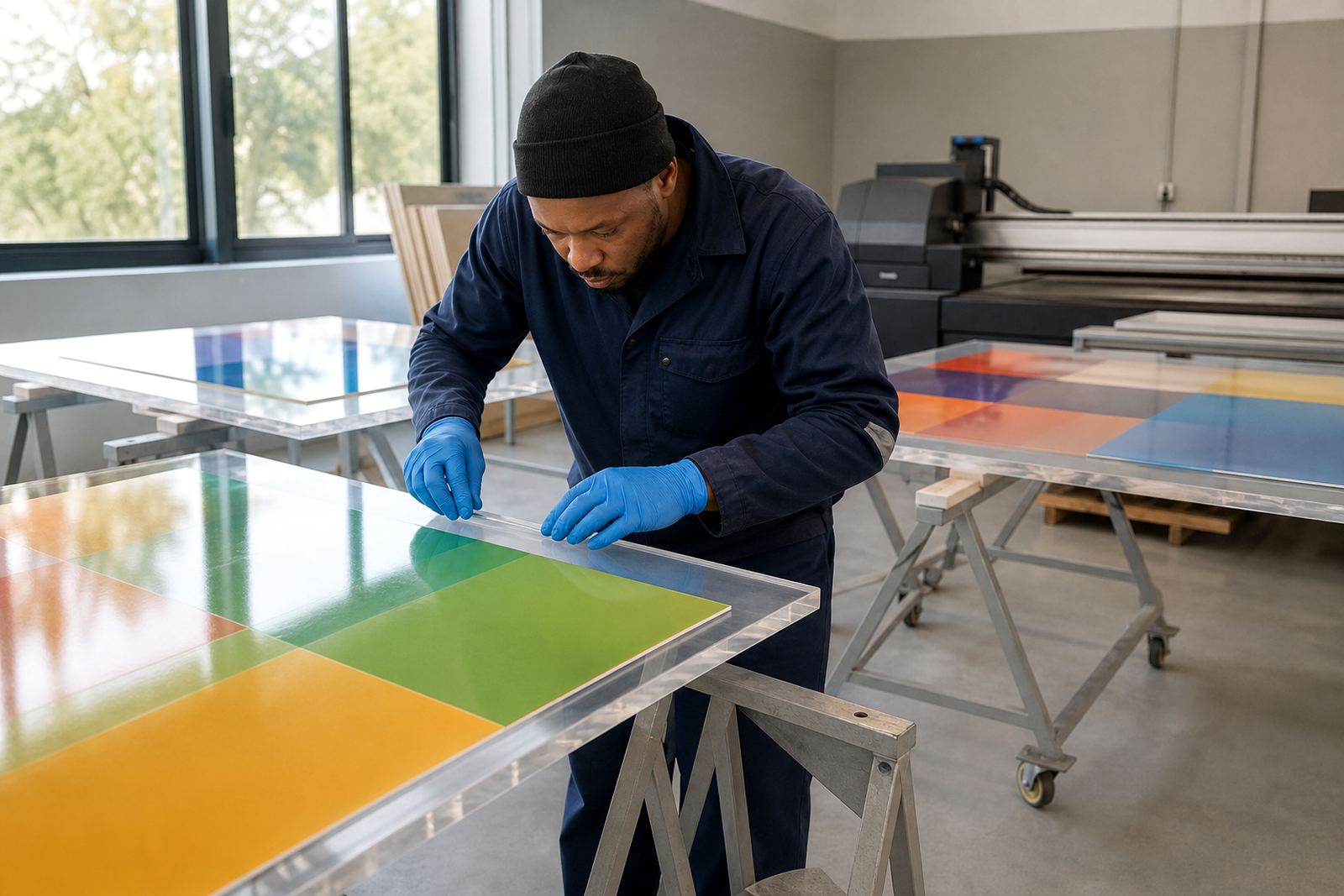
For indoor display jobs, the focus is usually on image sharpness, consistent laydown and a finish that looks neat under shop lighting, gallery lights or bright office conditions. This type of ink is commonly chosen for foam board, acrylic, PVC sheet, coated board and other display media that are used indoors and handled carefully.
It is important to match the ink to the printer, substrate and curing setup. A good result depends on adhesion, printhead compatibility, and the right curing settings for the media being used. If the cure is too light the print can stay tacky, too much heat can affect sensitive material so checking the setup before a full run saves time and waste.
Printer compatibility and finishing options
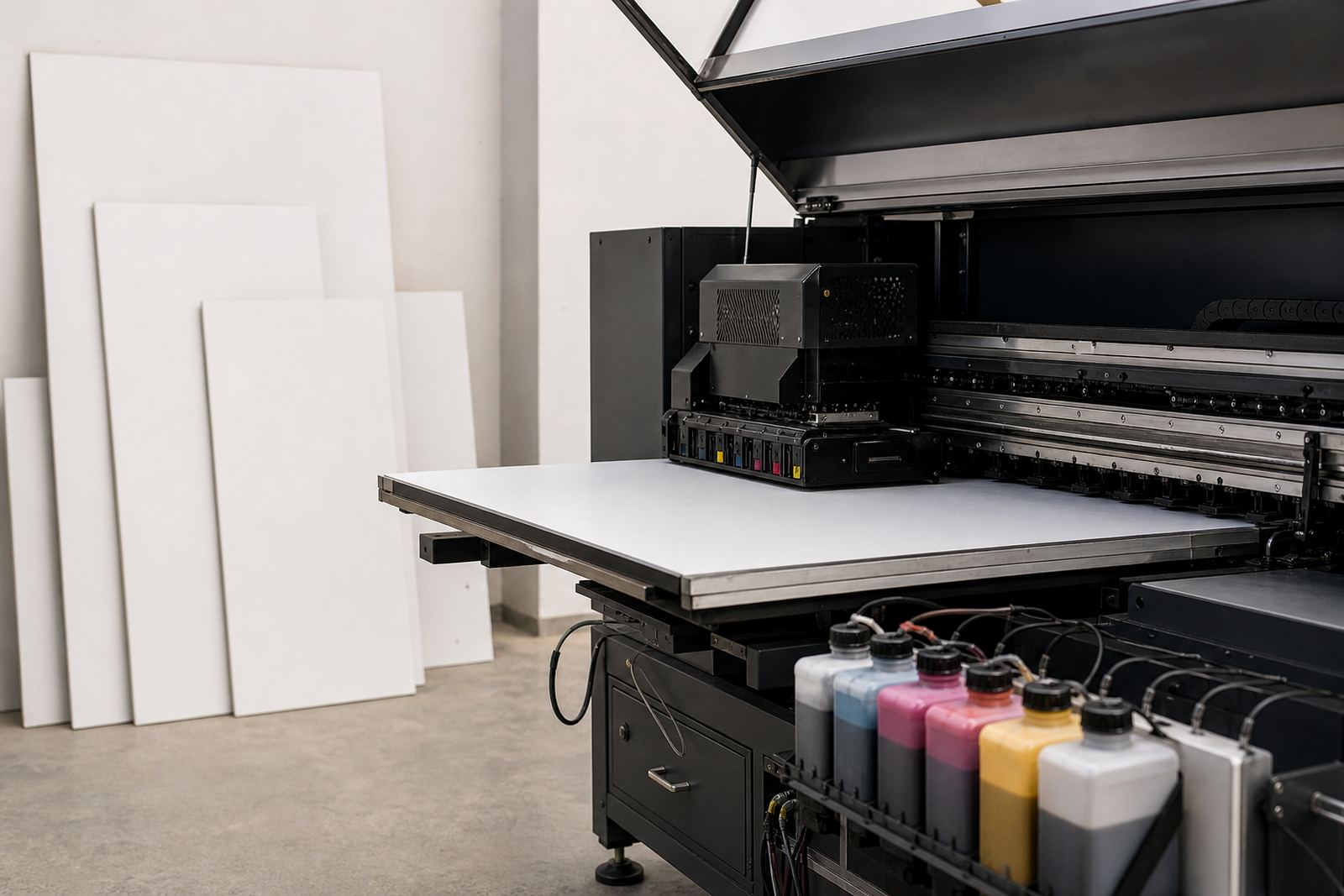
This ink is intended for UV flatbed printers and UV roll-to-roll printers used in indoor display production. Compatibility depends on the printhead type, ink channel setup, line speed and the printer’s curing system. Some machines are best suited to rigid boards while others handle flexible display media better, so the right choice is not only about colour, but also about how the ink behaves in your exact machine.
Typical options include CMYK process use, with selected workflows also requiring white ink for underlay or highlight work on coloured, clear or dark substrates. Depending on the job, a gloss or more satin look may be preferred, and the surface finish can also be influenced by media coating and curing strength.
- Flatbed printing for rigid indoor signs, panels and point of sale boards
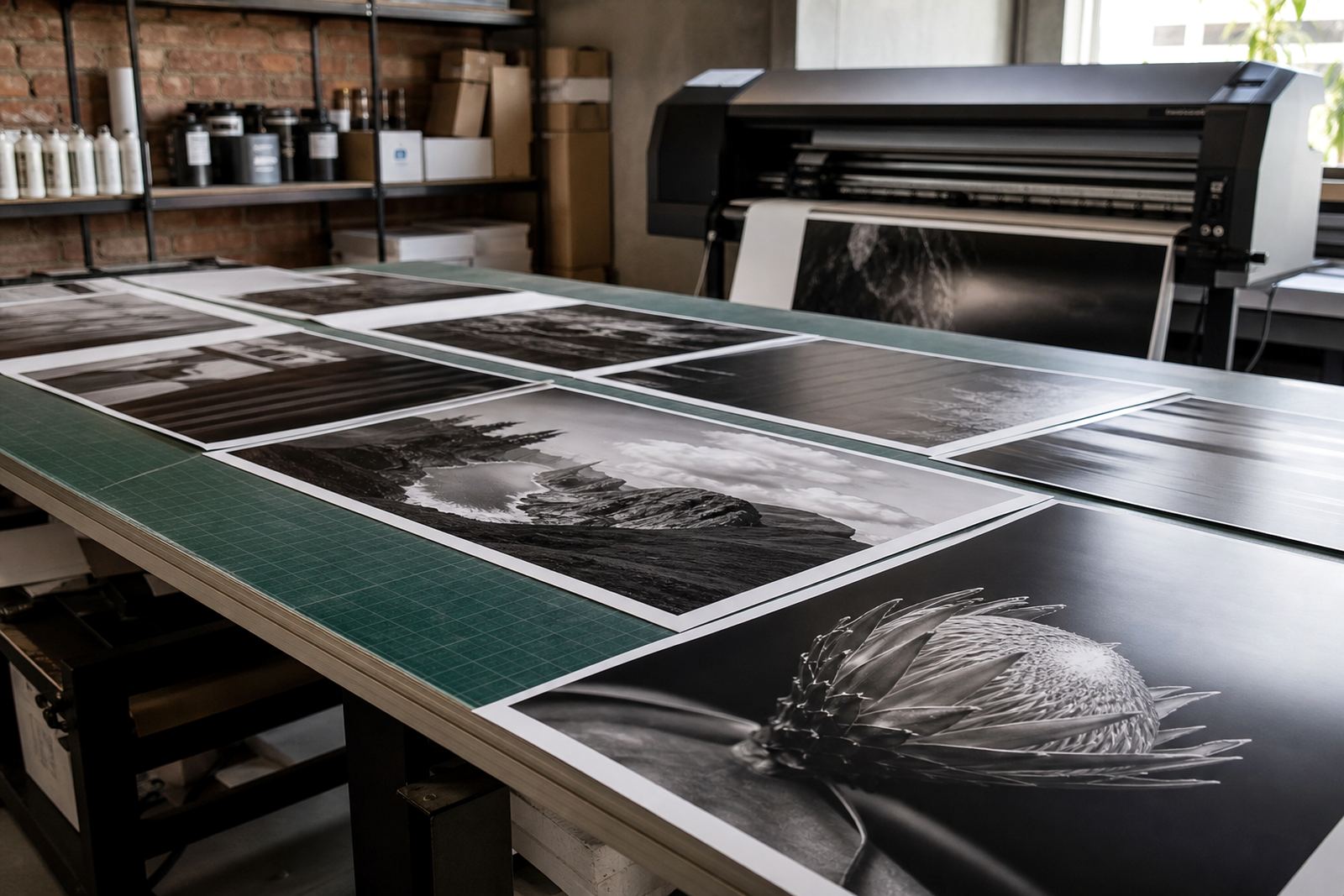
- Roll-to-roll printing for banners, window graphics and exhibition graphics
- White ink support where opacity is needed on dark or clear media
- Short-run and repeat work where quick turnaround matters
Where this ink suits best
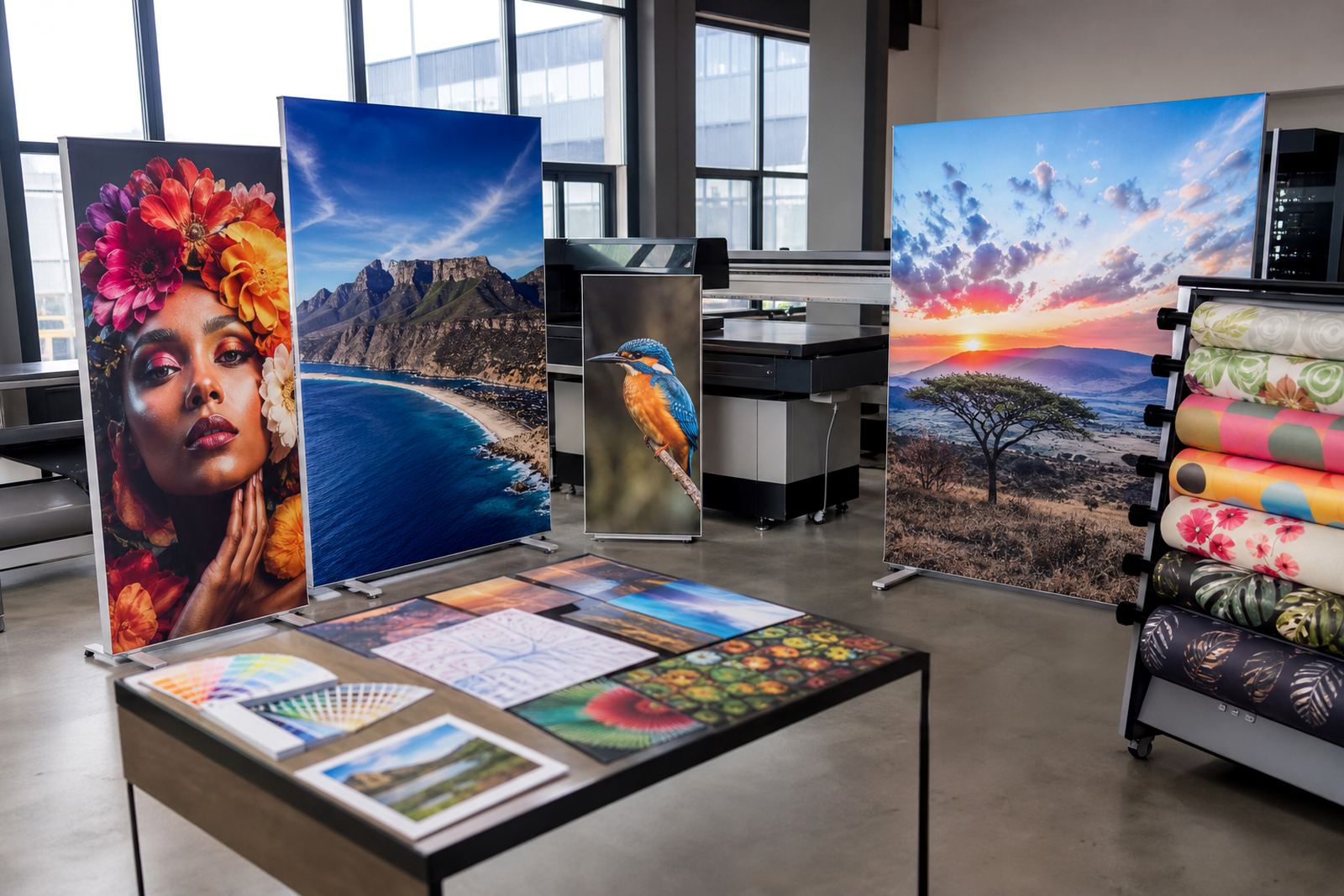
Indoor display ink suits work that is viewed at close range and needs a tidy finish. It is often used for shop fitting, promo boards, internal wayfinding, trade show graphics, reception branding and product display panels. In Cape Town and Johannesburg, a lot of customers use it for retail rollouts where the same artwork must be produced in stages for different branches.
It also works well for production environments where delivery times are tight and the print room must keep moving. Because UV curing is immediate, many indoor display jobs can go from print to trimming or mounting far quicker than with slower drying systems. That helps when a client wants a same-week install or a replacement panel after a change in artwork.
- Retail displays and branded panels
- Indoor exhibition and event graphics
- Reception signs and directional boards
- Decorative panels for offices, showrooms and hospitality spaces
Before the first production run
The key requirement is proper curing, ventilation and clean handling of the ink and media. Indoor display work also benefits from stable temperature and lower dust levels because dust can show on light colours and glossy finishes.
Operators should follow the safety data sheet, wear gloves during handling and avoid unnecessary skin contact. Good workshop habits matter just as much as the ink itself, especially when you are running long sheets or several boards in one shift.
Care, adhesion and production checks
Good adhesion starts with substrate preparation, a suitable print profile and the right cure. Some media needs surface cleaning before printing, while other boards may need a primer or adhesion test first. If the ink is being used on a new material, a small sample print is the safest way to check bond strength, scratch resistance and finish quality before full production.
Finger marks, pressure points and poor stacking can all affect the final look even when the print itself is sound. For repeat orders, it helps to keep the same media batch and curing settings where possible so colour and finish stay consistent.
- Check substrate type and whether it has a print-receptive coating
- Confirm printhead compatibility and ink channel setup
- Test adhesion before production on any new media
- Review curing speed against line speed and lamp strength
- Allow for handling, trimming and mounting at the install site
Before you order ink
Before placing an order, confirm which printer model you are running, whether it is a flatbed or roll-to-roll unit, and which printhead type is fitted. Also confirm the colours needed, whether white ink is required, and what substrate the job will run on. If you are unsure, a compatibility check can prevent costly mistakes and avoid blocked production time.
It is also worth checking order size and workflow. Some print rooms need sample packs for testing, while others want repeat order support for regular production across branches or franchise sites. From Epping, Cape Town, we supply courier stock support to Cape Town, Johannesburg, Durban, Pretoria and Gqeberha, with delivery also arranged for Bellville and Paarl where needed.
Our team can assist with ink selection, colour trial support, adhesion testing, curing guidance, production planning and operator training. If your job needs remote technical help or a safe handling briefing, write to UV Ink through the contact page form and we will work through the details with you.
Ink data
| Product type | UV-curable ink for indoor display printing |
|---|---|
| Printer use | Flatbed and roll-to-roll UV printers |
| Common applications | Retail graphics, exhibition panels, signage, internal display work |
| Finish focus | Strong colour, neat surface quality, efficient turnaround |
| Handling | Follow the safety data sheet and wear gloves |
| Supply area | Epping, Cape Town with courier delivery across South Africa |