What UV Varnish Ink Does on Printed Work
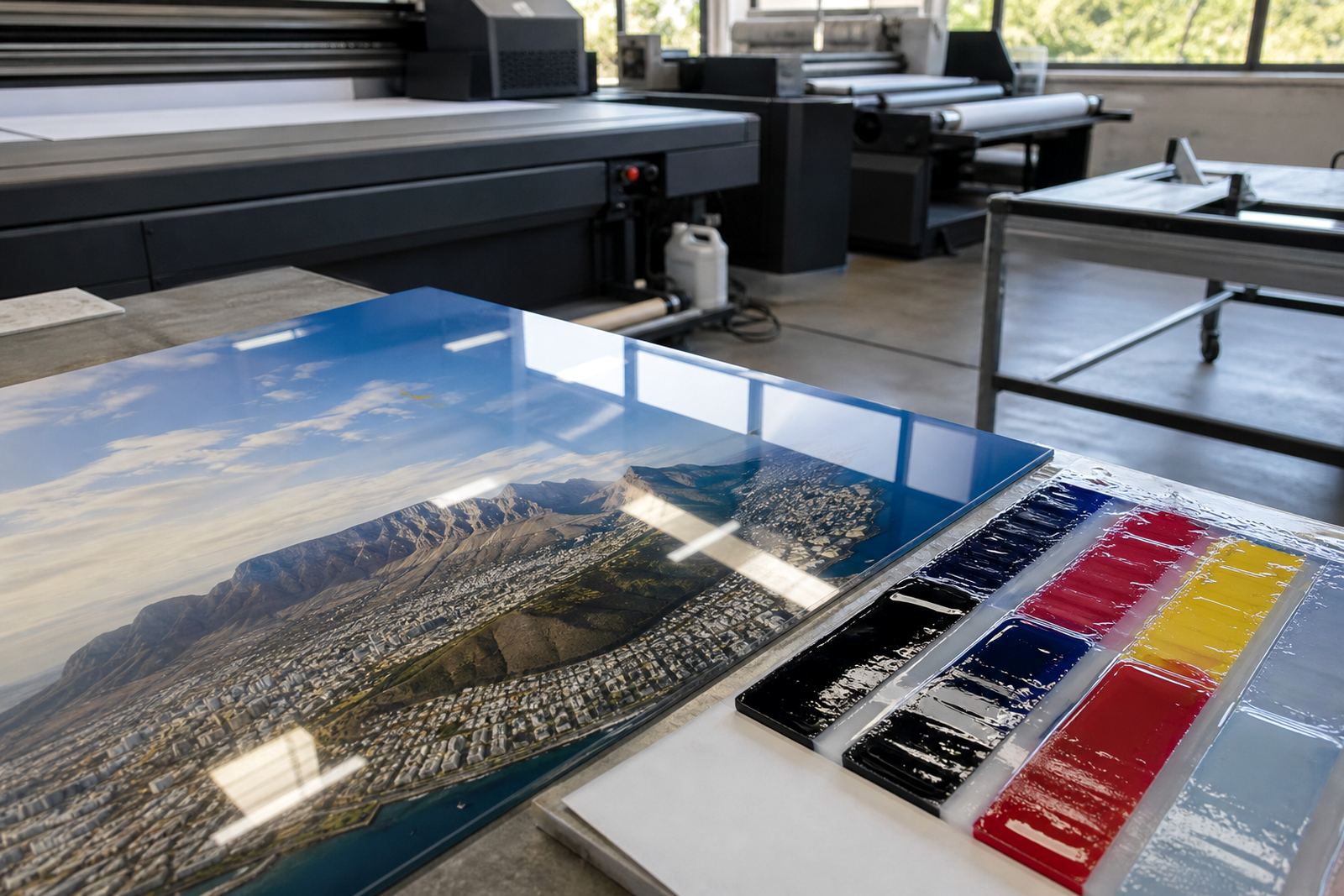
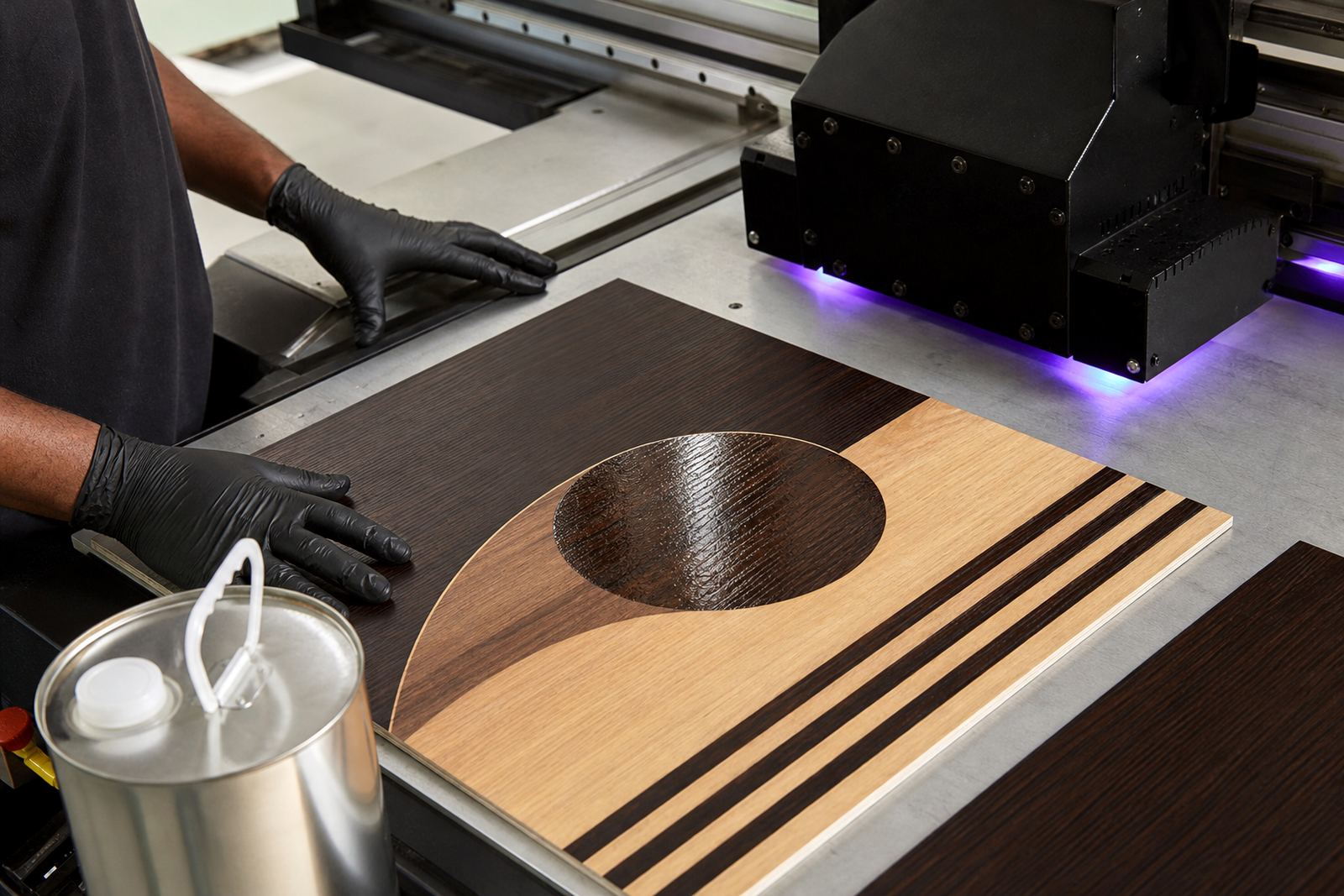
UV varnish ink is a clear, UV-curable coating used to create selective shine, tactile contrast and a finished look on printed sheets or rolls. It is often applied over graphics, packaging panels, display work and presentation pieces where the artwork needs a gloss layer without changing the base colour. Depending on the job, it can be laid down as a full flood coat or in selected areas for pattern, lettering or detail emphasis.
The main point is control. On a flatbed printer, the varnish can be placed onto rigid boards, panels and routed parts. On a roll printer, it can be used for continuous work where the media and curing path are set up for clean coverage. The clear layer must cure fully so the finish feels dry, resists scuffing and does not stay tacky in humid conditions.
For printers in Cape Town, Durban and Gqeberha, that curing step matters even more because coastal moisture can affect handling if the job is moved too soon. Always follow the safety data sheet and wear gloves when handling ink, test panels or cleaning materials.
Typical Sizes, Packaging and Ordering Options
UV varnish ink is usually supplied in practical containers suited to production use, with sizes chosen around daily consumption and the printer reservoir or cartridge system. Ordering the right size helps reduce wastage, especially if you run short production batches for signage, packaging samples or seasonal retail work. If a shop in Epping, Bellville or Paarl is doing regular repeat jobs, it often makes sense to keep a small working stock plus backup for busy weeks.
- 1 litre containers for sample runs, short jobs and colour trial support
- 5 litre containers for steady daily production and repeat orders
- Bulk supply for higher volume users with organised stock rotation
- Sample packs for adhesion testing, curing checks and finish comparisons
When ordering, check the printer type, the ink channel allocation and whether the varnish will be used as a spot layer or full coverage coat. Some users need a very clear finish with low texture, while others want a heavier build for raised effects. The delivery setup also matters, with courier stock support available to Johannesburg, Pretoria, Durban and Gqeberha, plus local delivery across Cape Town.
Where This Varnish Suits Best
This product suits print environments that need extra finish detail without changing the artwork underneath. It is commonly used for signage, promotional boards, product packaging, display pieces, presentation folders and creative print work where gloss and contrast help certain areas stand out. It can also be used to separate matt and gloss zones on the same item, which gives a simple but effective visual contrast.
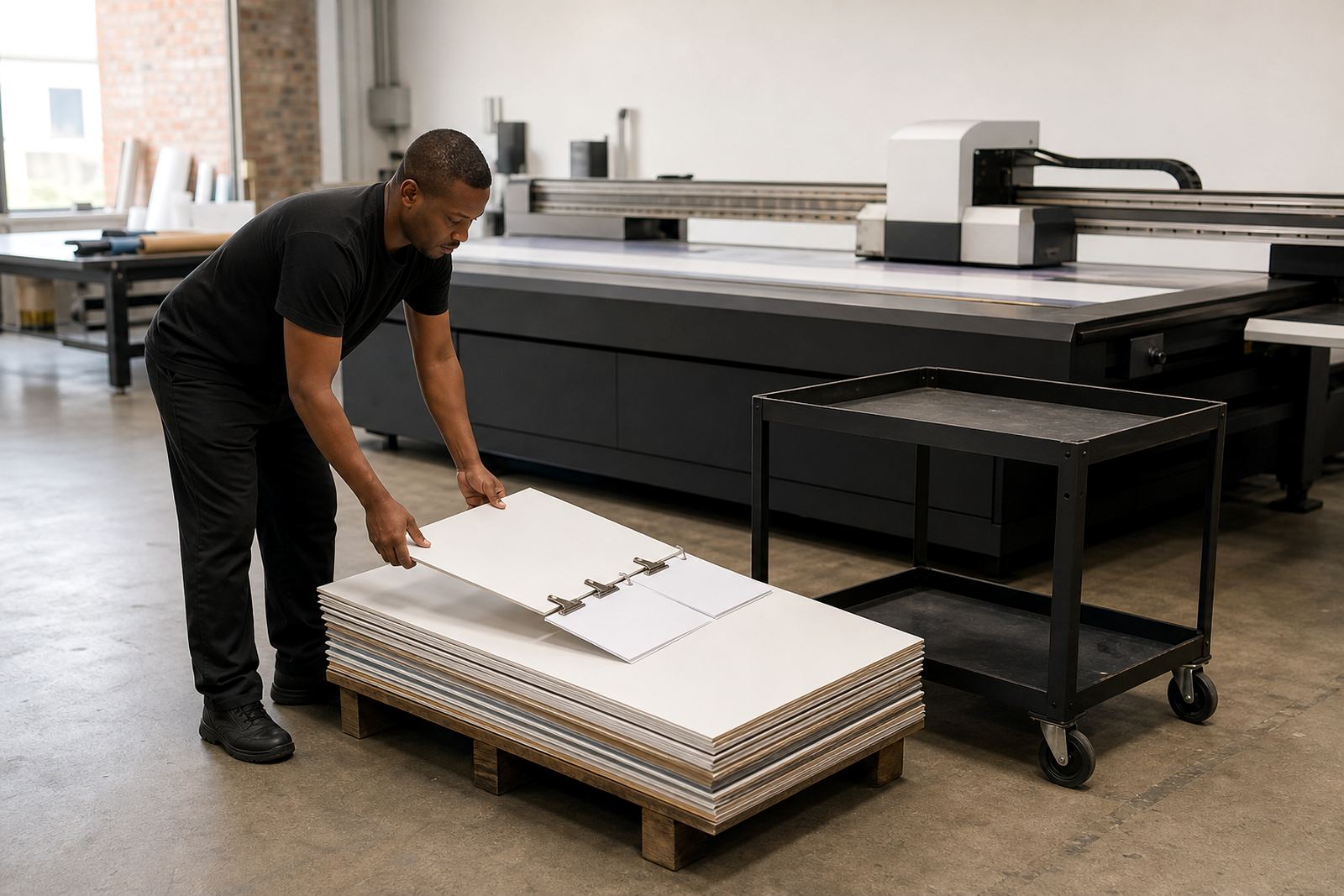
The varnish is most useful where the printer can maintain correct head condition, controlled curing and clean media handling. Flatbed users often apply it to rigid substrates such as coated boards, acrylic sheets or composite panels, while roll-to-roll users may use it on suitable coated media for graphics that need a premium finish. It is not only about appearance, because a well cured varnish layer can also improve surface resistance during handling and packing.
- Indoor signage and display boards
- Short-run packaging and mock-ups
- Presentation pieces and product samples
- Decorative graphics with spot gloss or raised detail
Curing setup and printer checks
UV varnish ink needs a printer and curing system that are set up for the job. In practice, that means clean ink lines, correct viscosity handling, suitable head compatibility and enough UV output to cure the film fully at production speed. A printer running too fast for the curing lamps can leave a soft finish or poor adhesion, while too much heat can affect sensitive media. Matching speed, pass count and lamp intensity is part of the setup.
Some systems may also need compressed air for certain functions, so check the machine requirements before ordering. If the work area is in a hot inland store room or a damp coastal site, keep the ink sealed and stored correctly to avoid issues with skinning or contamination.
- Confirm that the printer channels and heads are approved for varnish use
- Check lamp output, conveyor speed and pass count before production
- Keep the workspace dry, clean and free from dust near the curing zone
Curing and handling tips
UV varnish ink should be stored closed, upright and away from direct sunlight. Heat and contamination can shorten shelf life and affect print quality, so keep lids tight and rotate stock in a sensible order. After production, the printer should be cleaned according to the machine and ink guidance, especially if the varnish is not used every day. This helps prevent buildup in lines, pumps and heads.
Operators should inspect nozzles, wiping systems and curing output before starting a new batch. If the finish looks uneven, check for blocked nozzles, media dust, curing distance or incorrect print mode. Regular operator training helps reduce waste and keeps the finish consistent across repeat orders. For busy production teams in Johannesburg or Cape Town, remote tech help can save time when a job needs quick correction.
- Store sealed containers away from heat and sunlight
- Use gloves during handling and cleanup
- Do nozzle checks before every production shift
- Keep the safety data sheet available on site
Before you order ink
Before ordering UV varnish ink, confirm the printer model, head type, intended media and the effect you want to achieve. A clear gloss for packaging will not behave the same as a raised spot finish on board, so the end use must be clear from the start. It also helps to know whether the job is for flatbed sheets, roll work or mixed production. If you are running repeat orders, note the media brand type, curing settings and the pass count that gave the best result.
When you contact the team through the enquiry form, include the substrate, job size, finish target and any past issues with adhesion or curing. That makes compatibility checks, sample pack prep and production planning much easier. For teams in Epping, Bellville, Paarl, Durban, Pretoria and Gqeberha, the right prep saves time on press and reduces the risk of reprints. Please keep the safety data sheet handy and make sure staff wear gloves during handling.
- Printer make and model, plus head configuration
- Media type, finish target and whether the effect is spot or full coverage
- Current curing settings and any adhesion concerns
- Preferred pack size and delivery destination
Ink data
| Product type | Clear UV-curable varnish ink |
|---|---|
| Finish | Gloss, spot gloss, texture contrast and selective effects |
| Printer use | Suitable for compatible flatbed and roll-to-roll systems |
| Pack sizes | 1 litre, 5 litre and bulk supply options |
| Curing | UV curing required for proper dry-down and adhesion |
| Storage | Keep sealed, upright, cool and away from direct sunlight |