
White UV Ink for Strong Opacity and Layered Print Work
White UV ink is formulated for applications where a solid white layer is needed before colour, or where a finished white print must stand out on darker stock. It is cured by UV lamps or LED curing systems and hardens quickly on the surface, which helps reduce smudging and handling marks during production. On the right media, it can support a crisp base layer, spot white effects and backlit work where opacity matters.
In practice, the best result comes from matching the ink to the printer, the print mode and the substrate. White ink tends to need regular circulation and proper agitation in the ink path because the pigment is heavier than process colours. If a printer stands idle for too long, settling can affect output, so operators should follow the printer's maintenance routine and keep the heads in good order. A small setup mistake can cost time, so it is worth checking nozzle health before a long run.
- Designed for flatbed and roll-to-roll UV printers
- Used for clear, coloured and dark substrates
- Useful for underprint, overprint and highlight layers
- Requires correct curing and printer compatibility checks
Where White UV Ink Fits Best
This ink suits sign shops, packaging teams, label producers and graphics printers that need opacity on non-white materials. It is commonly used on acrylic, PVC sheet, coated boards, film, rigid display media and some treated flexible stocks. For coastal businesses in Cape Town or Gqeberha, storage and handling need a little extra care because humidity can affect substrate behaviour and surface energy. In inland areas like Johannesburg and Pretoria, static build-up can also change how some media feeds through the printer.
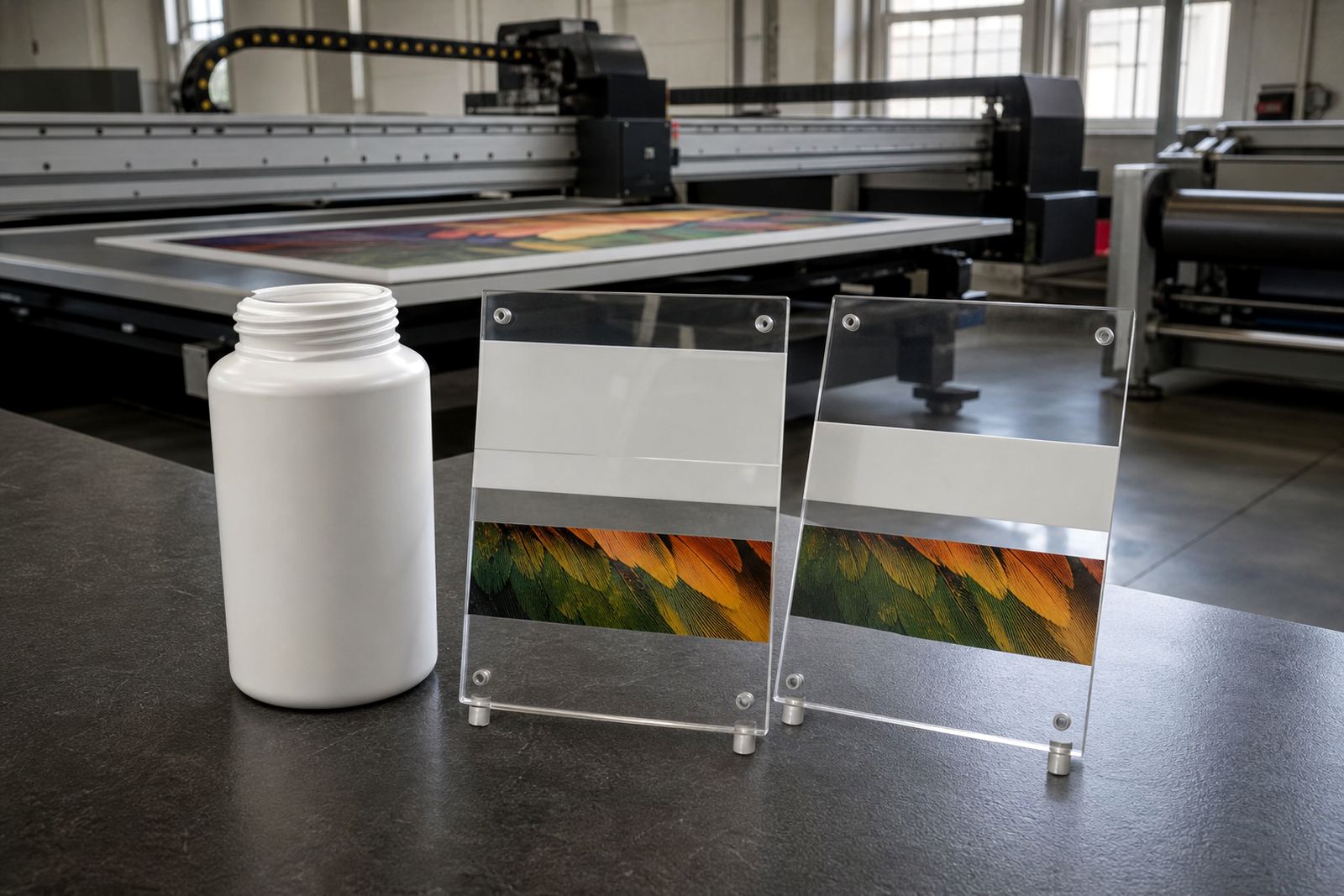
White ink is often chosen for a second pass or layered workflow rather than single-pass full coverage. It can be used beneath colour on clear film, as a flood white on coloured boards, or as a highlight behind graphics that need a clean backdrop. On packaging mock-ups and promotional pieces, it helps keep colours looking true. The final result will depend on the material, the curing unit and the printer profile, so a sample test is always worth doing.
- Suitable for clear, tinted and dark surfaces
- Works well for display graphics and packaging trials
- Helpful for backlit and layered applications
- Should be tested on each new substrate before production
Sizes, Pack Options and Ordering Checks
White UV ink is usually supplied in practical pack sizes that suit both small shops and busy production floors. Common order choices include single litres, multi-litre sets and bulk repeat supply for ongoing work. The right pack size depends on how often the printer runs white, whether the ink is used for underprint only, and how many heads are dedicated to white channels. For many operators, it helps to keep a working stock on hand so that a job does not stop halfway through because of a refill delay.
When placing an order, check the printer model, ink channel layout, head type, and whether the machine uses circulation or agitation for white. Also confirm the media list you plan to print on, because adhesion can vary from one substrate to another. If you are mixing stock from different batches, keep batch records and rotate older stock first. That simple habit saves a lot of trouble later on.
- Pack sizes can be matched to light, medium or high-volume use
- Order by printer compatibility rather than only by colour name
- Confirm batch details for repeat work and colour consistency
- Keep a buffer stock for urgent reprints and service delays
Lamp, media and adhesion checks
The curing lamp or LED system must deliver enough energy to harden the ink without overheating the media. On some printers, white layers need slower carriage speeds or extra passes to cure properly, especially when building opacity.
A new bottle or cartridge should be shaken or rolled only as instructed by the printer setup, not roughly handled. The operator should wear gloves and follow the safety data sheet every time. Good ventilation is also sensible in enclosed print rooms, even when the ink is low odour. When the first test sheet comes off, check for pinholes, chalky cure, overheat marks and adhesion by doing a simple tape test.
- Needs compatible UV lamp or LED curing output
- Wear gloves and follow the safety data sheet during handling
Using the ink on press
White ink needs more attention than standard colour ink because it can settle and block if left unused for too long. Keep the container sealed, store it in a cool dry area away from direct sun and avoid letting dust enter the system. On busy sites in Epping or Bellville, where production may start and stop through the day, it helps to build a daily maintenance routine around agitation, nozzle checks and purge cycles. That routine can prevent a costly blockage later on.
If a job starts to show weak opacity, banding or uneven gloss, the issue may be with cure, flow or head condition rather than the ink alone. A small clog can become a bigger one if it is ignored. When in doubt, stop the run and inspect the system before continuing. It is easier to fix a problem early than reprint 20 boards after the fact.
- Store sealed containers in a cool, shaded place
- Run regular agitation and nozzle checks for white channels
- Inspect filters, dampers and circulation parts on schedule
- Do not ignore weak opacity or curing changes mid-job
What to Check Before You Order White UV Ink
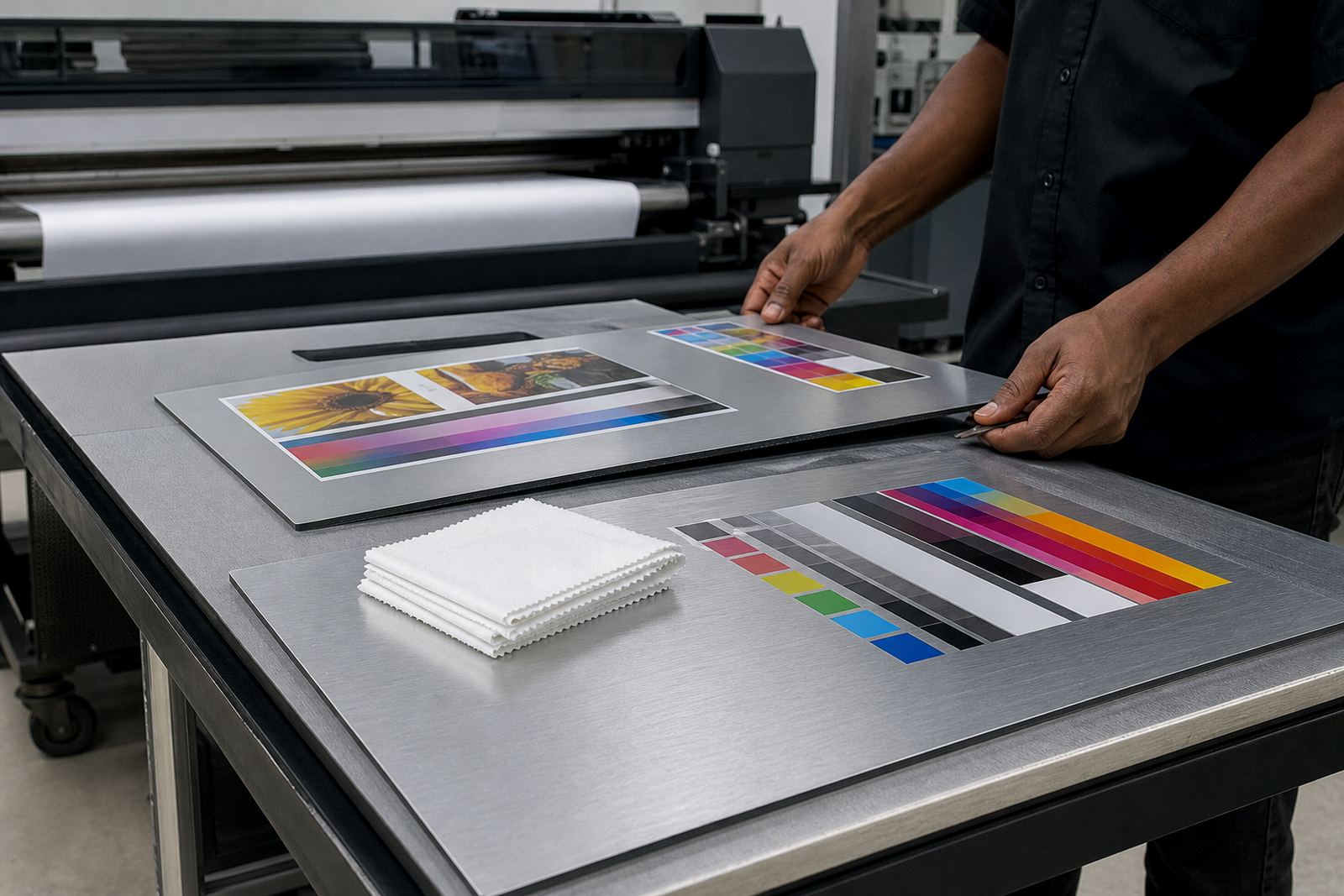
Before ordering, confirm the media type, printer model, ink system and the finish you need. White UV ink can behave differently on rigid PVC, acrylic, coated board, PET film and treated flexible stock. Ask whether you need underprint white, spot white or a flood coat, because that affects coverage and consumption. Also check whether your printer uses recirculation, a white ink agitator or a dedicated white channel. If your team is new to white, brief the operator before the job starts so they know what to watch for.
It is also wise to think about turnaround. If you are running short notice work in Durban or Pretoria, keep your test media and a sample pack ready so you can verify adhesion and cure before the full order starts. For repeat work, note the settings that gave the best result, including pass count, head height, lamp strength and media feed. That record makes the next run faster and helps keep output consistent across jobs.
- Confirm printer model and white ink channel setup
- Match the ink to the substrate and finish required
- Record pass count, lamp output and feed settings for repeats
- Use sample testing before full production on new media
Ink data
| Ink type | UV-curable white pigment ink |
|---|---|
| Use case | Underprint, spot white, flood white and layered graphics |
| Compatible printer types | Flatbed and roll-to-roll UV printers |
| Substrates | Acrylic, PVC, coated board, film and treated flexible media |
| Curing | UV lamp or LED curing, depending on printer system |
| Handling | Wear gloves, follow the safety data sheet and keep containers sealed |