
UV ink for coated aluminium panels in sign and display work
This aluminium panel ink is made for coated aluminium substrates used in signage, display work and print applications where a hard wearing finish is needed. It cures under UV light, which means the ink changes from liquid to solid during printing or in a follow-up curing stage, depending on the printer setup. On a properly prepared panel, that cured film helps the print resist handling, scuffing and the sort of day-to-day wear that comes with fitments, cleaning and transport.
Because aluminium panels can vary in coating, finish and supply source, a good result starts with surface preparation and a simple compatibility check. A panel that looks smooth can still have oils, dust, oxidation or release residue on it. If the ink is applied to a dirty or poorly matched surface, adhesion can drop off quickly. That is why we recommend a test print before production, especially for panels going into shopfronts, estate signage, industrial labelling or outdoor use near the coast where humidity and salt air can affect performance.
For Cape Town, Durban and Gqeberha jobs, we also suggest checking the panel storage conditions before printing. If the panels have sat in a warm store room or were moved through a cold room, condensation can affect the surface. Let the material settle at workshop temperature first and wipe it down properly before printing.
Sizes and supply options for different production runs
We supply aluminium panel ink in practical pack sizes for small workshops and higher volume print rooms. The right option depends on the amount of test work you do, the number of panels in production and how often the machine is running. For a business in Epping or Bellville doing regular short runs, a smaller pack may suit repeat sampling and colour correction. For a print shop pushing larger sign batches across Johannesburg, Pretoria or Durban, a bigger pack can reduce changeovers and help with stock planning.
Available options should always be checked against the printer model, the ink channel set-up and the type of panel coating being used. If you are switching from another UV ink, allow time for flush and compatibility checks before loading the new product. Do not mix different ink types in the same line unless the printer supplier or technical team has confirmed that it is safe to do so.
- Pack sizes suited to sample work and production runs
- Supplied for flatbed and roll-to-roll UV print systems where compatible
- Suitable for test batches, repeat orders and multi-panel jobs
- Can be supported with sample pack prep and colour trial support
Where aluminium panel ink fits best
This product suits coated aluminium panels used for indoor and outdoor signage, route markers, property boards, machine labels and display pieces. It is often chosen where a sharp print finish is needed on a smooth metal surface. When the panel is properly coated and the curing settings are right, the final print can give a neat, professional result without the long dry times you get from some other ink systems.
It is also useful in workshops that need a practical solution for mixed work. One day the machine may be running panels for a retail fit-out, the next it may be printing safety notices or long-life information boards for a plant room or warehouse. That is why we help customers check adhesion on the exact panel they plan to use, not only on a similar sample. Different panel coatings can behave differently, even when the sheet size and thickness look the same.
For outdoor work, the sign maker should also think about mounting hardware, edge sealing and cleaning routines. If the panel is drilled after printing, or handled roughly during fitment, the edges can take strain. Planning the job properly from the start saves rework later.
Before the first production run
Aluminium panel ink needs a printer set-up that can deliver the right amount of UV energy for the coating and the ink laydown. If cure is too light, the surface can stay soft or tacky. If cure is too strong, the ink film can become brittle or shift in appearance. That is why cure testing matters, especially when the workshop is working with different panel suppliers or changing between flatbed and roll-to-roll jobs.
Check the machine manual, keep the print heads clean and allow for a controlled recovery process before resuming production. Some sites also use filtered ventilation or extraction around the printer area, which is sensible when the room is enclosed and work happens for long shifts.
- Confirm printer compatibility before first use
- Check lamp or curing unit output before production
- Use the recommended ventilation and workshop controls
Curing and handling tips
If the surface is stacked too soon, dust or pressure marks can show up. Keep printed panels out of direct harsh sun until they are ready for fitment and avoid aggressive cleaners on the printed side. Mild cleaning is usually safer than strong solvents.
Ink storage matters too. Keep containers closed, upright and away from heat, direct sun and damp floors. Coastal humidity can affect workshop conditions, so a dry store area is better than a corner that catches condensation. If a drum or container has been opened, keep a note of the batch and use it within the normal working plan for the site. We also advise following the safety data sheet and wearing gloves when handling the ink, cleaning the area or moving sample materials.
If you need repeat order support, our team can help you match the previous supply, confirm the set-up and plan stock around project timing. That is useful for customers in Paarl, Pretoria and Gqeberha who need steady supply across several jobs instead of one-off purchases.
Before you order ink
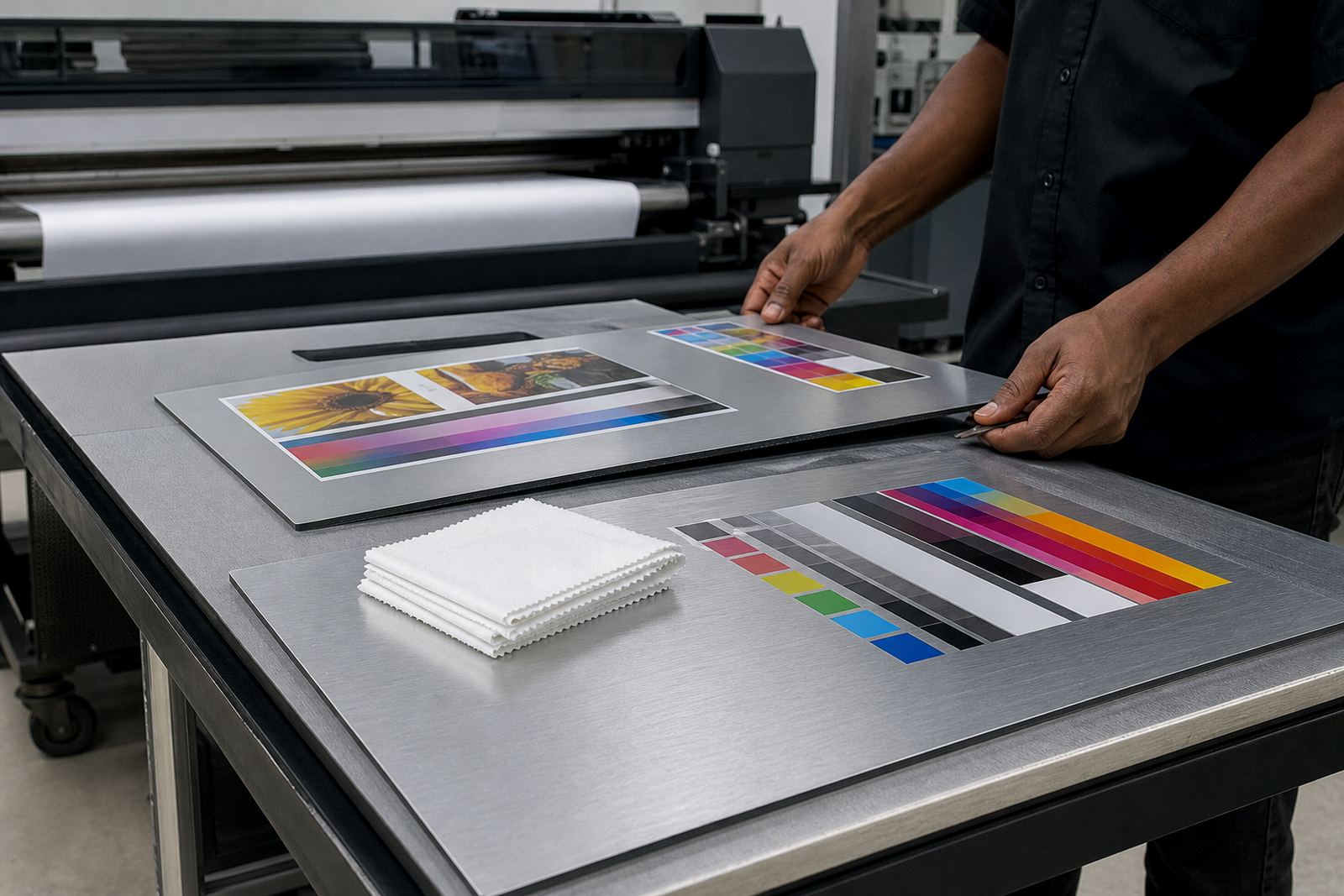
Before ordering aluminium panel ink, check the panel coating, printer type, curing method and the finish you need on the final piece. If the panels are for outdoor use, ask whether there is any overcoating, lamination or sealing planned after printing. If the job is for a client who expects exact colour matching, do a sample first and confirm the print under normal shop lighting, not only under machine light.
It also helps to let us know where the job is going and how it will be used. The team can help with ink selection, compatibility checks, adhesion testing, curing guidance and remote tech help through the enquiry form on our contact page. That way you can order with fewer surprises and keep the production line moving.
- Panel coating and supplier details
- Printer model and ink channel set-up
- Intended use, indoor or outdoor
- Expected finish, batch size and repeat order needs
Ink data
| Product type | UV-curable ink for coated aluminium panels |
|---|---|
| Printer compatibility | Flatbed and roll-to-roll UV printers where compatible |
| Finish | Cured print film for signage and display work |
| Application | Coated aluminium panels, labels and board applications |
| Handling | Follow the safety data sheet and wear gloves |
| Supply areas | Epping, Cape Town and courier delivery across South Africa |