
Why wallcoverings need tighter print control than signage
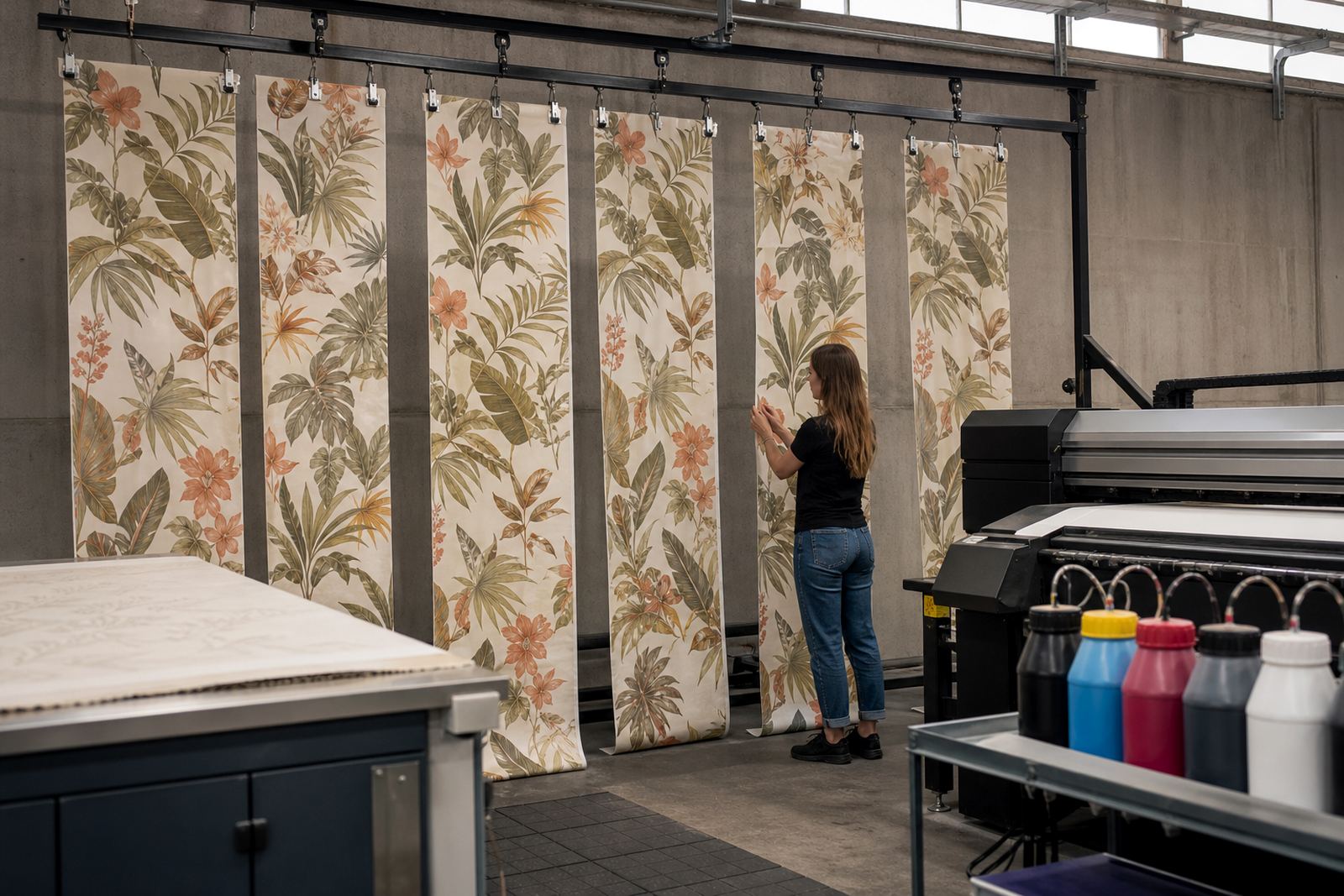
Wallcovering jobs are less forgiving than a quick sign panel. A wall panel sits under natural light, indoor lighting and close viewing, so any shift in colour, gloss or banding is easy to spot. If the design is being tiled across several drops, the print must stay consistent across long runs and through repeat orders too.
On textured substrates, or on papers and coated vinyl made for wallpaper use, ink laydown needs to be balanced so the image does not crack, scuff or soften at the edges. In Cape Town, where humidity can change from one week to the next, this matters even more because media moisture content can affect feeding and finishing.
Choosing a UV-curable ink for the right wallcovering stock
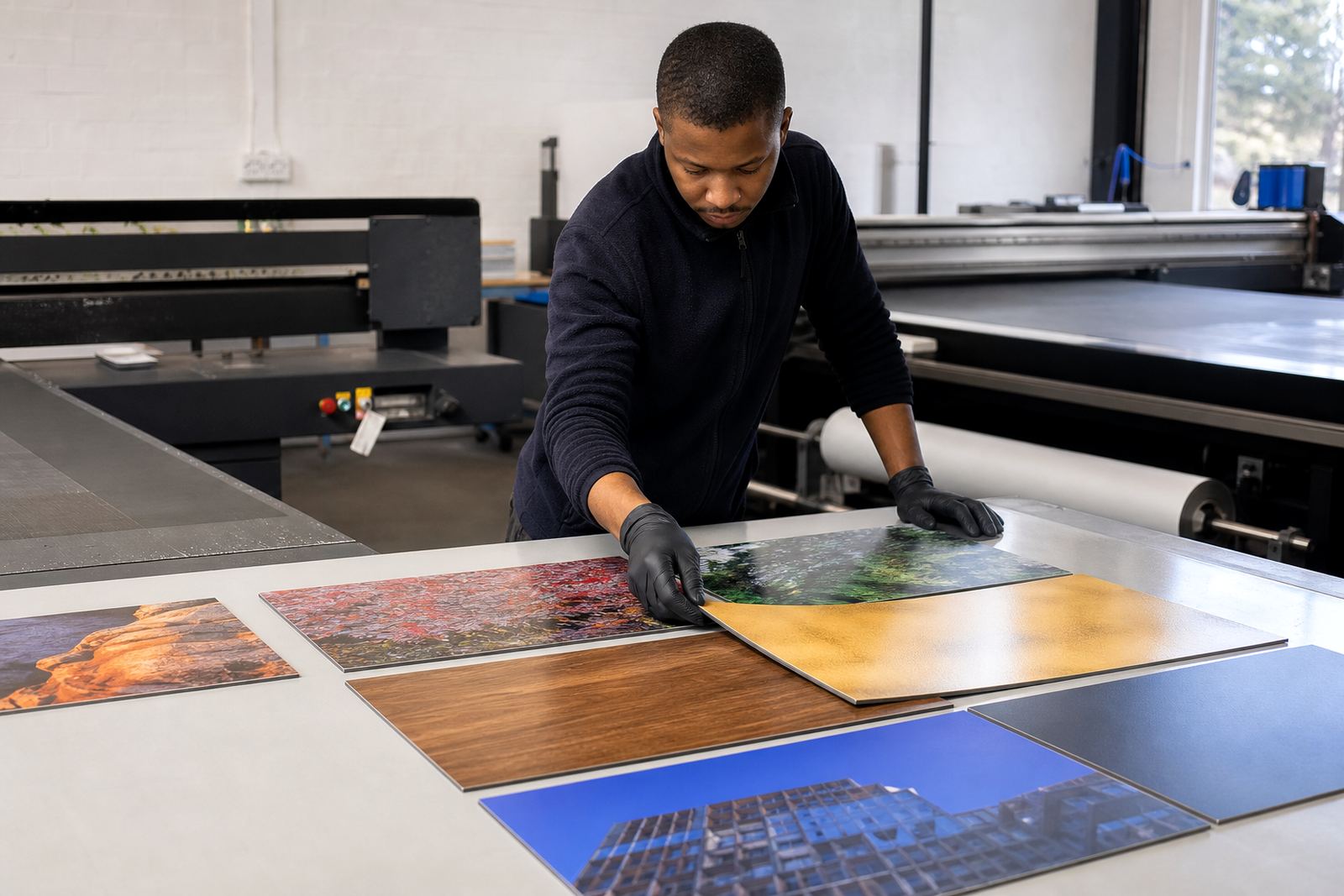
Not every UV-curable ink behaves the same on every roll. Some wallcovering materials take ink cleanly and hold fine detail, while others need extra attention around primer layers, curing strength and post-print drying time. The safest starting point is compatibility checking before production, not after the first full roll.
A print that will be wrapped, trimmed and joined in a busy office foyer needs different care from a short run for a retail feature wall in Stellenbosch or Gqeberha.
- Check whether the media is coated for UV ink reception.
- Confirm if the job needs matte, satin or gloss appearance.
- Test adhesion before committing to full production.
- Keep repeat orders on the same material batch where possible.
Curing settings that protect colour and stop handling issues
Stable curing is one of the most important parts of wallcovering printing. If the ink is under-cured, it can smear during rewinding or mark during packing. If it is over-cured, the surface may become brittle, which can affect flexibility when installers are joining panels on site. The goal is clean cure, not just dry to the touch.
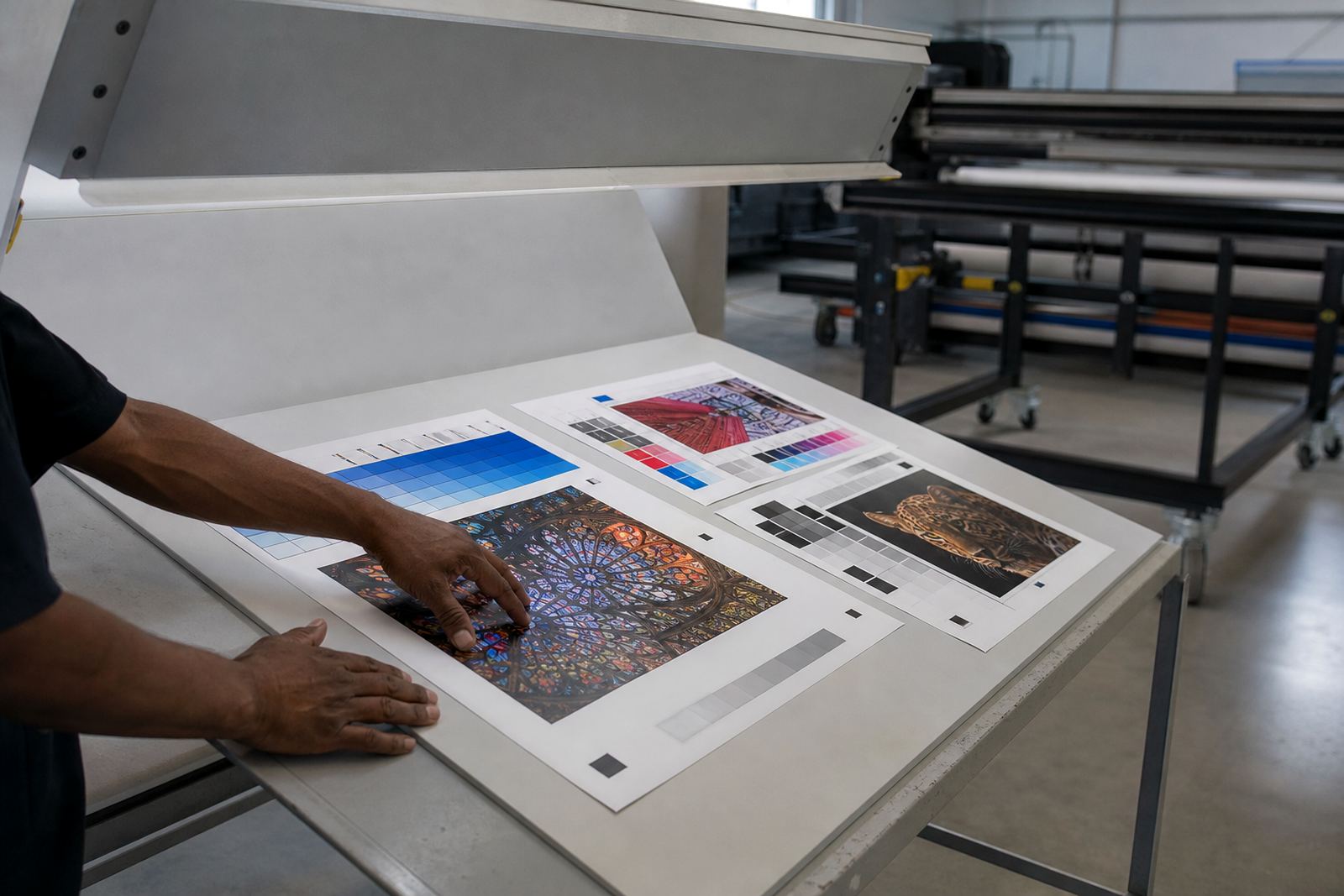
For long runs, operators should watch lamp output, pass speed and temperature through the job. Small changes can shift colour density, especially on large repeat patterns or light pastel designs. A sensible approach is to print short trials first, inspect them under good light and then keep those settings locked for the main run. Hennie often tells customers to check the first 3 to 5 metres carefully because that is where setup problems show first.
- Run a test strip before full production.
- Check the print after curing and again after rewinding.
- Look for tack, odour and surface rub resistance.
- Keep the printer bed, rollers and feed path clean.
Adhesion testing before the roll leaves the workshop
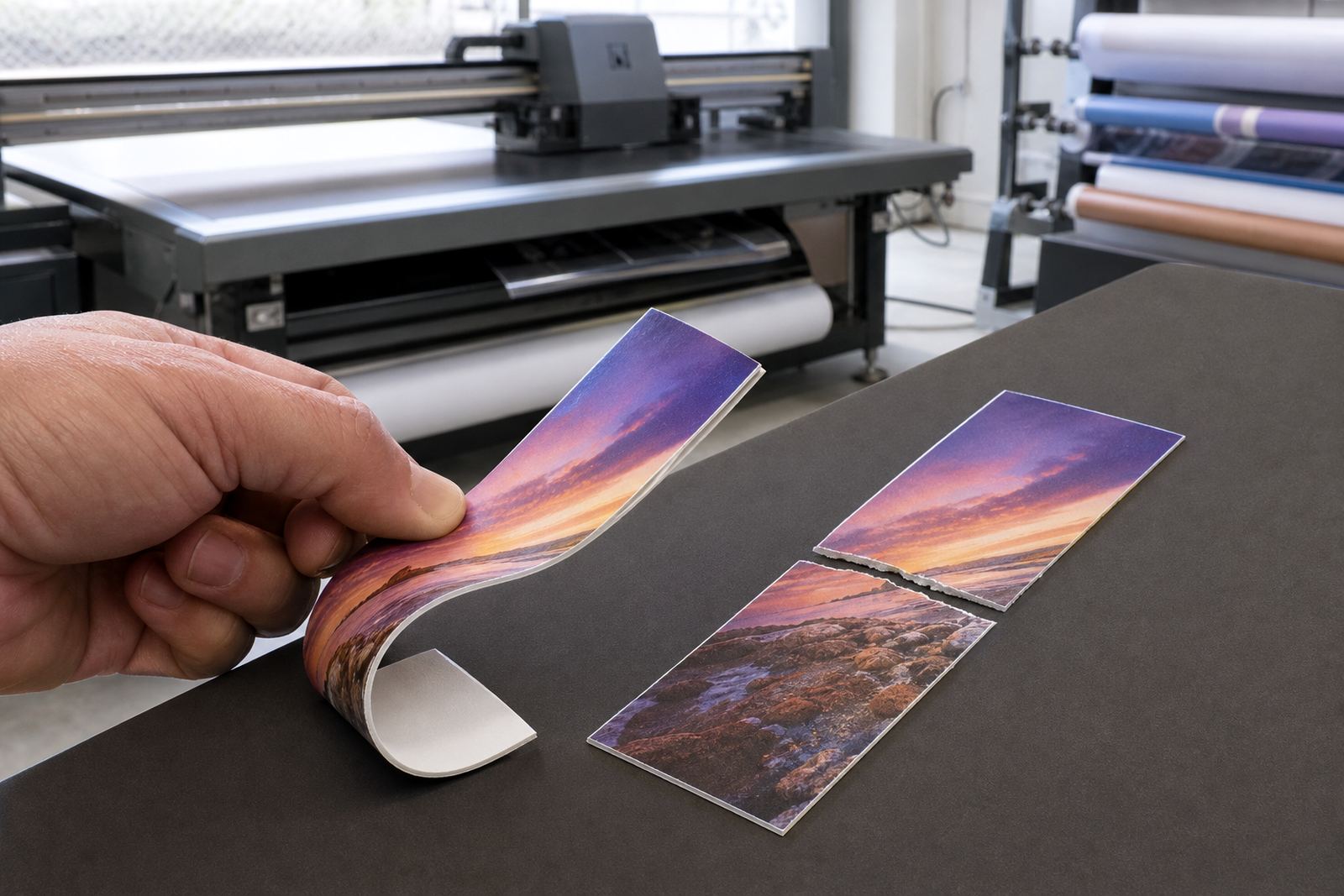
Wallcoverings are usually handled, rolled, unrolled and cut more than standard rigid signage, so adhesion testing should be part of the normal job flow. A print that looks fine on the machine may still fail when creased, trimmed or stored in a warm vehicle. That is why a simple rub test and tape pull test are worth doing every time the media or batch changes.
For South African production teams, especially where courier stock moves between Epping and Johannesburg or Pretoria, packaging conditions also matter. A roll packed too tightly, or sent out before the print has settled, can arrive with surface marks. It is better to allow proper cooling and inspection than to rush the job and create reprint work later.
- Test adhesion on edges and solid colour areas.
- Check how the print behaves after light flexing.
- Inspect for pinholes, fisheyes or patchy cure.
- Record the batch, date and printer settings for repeat jobs.
Curing setup and printer checks
Panels should be trimmed accurately, packed in order and labelled so installers can keep the repeat sequence correct. If the wallcovering is for a hotel corridor, showroom or office reception, one missed panel can slow the entire job and waste material. This is where careful sample pack prep and production planning help keep things orderly.
Installers also need to know whether the print surface can take light wiping, whether the ink has fully cured and how the edges behave when trimmed. For a local example, a Durban fit-out in humid weather may need slightly different handling from a dry indoor install in Paarl. The material should be acclimatised where possible, and the wall itself must be clean, dry and smooth before application.
- Label each drop in sequence.
- Keep panels flat and protected from dust.
- Allow the roll to acclimatise before cutting on site.
- Use clean blades so edges do not fray.
- Confirm the wall is free from loose paint, moisture and powdery plaster.
How UV Ink supports repeat orders and technical support
Wallcovering clients often reorder the same graphic for multiple branches, tenant fit-outs or phased projects. That is where repeat order management and reliable production notes save time. A job printed today should be easy to match next month, provided the same media, curing approach and colour checks are followed.
Our team in Epping works with customers who need advice on compatibility checks, colour trial support, curing guidance and remote tech help. Michael van Wyk leads the business, with support from Lindiwe Maseko, Hennie Opperman, Shanaaz Allie, Moagi Shirinda, Nadine Motaung and Thabo Steyn across sales, technical support, operations, logistics, customer service and training. Customers get courier stock support across South Africa, including Cape Town, Johannesburg, Durban, Pretoria and Gqeberha, plus nearby areas like Bellville and Paarl.
Whatever the project size, the same rule applies: follow the safety data sheet, wear gloves when handling ink and keep the work area tidy. Safe handling protects operators and helps keep the print consistent from trial to final roll.