
Why metal printing needs more than a standard setting
Printing on metal is not a one setting job. Aluminium, stainless steel, mild steel and coated panels all take ink differently, and the surface finish changes the way the droplets sit before curing. A powder coated sign blank is not the same as brushed aluminium, and a pre-treated sheet behaves differently again.
UV-curable inks are chosen for metal because they cure quickly under the right light energy and can give a hard finish that suits signage, labels and industrial marking. Even so, adhesion is affected by contamination, surface energy, heat and how much flex the panel will see after printing. Dust from cutting, finger marks, polishing compounds and coastal moisture can all interfere with bond strength.
Start with the metal finish, not the artwork
Before you worry about colour matching, look closely at the substrate. If the sheet has a glossy coating, the ink may need a different approach to grip properly. If it has a textured finish, fine detail may need adjustment so the image stays sharp and legible. For jobs in Cape Town or Gqeberha, where humidity can creep into storage areas, clean handling matters even more.
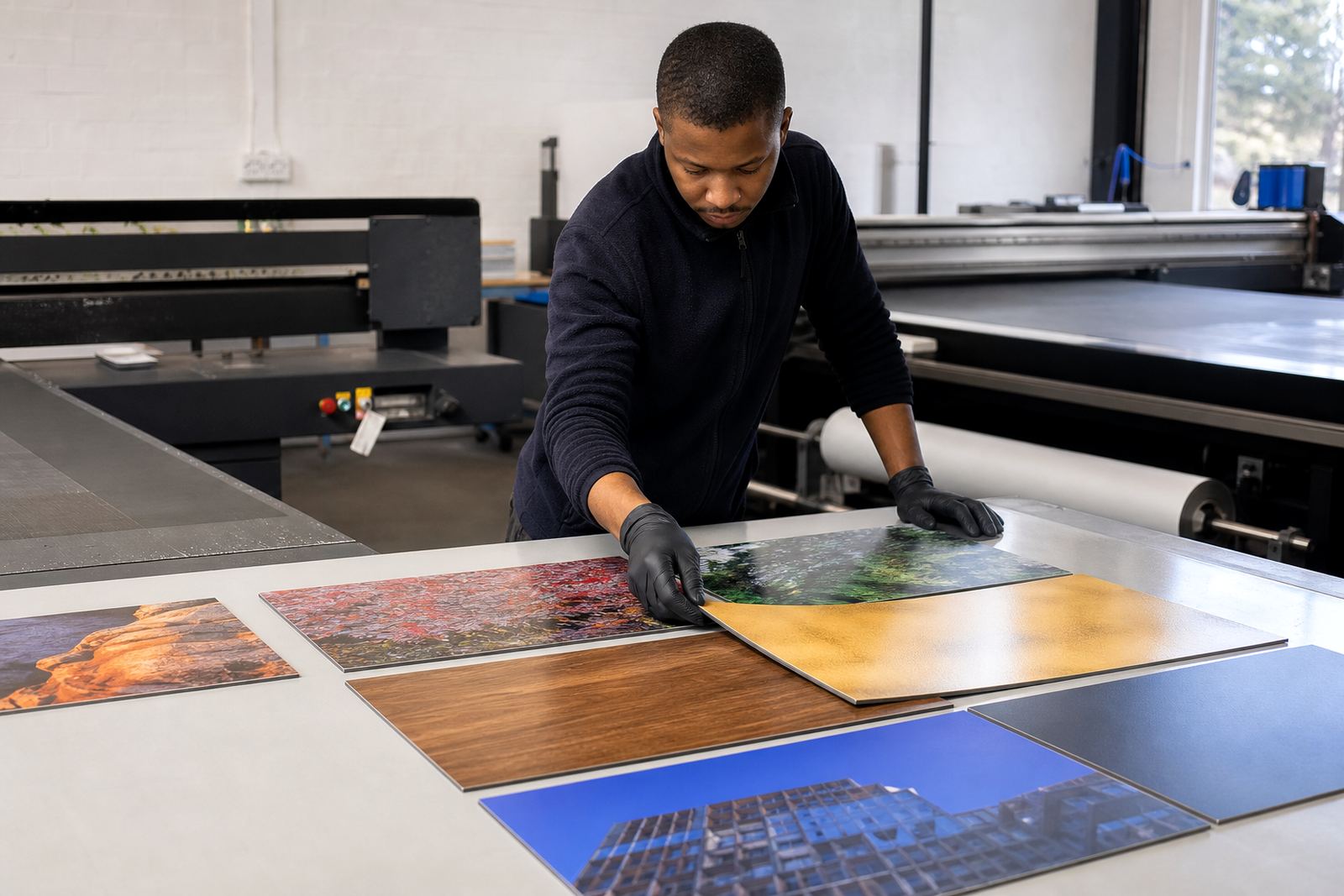
Good prep starts with practical checks. Wipe the sheet clean, keep gloves on, and avoid touching the print area after cleaning. If the panel was stored in a workshop with grinding dust or near open loading bays, inspect it carefully before it goes onto the printer bed.
- Confirm the exact metal type and coating
- Check for oil, dust, polish or fingerprints
- Decide whether the sheet is flat enough for print stability
- Note if the panel will be bent, riveted or folded after printing
Why compatibility checks save time and material
Ink compatibility is not only about whether a printer can spray the ink. It is also about how the ink cures, anchors and wears after curing. Some metal jobs need a stronger bond for handling, while others need a smoother finish because the artwork includes small text or fine linework. A proper compatibility check helps match the ink to the machine, the substrate and the final use.
For production teams in Johannesburg or Pretoria working under pressure, a quick test panel can stop a bigger problem later. It is far cheaper to check a sample than to reprint a run of nameplates or retail panels because the finish lifted at the edges. Sample testing also helps confirm whether a primer, cleaner or altered print mode is needed.
- Run a small sample on the actual metal stock
- Test adhesion after full curing and cooling
- Check edge lift, scratching and scuff resistance
- Review colour after the ink has fully cured
Curing matters as much as adhesion
UV inks cure when the correct light energy hits the ink film and turns it from liquid to solid. On metal, the surface itself can affect that process. Shiny panels may reflect light, while dark coated sheets can hold heat and change how the ink behaves during and after curing. If the cure is too light, the print may feel tacky or mark too easily. If it is too strong, the surface can overheat and affect fine detail.
Operator training helps here. The same metal panel can need a different approach from one job to the next, depending on ink laydown, thickness and the shape of the artwork. For larger flatbed jobs, keep an eye on machine speed, lamp settings and bed cleanliness. For roll-to-roll work on thin metalised or flexible metal-look stock, check tension and surface stability before starting the run.
From the ink lab: Cape Town workshops and sign shops
A sign shop in Epping might receive an order for brushed aluminium panels for an office park in Bellville, while another run goes out to a retail site in Durban. Both jobs may use metal, but the handling can differ completely. One panel may be wall mounted indoors, the other may face sunlight, salty air and frequent cleaning near the coast. That changes the ink choice, the cure approach and the need for test prints.
In practice, the best results usually come from a simple workflow: inspect, clean, test, cure, then review the sample under real light. If the panel passes a scratch check and the colours hold, production can move ahead with more confidence. If not, small changes in curing or surface prep often solve the issue before the full order starts.
Safe handling, repeatability and production planning
Metal printing is often part of a wider production line, so consistency matters. Keep a written note of the substrate, cleaner used, curing settings and any adhesion result. That makes repeat orders much easier, especially when a client asks for the same finish months later. It also helps if the sheets come from different suppliers or if the finish changes slightly from batch to batch.
Always follow the safety data sheet for the ink and wear gloves when handling uncured material or cleaned panels. If the job is going out by courier to Johannesburg, Durban, Pretoria or Gqeberha, pack the finished panels so they do not rub against each other in transit.
- Record substrate details for repeat runs
- Store ink and panels away from heat and dust
- Use gloves for cleaning and handling
- Pack finished metal prints to prevent scuffing
What to check before you print the full run
If the answer is yes to all four, you are far less likely to face costly rework later.
Metal can deliver a clean, professional result, but only when the print process matches the surface. A proper test print gives you the proof before production starts and keeps the job moving without unnecessary surprises.