Why flexible media behaves differently under UV ink
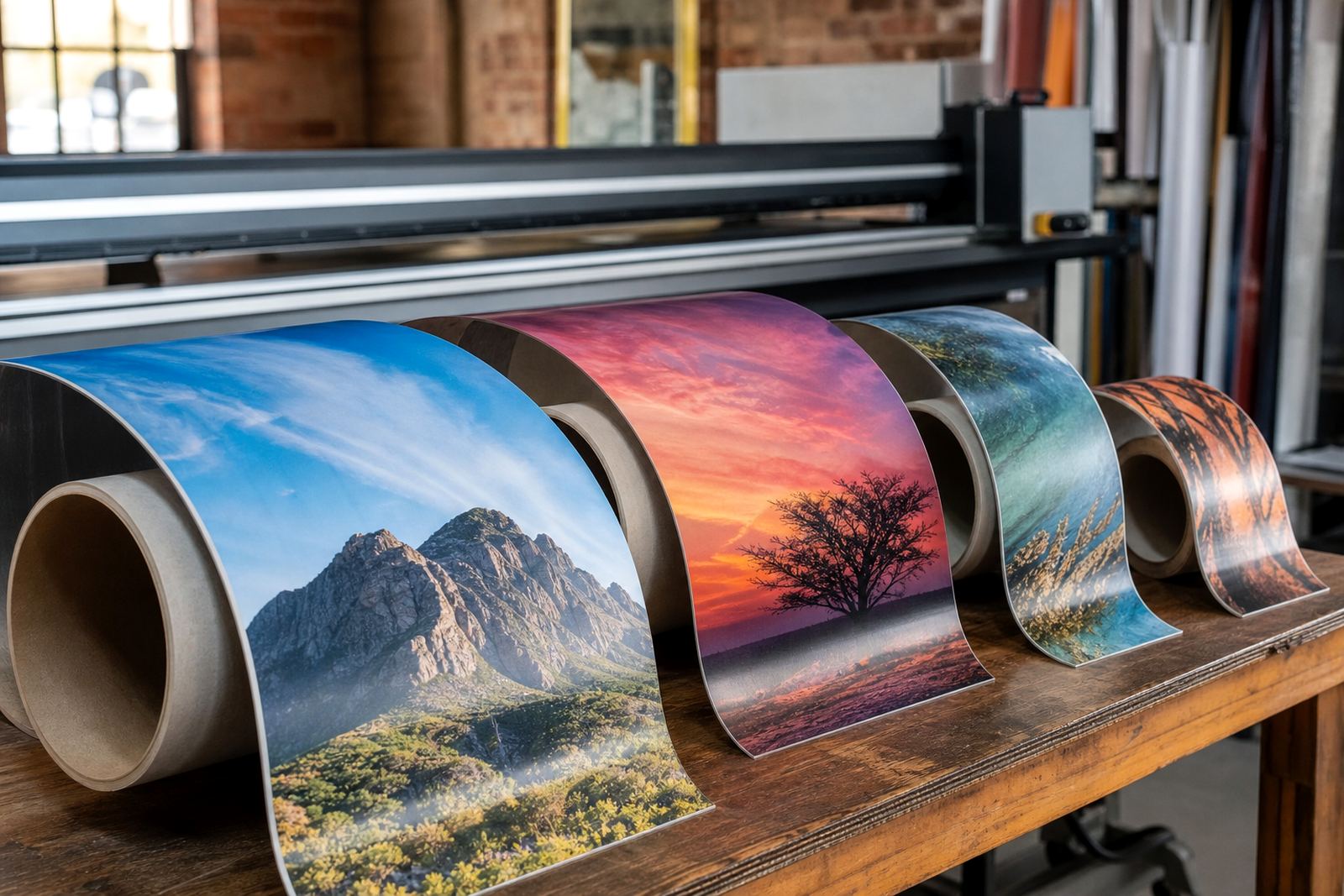
Flexible substrates move more than rigid boards do, so the ink film has to cope with bending, rolling and handling after print. That affects everything from dot sharpness to final adhesion. If the media has a coating, a texture, or a release layer, the ink may sit differently and need a slightly adjusted cure setting.
When the media is thin, curl can start as soon as heat from the printer or curing lamps is added. Some rolls stay flat in the machine but curl after trimming or laminating. Others look fine at first then show edge lift once they are packed in a warm vehicle or exposed to coastal moisture. It is worth testing the actual substrate, not only the product family.
- Check whether the material is coated or uncoated
- Confirm the intended use, indoor or outdoor
- Ask how the print will be handled after curing
- Test the exact roll width and batch before production
The three things that matter most before you print
The first question is whether the media can accept UV ink without beading or poor anchoring. The second is whether it can handle the heat and lamp output needed for proper curing. The third is how the finished print will be used, because a banner for short term indoor promotion has different needs from a sign that will be folded, rolled, or mounted near a shopfront.
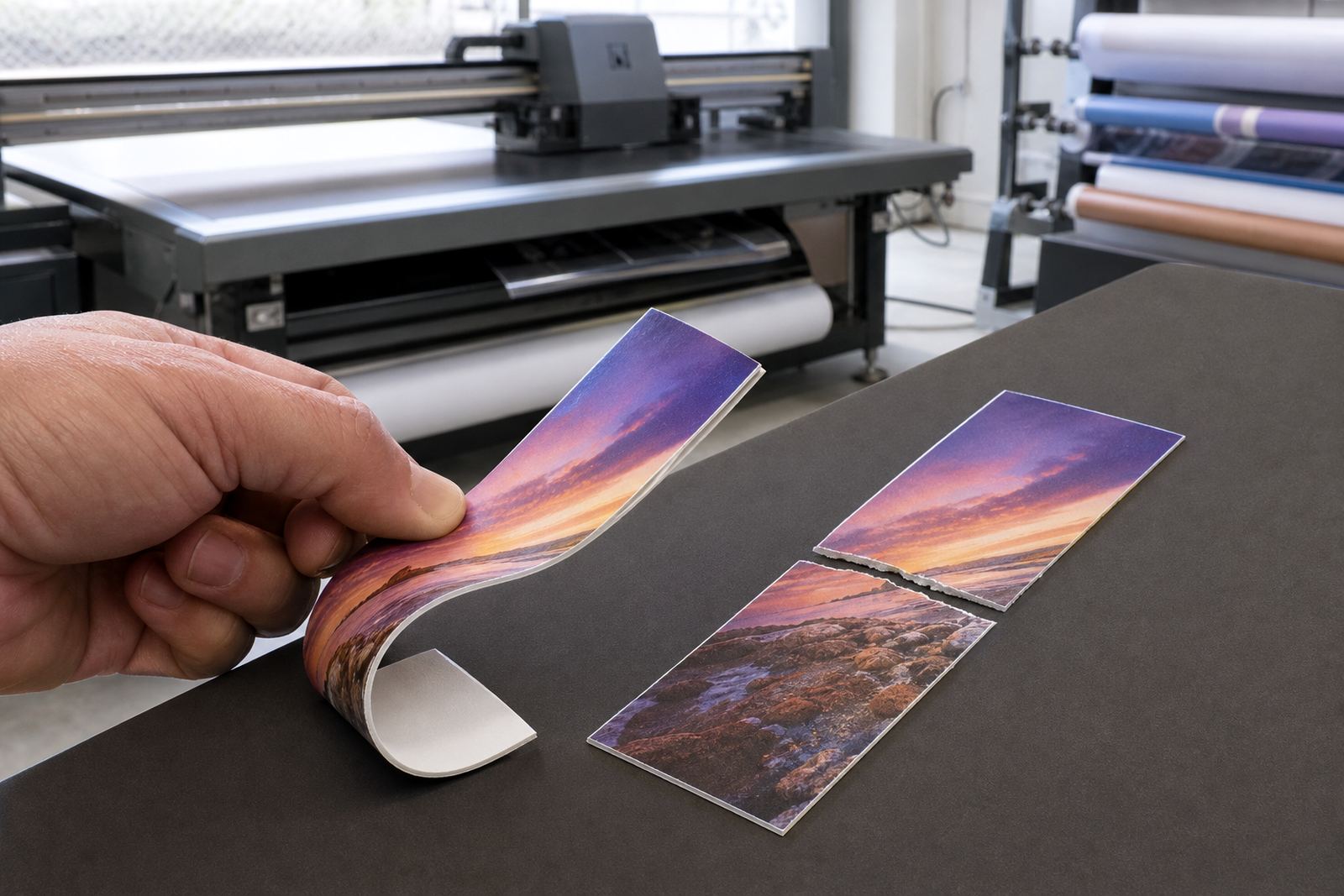
A practical selection process starts with sample prints and a simple handling check. Print a small area, cure it fully, then bend, rub and tape test it after cooling. If the surface marks too easily or the image cracks at the fold, that media may not suit the job. On some flexible films, a lighter ink laydown gives better movement and less stress on the cured layer.
- Look at print location, sunlight and handling frequency
- Review the required finish, gloss, matt or overlaminated
- Match the media to the printer type and carriage clearance
- Allow for trimming, eyelets, stitching or heat welding
Curl, stretch and shrinkage in South African conditions
Flexible media can react quickly to temperature changes. On the inland side, dry air in Johannesburg or Pretoria can reduce moisture but increase static, which affects feeding and stacking.
Curl usually shows up at the edges first. It can be caused by ink load, heat, tension from the roll, or the media memory from being wound tightly. Stretch and shrinkage matter when the artwork must align with die cuts, stitching, eyelets or panel joins. If a client needs neat finishing around poles, frames or pop-up systems, a stable media choice matters more than a slightly cheaper roll.
One local example: a Cape Town signage job for a wind-exposed storefront near the coast may need a flexible print that resists edge lift, handles frequent cleaning and stays presentable after repeated rolling. The same artwork on a softer substrate could work well for a short term in-store promotion in Bellville, but not for a long outdoor run along the sea side.
Curing guidance for clean finish and better adhesion
UV ink should cure enough to bond properly, but overcuring can make the film brittle on flexible media. Under curing can leave the surface tacky and weak during finishing. The aim is a balanced cure that gives good adhesion without making the print too stiff for the substrate.
Operators should watch for three signs: the ink surface feels dry but not powdery, colour stays consistent after a bend test, and there is no transfer when the print is stacked after cooling. If the printer allows adjustment, cure and pass settings should be matched to the media thickness and ink build. Sometimes a slower pass with lower ink density gives a better result than pushing heavy coverage through in one go.
- Follow the safety data sheet before handling ink or cleaning fluid
- Wear gloves when changing cartridges, refilling or cleaning heads
- Keep the work area ventilated and wipe spills promptly
- Let prints cool before stacking, rolling or laminating
How to compare flexible media for the right printer
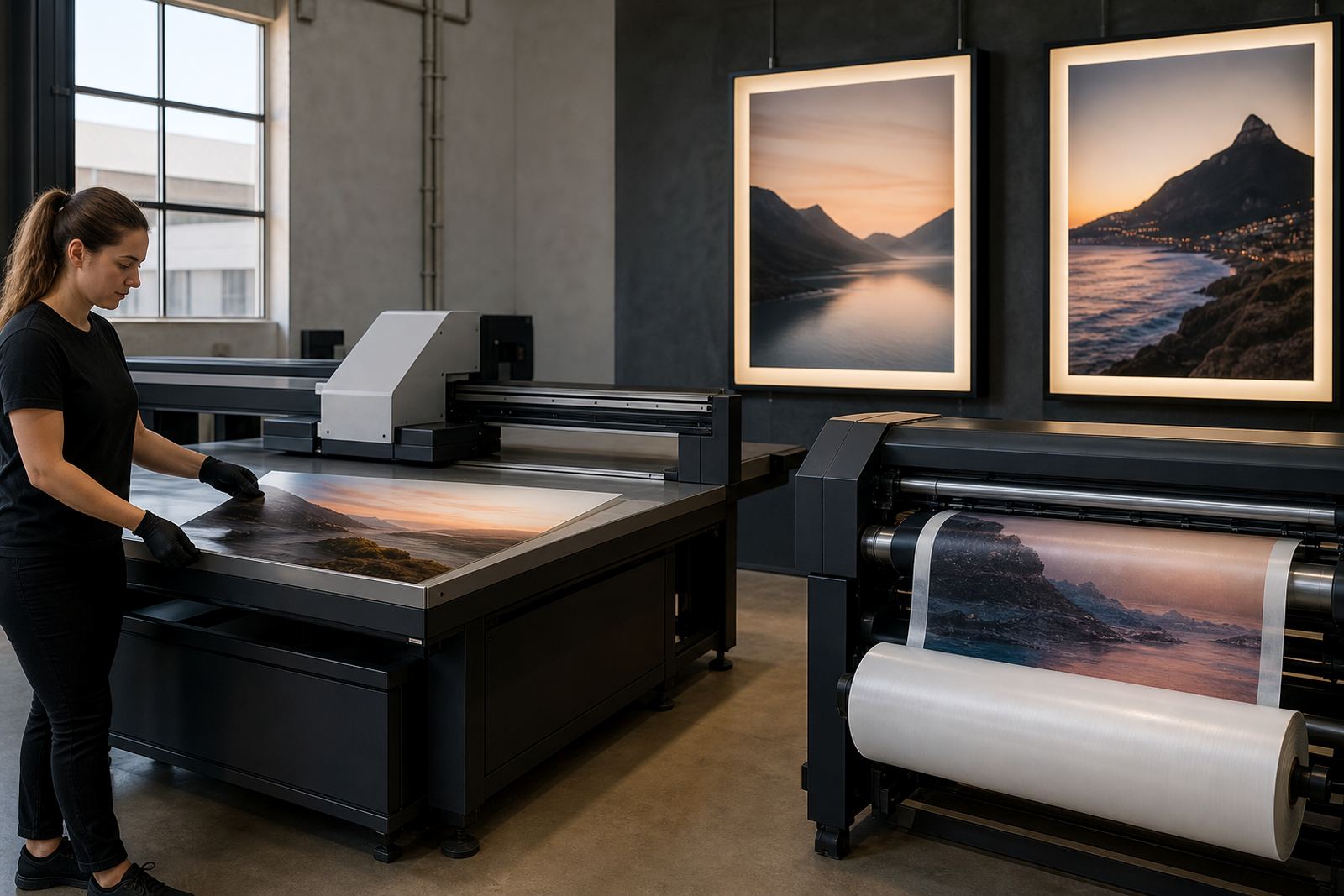
Flatbed and roll-to-roll machines do not treat flexible media the same way. A substrate that feeds well on a roll printer may still need extra support on a flatbed, especially if the sheet has a light curl or the surface is slippery. Printer compatibility is not only about size, it is also about feed stability, vacuum performance and how the media reacts to curing heat.
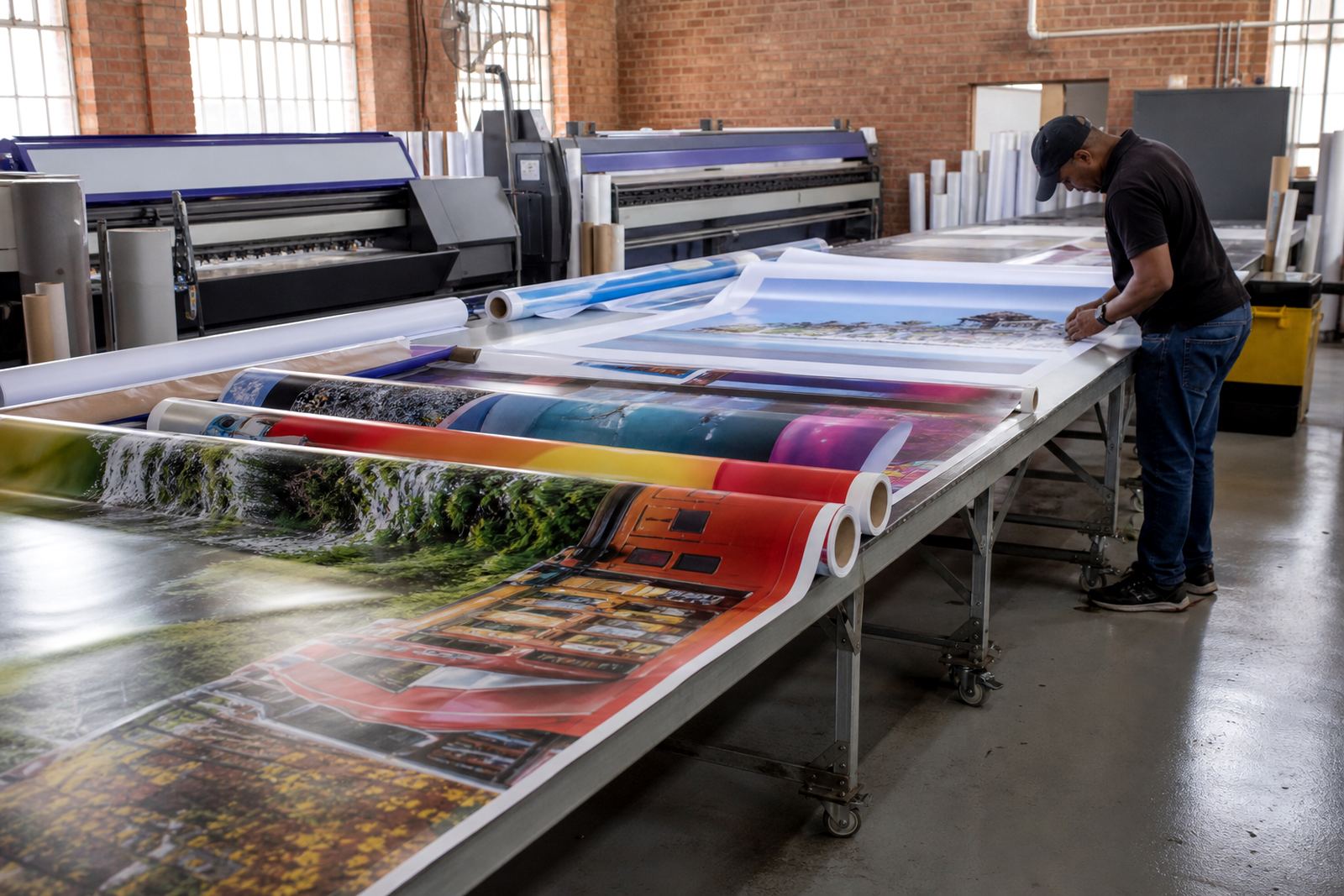
When choosing a substrate, look at the following points and keep notes from each trial. This makes repeat orders easier and helps the production team keep the same result from one batch to the next. It also reduces waste, which matters when couriering stock between Cape Town, Johannesburg, Durban, Pretoria and Gqeberha.
- Media thickness and roll tension
- Surface texture and coating level
- Feed consistency on long runs
- Drying and cooling time before finishing
- Adhesion after bending, rubbing or folding
A simple buying checklist for sign shops and print rooms
Before placing an order, it helps to define the job in plain terms: where the print will be used, how it will be mounted, and how long it must last. If the order is for packaging mock-ups, point-of-sale graphics, event work or outdoor signage, the media selection will likely differ. Good planning also helps with sample pack prep, colour trial support and repeat order management.
Keep a small record of the preferred ink load, curing settings and finishing method. That record can save a lot of time when the next job comes in from Paarl, Bellville or further afield.
- State the end use before ordering the media
- Ask for compatibility checks and adhesion testing
- Keep one approved setting for each material type
- Brief operators on handling, storage and curing
- Store rolls flat, cool and away from direct sun