
Point of sale jobs need print that holds up to handling
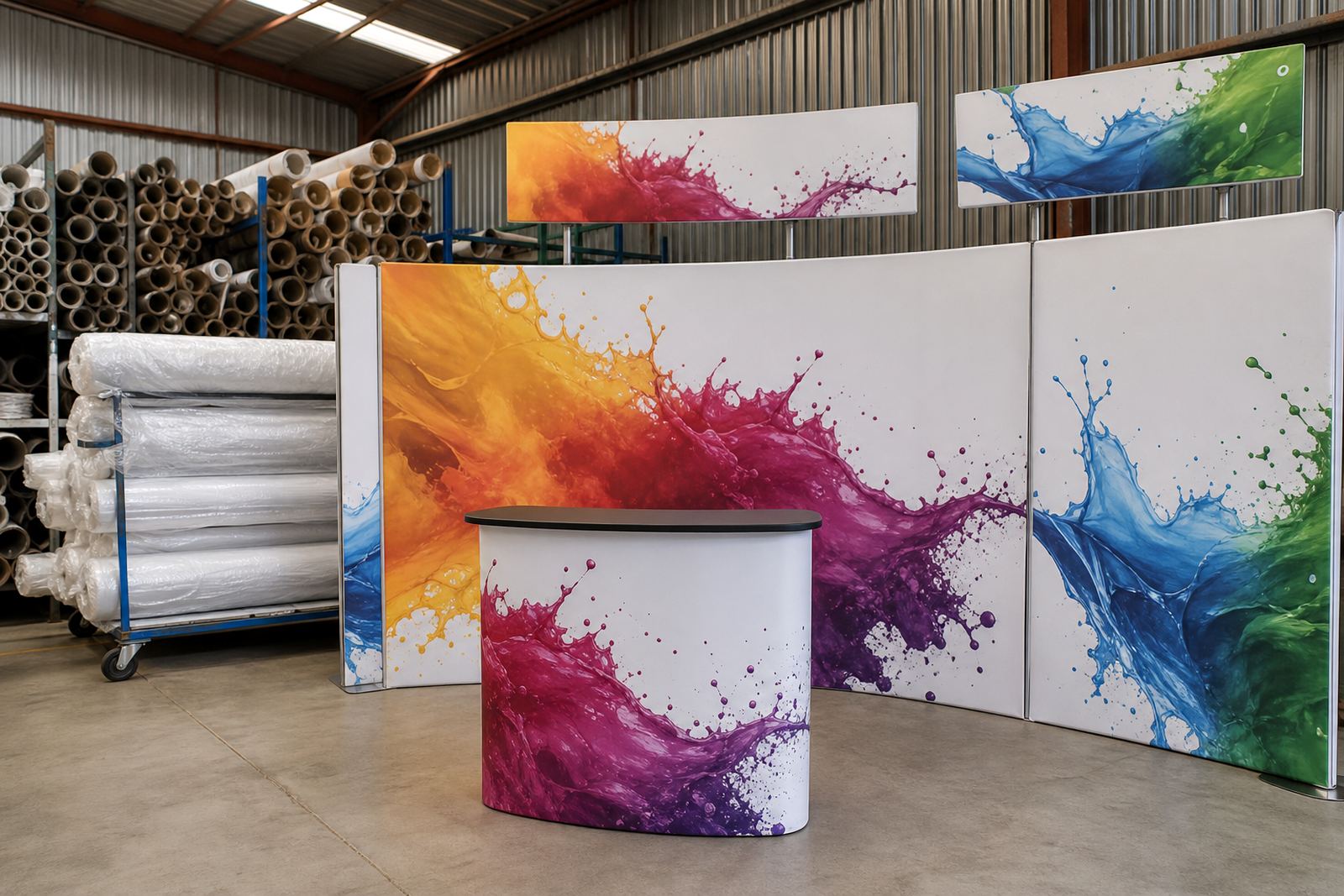
Point of sale displays are often touched, moved, packed and re-used, so the print has to do more than look good on day one. In store windows, on counter cards, shelf talkers and promotional panels, the image must cure properly, bond to the chosen substrate and keep its colour through normal handling. UV-curable inks are widely used for this because they cure quickly under the printer’s UV lamps and can produce crisp detail on rigid board as well as flexible graphics for indoor retail use.
For this type of work, the client usually wants short runs, fast turnarounds and repeat orders with consistent colour. That means less room for trial and error. A supplier must be able to advise on substrate choice, ink laydown, curing and whether the job needs a gloss finish, a matte look or a surface that can take light cleaning. In Cape Town and the rest of South Africa, shops also change campaigns often, so planning for reprints matters just as much as the first run.
Typical printer set-ups for POS boards and flex graphics
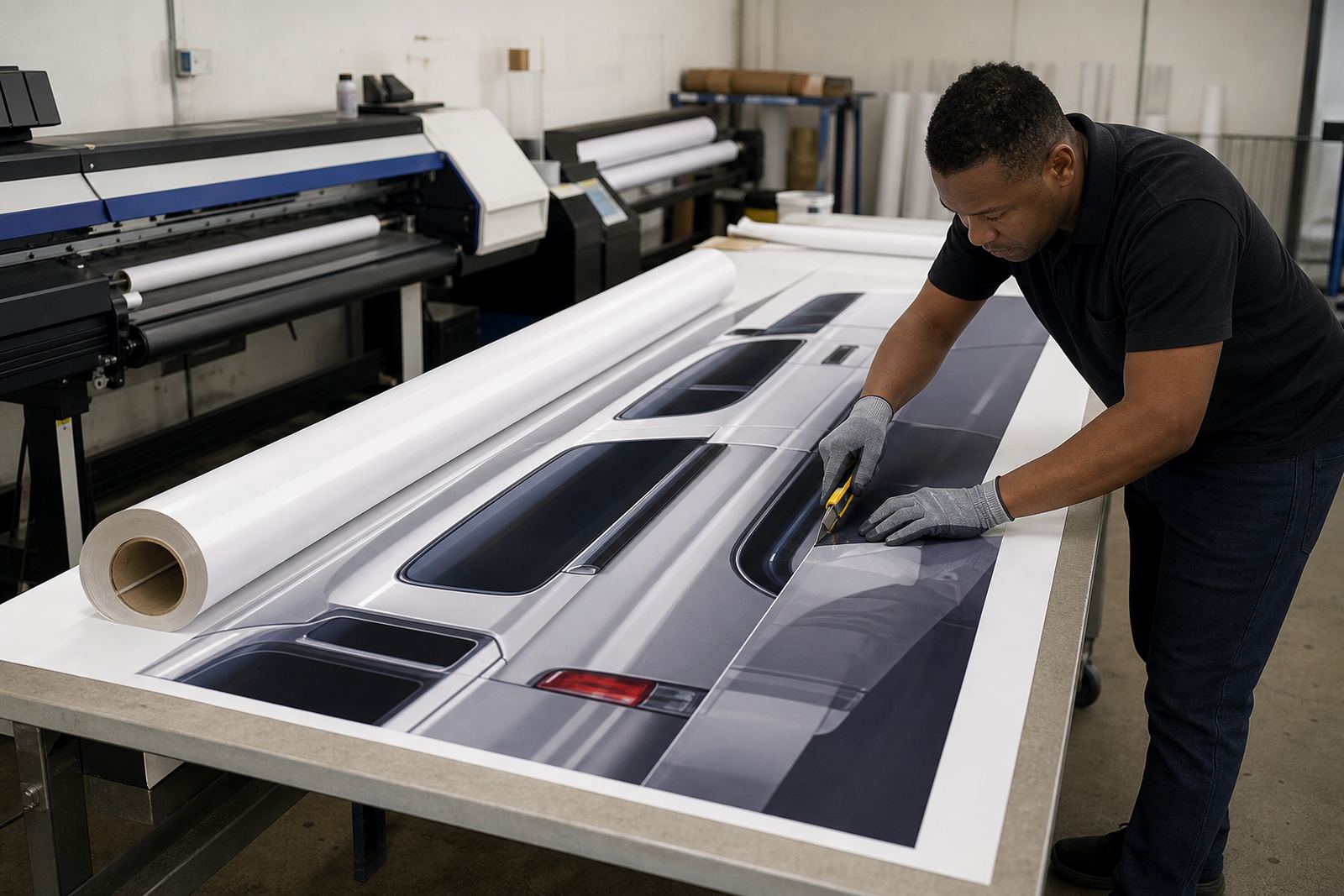
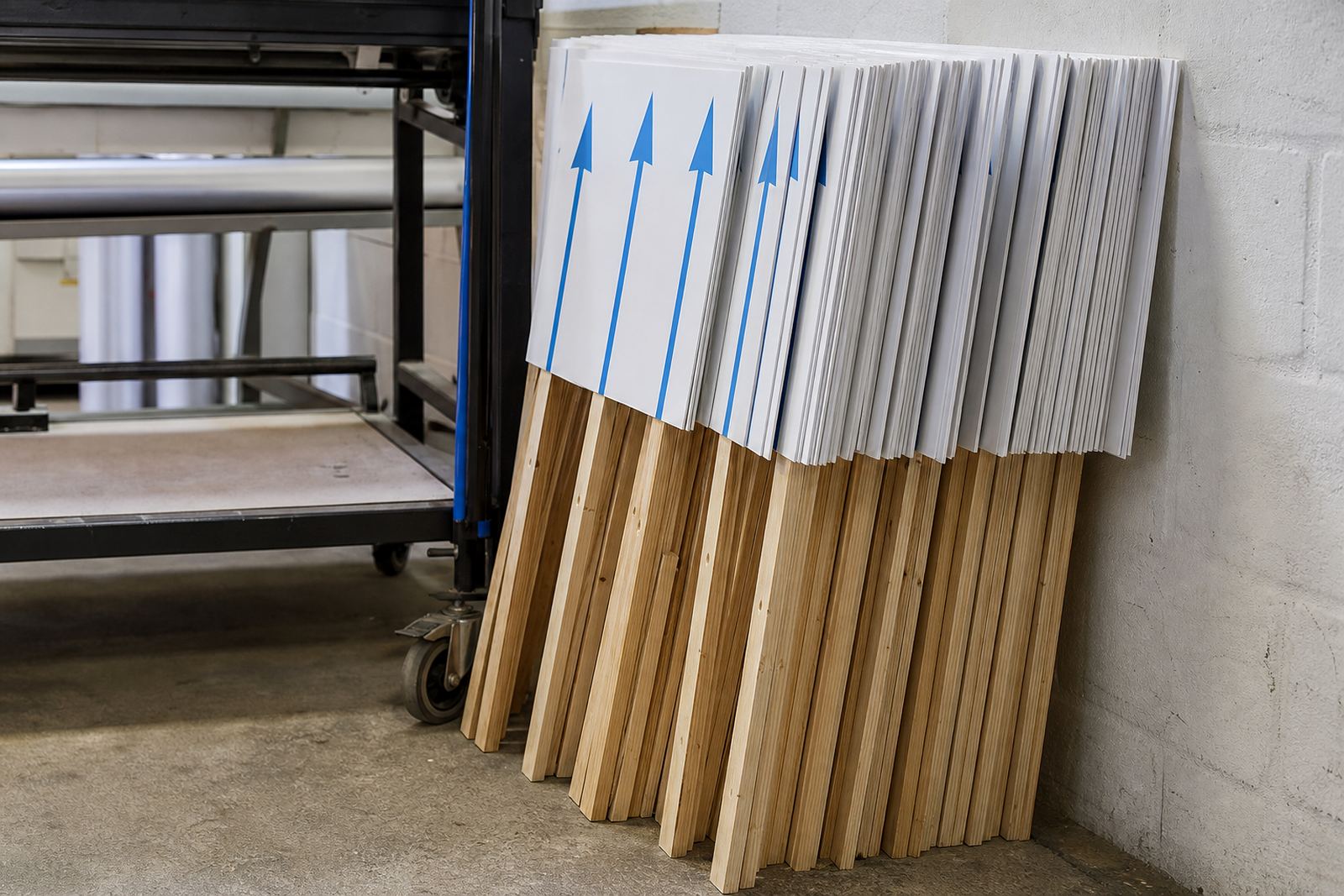
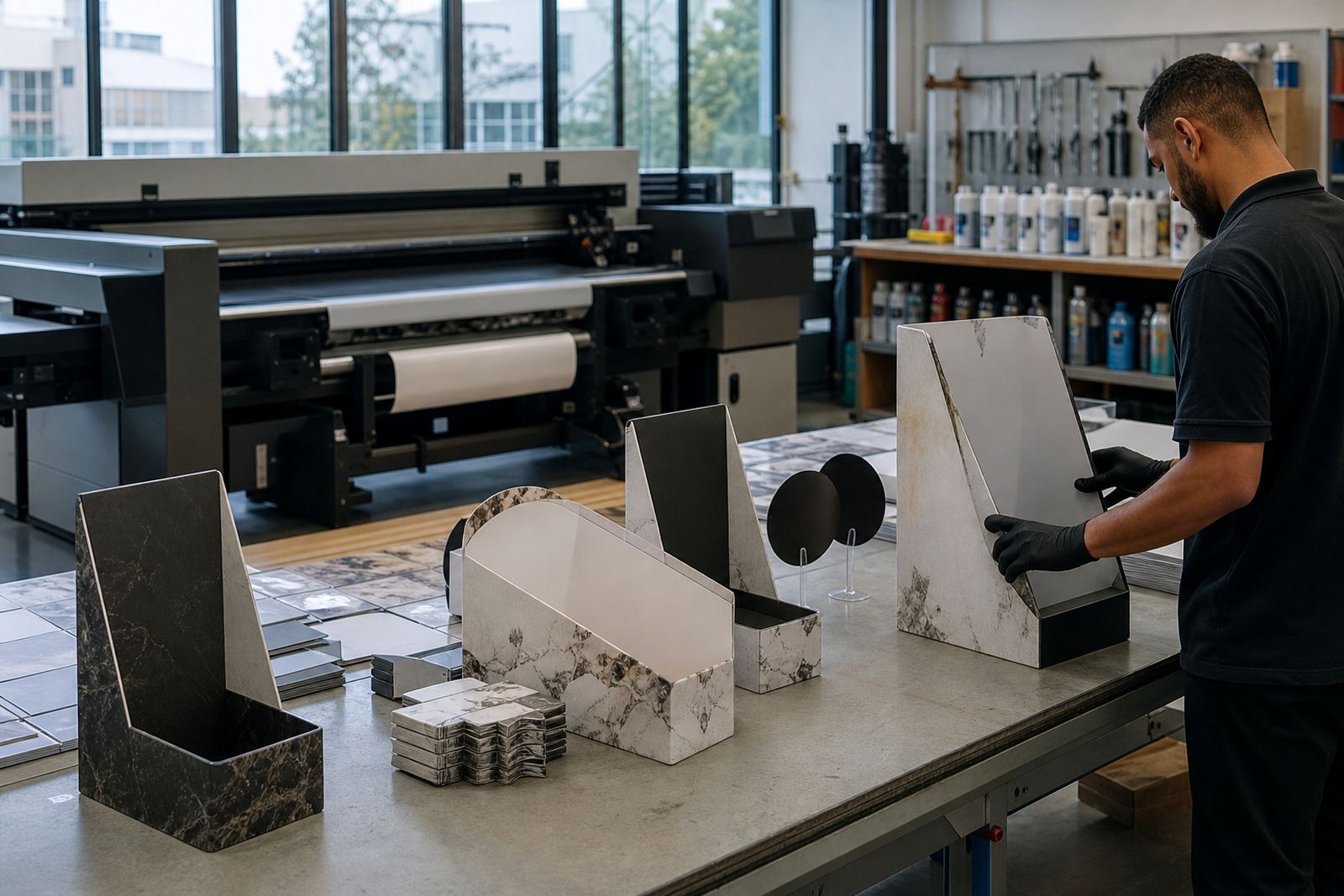
Point of sale applications usually split into two groups. The first is rigid printing, where flatbed printers handle foam board, correx, PVC sheet, acrylic and other display boards. The second is roll-to-roll work for flexible posters, window graphics and hanging signs. Both can use UV-curable inks, but the ink set and curing profile must suit the printer and the material. If the ink cures too fast, adhesion can suffer. If it cures too slowly, the print may smudge or feel soft at the surface.
Common equipment used for this kind of work includes:
- Flatbed printers for rigid signage and display boards
- Roll-to-roll printers for banners, decals and flexible graphics
- UV curing systems built into the printer carriage or print path
- Cutting and finishing tables for trimming panels and contour shapes
- Adhesion test materials and sample boards for trial prints
In coastal areas like Cape Town and Gqeberha, humidity can change how media behaves, especially on certain plastic sheets and coated boards. That is why compatibility checks are worth doing before the full job starts. A small test strip can save a full production run, and yes it is worth the extra hour.
Layout and planning advice before the first sheet goes in
Good point of sale planning starts with the retail space, not the printer. Measure the shelf height, window width, counter space and viewing distance before artwork is approved. A display seen from 3 metres needs different letter size and contrast from a counter card viewed at arm’s length. If the client wants a range of sizes, keep the artwork family consistent so the same campaign can run across multiple branches in Johannesburg, Durban, Pretoria and smaller towns without reworking the whole design.
For busy retail schedules, it helps to break the job into three parts: artwork approval, sample trial and final production. That gives time for colour checks and curing guidance before the full order is started. Municipal rules can affect where window graphics or temporary signs may be placed, especially in malls or on street-facing shopfronts, so check first rather than face a removal notice later.
Common mistakes that cost time and money for UV print rooms
Most problems on POS work come from rushing the set-up. The wrong media, poor cleaning before print or incorrect curing settings can lead to ink that lifts at the edges or rubs off after fitting. On glossy plastics, poor surface preparation is a common issue. On uncoated boards, over-inking can cause a dull finish or poor edge definition. If a printer is used outside its normal range, the result may look fine in the tray but fail once the panel is cut and handled.
- Skipping adhesion testing on a new substrate
- Using the wrong curing profile for a board or film
- Ignoring static, dust or surface contamination
- Ordering too little sample material for trials
- Assuming all rigid boards behave the same under UV print
Safety is part of the job too. Follow the safety data sheet for the ink you are using and wear gloves during handling and cleaning. Keep the workstation tidy and avoid leaving open containers near curing lamps or heat sources. Small habits make a big difference when a print room is running full tilt.
Budget ranges for point of sale production in Rand
Budget depends on size, substrate, number of colours, finishing and whether you need one-off samples or a repeat order programme. A simple counter card or shelf talker might only need a small material spend, while a full store rollout can include boards, testing, cutting and courier movement across several centres. For planning purposes, clients often think in broad ranges rather than exact quotes until the artwork and media are confirmed.
As a guide, smaller POS sample packs and trial sets may sit in the low hundreds of Rand, while short production runs for boards and flexible graphics can move into the low thousands. Larger campaign work with multiple branches, special finishing or repeated colour checks can climb further depending on quantity and turnaround. It is usually cheaper to confirm ink compatibility first than to replace a whole batch after adhesion fails. A little planning upfront avoids a much bigger spend later on.
How UV Ink supports repeat retail work from Epping
UV Ink works with point of sale clients who need practical support from quotation through to repeat order management. From our Epping, Cape Town base, we help with ink selection, compatibility checks, colour trial support, curing guidance and safe handling briefing. If a team needs remote tech help or operator training, we can support that as part of the order process so the next run is smoother than the first.
Our team includes Michael van Wyk, Lindiwe Maseko, Hennie Opperman, Shanaaz Allie, Moagi Shirinda, Nadine Motaung and Thabo Steyn, each focused on getting the right ink to the right job. Courier delivery is available across South Africa, including Cape Town, Johannesburg, Durban, Pretoria and Gqeberha, with delivery support into Bellville and Paarl as well. If you are preparing a point of sale campaign, the safest route is to start with a sample pack and a proper compatibility check before moving to full production.
- Sample pack prep for trial boards and films
- Production planning for short runs and rollouts
- Operator training for curing and handling
- Repeat order support for recurring campaigns
When the print has to look good on the shelf and still hold after handling, the ink choice matters just as much as the artwork.