Why Wayfinding Signs Need the Right Ink
Directional signs are judged in seconds. UV-curable inks are commonly used for this work because they cure quickly under UV light and can print on many rigid materials used for wayfinding systems.
The usual challenge is not just colour, it is adhesion and consistency. A sign for a hospital in Cape Town, a warehouse in Epping, or a school in Pretoria may look simple, but it can face dust, coastal humidity, fingerprints, sun and repeat cleaning. If the surface is not prepared properly, or the ink is not matched to the printer setup, you can get flaking, weak edges or poor hold around drilled fixing points.
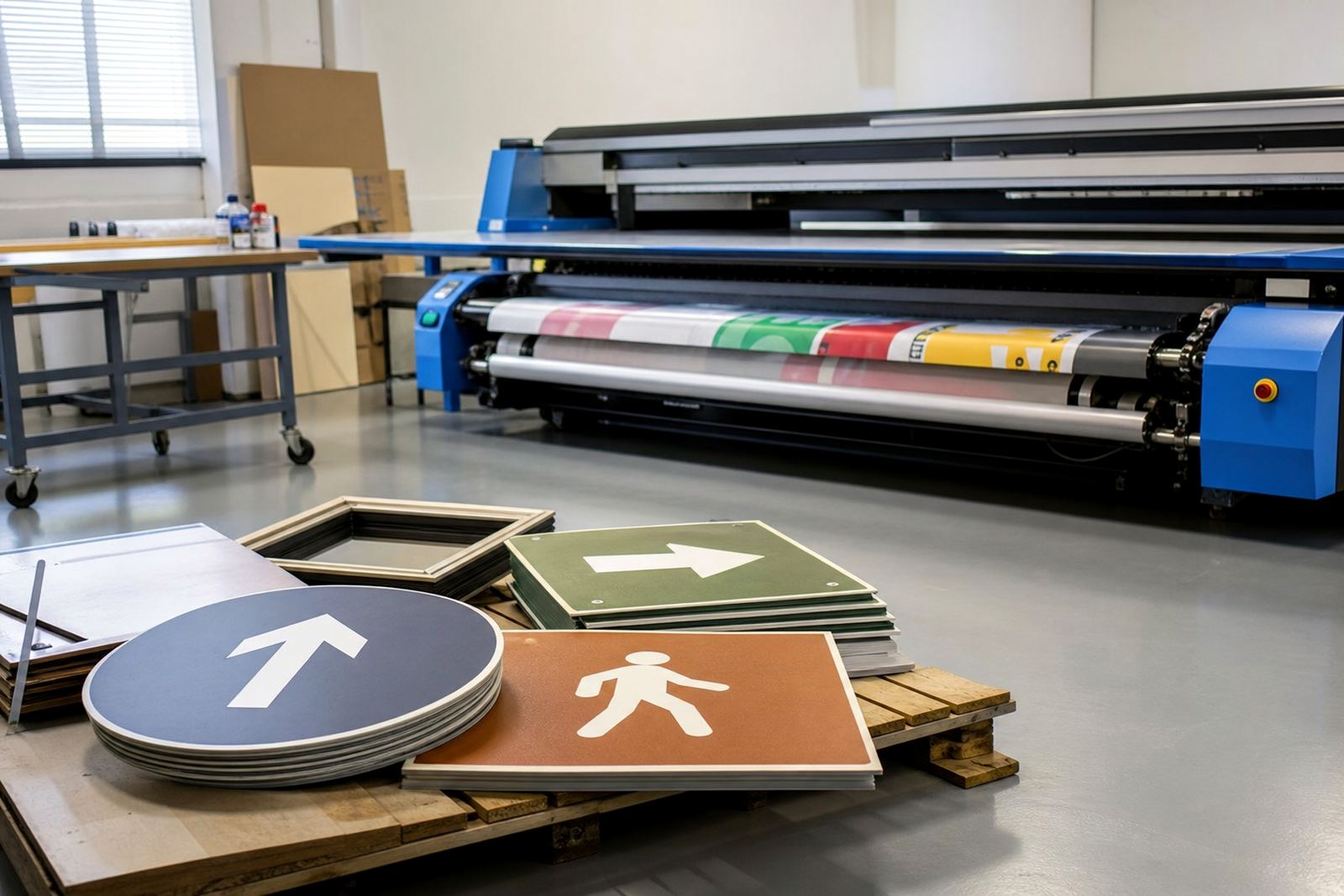
For wayfinding, clear contrast matters more than fancy effects. White on dark panels, black on light boards, arrows that stay sharp, and small text that does not blur after curing all help the sign do its job. It sounds basic, but one loose panel can cause confusion at an entrance and thats the sort of problem that wastes time on site.
Typical Printer Setups and Materials We See
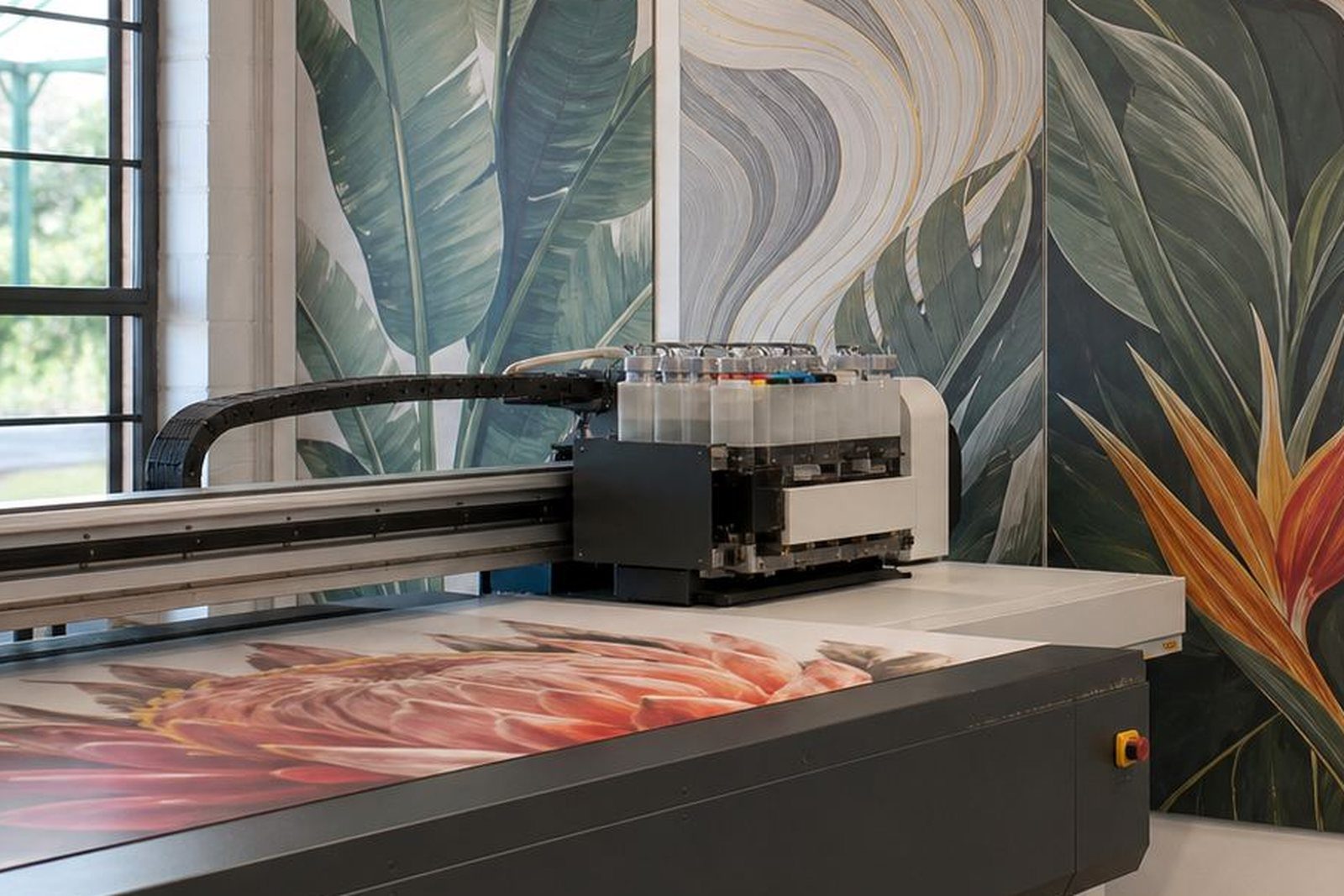
Wayfinding work is usually produced on flatbed printers for rigid sheets, or on roll-to-roll printers when the sign face is being wrapped, mounted or used as a graphic layer before finishing. The right ink needs to sit well on the machine, cure properly and stay readable on the chosen substrate. Compatibility checks are important because a setting that works on one printer can behave differently on another, especially when speed, lamp output or pass count changes.
Common materials for directional signs include:
- Foam PVC boards for indoor signage and temporary direction panels
- Acrylic sheets for cleaner finished displays and light-duty applications
- Composite panels for more rigid outdoor direction boards
- Correx or fluted board for temporary event wayfinding
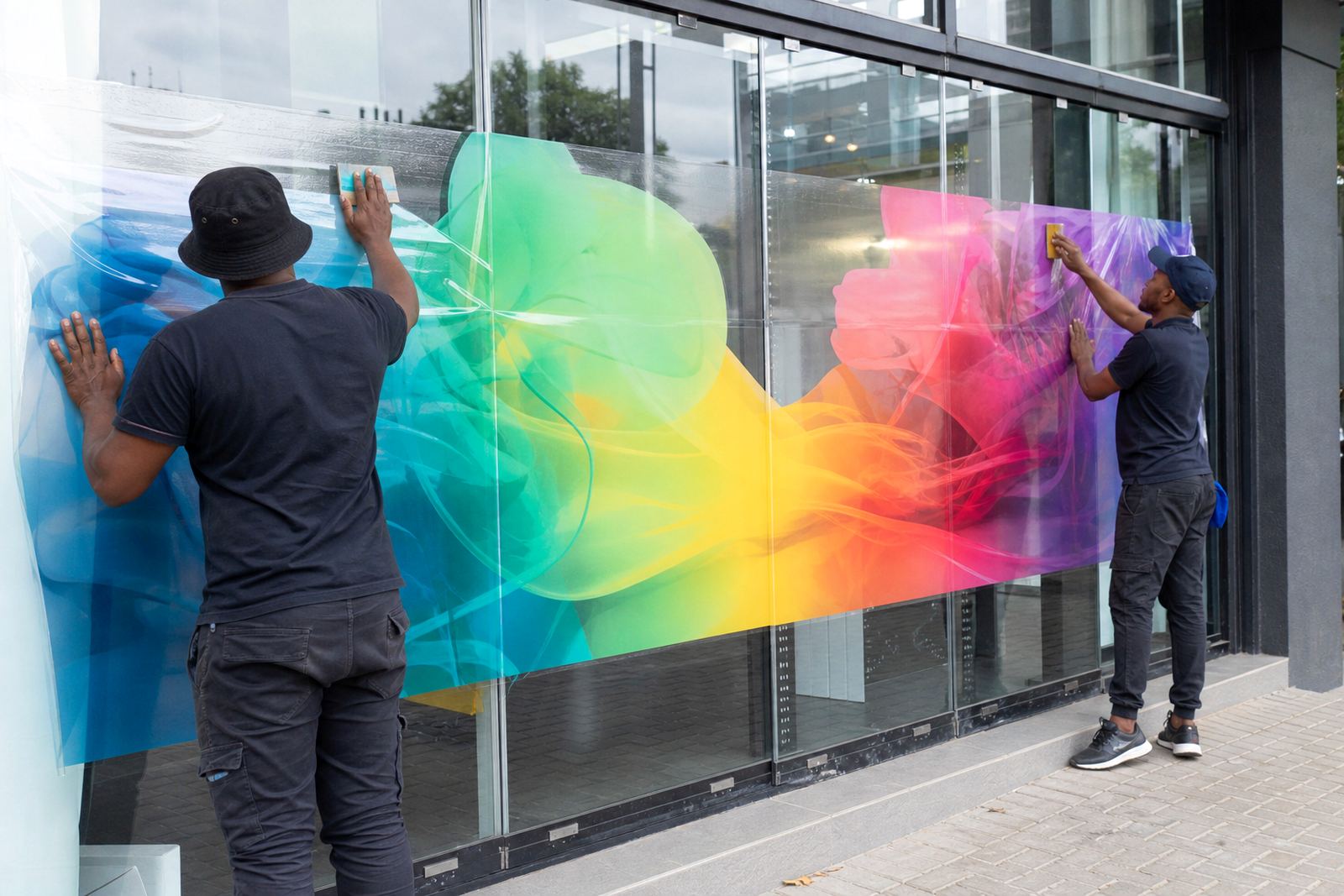
- Polymer films and self-adhesive stocks for applied graphics and overlays
If the ink is under-cured, the edges can mark during handling. If it is over-cured, some materials may become brittle or show surface stress. A decent curing balance matters, and the operator should always test before going into a full run.
Planning the Layout Before You Print
Good wayfinding starts with the layout, not the printer. Before ink ever goes on the sheet, the sign set should be mapped as a system: entrance boards, parking arrows, reception directions, floor numbers, exit signs and restricted-access notices. If each board is designed separately, the result can feel inconsistent and people miss the path. A clean plan saves reprints and a lot of back and forth on site.
We usually suggest checking these points early:
- Viewing distance and line of sight from the route people will follow
- Panel size against the wall space, post size or mounting frame
- Colour contrast for indoor lighting, shade and bright outdoor areas
- Fixing method, including screws, brackets, standoffs or adhesives
In coastal areas like Gqeberha and Durban, moisture and salt air can add extra wear, so the substrate and finishing steps matter even more. In Johannesburg and Pretoria, dust and strong sun exposure can change how a sign ages outdoors. For municipal or multi-site work, it also helps to keep dimensions standardised so replacements can be produced quickly without redoing the whole system.
Adhesion, Curing and Handling on Site
UV-curable inks set fast, but curing is not the same as drying. The ink needs enough UV energy to harden properly so the print can be handled, cut and fitted without marking. Poor curing can show up later as scratching, weak tape grab or surface transfer when a sign is wiped down. Good practice is to follow the safety data sheet, wear gloves and keep operators clear on handling procedures from the start.
Adhesion testing is worth doing on every new material batch or supplier change. Even boards that look the same can behave differently from one delivery to the next. That is why sample prints, colour trials and a short test for tape pull or handling resistance can save a full production run. When the board is destined for a reception wall or a factory passage, the finishing must suit the environment, not just the artwork.
If a site needs signs for the morning, curing, cutting and packing should be timed carefully so the panels are ready without rushing the final check. A small error in orientation or arrow direction can send visitors the wrong way and that is a pain to fix once the panel is mounted.
Common Mistakes That Lead to Reprints
Most wayfinding problems come from avoidable setup issues. The wrong substrate, poor file prep, weak curing or a mismatch between ink and printer mode can all lead to wasted sheets and extra labour. On a busy job, those mistakes show up quickly because directional signs are often part of a larger rollout across several rooms or sites.
- Using a material that has not been tested for ink adhesion
- Printing too fast without checking curing performance
- Skipping a colour trial on small text and arrows
- Ignoring edge finishing where panels will be drilled or routed
- Mixing different sign sizes without a standard layout system
- Sending an indoor spec to an outdoor location by mistake
Another common issue is forgetting how the sign will be cleaned. Some boards are wiped daily, especially in clinics, schools, offices and retail centres. If the surface coating or ink choice is wrong, the sign can look tired very quickly. A simple test panel often gives the answer before the full batch is produced.
Budget Ranges for Directional Sign Projects
Budget depends on size, substrate, print coverage, finishing and how many versions are needed. A small set of indoor arrows and room markers may be inexpensive compared with a full campus or warehouse wayfinding system that includes multiple panels, mounting hardware and repeat production for different zones. Because every site is different, it is better to budget by application than by guesswork.
Courier delivery across South Africa adds to the total where stock must move from Epping to Cape Town, Johannesburg, Durban, Pretoria or Gqeberha. Repeat orders can be easier to manage when the original specs are kept on file and the same setup is used again.
For shops producing this kind of work, we can help with ink selection, compatibility checks, adhesion testing, curing guidance and sample pack prep so the first run is done properly. That often saves more than chasing the cheapest unit price. A sign that works the first time is usually cheaper than one that has to be reprinted later.