Conference brief for a busy Milnerton venue
The client was an event supplier working on a conference setup in Milnerton, Cape Town. The job had to move quickly, with only a short lead time before the build started.
The main brief was simple: get strong colour, crisp type and reliable adhesion on rigid display material. The panels had to be easy to read from a few metres away, but also tidy at close range where delegates would stand and take photos. The site team also wanted a finish that would cope with handling, light wiping and the usual knock-on effect of transport between storage and the venue.
- Project type: conference panels and welcome boards
- Area: Milnerton, Cape Town
- Print method: UV-curable inks for flatbed and roll-to-roll production
- Use: indoor event graphics and directional signage
What the production team needed from the ink
The production side had a few constraints. The boards needed good adhesion on the chosen media, consistent curing on every sheet and stable output across a mixed run of sizes. The team was working with both rigid panels and lighter graphic elements, so the ink had to perform across different printer settings without constant adjustment.
In practical terms that meant checking substrate compatibility before the run, confirming cure under the printer's lamp setup and making sure the printed surface was dry enough for immediate handling. We also spoke through colour build, because conference graphics often mix brand colours, arrows and text blocks on the same board. If the ink is too soft or the cure is uneven, you get scuffing, dot gain or weak edges on fine lettering. That was not an option here.
- Need for fast curing after print
- Clear adhesion on rigid display boards
- Readable text at distance and up close
- Low handling risk during install and strike-down
Ink selection, testing and support over two weeks
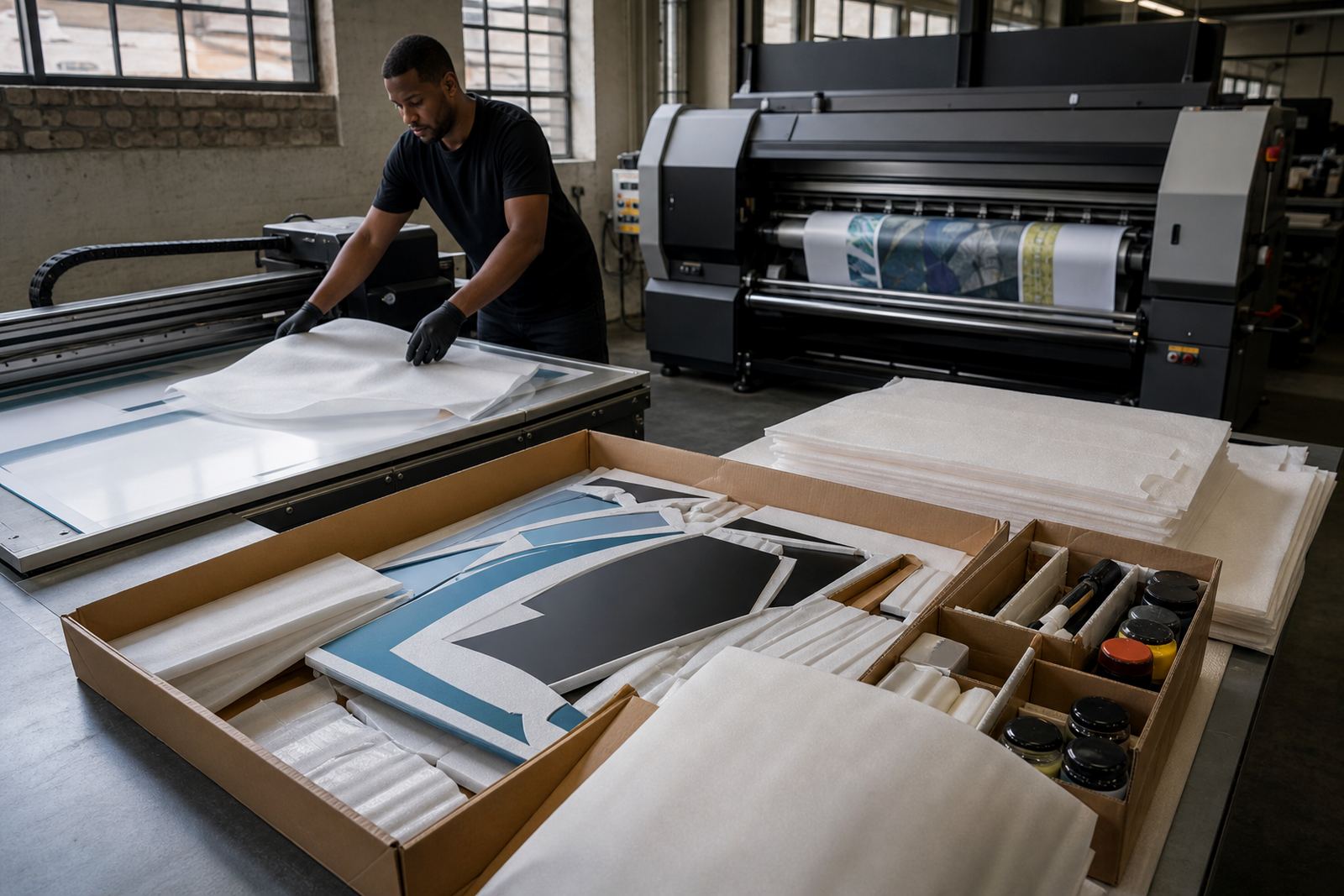
We worked through the job in a two-week window. In week one, we helped the client choose the right UV-curable ink set for the printer and the material. We then arranged a sample pack for colour trial support and carried out adhesion checks on test pieces before full production. This saved time later because the team could see how the ink sat on the board before committing to the full run.
Week two focused on production planning, curing guidance and operator training. The print team needed clear settings for pass count, lamp output and handling time after print. We also gave remote tech help during the first production batch, which meant any small setting changes could be made straight away instead of waiting until the end of the run. That kept the schedule on track and helped avoid wasted boards. One of the operators mentioned the sheets were handling better than expected once the cure was dialled in, which made install day easier for everyone.
- Week 1: sample prep, colour trials and adhesion testing
- Week 2: production support, curing guidance and operator training
- Remote help during the first full batch
- Repeat order notes captured for future conference work
What we supplied for the expo build
The supply package covered more than just ink tins. We prepared the order around the actual production sequence so the client could move from sample to final print without delay. The team received the ink selection matched to their printer type, compatibility checks for the substrates, and a clear safe handling briefing for staff on site and in the print room.
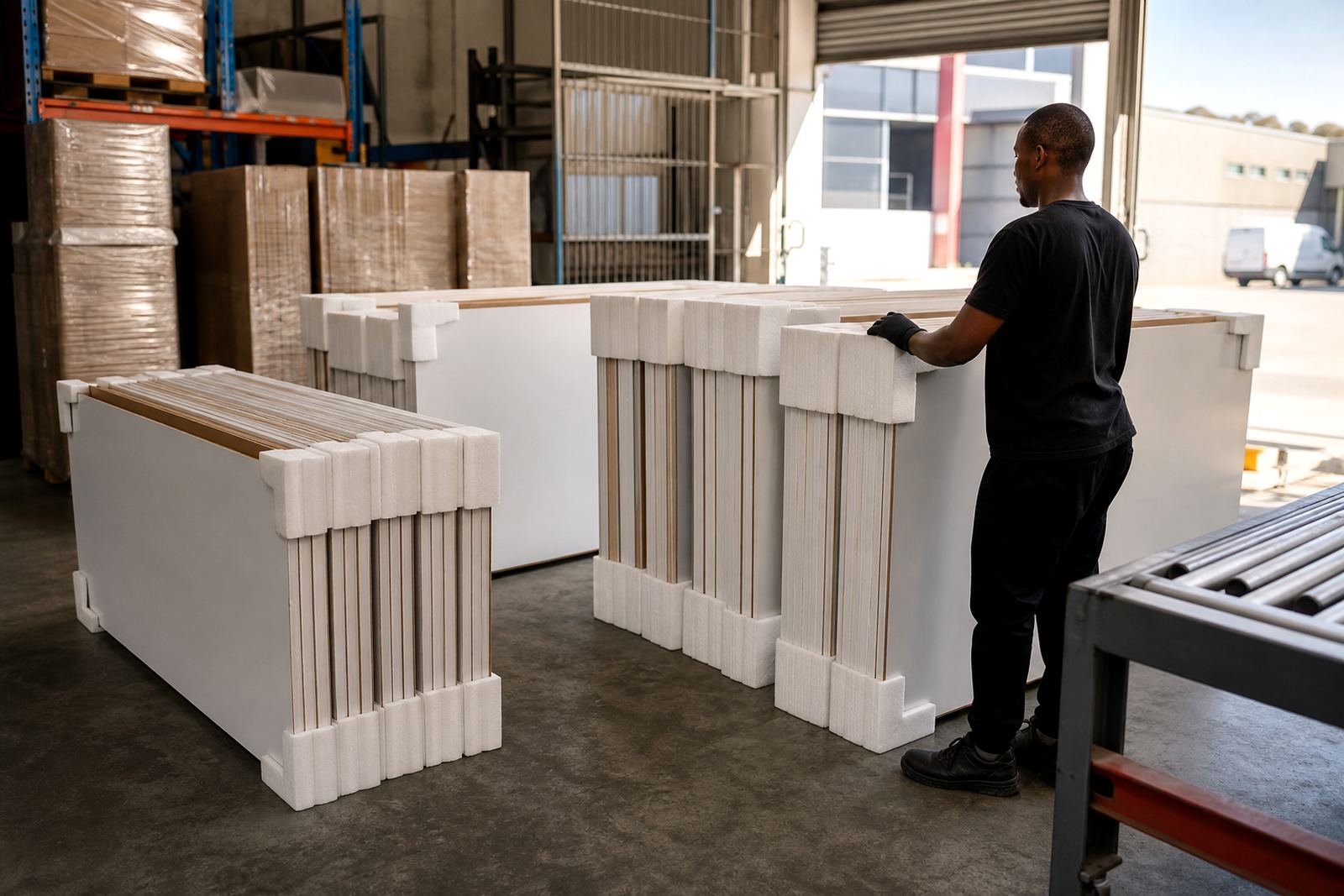
We also assisted with sample pack prep and repeat order management so the same colour and finish could be used again for later events. That matters in exhibition work because one conference is often followed by another with only minor changes to the graphics. Keeping the same ink and cure settings reduces variation and saves time. The client collected the first stock through our Cape Town base and the remaining cartons went by courier to the production site. If there is any dust or moisture in the air, especially around the coast, proper storage and sealed packaging help keep the ink in good condition until it is needed.
- Ink selection for flatbed and roll-to-roll printing
- Compatibility checks on the chosen media
- Sample pack prep for visual approval
- Courier stock support from Epping, Cape Town
Results on the venue floor
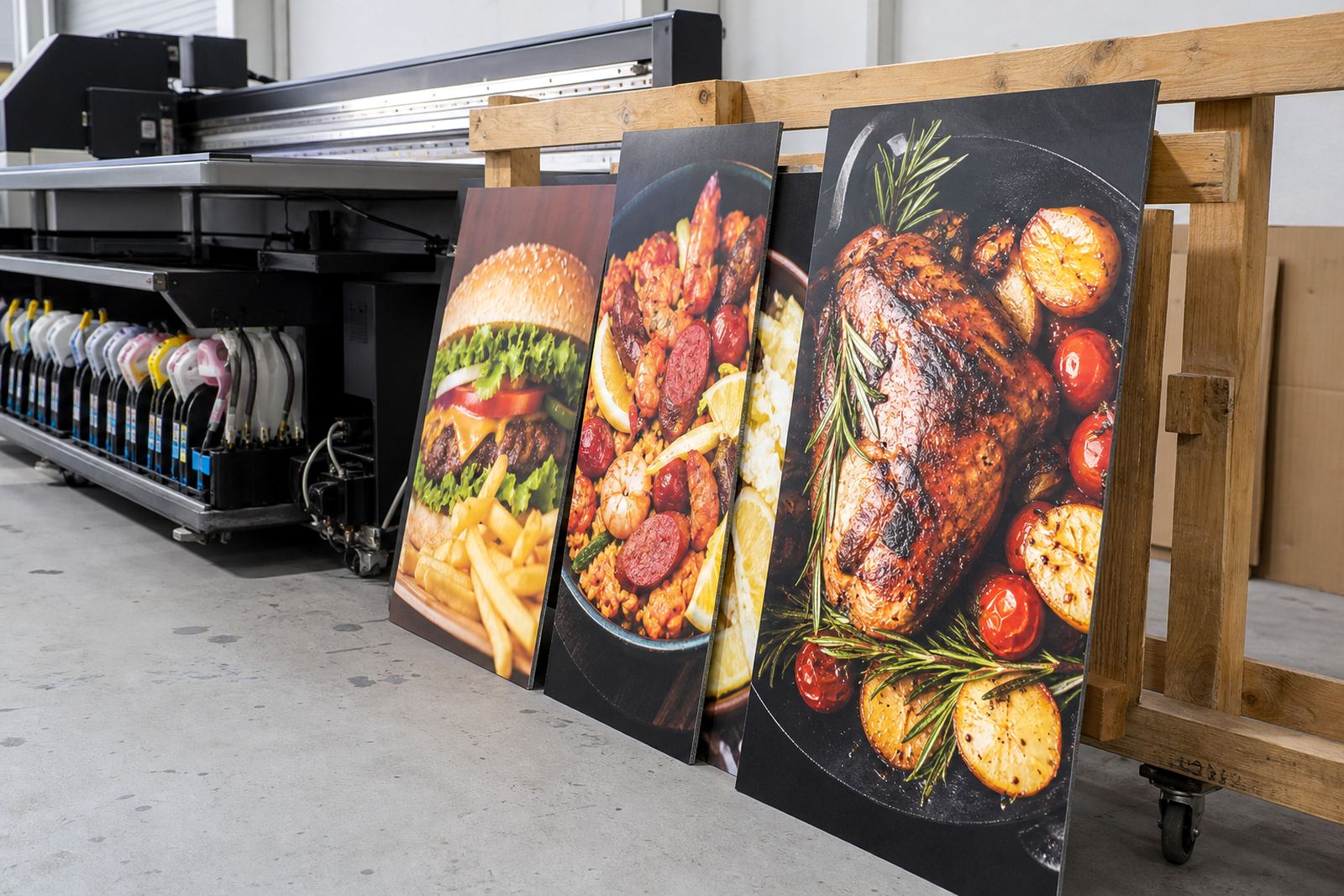
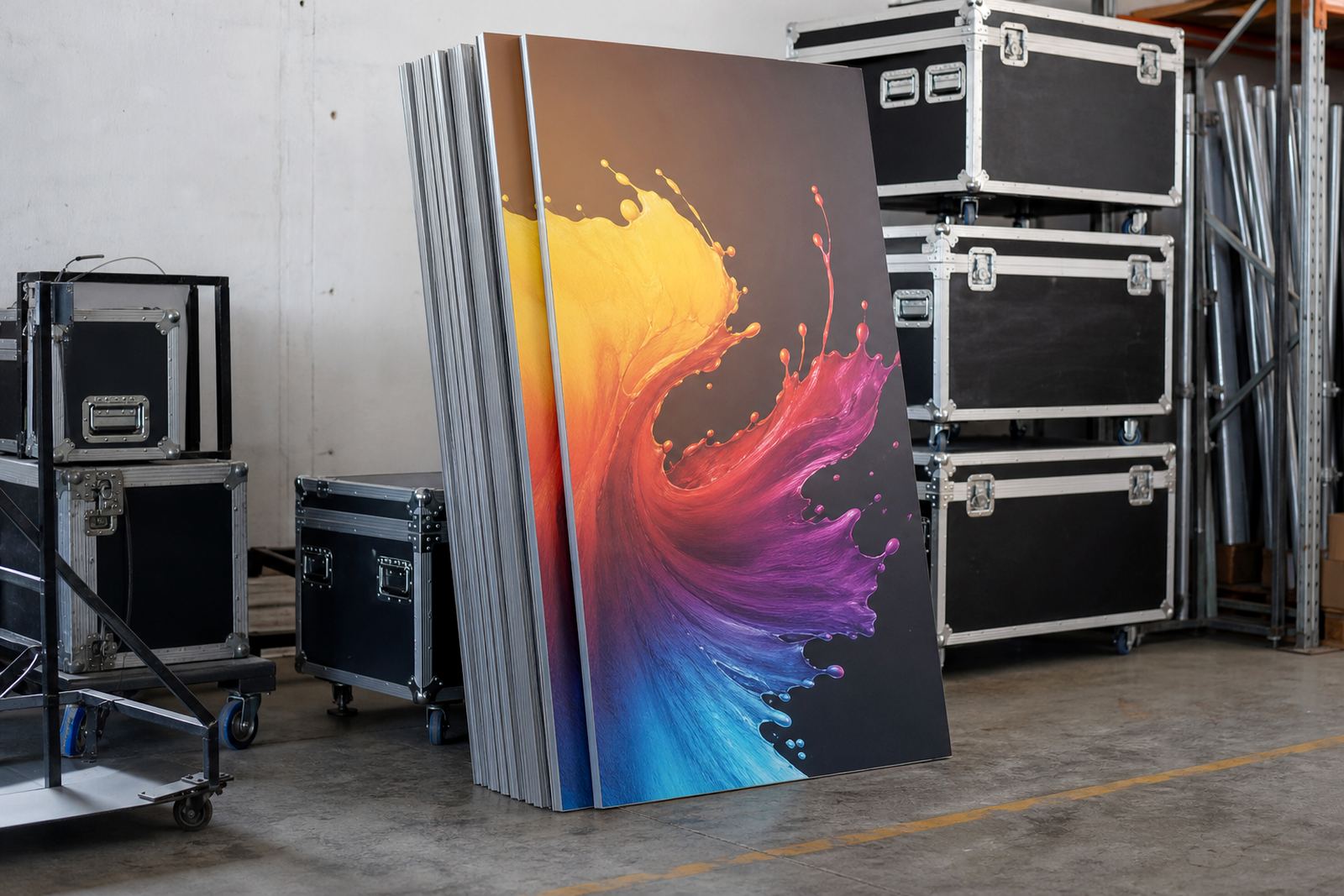
The finished panels arrived on site with strong colour, clean edges and steady curing. The welcome boards held together well through unpacking and setup, and the printed surfaces stood up to normal handling during the build. The event team said the biggest win was speed. Once the graphics were approved and the print settings locked in, the rest of the production moved with less stopping and starting.
For a conference build, that kind of predictability matters. A print system that cures properly and bonds well to the board gives everyone one less problem. The panels also photographed neatly, which helped the client present a tidy entrance area and clear wayfinding inside the hall.
In short, the job gave the client consistent output, fewer reprints and a smoother handover from print room to venue. The boards did what they were supposed to do, without fuss or patch repairs.
What we would repeat on the next conference job
If we were doing the same style of project again, we would keep the same approach: test first, confirm compatibility early and lock in curing settings before the main run. That is the best way to protect schedule and keep colour consistent across multiple panels. For event work in Cape Town, Johannesburg, Durban, Pretoria or Gqeberha, the principle stays the same even if the artwork changes from one client to the next.
We would also keep the training element in place. When the operators know what to look for, they spot cure issues, adhesion slips or handling risks before they become waste. That matters for UV-curable inks because good results depend on the whole chain, not just the bottle. For safety, always follow the safety data sheet and wear gloves when handling inks and related cleaning materials. It is basic practice, but it protects staff and helps keep the print area tidy.
- Test on the final substrate before full production
- Confirm cure settings against the actual printer setup
- Keep gloves and SDS guidance in the print room
- Allow for transport and install handling time
Ink data
| Project | Milnerton Expo Panels |
|---|---|
| Client type | Event supplier for a conference build |
| Location | Milnerton, Cape Town |
| Product | UV-curable inks for exhibition panels and welcome boards |
| Timeline | 2 weeks from sample approval to production support |
| Delivery | Collection in Cape Town base with courier support across South Africa |