Brief From a Pretoria Signage Team
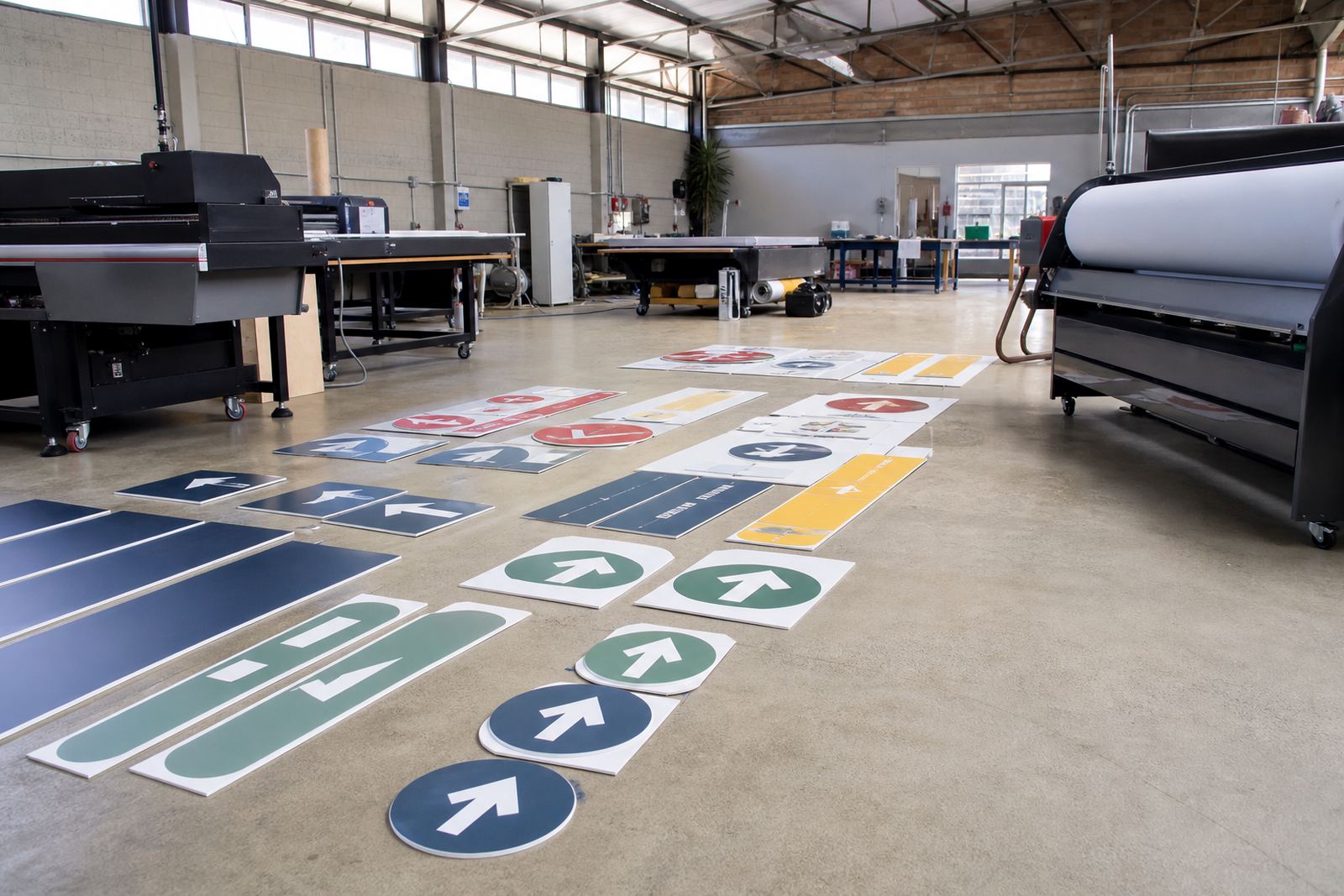
The client was a signage workshop in Pretoria handling internal wayfinding boards for a busy premises with multiple entrances, corridors and directional points. Their team needed ink support for rigid media printing on a flatbed setup, with strong text clarity, clean solids and dependable curing from the first sheet to the last.
The brief was practical. The boards had to be easy to read from a short distance, hold colour well under indoor lighting and keep edges tidy around arrows, room names and safety markers. The printer was already in production, so the main concern was ink behaviour on the chosen board material and getting the cure right without slowing the job down.
Because wayfinding work is unforgiving, the client could not afford banding, poor adhesion or soft curing. Even small changes in ink laydown or lamp settings can affect legibility. We treated the job as a repeatable production run, not a one-off trial, and that shaped every recommendation we made.
What Had To Be Controlled On The Run
Rigid media is not all the same. Some boards take UV ink cleanly, while others need more care around surface prep and curing. In this job, the key constraint was getting adhesion and readability to work together without overcuring the surface or leaving the print undercured at the edges. That balance matters when the boards will be handled, mounted and wiped down later.
- Substrate: rigid board for indoor wayfinding panels
- Print method: flatbed UV printer
- Priority: clear text, even solid areas and stable curing
- Risk points: poor adhesion, weak whites, edge cure inconsistency, handling marks
- Support need: sample checks and practical curing guidance
There was also a time pressure element. The boards had to move through production in a sensible order, so we helped the team plan the run around drying and handling stages. In practice, that meant keeping the process simple, watching the first few panels closely and confirming that the ink responded the same way across the batch.
The Pretoria workshop also wanted the option to repeat the same result later for add-ons and replacements. Wayfinding systems often expand after the first install, so consistency is as important as the first print. We kept notes on the working set-up for that reason, including the media type, the curing approach and the handling time before stack or install.
Ink Choice, Compatibility Checks And Trial Pieces
We supplied UV-curable inks suited to flatbed and roll-to-roll printer workflows, then checked that the selected set would suit the printer and the rigid board being used. Compatibility matters because a good-looking print can still fail later if the ink does not anchor properly or if the cure does not suit the board surface. That is where trial pieces save time and material.
For this project, we started with a small test section before the full run. The client wanted a clean line on arrows and text, so we looked at the sharpness of edges, the feel of the cured surface and how the print handled a basic adhesion check. We also discussed colour consistency across repeated panels, because wayfinding work often includes multiple identical signs placed in different parts of a building.
- Ink selection matched to the printer and rigid media
- Sample pieces checked before full production
- Adhesion testing used to confirm surface hold
- Curing guidance given for consistent output across the run
- Colour trial support used to keep text and symbols uniform
Our technical support lead and operations team worked with the signage crew on the practical side of the job. That included how the boards should be handled after printing, how long they should rest before packing and what to watch for if the printer showed slight variation between passes. Nothing fancy, just the sort of support that keeps a production job moving without surprises.
Curing, Handling And Safe Use On Site
UV-curable inks need the right cure to perform properly. If the cure is too light, the print may stay soft or pick up marks during handling. If it is too heavy, some media can react badly, especially on coated rigid boards. We talked through the curing settings with the Pretoria team and helped them settle on a practical middle ground that suited the material and the machine.
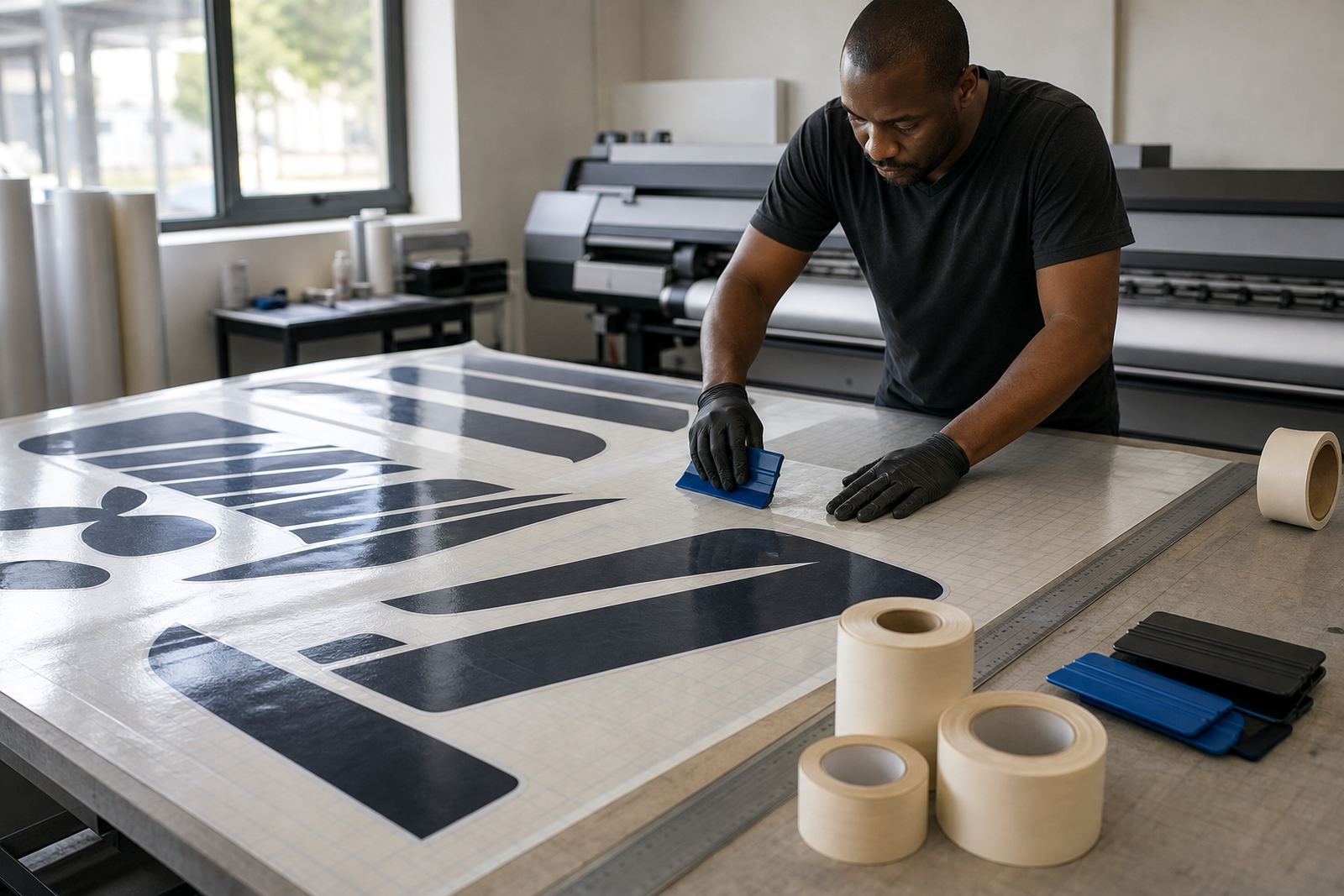
We also reminded the team to follow the safety data sheet and wear gloves when handling ink and printed pieces during setup and clean-up. That matters on any print floor, whether the job is a few boards or a full signage batch. Good handling keeps the process tidy and helps protect the operators from unnecessary contact.
The printer team was also advised to keep an eye on temperature, dust and lamp stability. We kept the guidance simple and usable, so the operators could carry on without overcomplicating the run.
For the finishing stage, the boards were allowed proper handling time before packing and install. That reduced scuffs and kept the face of the signs clean. The client also appreciated that we did not push a complicated process. A straightforward method is often the best method when the work has to be repeated later under normal workshop pressure.
Timeline From Enquiry To Finished Boards
The project moved across two weeks. In week one, we confirmed the printer type, the board surface and the likely production sequence. We then supplied sample ink, gave compatibility feedback and discussed curing settings for the first pass. The client checked the print feel and the visual result on a small run before starting the full batch.
In week two, the signage team ran the main production job and followed the agreed settings. We stayed available for remote technical help during the process, in case any changes were needed around cure or handling. That support was useful because production floors often need clear answers rather than long explanations.
- Week 1: enquiry, compatibility review and trial support
- Week 1: curing guidance and sample pack prep
- Week 2: full production support and remote tech help
- Week 2: repeat order notes and courier planning for follow-up stock
By the end of the run, the client had a clean, readable result that met the brief for indoor wayfinding. The boards were consistent enough to install as a set, which is what matters most when people are following arrows and room markers under pressure. One panel with a slight laydown variation was corrected early, so the rest of the batch stayed on track.
What We Would Repeat On The Next Signage Run
If we were repeating this job, we would follow the same approach again. Start with the substrate check, confirm the printer compatibility, test the cure on a small piece and only then move into the full batch. That sequence saves time, reduces waste and gives the operator confidence before the main production slot begins.
We would keep that same support setup around the job: a clear ink recommendation, a quick adhesion check, guidance on safe handling and a simple plan for repeat orders. Wayfinding work often grows in phases, so the ability to reorder matching stock and keep the same print feel is useful for later additions or replacements.
For Pretoria and other inland sites, we would still watch the workshop conditions closely. Dust, static and heat can all affect finishing work, and a small change in the room can shift how a UV print behaves. That is why our support stays grounded in the actual production space, not just the product label. The result is a steadier job and fewer surprises when the boards leave the print table.
Our Epping base in Cape Town supplies UV-curable inks with courier delivery across South Africa, including Pretoria, Cape Town, Johannesburg, Durban and Gqeberha. Clients can reach us through the enquiry form on our contact page for ink selection, compatibility checks, adhesion testing, curing guidance and repeat order support.
Ink data
| Project type | Pretoria wayfinding job for rigid signage boards |
|---|---|
| Location | Pretoria, Gauteng |
| Substrate | Rigid board for indoor signage |
| Print system | Flatbed UV printer |
| Timeline | 2 weeks from enquiry to completed production support |
| Support provided | Ink selection, compatibility checks, adhesion testing, curing guidance, remote tech help |