The Somerset West print shop’s ink problem
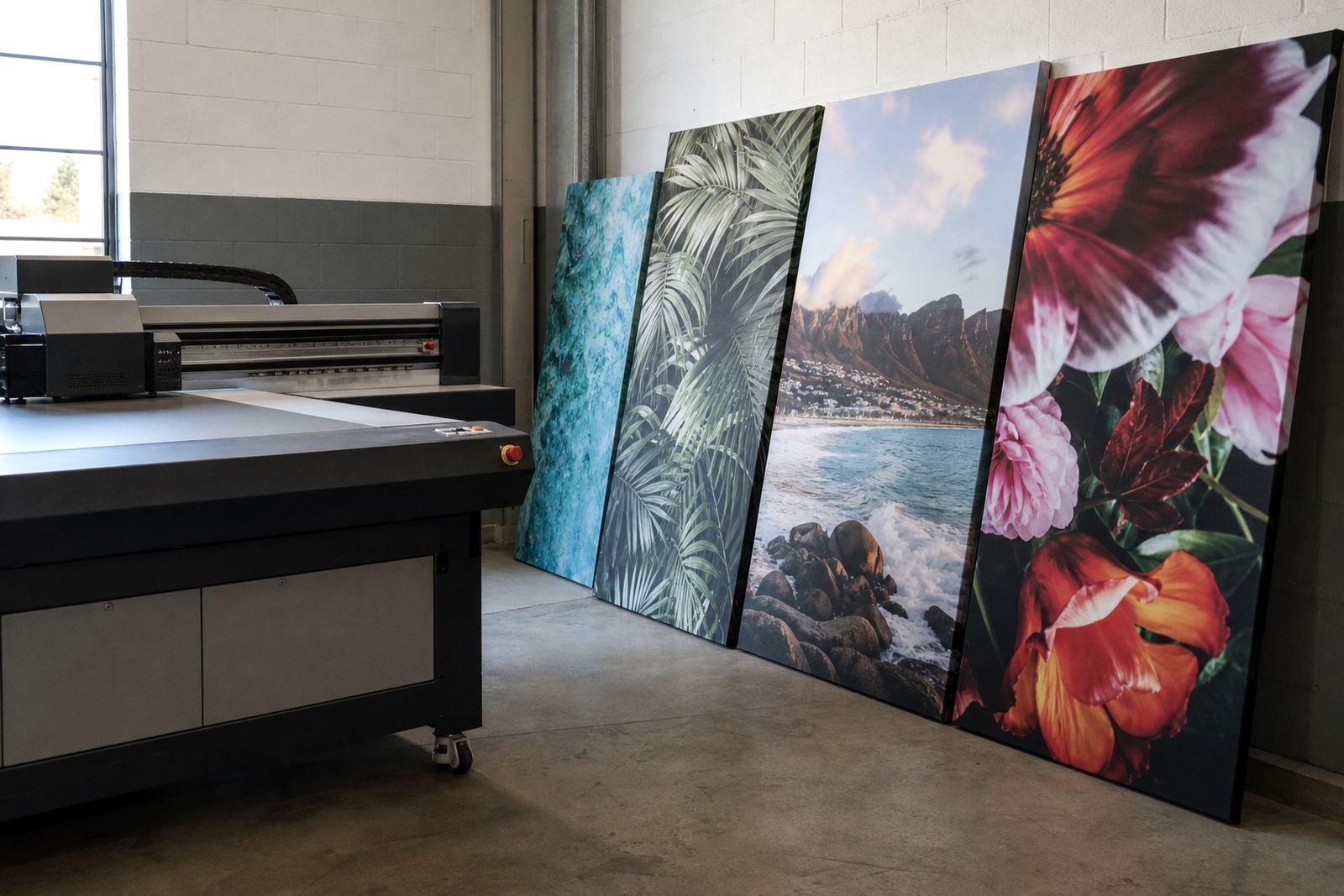
The client was a decor and interiors printer in Somerset West producing wall panels, decorative acrylic pieces and feature graphics for a commercial fit-out. Their brief was straightforward but strict: the printed pieces had to look sharp under indoor lighting, survive handling during install, and keep colour consistency across repeat runs. The work included flat panels and cut acrylic items, so the ink needed to cure properly on both rigid and non-porous surfaces without cracking at the edges.
The project ran over 3 weeks from first sample checks to final production support. Because the install schedule was tight, the printer needed feedback on adhesion, curing and any surface preparation steps that would reduce rework. We treated it as a production job, not just an ink supply call, and worked with their operator on practical settings and handling on the shop floor.
What the print room needed to solve
The main challenge was substrate mix. Wall panels, acrylic pieces and decorative inserts can all behave differently under UV-curable inks. Some surfaces accept ink well right away, while others need careful cleaning, a different primer approach, or a slower carriage speed to help the ink wet out properly before curing. The client also had to manage a few moving parts at once, including short lead times, fitment on site, and indoor surfaces that would be seen close up by designers and contractors.
In Cape Town conditions, humidity can shift through the day and that can affect drying behaviour around edges and corners even with UV curing.
- Mixed substrates: rigid wall panels and acrylic pieces
- Neat edge detail for close viewing indoors
- Fast turnaround for fit-out deadlines
- Stable curing under changing shop-floor conditions
Ink selection, testing and support
We supplied UV-curable inks suited to flatbed and roll-to-roll printer environments, then helped with compatibility checks before full production. The first step was sample output on the actual materials. We looked at dot sharpness, surface adhesion and how the print held up after curing and light handling. Where needed, we adjusted the process around cleaning, pass count and curing intensity so the finish stayed consistent.
Our technical support also covered safe handling and day-to-day operator habits. UV inks must be treated carefully, and the safety data sheet should always be followed. Gloves are part of the routine when handling ink, cleaning lines or working around uncured prints. That applies to test pieces as much as production stock. The team also received guidance on keeping lids closed, managing dust around the printer and checking lamps or curing units before a long run.
- Ink Selection for the right surface and printer type
- Compatibility Checks before production starts
- Adhesion Testing on wall panels and acrylic pieces
- Curing Guidance for clean, even finish
- Safe Handling Briefing and operator support
Production details that mattered on site
For this job, the production notes were as important as the ink itself. The printer was working with flatbed output for the wall elements and roll-to-roll stock for other décor items, so the team needed a repeatable method that would not slow down the line. We helped them set up sample packs, confirm the order of production, and plan the repeat runs so the same colour tone could be held from the first panel to the last. That kind of planning saves time when installers are waiting on site and someone is counting every metre and every sheet.
We advised on interleaving, flat stacking and keeping finished pieces out of direct sun while waiting for collection. Simple steps, but they make a real difference when the delivery window is tight and the site team is already on the clock.
Results for the interior fit-out
The prints went out with clean cure, solid adhesion and a finish that suited the decor brief. The wall panels carried colour well under indoor lighting, and the acrylic pieces held detail without a chalky look or visible lifting at the edges. The client was able to keep to the project timeline and move the fit-out forward without having to reprint problem items. That saved time on the production floor and reduced pressure during install week.
For us, the strongest result was that the printer now has a repeatable method for similar jobs. They know which checks to run before a batch starts, what to look for on the first sample and how to brief operators before a big run. That means fewer surprises next time and a more predictable output on future décor work.
- Cleaner adhesion on both rigid and acrylic surfaces
- More consistent colour across repeat items
- Less rework during the install phase
- Better confidence for future décor and fit-out jobs
What we would do again for UV print rooms
If this same job came through again, we would follow the same pattern: start with the actual substrate, run a short test sequence, confirm curing settings and then move into full production once the sample checks pass. We would also keep the communication direct between the print operator and technical support so any small change in surface or finish gets picked up early. That is especially useful on interior jobs where the final result is judged close up and there is no room for sloppy prep.
We would also repeat the courier and stock planning. For clients in Somerset West, Cape Town and the wider region, a good production plan is only half the job. The other half is making sure stock arrives on time, stays in good condition and gets to the printer or site without drama. That is the sort of support our Epping team is set up for.
Ink data
| Project type | Interior fit-out decor job for wall panels and acrylic pieces |
|---|---|
| Town | Somerset West, Western Cape |
| Timeline | 3 weeks from sample checks to production support |
| Substrates | Wall panels, acrylic pieces and decorative inserts |
| Ink use | UV-curable inks for flatbed and roll-to-roll printing |
| Support provided | Compatibility checks, adhesion testing, curing guidance and sample pack prep |