
What High Adhesion Ink Is Used For
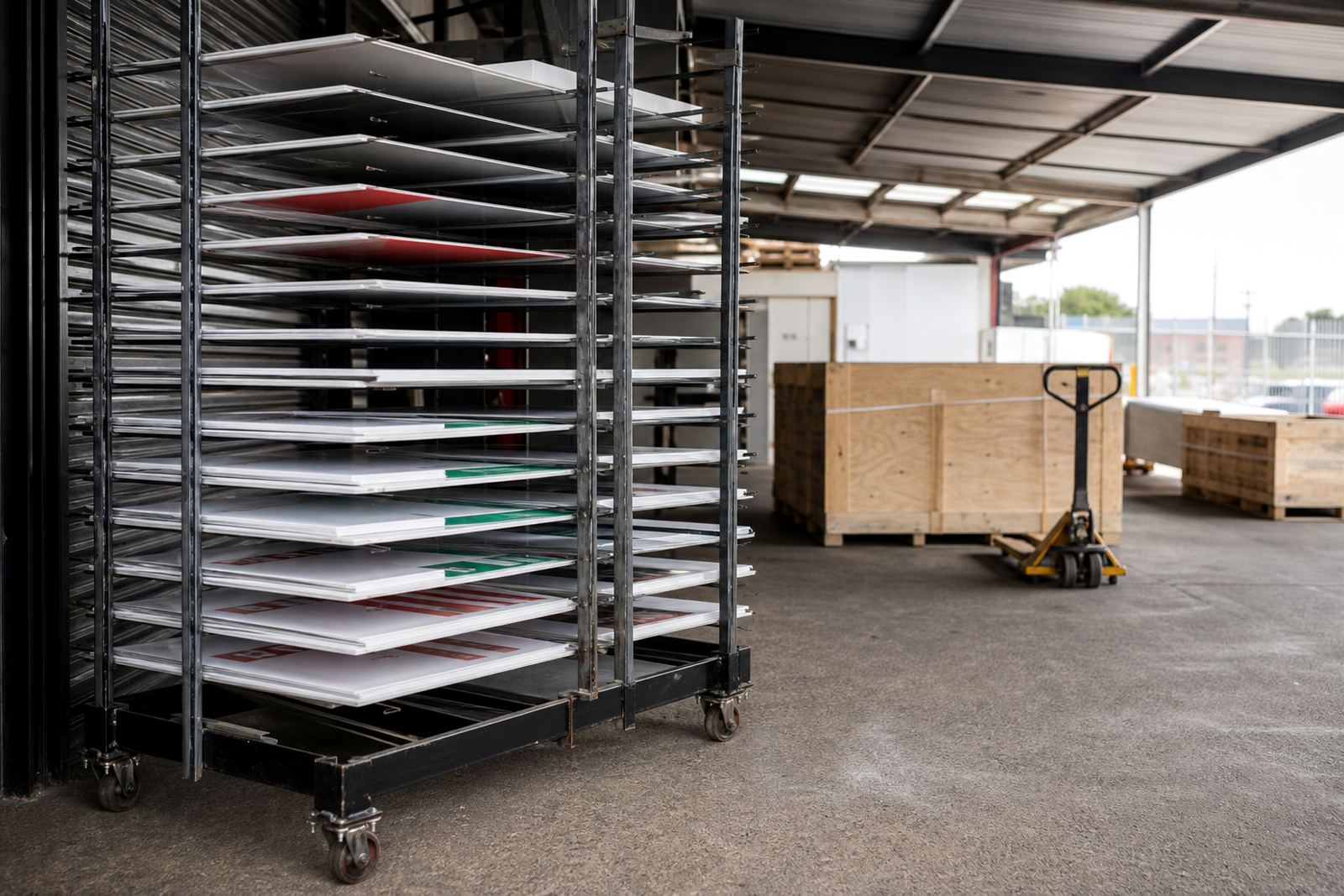
High adhesion UV-curable ink is made for materials that can be tricky to bond with, including smooth boards, coated media and some plastic-based surfaces. It is formulated to support better anchorage after curing, so the print can hold up during handling, packing and routine use. On the press, the ink is applied like other UV systems, then cured with UV light to set the image and lock it onto the surface.
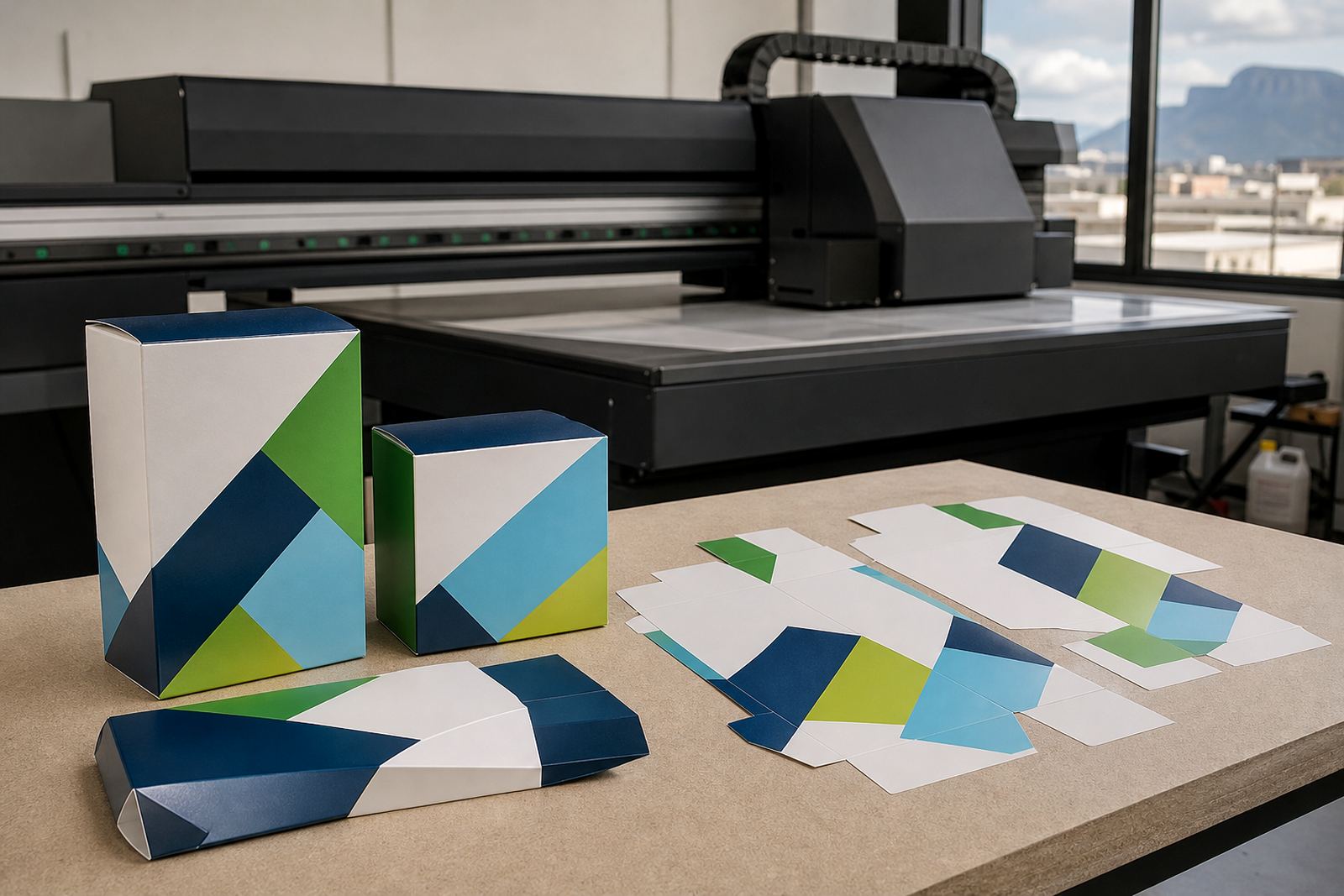
This type of ink is a practical choice for signage, graphics and selected packaging work where ordinary ink may not grip well enough. It is not a guess-and-go product. The best result comes from checking the substrate, the printer setup and the curing set-up before a run starts. That is why we normally look at the material first and then guide the ink choice, trial prints and test curing.
Based in Epping, Cape Town, we supply high adhesion UV inks to customers in Cape Town, Johannesburg, Durban, Pretoria and Gqeberha, with courier delivery to other areas as well. The focus has stayed on supplying ink that performs properly in real production conditions, including fast turnarounds and jobs that cannot afford rework.
Compatible Printers and Typical Formats
This ink is suited to UV flatbed printers and UV roll-to-roll printers where the printhead, waveform and ink path are compatible with the ink chemistry. Before ordering, it is important to confirm the printer model, the head type, the channel setup and whether the machine is configured for rigid boards, flexible media or both. A mismatch can lead to poor drop formation, weak cure or an ink line issue.
For larger production work, the ink can be supplied in multiple container sizes to suit repeat orders or smaller test runs. That makes it easier to manage stock in a workshop in Bellville, Paarl or further afield without tying up too much cash in one go. Smaller pack sizes help with colour trial support and sample pack prep, while larger packs suit ongoing print rooms with steady demand.
- Flatbed jobs on rigid board, foam board and coated panels
- Roll-to-roll production for banners, films and flexible graphics
- Trial runs before full production on new substrates
- Repeat work where the same substrate and cure settings are used
Adhesion, Curing and Surface Testing
Good adhesion depends on more than the ink alone. The surface energy of the material, the cleanliness of the substrate, the ink laydown and the curing intensity all matter. If the print is under-cured it can feel soft, mark easily or lose bond. If it is over-cured, some materials can warp, crack or become brittle. That is why curing guidance is part of the service, not an afterthought.
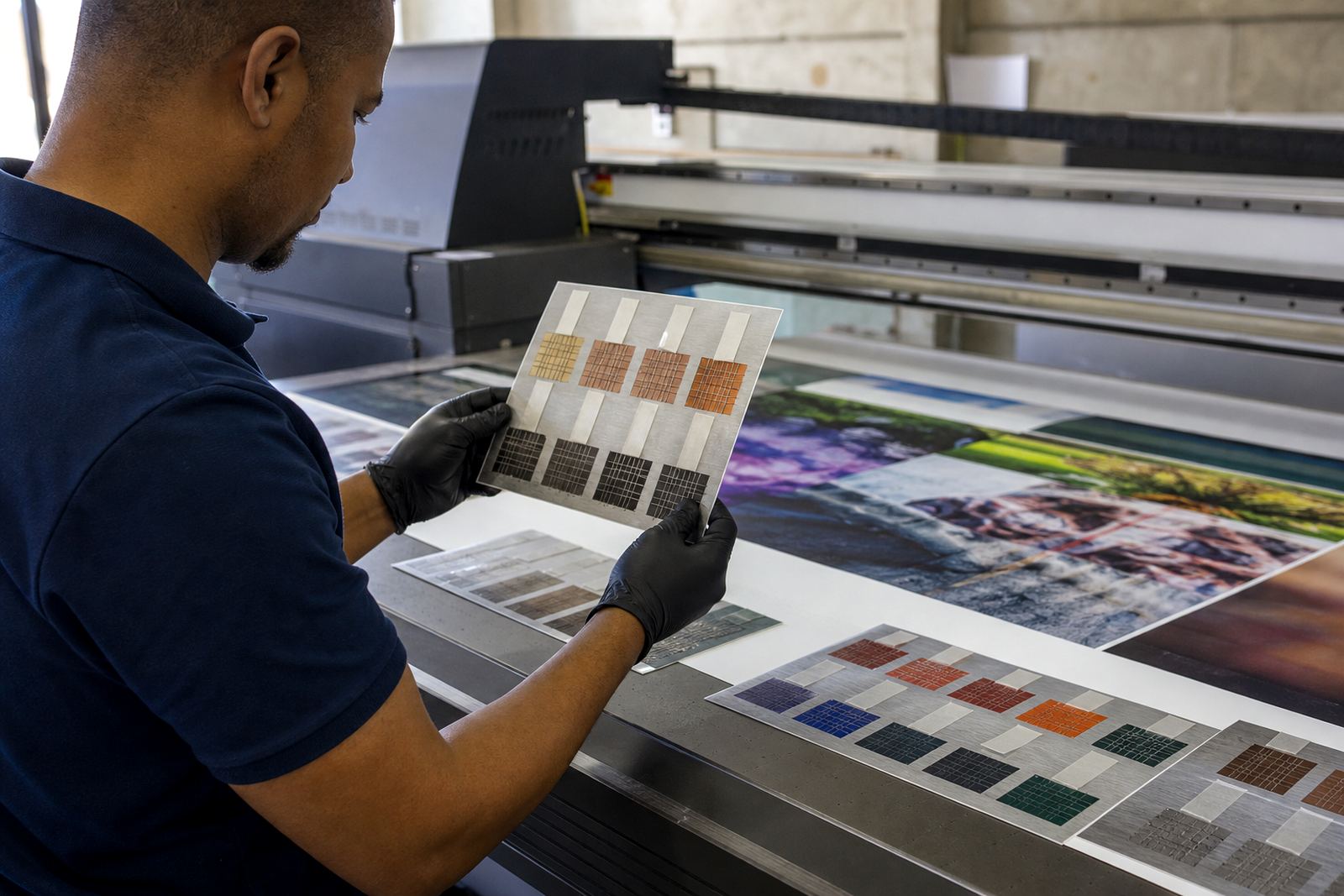
For challenging materials, we usually recommend an adhesion test before production starts. A quick test can show whether the surface needs wiping, pre-treatment or a different cure setting. On some jobs, a simple change in print speed or lamp intensity makes a clear difference. In coastal areas like Cape Town and Gqeberha, humidity can also affect drying behaviour and surface handling, so the test should be done under conditions close to the real job.
- Clean the substrate before printing
- Check lamp output and curing distance
- Run a small test patch before full production
- Confirm the print can withstand folding, rubbing or packing
Curing setup and lamp checks
The printer and curing system must be correctly set up and kept stable.
Keep the room at a sensible working temperature and avoid dust near the ink station. If the work area is very dry or very humid, monitor the effect on print quality and drying. Some jobs may also need ventilation, depending on the printer layout and how the curing unit is enclosed.
We support remote tech help, operator training and safe handling briefing, so teams can run the ink with fewer stoppages. If a workshop is busy, it helps to have one person responsible for stock checks, another for print tests and a clear handover between shifts. That reduces mix-ups and keeps the machine ready for the next run.
Using the ink on press
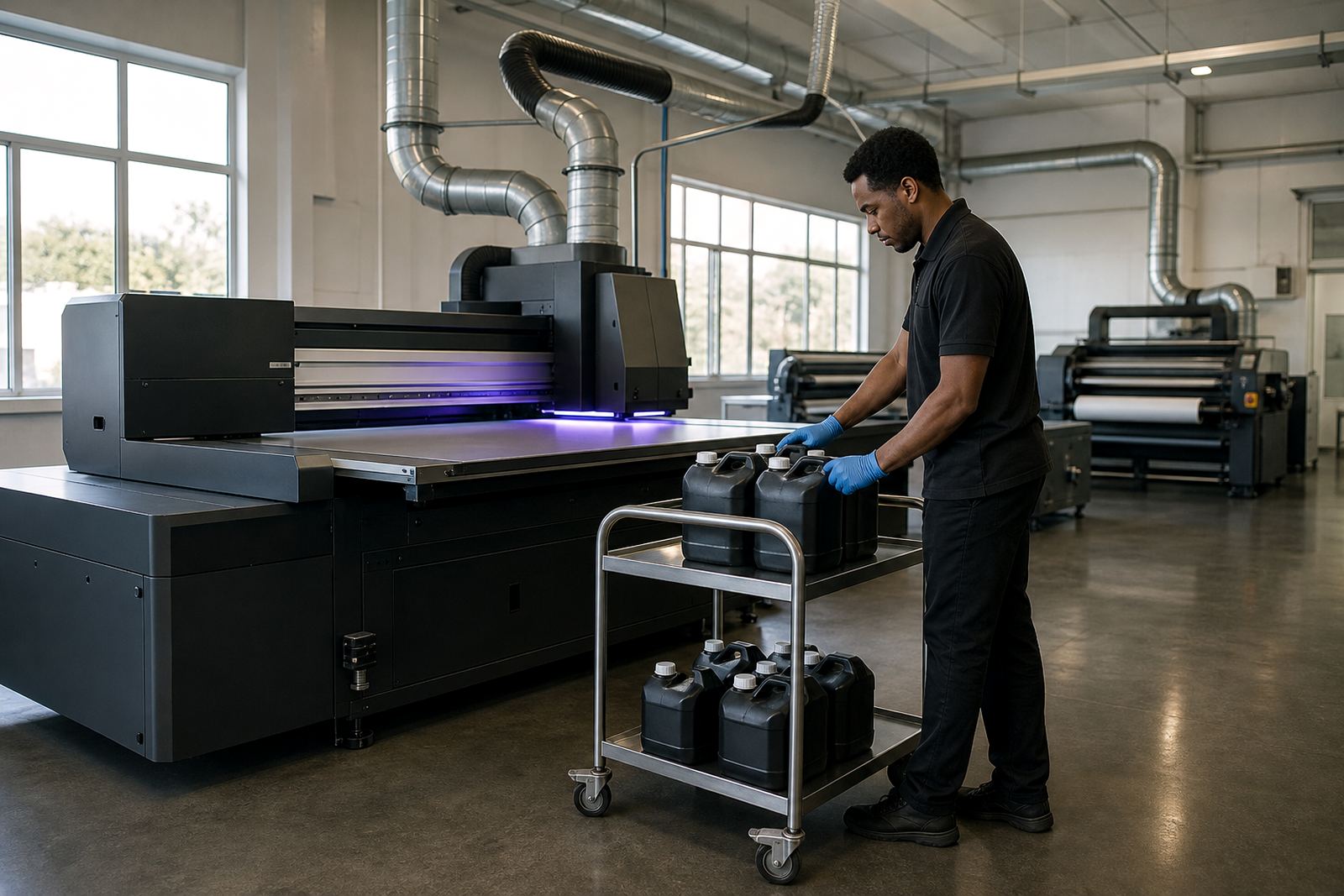
UV-curable inks should be stored sealed, away from direct sun and out of hot storerooms. Keep containers upright and follow the storage advice on the label and safety data sheet. Once a container is opened, close it properly after use so the ink stays in good condition and contamination is reduced. If the ink is left exposed, skin formation can happen and that may affect the line later.
For handling, always follow the safety data sheet and wear gloves. Avoid contact with skin and do not wipe spills with bare hands. Keep the work area tidy, especially around decanting points and cleaning cloths. If a workshop is using the ink every day, routine checks on filters, dampers and head health should be part of the service plan. That helps reduce nozzle issues and protects print consistency over time.
Repeat order management is useful when the same substrate and cure settings are used often. It helps keep batches consistent and reduces the chance of switching to the wrong ink for the wrong job. If the printer starts showing changes in colour, cure feel or adhesion, stop and test before running the full order.
Before you order ink
Before placing an order, it helps to have the substrate details, printer model and the intended use of the finished print. The more exact the information, the easier it is to match the ink to the job. If the material is coated, flexible, textured or unusually smooth, mention that up front. The same applies if the print will face handling, outdoor exposure or regular cleaning.
- Printer make, model and head type
- Substrate material and finish
- Whether the job is flatbed or roll-to-roll
- Expected exposure to sunlight, moisture or abrasion
- Required colour finish and production speed
- Any previous adhesion problems or curing issues
We can help with ink selection, compatibility checks, sample pack prep, production planning and colour trial support. If the job is urgent, courier stock support is available to major centres including Cape Town, Johannesburg, Durban, Pretoria and Gqeberha. For customers in and around Epping, Bellville and Paarl, collections and local delivery can be arranged according to the order and dispatch schedule.
Ink data
| Product type | High adhesion UV-curable ink |
|---|---|
| Use | Flatbed and roll-to-roll printing on difficult substrates |
| Container options | Available in multiple pack sizes for test runs and repeat production |
| Curing method | UV light curing through the printer's curing system |
| Support | Compatibility checks, adhesion testing and curing guidance |
| Supply area | Epping, Cape Town with courier delivery across South Africa |