
Why the Cape Town to Gauteng route needs tighter planning
When inks travel from Epping to Johannesburg, Pretoria, or nearby production sites, the best results start before the courier leaves the yard. UV-curable inks are made to cure under the correct UV light exposure, but the print outcome depends on more than the ink itself. Printer type, substrate, speed, lamp output, and colour target all matter. If one of those shifts, adhesion and finish can shift too.
For Gauteng printers, the practical challenge is not only lead time. It is keeping production steady while dealing with busy schedules, public holidays, and urgent client changes. A job that was supposed to run on Monday may need to move to Wednesday, then the inks have to still be on hand and within spec. That is why repeat order management and stock planning matter just as much as colour matching.
- Check whether the printer is flatbed or roll-to-roll before placing an order
- Confirm the substrate type, including rigid board, vinyl, PET, or coated media
- Allow for test prints before full production on a new job
- Keep a small safety buffer for reprints and spoilage
Compatibility checks save time on the Gauteng side
Not every UV-curable ink behaves the same way in every machine. Some systems need a specific viscosity range, while others need a certain curing response to hold detail and colour. Even when a printer can physically run the job, the ink still has to transfer cleanly, cure properly, and bond to the surface. That is where compatibility checks come in.
A good order starts with the machine model, the print mode, and the material being printed. If the job is for outdoor signage in Pretoria, the curing and adhesion needs may differ from a packaging run in Johannesburg. If the surface has a low-energy coating or if the job moves through a cooler workshop, test prints become even more important. Coastal humidity in Cape Town can affect storage too, so stock should be sealed properly and handled with care.
- Use compatibility checks before changing ink type or substrate
- Run adhesion tests on the exact material, not a similar one
- Keep curing settings recorded for repeat jobs
- Store containers closed and upright in a clean, dry area
For teams that print across multiple sites, one note can prevent a lot of trouble: the same ink may behave differently on a flatbed board than on a roll media job, even when the colour looks fine at first glance.
Curing guidance matters more than many shops expect
UV ink is designed to cure when exposed to the right UV energy, but under-curing and over-curing both create problems. Under-cured ink can feel tacky, scratch too easily, or struggle with adhesion. Over-curing can cause brittleness or colour shift. For Gauteng production teams, this often shows up after a busy shift when operators are moving quickly to keep up with deadlines.
Training operators to watch for these signs is worth the time. A clear curing guide should cover lamp distance, pass count, print speed, and the signs of a proper cure. If a line of labels or signage is being produced for multiple sites, keeping those settings consistent helps reduce variation between batches.
- Do a scratch test and tape test on cured samples before full runs
- Record curing settings for each substrate and printer mode
- Watch for odour, tackiness, or dull spots that can indicate poor cure
- Adjust speed and lamp settings before changing the artwork file
In practice, many production issues get blamed on the artwork when the real cause is curing. A small adjustment to the machine often solves what looks like an ink problem.
A local example: from Epping sample pack to Gauteng production
Consider a Johannesburg print shop taking on a short-run packaging job with a tight turnaround. The team starts with sample pack prep from Cape Town, then tests a few inks on the exact board stock planned for the job. They check adhesion, cure time, and colour stability under workshop lighting. One sample cures well but shows weak edge adhesion, so it is ruled out before production begins.
That small delay at the test stage can save a whole run. If the team had gone straight to production, they may have faced peeling, reprints, or client delays. When the final ink is chosen, the order is packed for courier delivery and the shop can keep its press schedule moving. For Gauteng operators, that kind of planning is especially useful when they are juggling signage, graphics, and packaging work in the same week.
The strongest results usually come from simple habits:
- Test first, then scale up
- Match the ink to the substrate and printer
- Keep a written note of successful settings
- Order repeat stock before the last container is empty
Courier stock support for Cape Town to Johannesburg and beyond
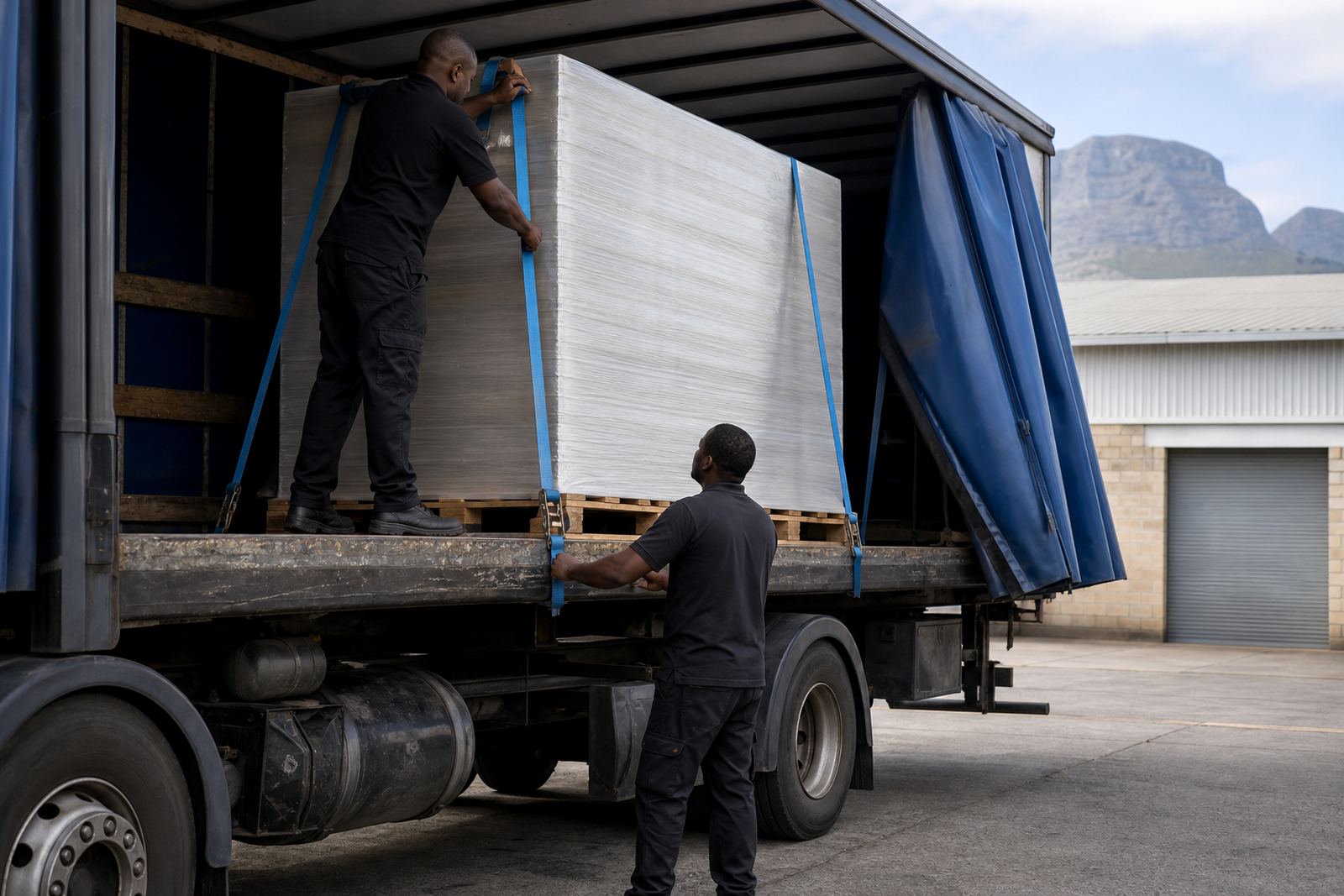
Courier delivery from Cape Town to Gauteng works best when the order is prepared with production in mind. Clear labelling, proper sealing, and the right quantity all reduce the risk of delays. If the team in Gauteng knows a job is coming up next week, it helps to place the order early enough to allow for transit and a quick check on arrival.
This is also where stock support makes a real difference. Shops in Johannesburg and Pretoria often need repeat orders on a reliable cycle, while smaller sites in nearby towns may prefer to keep a few key colours on hand. A supplier that handles repeat order management can help prevent gaps between jobs, especially when municipal work or customer deadlines move at short notice.
- Place repeat orders before stock reaches the last carton
- Keep a record of which inks work best on each printer
- Use sealed storage to protect against dust and humidity
- Plan for delivery lead time during busy periods and public holidays
For teams in Gqeberha, Durban, or Cape Town with separate print schedules, the same principle applies: good stock control is cheaper than emergency buying. It also keeps the workshop calmer when the phones start ringing and the orders stack up.
Safety, handling, and operator training should stay part of the process
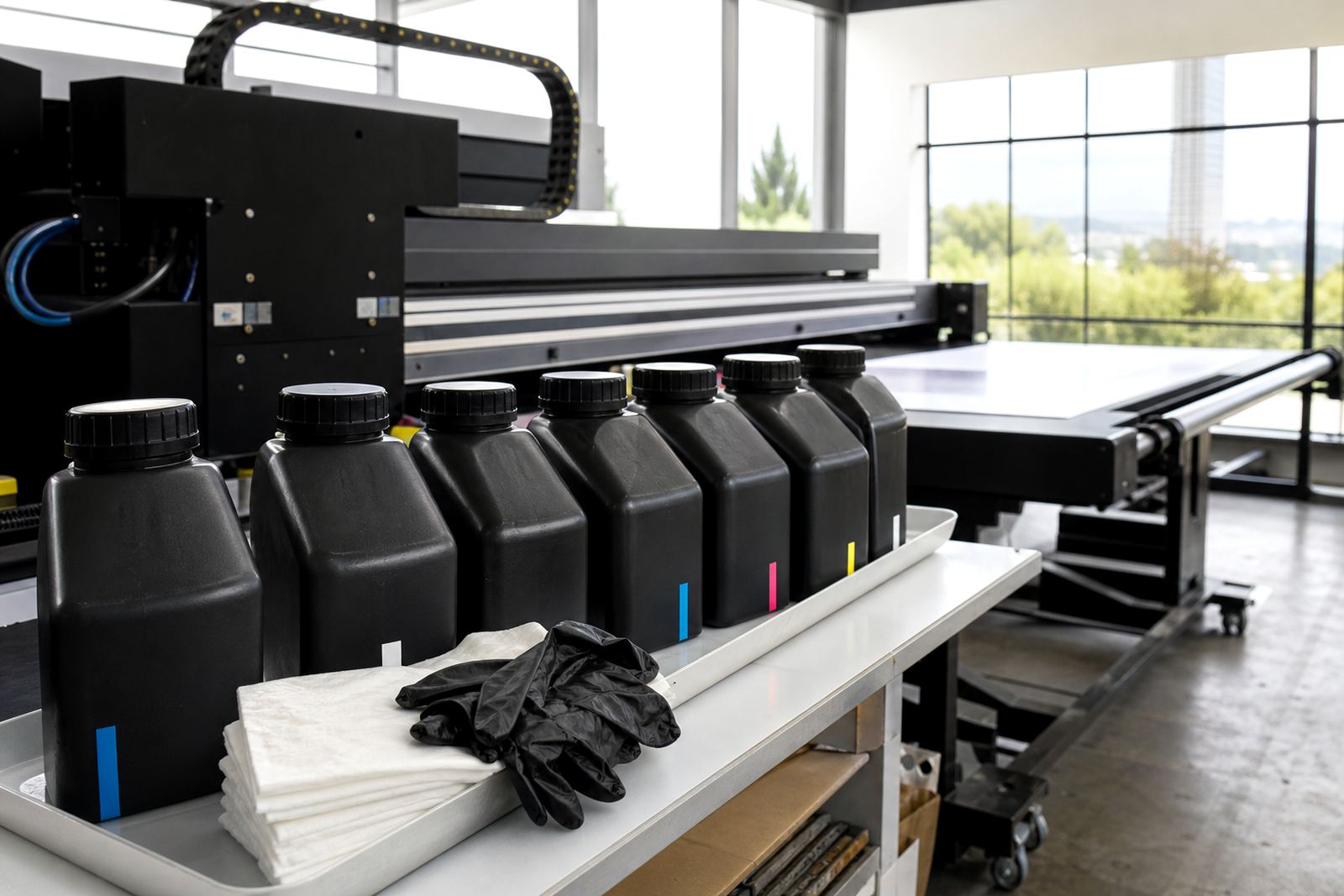
UV-curable inks need proper handling from the first opening to the last drop in the container. Follow the safety data sheet for storage, use, and clean-up. Wear gloves when handling ink and when cleaning spills. Keep the work area ventilated and make sure operators know how to manage waste and uncured residue safely. This is especially important in busy workshops where multiple staff members handle the same job.
Training also helps new operators understand how ink, curing, and adhesion fit together. A short briefing can reduce mistakes and improve consistency across shifts. For firms with flatbed and roll-to-roll output, remote tech help and operator training can be the difference between a smooth run and a full reprint.
Practical handling points to keep on the wall:
- Use gloves and follow the safety data sheet every time
- Keep lids closed when ink is not in use
- Clean spills quickly and do not leave uncured ink on surfaces
- Store containers away from heat, direct sun, and dust
What Gauteng buyers should ask before placing the order
Before you confirm an order from Cape Town, it helps to ask a few direct questions. The answers will tell you whether the ink is likely to run well on your machine and whether the delivery plan fits your production schedule. This is not about adding paperwork. It is about avoiding expensive surprises once the printer is running.
Ask about the exact printer type, the intended substrate, the curing setup, and whether a sample pack or colour trial is needed first. If your team is in Bellville, Paarl, Johannesburg, or Pretoria, the same rule holds: clear details upfront save time later. The right conversation at the start usually means fewer interruptions on press.
- Is this for flatbed or roll-to-roll printing?
- Which material is being printed, and has it been tested before?
- What curing settings have worked on previous jobs?
- Do we need sample prep or a colour trial before full production?
When those answers are in place, Cape Town to Gauteng becomes a straightforward supply route rather than a production risk. That is the practical advantage of planning the ink side properly from the start.