Start with the board, not the artwork
When a rigid job looks risky, the issue is often not the file it is the board. Foamed PVC, fluted polypropylene, acrylic, aluminium composite, solid PVC and coated fibre boards all behave differently under UV ink. Some accept print well straight away, while others need testing because the surface energy, texture and coating can change how the ink sits and cures.
For shops in Epping, Bellville or Paarl working on signage for shopfronts, factory units or estate notices, the first question should always be how the board will be used. Indoor displays for short term promotions can be lighter and more economical. Outdoor panels near the coast, or in areas where humidity is high, need better dimensional stability and a surface that can handle moisture, heat and cleaning. That is where selection matters most.
- Check whether the board is smooth, corona-treated or coated for print.
- Confirm the thickness and whether the panel will stay flat after cutting.
- Ask how the board behaves in sun, moisture and temperature change.
- Match the board to the fixing method, frame or standoff system.
Adhesion depends on surface energy and curing
UV-curable inks dry by exposure to UV light, so adhesion is linked to both the board surface and the curing process. If the lamp output is too low, or the print speed is too high, the ink may cure on the surface but still remain weak underneath. If the board is too glossy, dusty or contaminated with release agents, the ink can bead or scratch more easily.
Before a full run, do a sample print and a simple tape test after curing. This helps confirm whether the ink anchors properly to the media. In some cases a primer, adhesion promoter or a change in curing settings can improve performance. Keep the board clean, dry and at a stable room temperature. On humid mornings in Cape Town or after a cold delivery into Pretoria, let the material acclimatise before printing. A rushed start can cost you a reprint.
- Wipe boards with a clean lint-free cloth before printing.
- Test curing on the actual media you plan to use.
- Adjust ink laydown if the surface is porous or unusually smooth.
- Do not assume one setting will suit every rigid substrate.
Thickness, weight and handling on the job
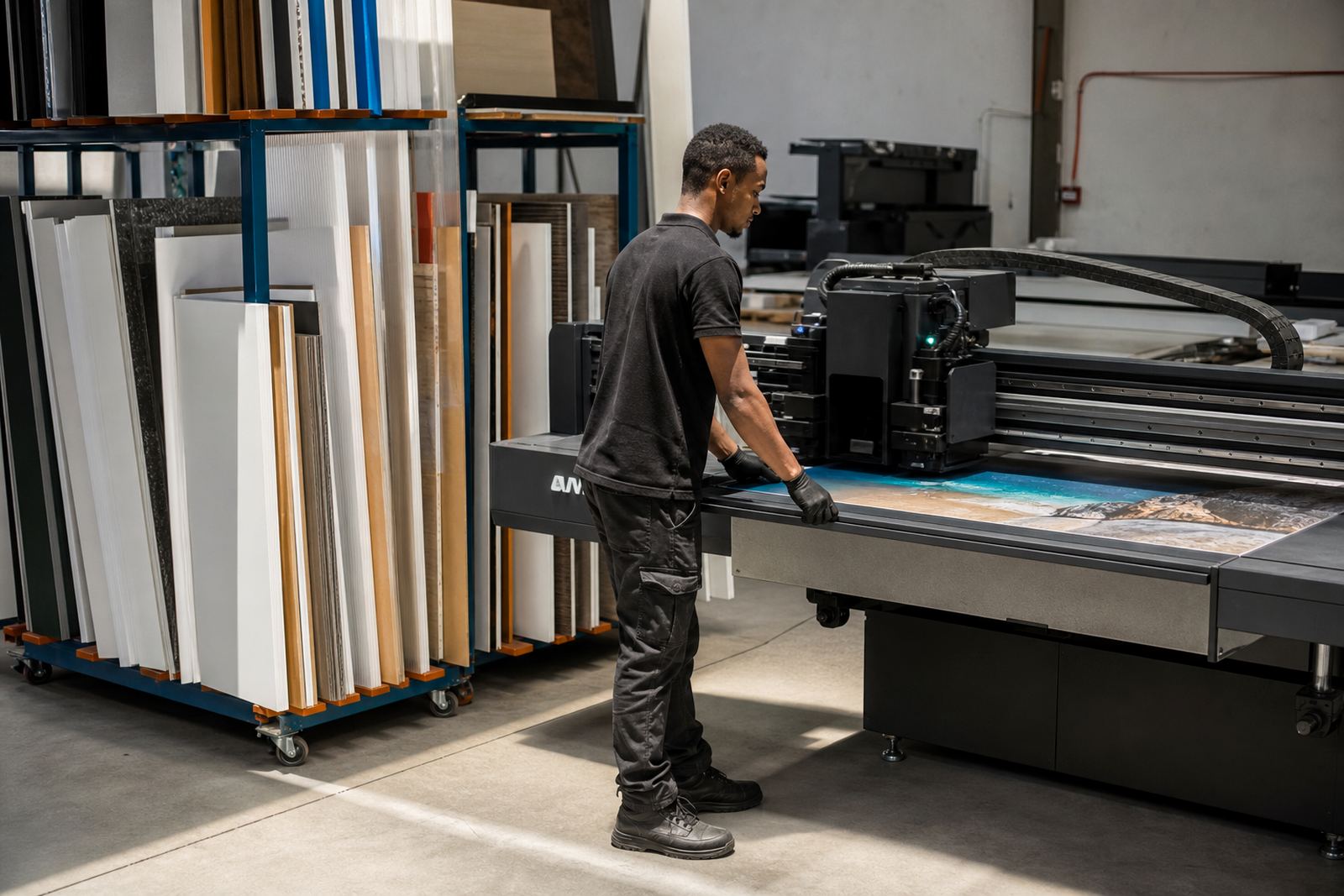
Rigid media sounds simple until the board has to move through the workshop. A light panel may be easy to carry but can bow on the bed. A heavier board gives better stability yet needs more care when loading, especially on larger flatbed printers. If the panel is too thick, it may not clear the carriage or the vacuum table properly.
A board for Gqeberha delivery to a coastal retail site may need to travel, be unpacked, printed, trimmed and installed without edge damage. A board for a short-term exhibition stand in Johannesburg might need quick turnaround and easier handling by one operator. The practical choice is the one that fits your machine and your labour.
- Confirm the maximum board thickness your printer can accept.
- Check if the material is rigid enough for the final size without extra framing.
- Plan lifting, stacking and trimming before the job starts.
- Store boards flat to avoid warp, especially in damp conditions.
Choose the finish for the final location
A board that looks good under workshop light may behave differently once it is installed outside a warehouse or in a mall passage. Matte finishes reduce glare and improve readability under bright light, while gloss can make colours pop but may show reflections. Textured boards can add character, yet they often need more careful ink selection and curing to hold detail properly.
For packaging mock-ups, product displays or directional signage, the finish should suit the customer viewing distance. Close-up work needs clean detail and consistent ink edges. Bigger boards viewed from several metres away can carry stronger colour and slightly heavier ink coverage. If the sign will be cleaned often, choose a finish that can tolerate wiping without losing clarity too quickly.
A practical rule is simple: the more light, touch and weather a board will face, the more the finish matters. It is worth checking whether the client expects a printed face, a laminated face, or a panel that will be cut after printing. Those choices affect both appearance and handling.
Use samples before the full production run
Sample support is one of the best ways to avoid waste. A small test pack lets you compare adhesion, cure, colour and edge quality on the actual substrate before you commit to a full sheet order. This is especially useful when the board comes from a new supplier or when the job involves mixed media across several branches or sites.
At UV Ink, sample pack prep, colour trial support and adhesion testing are part of a sensible production process. A quick trial can show whether the ink spreads too much, whether the surface needs a different setting, or whether the board is suitable for the intended use. That saves time and helps operators make better calls on the shop floor.
- Label sample boards by media type and curing setting.
- Keep a note of whether the print was flatbed or roll-to-roll.
- Record drying or curing behaviour immediately after printing.
- Store approved samples for future repeat orders.
A Cape Town example: coastal signage that must hold up
Consider a job for a retail frontage near Epping, with delivery to a client later moving the panels to a coastal site. A coated rigid board may print beautifully but still need careful curing and clean storage before dispatch. If the panels sit in a hot delivery vehicle too long, the board can bow or the print can suffer light surface marks.
That is why production planning and courier stock support matter. When a job goes from Epping to Cape Town, Durban, Pretoria or Gqeberha, the media choice must suit the route as much as the print file. For bigger runs, repeat order management helps keep the same approved board in circulation so the result stays consistent from one order to the next. It is a simple way to avoid surprises when the same customer comes back months later.
Good rigid media selection is not about using the most expensive board. It is about matching the surface, thickness and finish to the printer, the ink and the final site. Get that right, and the job will look better and last longer.