
Why courier planning matters when a press cannot wait
In a busy shop, the biggest cost is often not the ink itself but the time lost while waiting for the next delivery. A flatbed or roll-to-roll printer can be ready for the next run, then the job stops because the correct colour, curing setup or compatible ink was not ordered in time. That gap is expensive, especially when a client in Sandton, Montague Gardens or Gqeberha is waiting on a deadline.
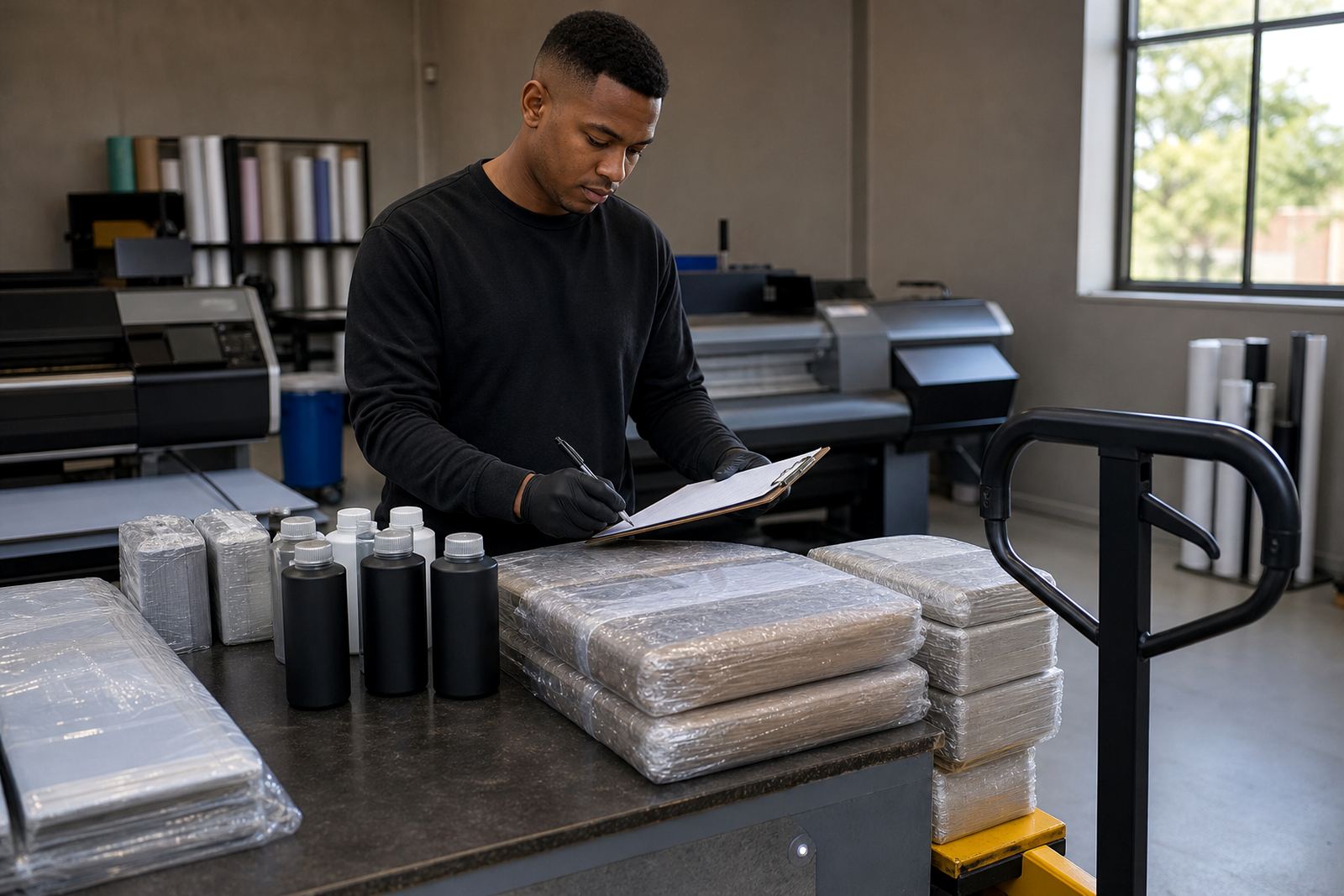
Courier planning keeps the work moving. It means knowing what your average monthly usage is, which materials you print on most often, and what your backup stock should be when orders run late or roads are delayed. The goal is simple: dont let a small stock shortage turn into a production stop.
Match the ink to the printer before you place the order
UV-curable inks are not all the same. The printer model, printhead type, curing setup and substrate all affect how the ink behaves. A good order starts with compatibility checks, because the wrong match can lead to poor jetting, weak adhesion, uneven gloss or blocked nozzles. That can happen on rigid boards, self-adhesive vinyl, corrugated packaging or coated media if the setup is not right.
Before ordering, confirm these basics:
- Printer type, flatbed or roll-to-roll
- Printhead compatibility and any ink limits set by the machine
- Media to be printed, including board, film or banner stock
- Colour set required for the job, especially if the client needs spot colours or repeated work
- Curing method and whether the machine is running at full production speed
When those points are clear, courier stock support becomes much easier and you avoid ordering the wrong product twice.
Keep a simple stock plan for monthly and emergency use
A practical stock plan does not need to be complicated. Start with your top moving colours and the volumes you use in a normal month. Then add a safety buffer for urgent jobs, reprints and holiday peaks. For many shops, that buffer is what keeps a printer from sitting idle while someone waits for a parcel to arrive in Cape Town, Pretoria or Durban.
Good planning also helps with repeat order management. If your team knows that black, cyan, magenta, yellow and a clear coating move faster than the rest, those should be reviewed first before stock gets low. A small weekly check is better than a big panic order on a Friday afternoon. In Epping, where many businesses work on tight dispatch windows, that kind of routine saves time and keeps the workshop steady.
- Check stock levels on the same day each week
- Flag any colour that drops below your set minimum
- Separate fast-moving stock from slow-moving stock
- Keep one emergency pack for rush work or reprints
- Note which jobs use more ink because of heavy coverage
Adhesion and curing should be part of the delivery schedule
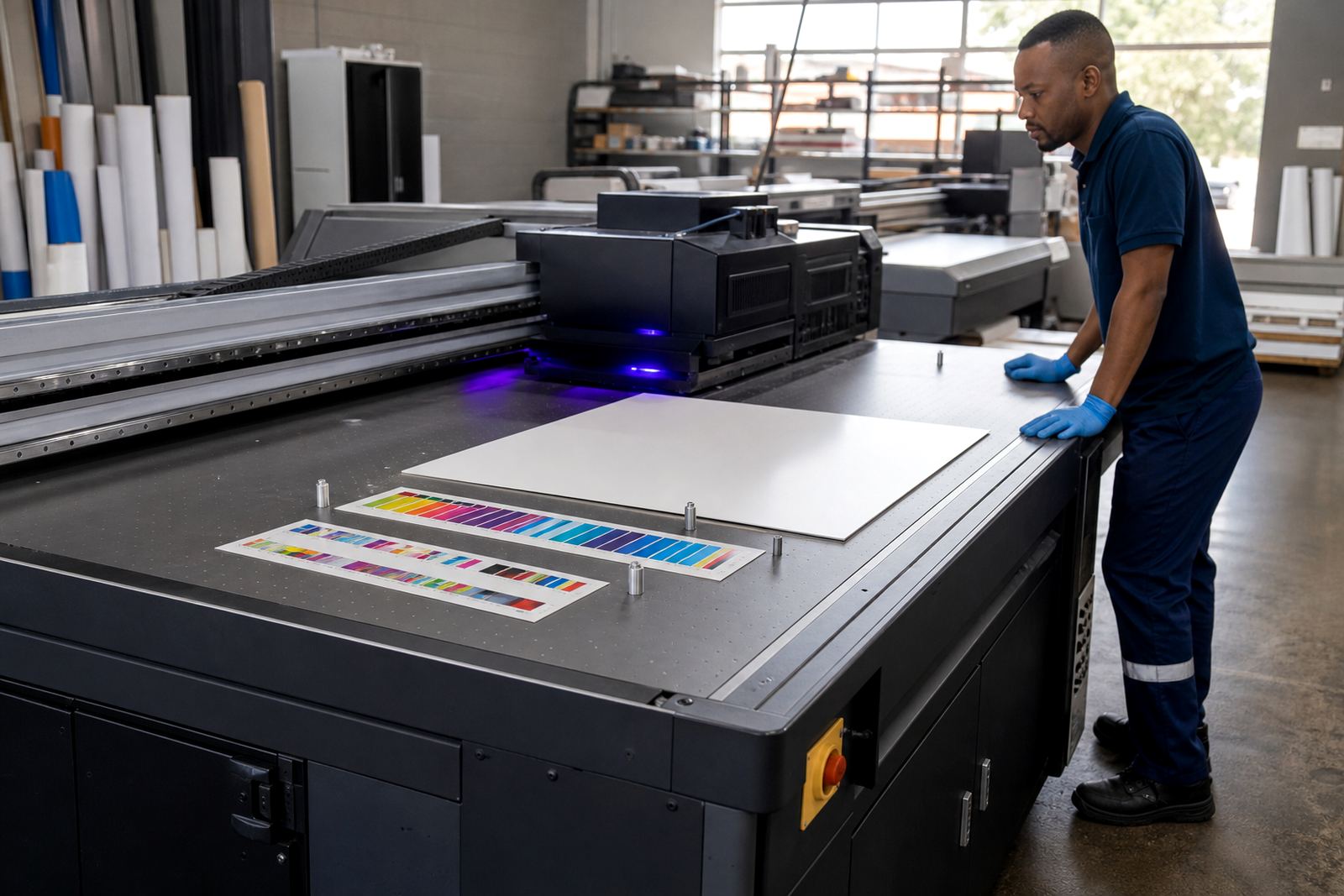
With UV-curable inks, it is not enough for the parcel to arrive on time. The ink must also cure properly once it is on the machine. If curing is too light, the print may feel tacky or scratch too easily. If it is too aggressive, some media can warp, crack or show uneven finish. That is why curing guidance should sit alongside courier planning, not after it.
For shops near the coast, humidity can affect how some substrates behave before printing. In places like Durban and Gqeberha, media may need a bit more attention before it goes to press. A short adhesion test on the actual substrate is worth far more than finding the fault after a full production run. If a client needs signage for an outdoor install or packaging that will be handled often, build in time for sample checks and drying tests before the final job starts.
How a Cape Town shop can avoid downtime across the country
Consider a sign shop in Bellville handling a rush order for shopfront graphics and a separate packaging run for a Johannesburg client. The team has enough machine time, but one colour runs low on a Tuesday. If the replacement order is placed late, the delivery may miss the production window and the second job gets pushed back. That means the printer stops, the operator waits and the client gets a later handover than planned.
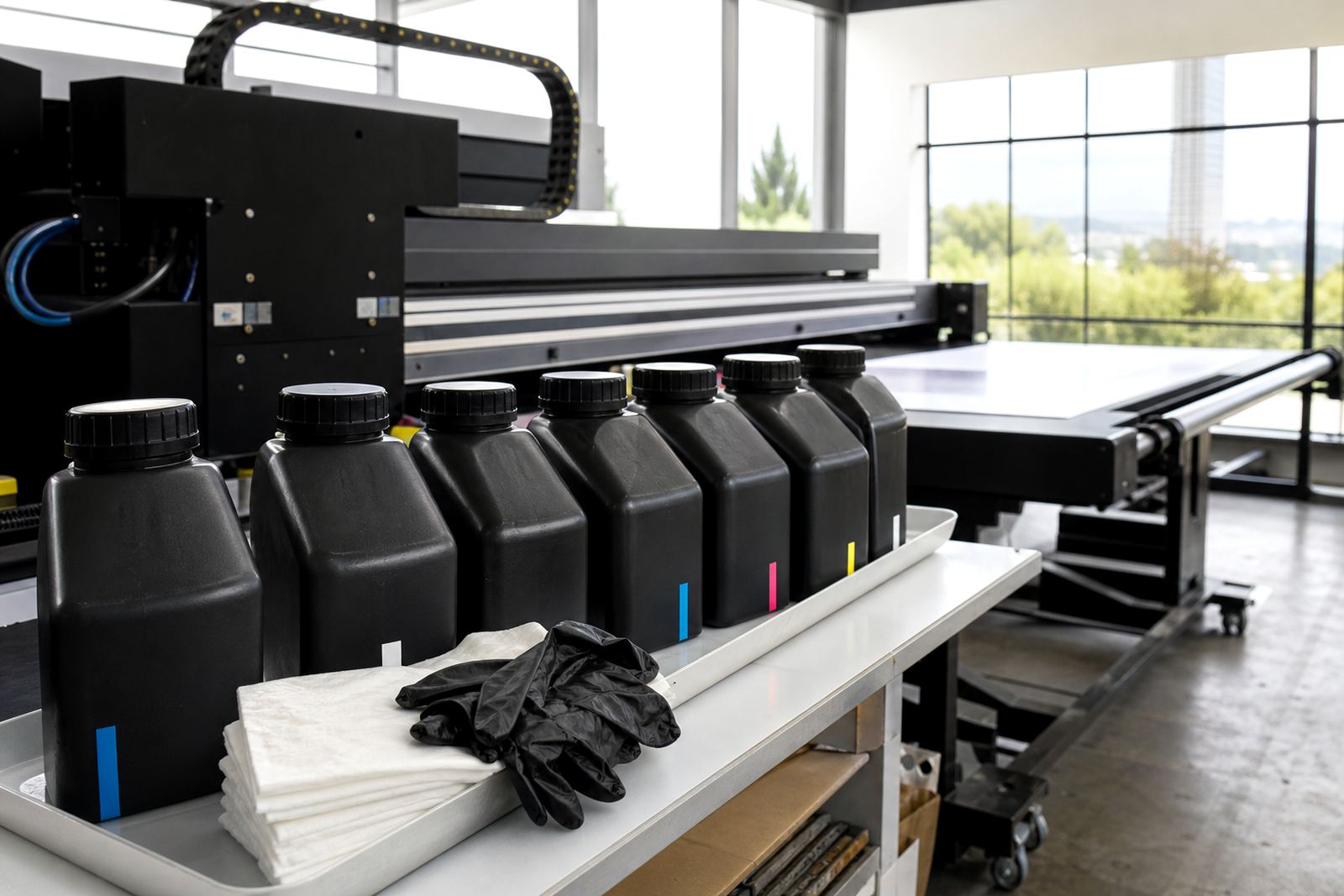
With better courier planning, that same shop could keep a buffer for its main colours, prepare a sample pack for new media, and confirm the compatibility of the ink before dispatch. The result is fewer interruptions and less rework. It also gives the team time to brief operators on safe handling, including following the safety data sheet and wearing gloves during transfer or maintenance. Small habits like that reduce mess and keep the work area tidy.
- Plan orders around production peaks, not only around low stock
- Allow extra time before public holidays and long weekends
- Keep samples from previous jobs for quick comparison
- Use remote tech help when a cure or adhesion issue appears
Training the operator is part of the order plan too
Even good ink can be wasted if the machine is not set up correctly. Operator training helps the team understand what to look for when changing cartridges or filling tanks, how to spot early signs of nozzle trouble and how to handle stock safely. When a print shop understands the ink and the printer together, it uses courier deliveries more efficiently.
Training also helps when several branches or job sites rely on the same supply flow. A team in Pretoria might need a slightly different schedule from one in Paarl, depending on local demand and courier cut-off times. Clear instructions make it easier to plan around production rather than react to problems after they start. And if a job uses a new substrate, the operator should know when to pause, test and confirm adhesion before the full run.
The order checklist that keeps prints moving
A strong courier plan is built on small checks done before the stock runs out. That way, a print shop can keep serving customers in Cape Town, Johannesburg, Durban, Pretoria and Gqeberha without losing a day to last-minute buying. The key is to treat ink ordering as part of production planning, not an afterthought.
Use this simple checklist before every order:
- Confirm the printer model and the ink type it accepts
- Check which colours are running low
- Review the next jobs in the queue
- Ask whether adhesion testing is needed for a new material
- Allow time for curing checks and operator setup
- Keep the safety data sheet on hand for handling and storage
When that process becomes routine, deliveries fit better into production and the workshop stays productive. One well timed order can save hours of avoidable downtime, and that is often the difference between a smooth week and a messy one.