Why fine detail starts with the full print system
When a label edge looks fuzzy or small text fills in, the issue is often wider than the ink. Nozzle size, ink laydown, media coating, heat, static and curing all affect the finished result. UV-curable inks must jet cleanly, hold their shape on the surface and cure at the right speed without over-hardening the print before it bonds properly.
That is why fine detail work needs a balanced setup. A printer that handles larger signage well may still need different settings for small text, linework or technical graphics. The same job can behave differently on board, vinyl, polypropylene or coated paper, especially in Cape Town coastal humidity or in a dry inland workshop during winter.
At UV Ink, we help customers match the ink to the printer and the job requirements. Our focus is practical: ink selection, compatibility checks, adhesion testing and curing guidance that fits the real conditions in South Africa, from Epping to Pretoria. Michael van Wyk and the team work with customers who need consistent results on production runs, not guesswork.
What crisp detail needs from a UV-curable ink
Fine detail printing depends on a few simple things working together. The ink should cure fully without spreading, should grip the media properly and should support clean dots and thin strokes. If the ink is too thick for the head or not matched to the substrate, small features can close up. If curing is too strong or too slow, the print may look good off the machine but fail later in handling.
It also matters how the ink behaves during multi-pass printing. On complex graphics or small type, the printer may lay down several layers in quick succession. The ink must stay stable between passes so that edges remain sharp and colours stay even. For roll-to-roll work, media tension and take-up control also influence line accuracy, especially on longer runs.
- Match the ink to the printer head type and firing behaviour.
- Check how the media accepts the ink before production starts.
- Adjust curing so the print hardens fully without distortion.
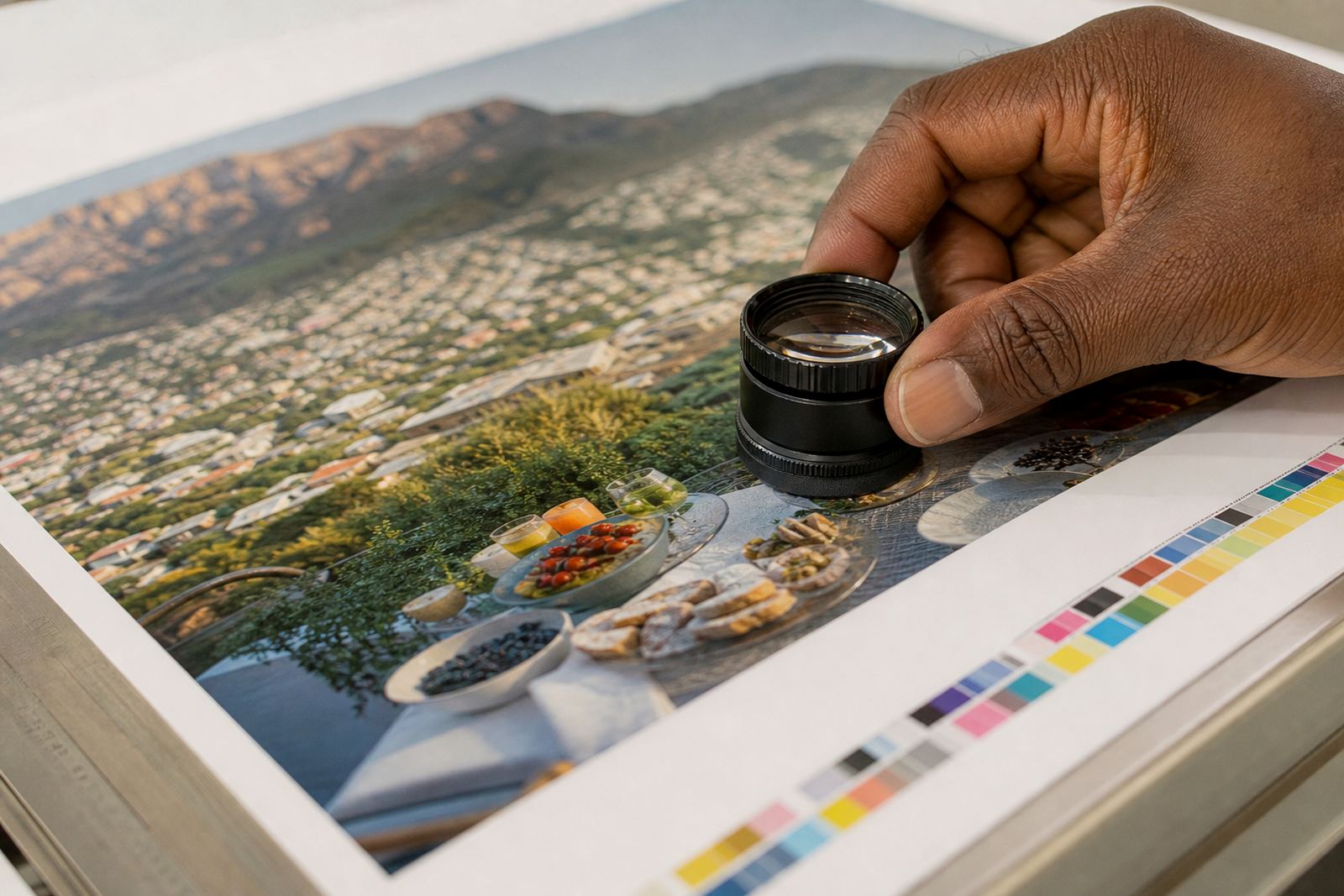
- Confirm that fine text, reverse text and thin lines hold up after handling.
A good rule is to test the smallest readable element first. If a 4 point disclaimer or a narrow barcode line survives the test, the rest of the job usually has a better chance of holding together.
Adhesion testing saves time before production runs
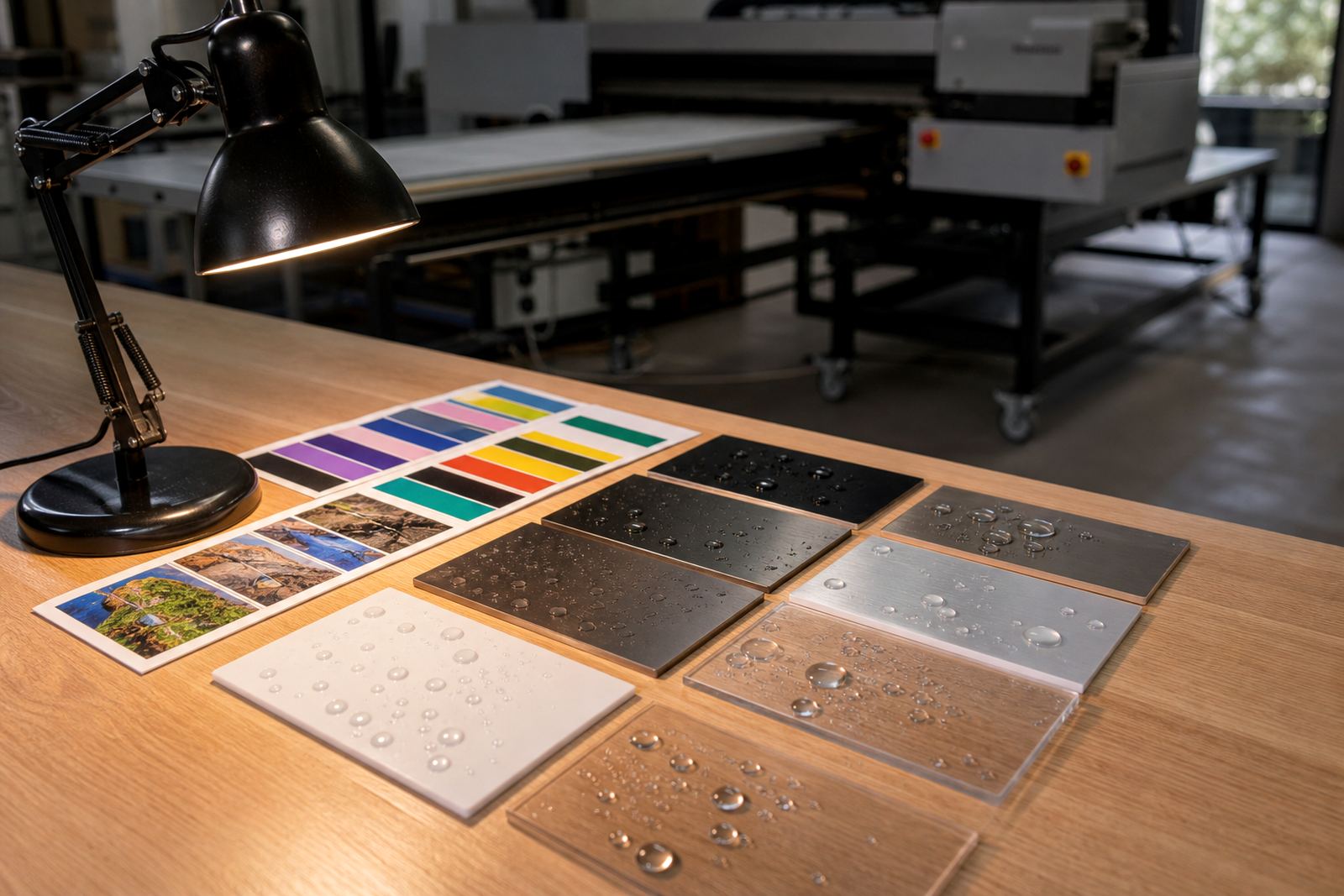
Adhesion is one of the first things to check before committing to a long print run. A job might look bright and clean immediately after curing, then fail when folded, trimmed or stacked. That is a costly surprise on packaging inserts, labels, point of sale graphics and other fine detail work. A simple scratch test, tape test or handling trial can show whether the ink is bonding properly to the surface.
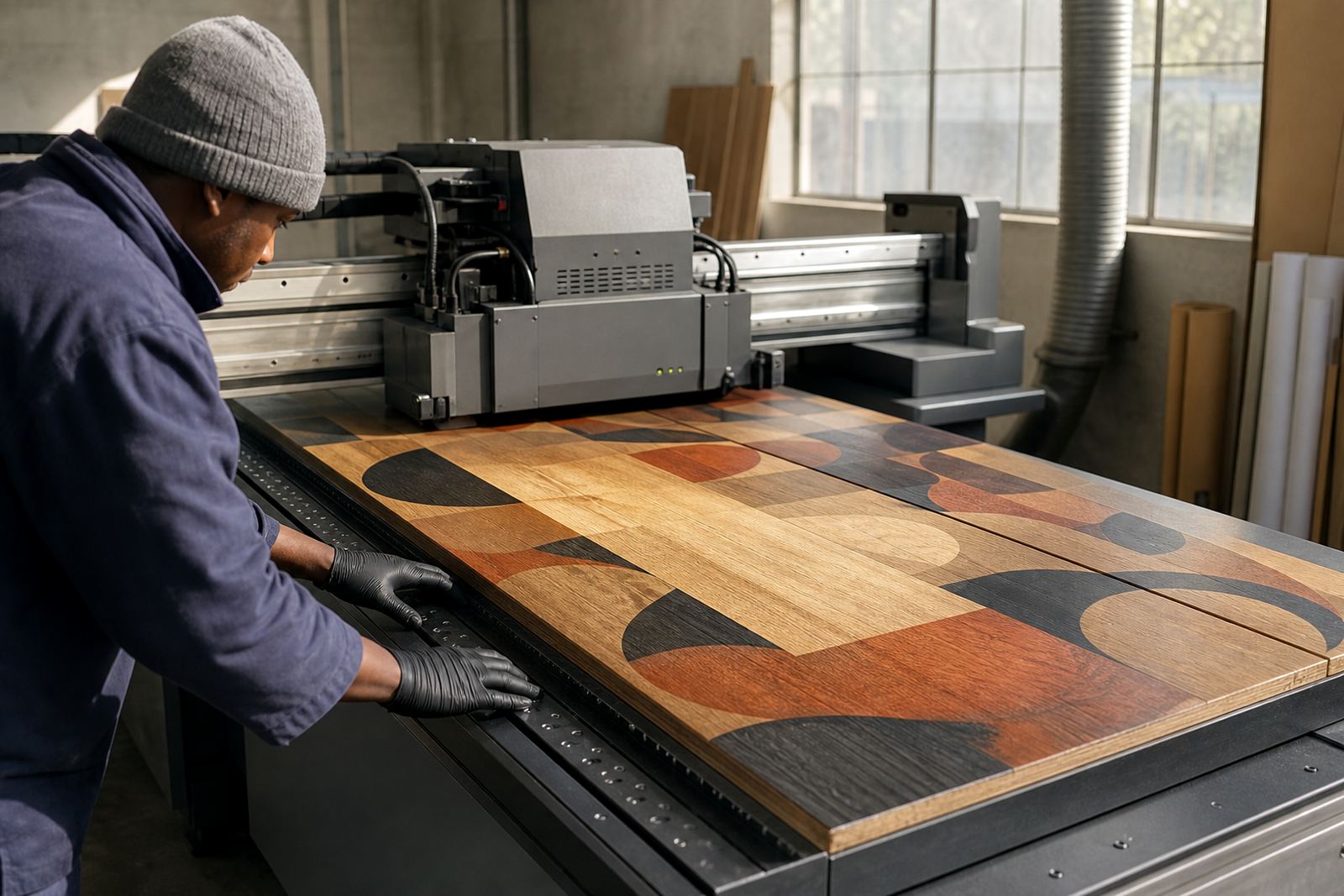
Different materials behave differently. Smooth plastics, coated boards and some treated films may need special care. On rough or porous media, the print can sink in unevenly and lose sharpness at the edges. Our adhesion testing and sample pack prep help customers see how the ink behaves before the order goes into full production.
- Test the same media batch you plan to use for the job.
- Allow for drying and curing before judging final adhesion.
- Check the print after cutting, folding and stacking.
- Keep a record of settings that work so repeat orders stay consistent.
This matters in busy shops where the next job is always waiting.
Curing settings and heat management on South African jobs
Curing is where fine detail can either hold together or fall apart. UV-curable inks need enough energy to cure fully, but not so much that the surface becomes brittle or the print distorts. Too little curing can leave the image tacky and vulnerable to scratching. Too much can reduce flexibility or affect the way the ink sits on the media.
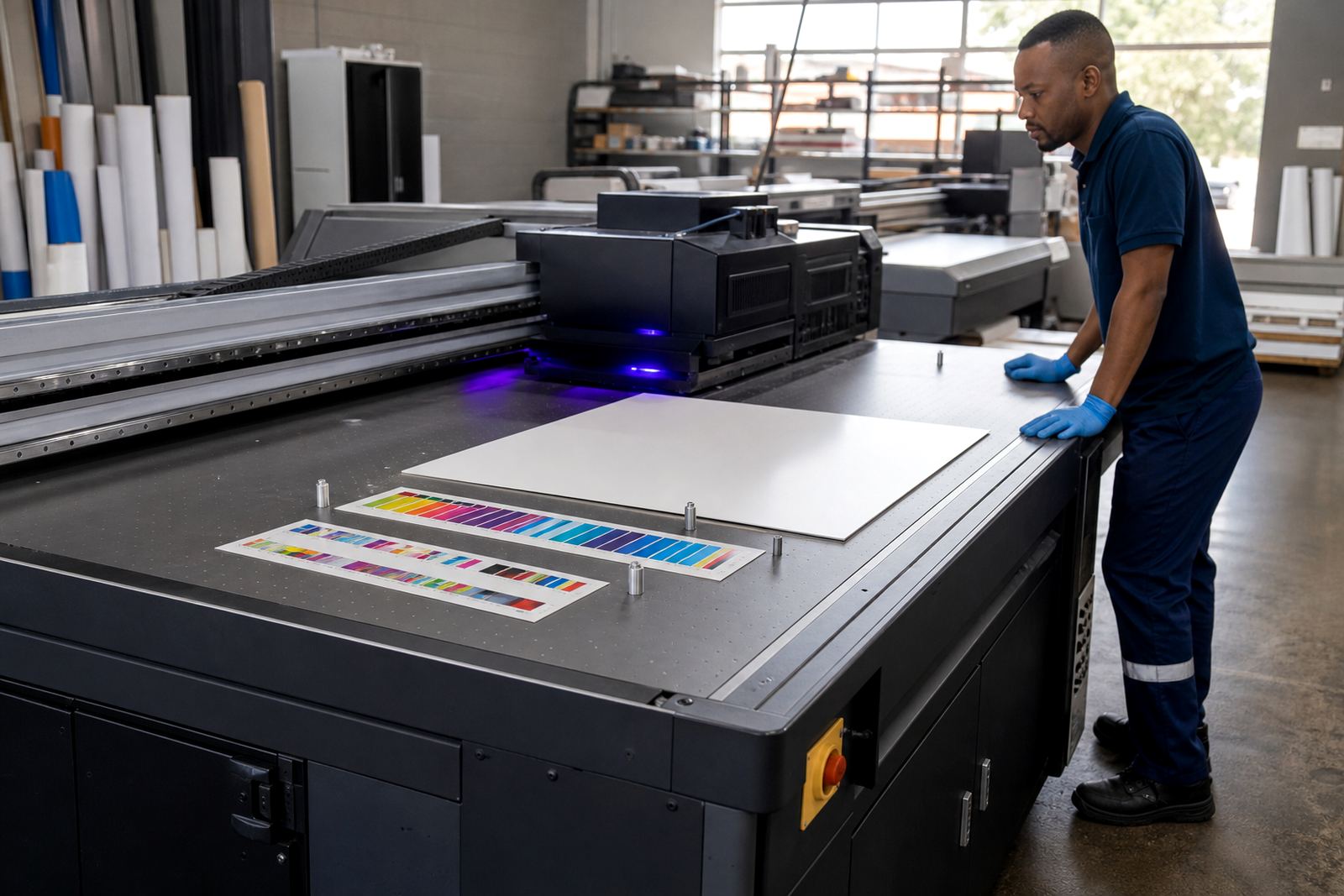
On flatbed printers, the cure must suit both the ink film and the substrate thickness. On roll-to-roll printers, heat build-up along the web can change how the media tracks and how the print cures from edge to edge. That is why curing guidance should be based on the actual machine, the lamp or LED setup, and the media used on that day.
In places like Durban, where humidity can be high, and in Gqeberha where wind and dust can affect handling, small changes in environment can show up in the final print. A proper production plan makes a real difference when fine detail is the priority.
Printer compatibility is about more than the model name
Not every UV-curable ink behaves the same in every machine. Compatibility depends on head type, ink delivery, viscosity, filtration, curing method and the way the printer handles maintenance cycles. Even if two printers are both used for signage or labels, they may not respond the same way to the same ink.
That is why compatibility checks are part of our support. We look at the job type, the substrate and the printer’s working range before advising on a product. If a customer is moving between flatbed and roll-to-roll production, or between short runs and repeat orders, the settings may need adjustment. Remote tech help and operator training can make those transitions easier.
- Confirm the printer’s head and ink system requirements.
- Check whether the job needs high opacity, fine line accuracy or both.
- Review maintenance routines so the heads stay in good condition.
- Keep spare samples and notes for repeat production planning.
For customers in Cape Town, Johannesburg, Durban, Pretoria and Bellville, courier stock support helps keep the right ink on hand when production windows are tight. That kind of planning matters when the job is for a municipal notice board, retail display or detailed packaging insert that cannot slip a day.
Safe handling and repeatable results in the workshop
Fine detail work is only useful if the shop can reproduce it safely and consistently. UV-curable inks should be handled with care, and staff should follow the safety data sheet every time. Wear gloves, avoid skin contact and keep the area tidy so spills do not affect print quality or operator safety. Good habits protect the team and help keep the print process stable.
Repeat order management also helps fine detail work stay consistent. If a customer runs the same label or graphic every month, the settings, media and curing notes should be kept together. That reduces trial and error and makes it easier to match colour and detail from one batch to the next. Thabo Steyn handles training support for shops that want their operators to keep the same standard across shifts.
A local example is a signage and packaging workshop in Epping that prints small warning text on product sleeves and short runs of shelf labels. On a humid morning, they may need a slightly different cure than on a dry afternoon, and the media may need extra attention during setup. With the right ink, clear testing and careful handling, those tiny details stay readable and the production line keeps moving.