
Why surface energy matters before the first pass
Surface energy describes how willing a material is to accept liquid on its face. In simple terms, a higher surface energy surface lets UV-curable ink spread out more evenly, while a lower surface energy surface makes the ink bead up or sit loosely on top. That difference changes wetting, adhesion and how reliable the finished print will be after handling, cutting or outdoor use.
For flatbed and roll-to-roll work, this matters on plastics, coated boards, powder-coated metal, glass and certain laminated films. A job may look fine coming off the printer, but if the surface was not prepared properly the print can scratch, peel or fail during folding and packing. That is why compatibility checks should come before full production, not after the customer has already approved the run.
How UV ink wets a substrate
UV-curable ink needs to settle across the surface evenly before curing. Good wetting helps the ink form a consistent film, which supports colour strength and edge detail. Poor wetting can cause beading, pinholes, crawling or a weak bond that shows up later when the item is handled, stacked or exposed to humidity.
In practice, wetting is affected by surface energy, surface cleanliness, ink formulation and the printer settings used for the job. Dust, oil from hands, silicone residue and polishing compounds all reduce adhesion. Even a substrate that normally prints well can give trouble if it has been stored in a damp warehouse, touched repeatedly or cut with dirty tools.
- Higher surface energy usually means better spread and stronger wetting.
- Lower surface energy usually needs cleaning, pretreatment or a different material choice.
- Freshly handled or dusty sheets often need a wipe-down before testing.
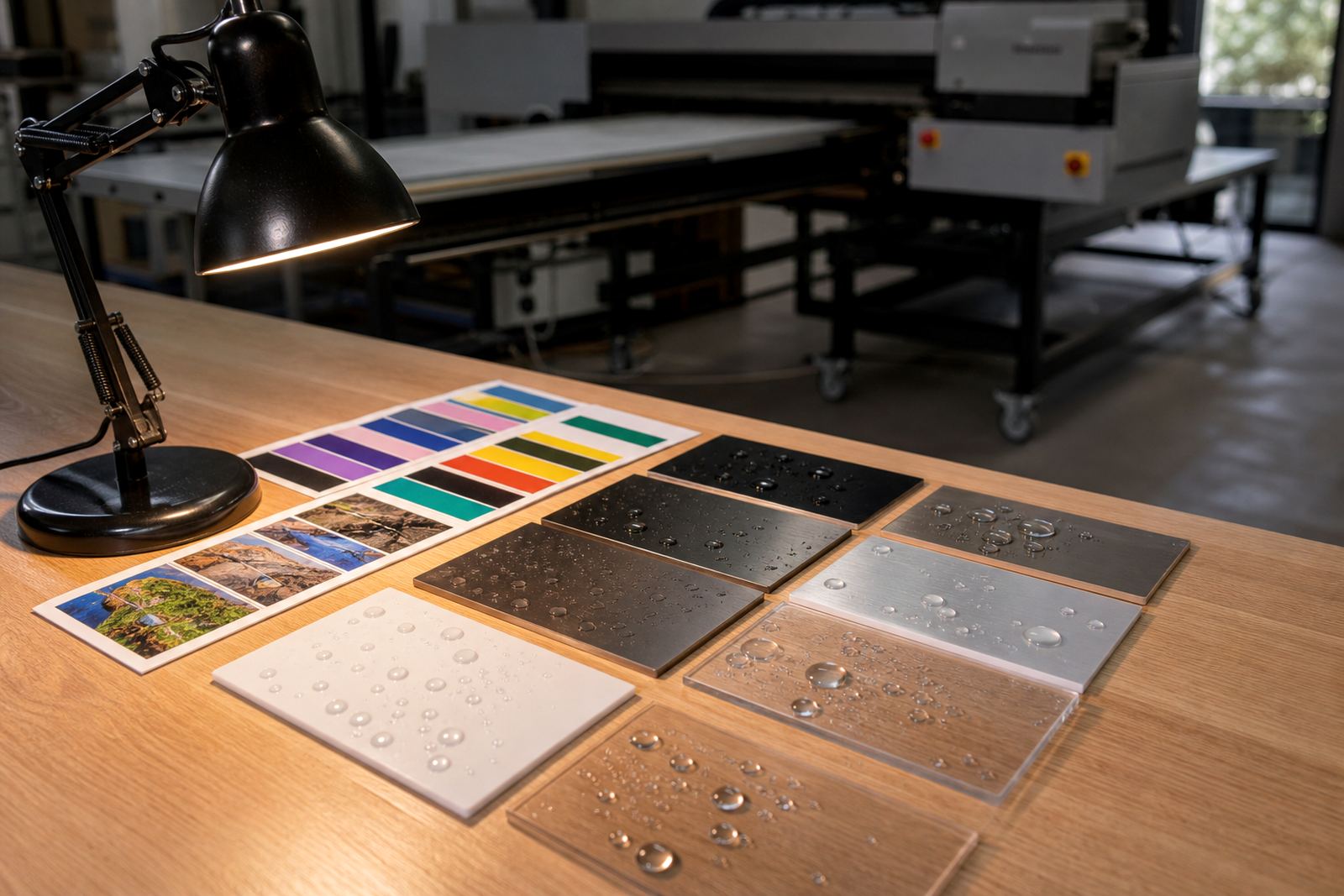
- Trial prints are useful because they show how the ink behaves on that exact batch.
Substrates that often need extra preparation
Some materials are naturally easier to print on than others. Acrylic, glass and many coated boards can respond well, but only if the surface is clean and the cure is matched to the ink film. Polyethylene, polypropylene and some rigid plastics are more demanding because they tend to have lower surface energy. That means the ink may struggle to anchor unless the surface is treated or the material is selected carefully for the application.
In coastal areas like Epping and the wider Cape Town side, humidity can add another layer of difficulty. Moisture on the sheet or in the air can affect drying behaviour, especially when work is moving between a cool store room and a warmer production floor. For outdoor signs, packaging inserts and retail displays, it is worth checking whether the substrate will be laminated, folded or touched often. If so, you need more than a good visual finish, you need a print that stays put.
Practical prep steps that make a difference
Before you run a full job, start with a clean substrate and a simple test plan. Wipe the surface if the material allows it, confirm that the sheet has no release residue and check whether the chosen ink system is suitable for that printer and application. Curing guidance matters too, because a print that is under-cured may feel dry but still have a weak bond. Over-curing can also be a problem on sensitive materials, so the right balance is important.
There is no single fix for every substrate. Some jobs need only cleaning, while others need primer, pretreatment or a different material altogether. A short sample run can save time, ink and rework later. That is especially useful when a customer wants the same artwork across several media types, because one setting will not always perform the same on board, film and rigid plastic.
- Check the material type before loading the printer.
- Keep hands off the print area where possible.
- Use sample pieces to test adhesion before committing to volume.
- Allow the curing system to do its full job at the chosen speed.
What printer compatibility really means
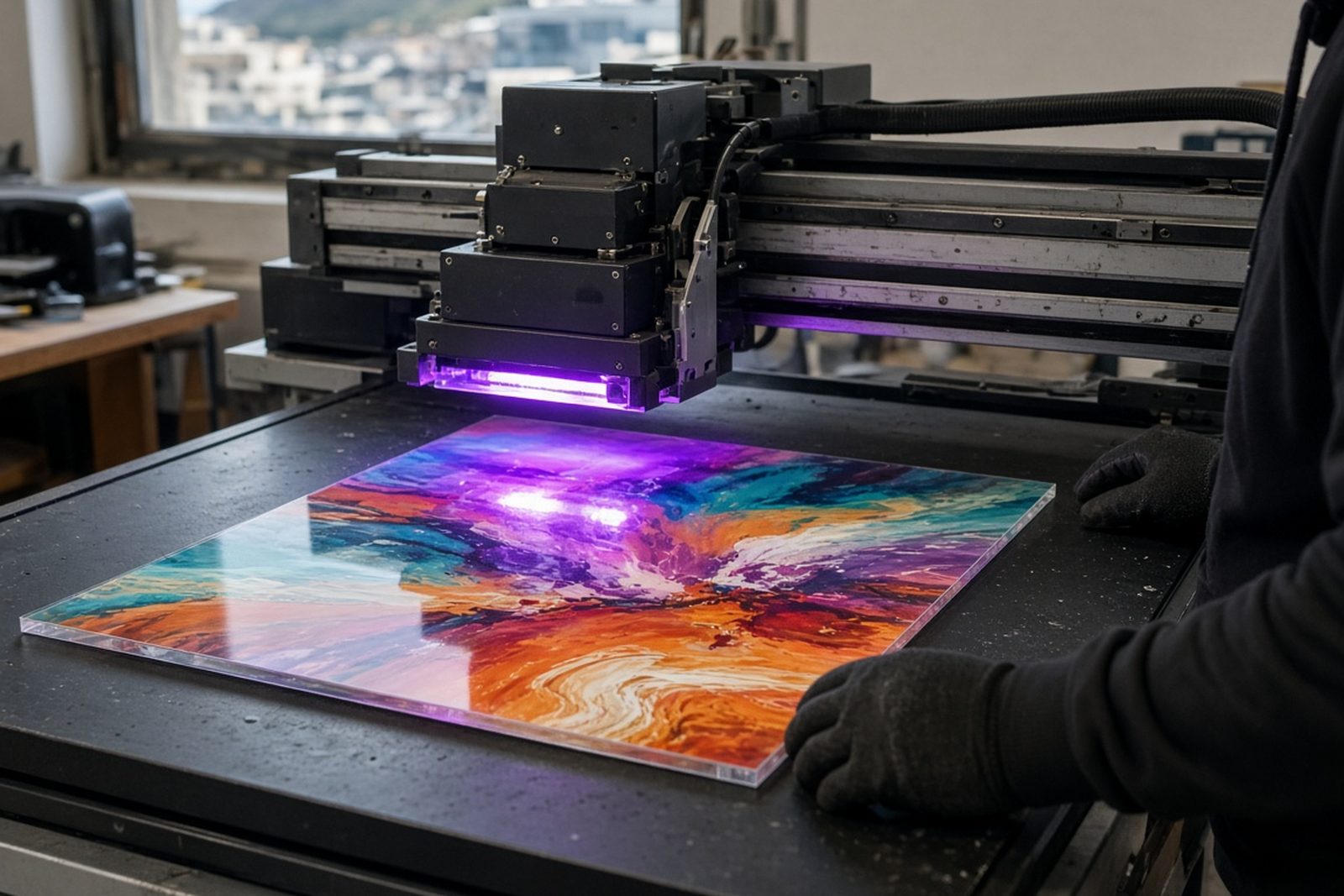
Compatibility is not only about whether the ink fits the machine. It is also about how the ink behaves in that system at the chosen carriage speed, lamp output, pass count and substrate height. A good UV-curable ink should be matched to the printer’s ink delivery, curing setup and intended media range. If the system is not aligned, you can get poor wetting, weak cure or colour variation between batches.
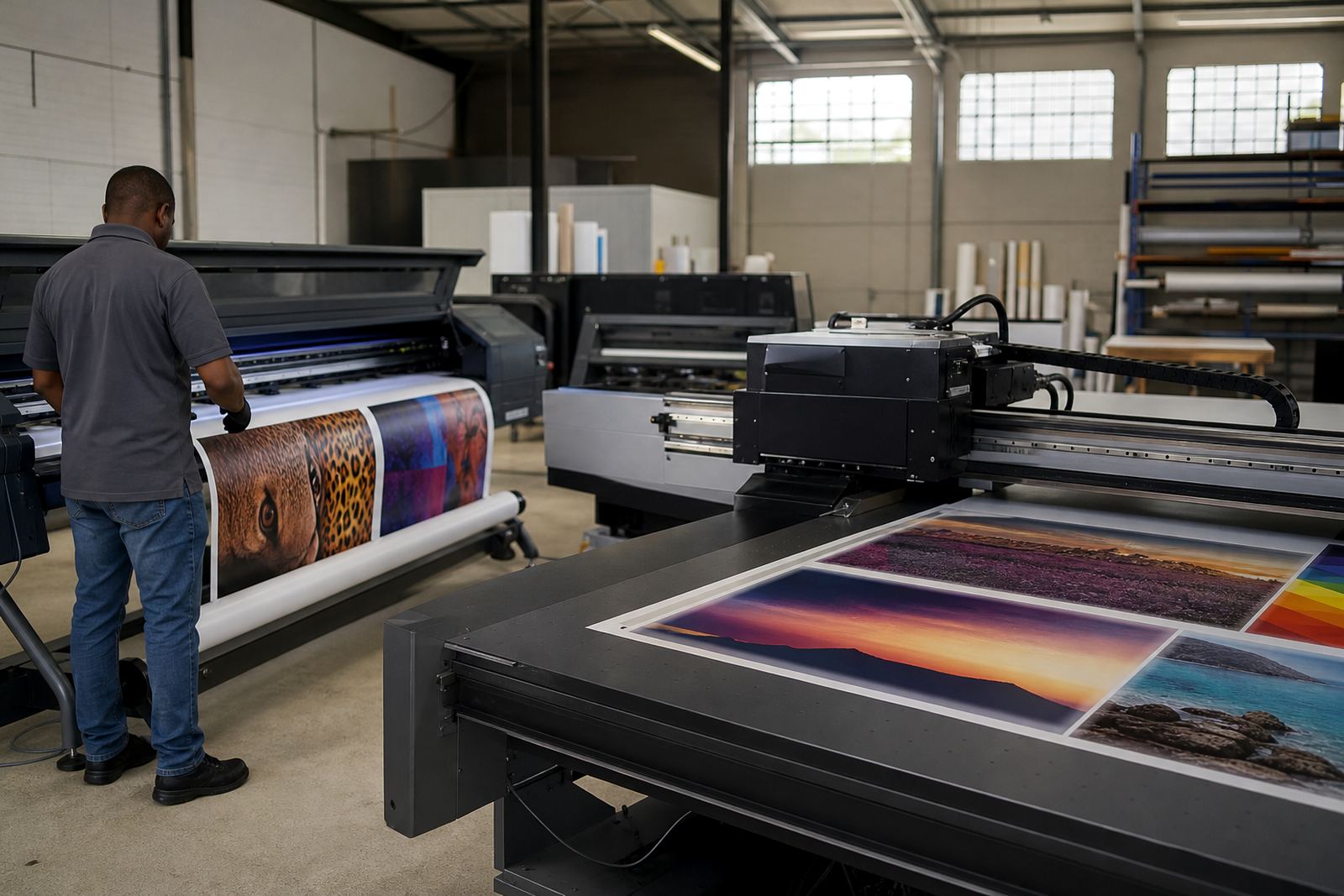
That is why production planning matters. A printer operator needs to know whether a job is for rigid board, roll media or a mixed run with different panel sizes. The same artwork may need different settings for signage, graphics or packaging. When the job is time-sensitive, especially with courier deadlines to Johannesburg, Durban, Pretoria or Gqeberha, a clear compatibility check up front can prevent last-minute delays and reprints.
A Cape Town example: when good ink still needs better prep
Consider a sign shop in Bellville printing onto a plastic panel for a retail display. The ink is suitable, the artwork is correct and the file is ready. But the first test shows beading along one edge and a light rub test lifts the surface. On inspection, the sheet was handled without gloves, stored near dust and moved from a cool store to a warmer work area too quickly. The issue was not the ink alone, it was the surface condition.
After cleaning the panel, allowing it to settle and running a fresh sample, the print behaved much better. The lesson is simple: surface energy works together with cleanliness, curing and handling. One wrong setting can spoil the whole print run.
Safer handling and support for real production work
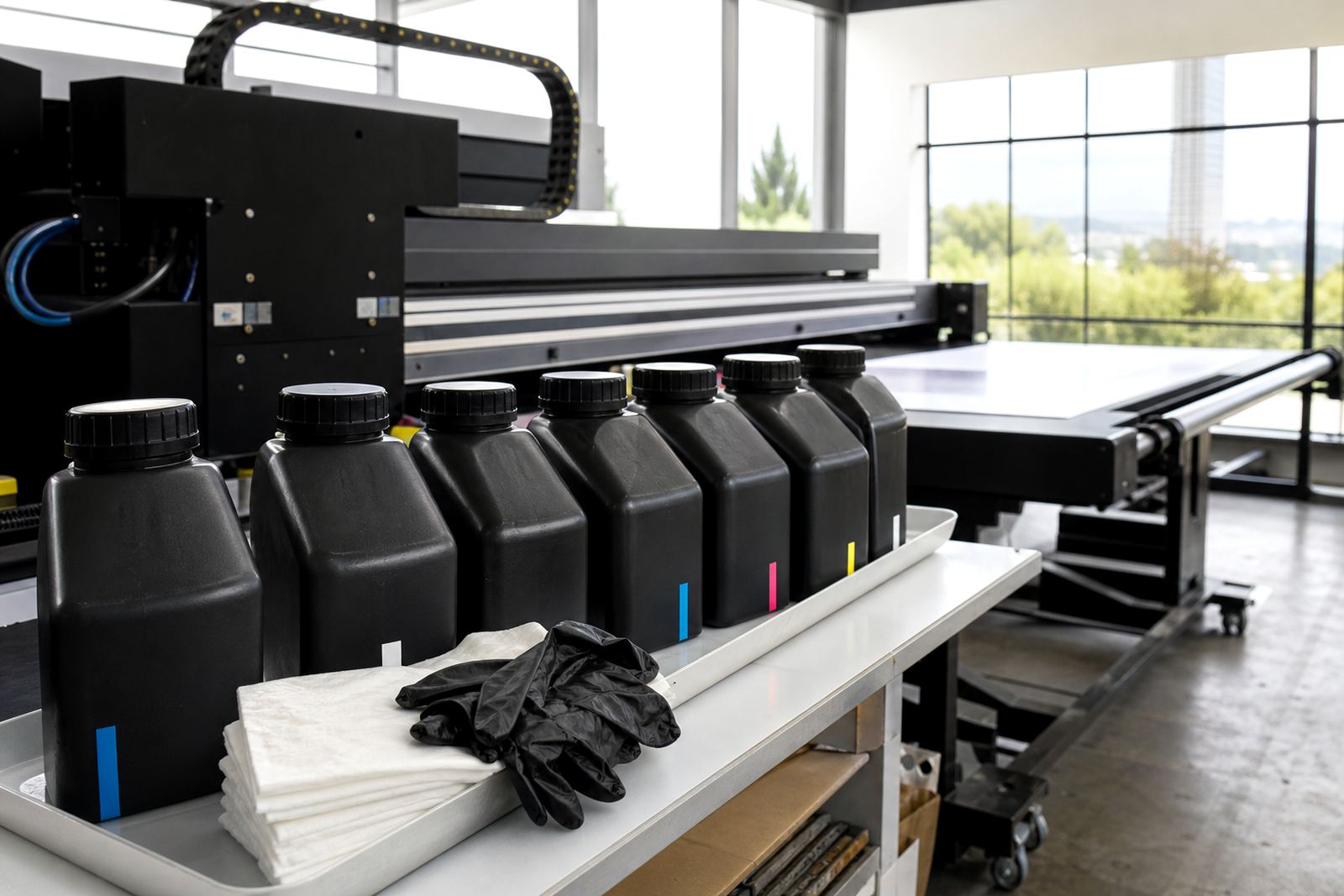
UV-curable inks should be handled carefully in every workshop. Follow the safety data sheet for the product in use, wear gloves and keep the work area tidy. Good housekeeping protects operators and reduces contamination on the substrate. It also helps when training new staff, because consistent handling habits usually improve print results as much as machine settings do.
If your team is unsure about surface energy, adhesion or curing, the best approach is to test before full production and keep notes on what worked. That way repeat orders are easier to manage and future jobs can be set up with less guesswork. A practical print room does not rely on luck, it relies on a tested process.