
What roll-to-roll UV printing is best at
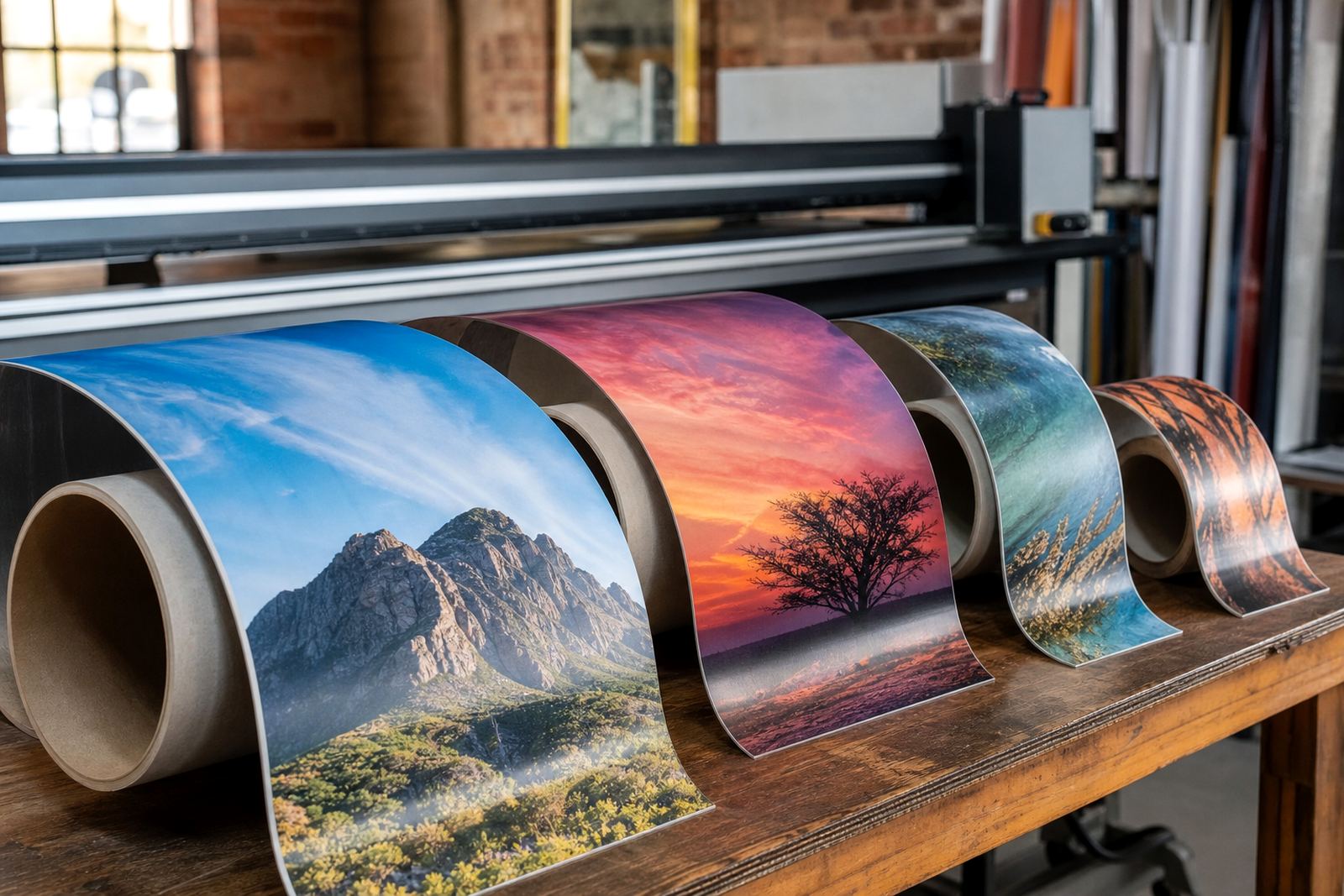
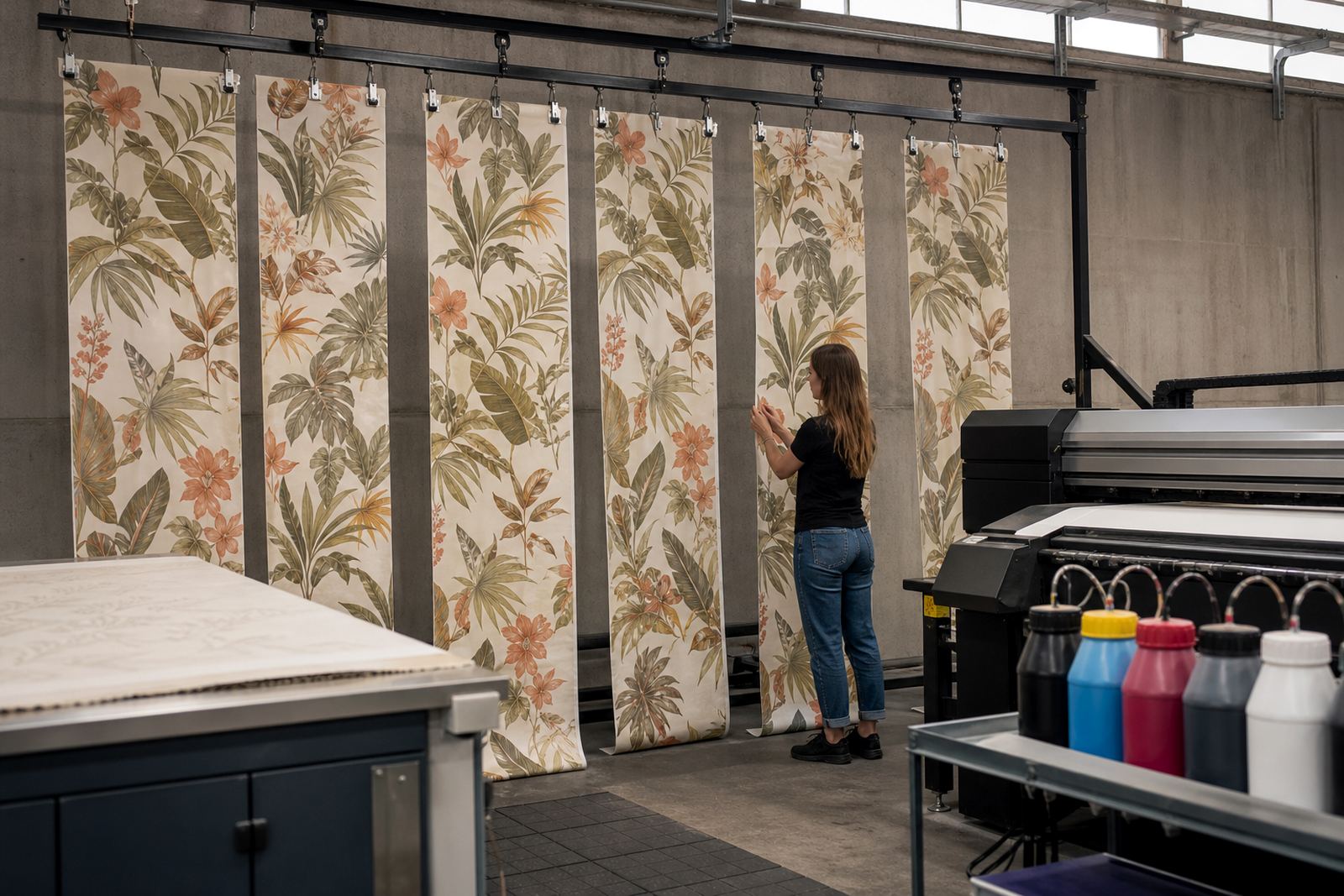
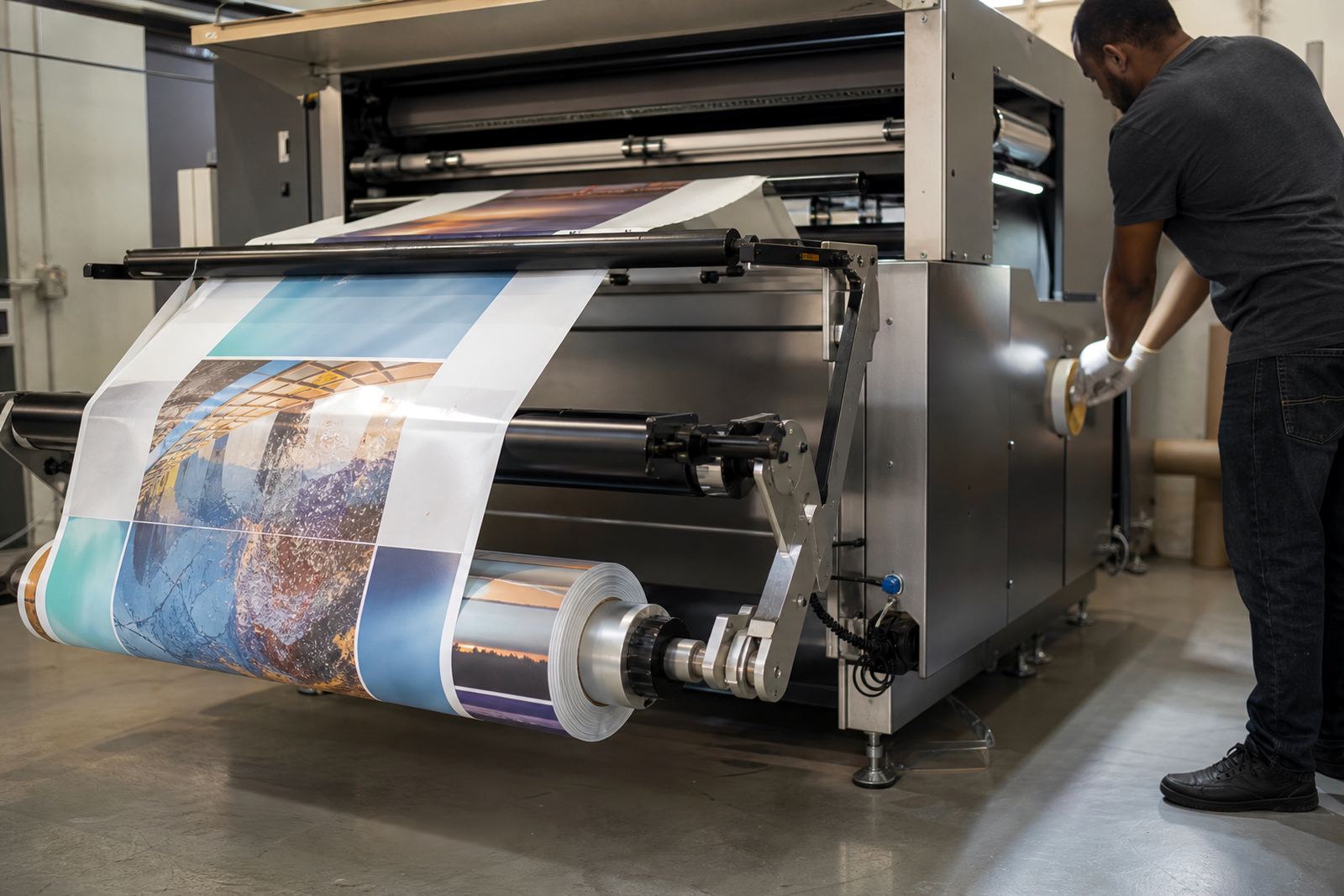
Roll printers feed flexible material through the machine as a continuous web, which suits work such as banners, self-adhesive vinyl, window film, mesh and light packaging stock. UV-curable ink is laid down on the surface and then cured with UV light, so the print becomes dry enough to handle almost immediately.
This is useful when turnaround matters. In busy print rooms, a roll job can move from printer to cutting table far faster than conventional drying methods. That said, the material still needs the right setting for tension, feed, and heat, otherwise you can get cockling, banding or poor tracking. In humid coastal areas like Gqeberha and Durban, material storage matters too because damp rolls behave differently from dry ones.
For operators, the first rule is simple: treat each media type as its own test case. A banner PVC, a cast vinyl and a coated film will not all behave the same way under the same curing setup.
How UV curing affects finish and handling
UV-curable ink does not dry by evaporation. It cures when exposed to the correct UV light output, and that changes the surface from wet ink to a solid print layer. If curing is too weak, the print may feel tacky, smudge, or pick up dust. If it is too strong, you can overheat the media, cause shrinkage, or make the print brittle on certain films.
The practical aim is a clean cure with enough adhesion for the intended use. Some jobs need strong outdoor resistance, while others need a flexible finish for wrapping around curves or folding over panels. Keep in mind that a print that looks fine straight off the machine can still fail later if the cure is not balanced properly.
- Check lamp output and print speed together, not separately.
- Watch for odour, tackiness and surface cracking during the first test run.
- Allow printed rolls to settle before cutting, laminating or applying heat.
Operators should also follow the safety data sheet for the ink being used and wear gloves when handling ink, head wipes or contaminated media.
Choosing a media that bonds properly
Adhesion is where many roll jobs succeed or fail. Flexible substrates often have coatings, plasticisers or release layers that affect how the ink sits on the surface. A good-looking print is not enough if the ink cannot bond properly after curing. That is why a small test is worth doing before a full production run.
When you are selecting media, look at the intended use first. Is it for a retail banner, a short-term event graphic or an outdoor sign that must cope with sun, rain and handling? A plain film for indoor display may perform differently from a calendared vinyl used on a cold morning in Pretoria or a warm afternoon in Paarl. Temperature, storage and application method all count.
- Do a scratch test after curing and cooling.
- Test edge lift on adhesive media after 24 hours if time allows.
- Store rolls flat or upright in a dry area, away from direct sun and open windows.
Good adhesion starts with clean media, correct surface energy and a cure that suits the job. If the substrate is unfamiliar, test it before committing to production.
Printer compatibility is not just about fit
Not every UV ink behaves the same in every roll printer. Compatibility depends on how the ink flows, how it cures and how it interacts with the printhead and system components. A machine may accept a material in principle, but still need careful settings for viscosity, head height, feed tension and curing power.
Before running a new roll, confirm that the printer is set up for the media width and thickness, and that the take-up system can handle the roll weight. On larger production jobs, especially when sending work from Cape Town to Johannesburg or Durban, repeatability matters. You want the second roll to match the first one without constant adjustment.
Common checks before production include the following:
- Confirm the media width and core size.
- Check that the roll tracks straight through the printer.
- Verify colour density, cure and adhesion on a small sample.
- Make sure the operator knows the correct drying and handling steps.
When compatibility is right, the machine runs cleaner and the finished print is easier to trim, laminate and install.
Local production planning for South African roll jobs
That means planning matters as much as ink choice. If a shop in Bellville needs event graphics for a client in Johannesburg, the production line should be set up to reduce reprints, not create them. Keep sample packs ready, confirm artwork size early and agree on the finishing plan before the roll starts.
For coastal jobs, humidity can affect storage and application. For inland jobs, heat and dry air can change how the media feeds. A practical shop will keep records of which settings worked for each substrate, then reuse those notes for repeat orders. This saves time and helps operators avoid guesswork when the same product comes back months later.
Local courier delivery also changes the workflow. If printed rolls need to go from Epping to Gqeberha or from Cape Town to Pretoria, pack the material so it will not crush, curl or scuff in transit. A tidy roll is easier to unpack and install on site.
A simple roll printer checklist before every run
The most reliable jobs come from routine, not luck. A short checklist before each run can save material, ink and time. It also helps newer operators build good habits fast.
Use this as a starting point before printing banners, films or vinyl:
- Inspect the roll for damage, dust and moisture.
- Check the printer path, rollers and take-up tension.
- Run a nozzle check and a small colour test.
- Confirm curing strength and print speed for the chosen media.
- Keep gloves on when handling fresh ink or cleaning materials.
- Label the roll if the job will be paused and resumed later.
If a job needs to be installed outdoors, allow extra time for testing and finishing. A clean set of notes from the first run makes the next order smoother, and that matters when repeat work arrives from sign shops, packaging teams or in-house print rooms.
Why practical support makes roll printing easier
Roll printing works best when the supplier understands the whole process, from ink selection to final handling. A simple enquiry can lead to a better match between printer, media and curing settings, especially when the job needs help with adhesion testing, sample pack prep or operator training. For businesses across Cape Town, Johannesburg, Durban, Pretoria and Gqeberha, that support can make the difference between a rushed run and a predictable one.
UV Ink is based in Epping, Cape Town and supplies UV-curable inks for flatbed and roll-to-roll printers with courier delivery across South Africa. The team supports customers with compatibility checks, curing guidance, remote technical help and repeat order management. Whether the job is for banners, films, vinyl or other flexible materials, the goal is the same: prints that cure properly, hold together and get to site on time. There is no point saving a few minutes if the roll fails on application, so plan the run properly and keep the process steady from start to finish.
For any new media or new application, start small, test carefully and keep your notes. That habit pays off on every future order.