
UV-curable ink is not just another liquid
UV-curable ink behaves differently from solvent or water-based products. It stays workable until it is exposed to the correct UV light, then it starts to cure and form a harder film on the substrate. That makes it useful for flatbed and roll-to-roll printing, but it also means operators need to treat uncured ink with respect from the first cap opening to the final clean-up.
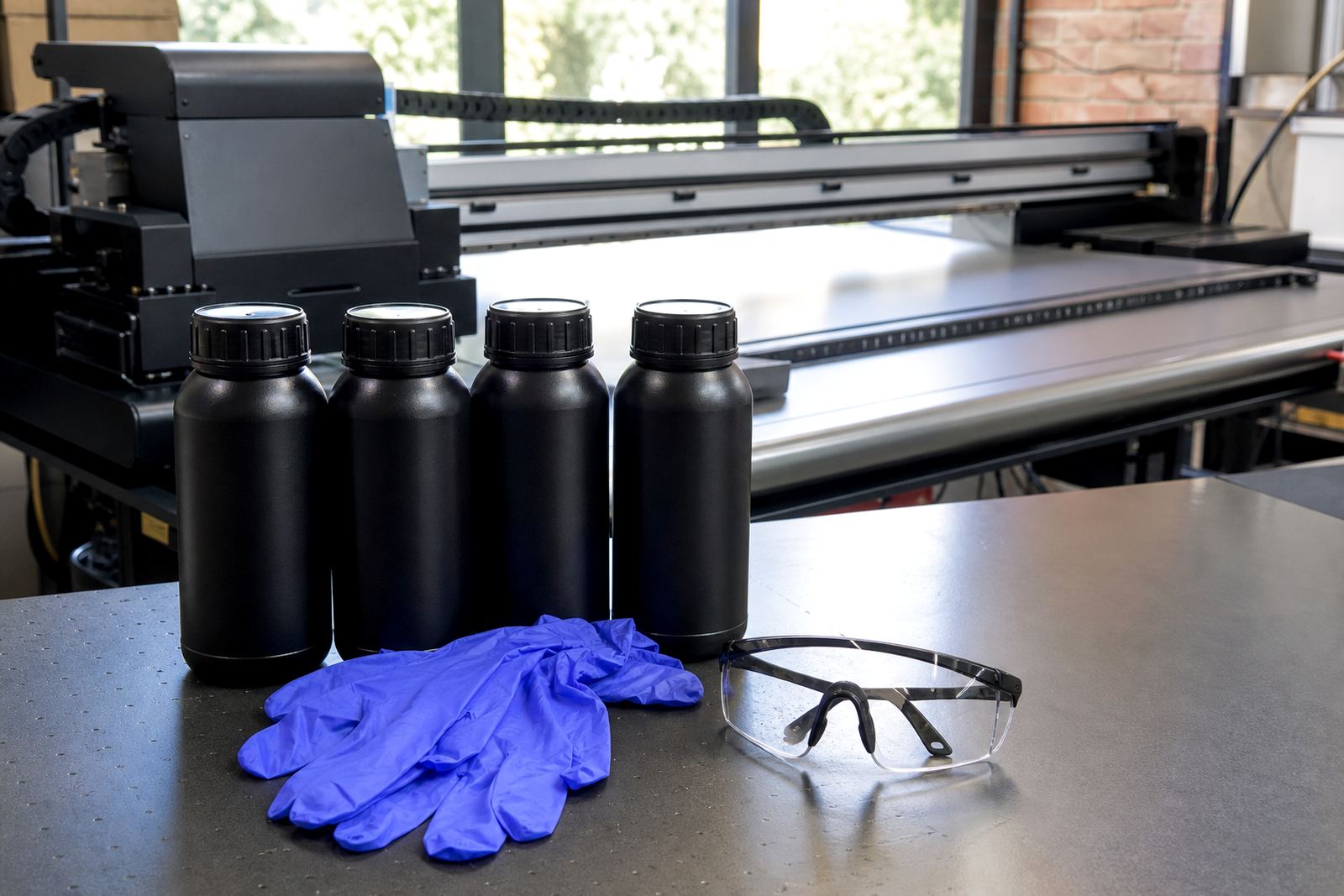
Gloves matter because uncured UV ink can stay on the skin longer than people expect. Even if a small mark looks harmless, repeated contact can build up irritation. In a busy shop in Epping or Bellville, where one person may handle sampling, another may load material and another may do cleaning, skin contact can happen many times in a shift. It only takes a few careless moments.
Good handling starts with simple routine: keep the container closed when not in use, wipe spills immediately and never use bare hands to clear a blocked line or check a wet print. The safest approach is to treat any uncured ink as a material that should stay off the skin altogether.
What gloves do in a print room
Gloves are not there for show. They create a barrier between your skin and the ink, cleaning fluids and contaminated surfaces around the machine. That is important during ink changes, nozzle checks, plate or board handling, and when moving printed stock that may still have uncured spots along the edges.
For UV work, the right glove needs to fit properly and allow enough feel for fine tasks. A loose glove can catch on fittings, while one that is too thin may tear before the job is done. Replace gloves if they are torn, stained through, or have been in contact with a strong cleaner. It sounds basic, but in practice it saves a lot of trouble.
- Wear gloves when opening ink containers.
- Use them when mixing, decanting or testing colour.
- Keep them on for wipe-downs and spill control.
- Change them before moving from dirty work to clean work.
Skin contact, irritation and why the safety data sheet matters
The safety data sheet tells you how the product should be handled, stored and cleaned up. That is not paperwork for the shelf, it is the practical guide for everyone in the print room. If a product needs a certain type of glove, a specific cleaner, or a particular storage temperature, the sheet should be the first reference. Operators should also wear gloves whenever the sheet recommends skin protection.
Some people think if the ink is not cured yet it can be handled like paint. That is not a safe assumption. UV-curable chemistry can be more aggressive on skin than people realise, especially when contact is repeated. A bit on the fingers today and again tomorrow can lead to dryness or irritation, and then you are dealing with a problem that should have been avoided.
Always make sure the team knows where the safety sheets are kept, and that new operators are shown how to read the parts about personal protective equipment, first aid and spill response. If your shop runs after hours because of production pressure, do not skip that step just because the order is urgent.
Adhesion testing should be done with clean hands
When you are checking adhesion, the surface has to be handled carefully. Finger oils, dust and residue can affect how the ink bonds and can confuse the result of a simple test. If someone grips the board, banner or panel with bare hands before a test, the failure may not be the ink at all.
Gloves help keep the test meaningful. They reduce contamination during sample prep, colour trials and production planning, which is useful when you are comparing different materials or curing settings. On a humid Durban morning or in a coastal workshop where the air carries moisture, surfaces can already be challenging. Add skin oils and you make the result harder to trust.
A sensible testing routine looks like this:
- Handle the substrate with gloves from the start.
- Keep the print area free of dust and loose debris.
- Allow the recommended curing time before testing.
- Use the same method every time so results can be compared.
Curing, washing and the small mistakes that waste material
UV ink only performs properly once it has cured fully. If a print is handled too soon, the surface can mark, smear or pick up dirt. Gloves help here too, because they reduce the chance of putting pressure on a partly cured print while it is still soft at the edges. A careful operator can spot trouble early and avoid rework.
The same applies during wash-up and maintenance. Used cloths, wipes, caps and tools can carry residue that should not go straight from one hand to another. Keep a separate bin for contaminated waste and avoid mixing clean tools with dirty ones. It sounds neat and simple, but in real print rooms it is often the rushed clean-up where things go wrong. It can get messy quick if the team starts cutting corners.
In a busy production space, a glove change is a small pause that protects the whole run. That is cheaper than scrapping a board, cleaning a roller a second time, or stopping to explain why a finished job has finger marks on the edges.
A practical habit for South African print shops
That pressure makes shortcuts tempting, especially when a job is due in Johannesburg, Pretoria, Cape Town, Durban or Gqeberha. But the best shops keep glove use part of the daily routine, the same way they check curing lamps, media alignment and ink levels.
At our Epping base, we often see the difference between a team that treats gloves as optional and one that uses them properly from the first sample to the final pack-out. The second team wastes less time on clean-up, gets more consistent adhesion results and keeps operators more comfortable through the day.
If you are building a steady workflow, make glove use part of the training, not an afterthought. Pair it with clear safe handling briefings, sample pack prep, remote tech help and repeat order management so every run starts the same way. The habit is simple, but it pays back every day.